
The Three Seats One Person Occupies After Founding
A single person managing an enterprise holds three distinct structural roles whose conflicting time horizons and operational demands require formal separation.

Seat
Midnight arrives while an enterprise creator reviews pending invoices and fixes production code. The person who started the company occupies three distinct operational positions at once. Organizational literature divides these positions into technical execution, managerial coordination, and governance oversight.
Confusion usually follows when a single title covers all three without distinguishing the separate duties each role requires.

The Technical Operational Domain
Direct labor produces the firm’s immediate commercial output. Whether writing software, manufacturing physical goods, or closing initial customer accounts, this work demands tactical focus on day-to-day tasks. Technical labor measures progress through finished deliverables and real-time troubleshooting, consuming energy through constant execution.

Managerial Coordination and Resource Direction
Systemic coordination connects individual technical tasks to overall operational output. Managerial work creates schedules, assigns responsibilities, evaluates performance, and clears workflow bottlenecks. In this role, an operator steps back from direct execution to build processes that let multiple tasks run predictably.
Performance is measured by operational velocity, resource efficiency, and process clarity.
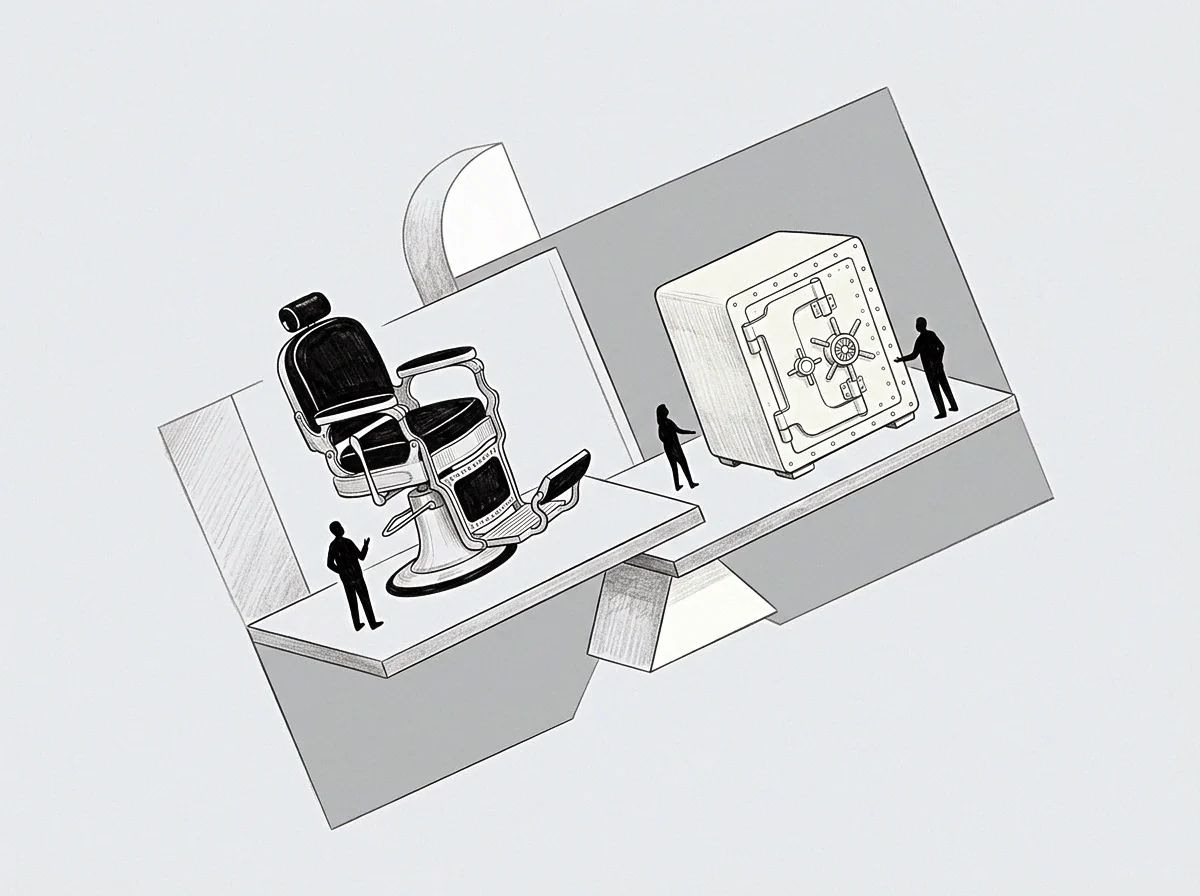
Governance Oversight and Enterprise Strategy
Capital allocation and long-term positioning set the enterprise’s broader direction. Governance requires evaluating market opportunities, managing equity balance sheets, securing financing, and defining core business objectives. Anyone holding this authority answers to shareholders, board members, and regulatory bodies, working on time horizons that stretch across quarters and years rather than daily shifts.
- Technical Craft Execution directly produces commercial artifacts through manual or cognitive labor, operating on daily timeframes.
- Administrative Managerial Oversight designs operational systems, allocates human and financial resources, and measures workflow efficiency on weekly cadences.
- Governance Enterprise Direction establishes long-term capital allocation, maintains legal entity structures, and protects shareholder value over multi-year horizons.
The enterprise can easily appear unstructured when no clear authority exists to resolve whether operational delays stem from poor scheduling or inadequate technical capacity.

Shift
Moving between administrative governance, resource management, and direct labor creates heavy cognitive switching costs. Research in cognitive psychology shows that jumping between unrelated tasks lowers efficiency across everything currently active. An operator who spends two hours negotiating credit terms with a bank cannot instantly pivot to debugging complex code without focus lag.
Residual distraction from unresolved governance decisions degrades technical execution.
As focus fractures, process documentation stalls while attention remains split across competing demands.
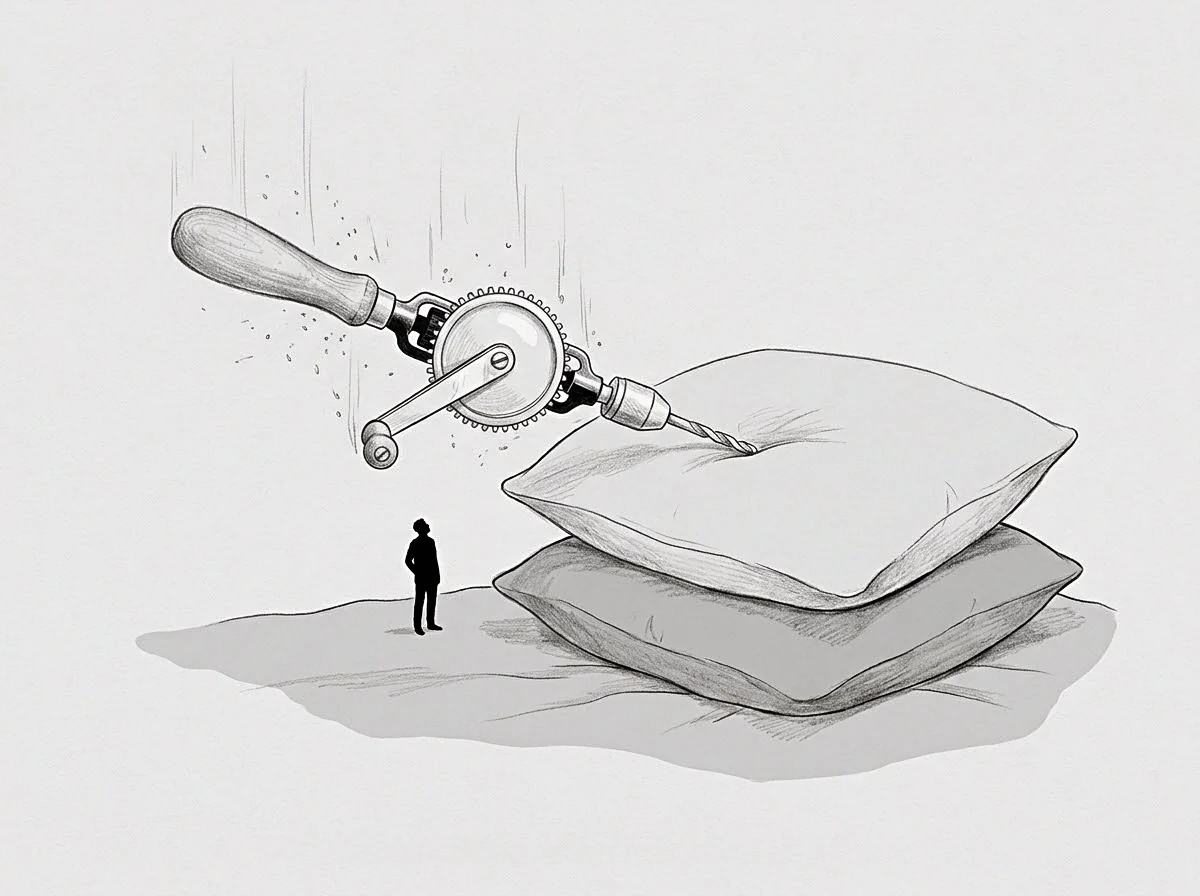
The Temporal Arithmetic of Multi-Role Execution
Dividing time among competing roles tends to distort normal operations. Urgent technical problems force immediate attention, swallowing hours set aside for strategic planning. Administrative tasks like payroll and status reports take up whatever daytime remains.
Governance oversight ends up pushed into evenings and weekends, where exhaustion compromises decision quality.
Switching cognitive focus between broad strategic governance and acute technical execution increases task completion latency whenever operational interruptions exceed three instances per hour.
Unplanned Inertia in Daily Operations
Immediate operational fires quickly overtake planned schedules. When bugs disrupt production, direct labor takes priority over process documentation or balance sheet updates. Over months, this pattern builds a dependency on reactive interventions, leaving the organization unable to plan ahead because every hour goes toward managing current emergencies.
Cognitive fatigue sets in as impending deadlines force trade-offs that favor urgent tactical tasks.
Neglecting systemic management while staying bogged down in technical labor causes operational stagnation, stalling growth under uncoordinated personal effort.

Load
Holding multiple positions at once generates systemic role conflict and emotional fatigue. Studies in organizational behavior define role conflict as the tension created when the duties of one role directly oppose the requirements of another. The manager pushes for process stability and cost control, while the technical worker needs autonomy and flexible timelines.
Meanwhile, governance demands financial returns that require operational investments the manager cannot fund.
Personal capacity drops quickly under these conditions, eventually bringing progress to a halt.

Tacit Knowledge Burden and Delegational Resistance
Unspoken operational procedures create steep barriers to transferring work. Much of technical execution depends on informal knowledge gained through months of direct experience. When an operator tries to delegate without recording core assumptions, substitute workers struggle to meet expected standards.
Concluding that delegation fails, the operator takes the workload back, compounding existing capacity limits.
Failing to document implicit technical routines forces the operating founder to remain trapped in daily direct labor regardless of enterprise expansion.

Capacity Decay and Operational Fragility
Personal energy reserves determine the operational ceiling of an unstaffed enterprise. Working eighty hours a week across execution, coordination, and governance leads directly to physical and mental exhaustion. As energy drains, decision quality slips across all three functions.
Minor mistakes in payroll, client communication, or technical work accumulate into broader operational instability.
So long as tacit knowledge remains undocumented, systemic errors multiply across the firm.
Whether an operator can transition out of direct technical work without causing a permanent decline in output quality remains a persistent challenge for growing businesses.

Desk
Structural clarity requires mapping each organizational role against explicit metrics and time horizons. Comparing these three positions highlights the contradictions of combining them in one person. Focus, output, timeframes, and tacit dependencies diverge across each seat.
Time allocations shift constantly and weekly hours vanish while metrics guide daily decisions.

Which Operational Domain Consumes The Weekly Capacity?
Tracking weekly hours shows that immediate technical work routinely swallows administrative time. Without strict scheduling, troubleshooting eats up to seventy percent of working hours. Managerial coordination takes another twenty percent through reactive communication, leaving strategic governance with less than ten percent of operational focus.
| Role Title | Primary Focus | Time Horizon | Evaluation Metric | Tacit Reliance |
|---|---|---|---|---|
| Technician | Direct Deliverable Production | Daily Shift | Output Volume and Craft Quality | High Implicit Craft Skill |
| Manager | Process Coordination | Weekly/Monthly Cadence | Workflow Velocity and Unit Cost | Moderate Process Knowledge |
| Founder | Governance and Capital Allocation | Quarterly/Multi-Year Horizon | Shareholder Equity and Strategic Growth | Low Operational Execution Detail |
Strategic enterprise direction requires deliberate isolation from daily operational fires to preserve long-term planning clarity.
Setting a formal role definition agreement establishes distinct weekly hour allocations for governance, changing how founders plan executive decisions.

Terms
Turning informal work habits into structured roles requires explicit boundaries. An operator defines a functional seat by specifying duties, hourly commitments, and output metrics. Leaving expectations unstated creates implicit obligations that trigger friction between equity partners.
Writing clear internal job descriptions forces the firm to confront the real labor demands of its model.
Clear boundaries prevent confusion where implicit agreements eventually break down.

Documenting Tacit Work and Operational Protocols
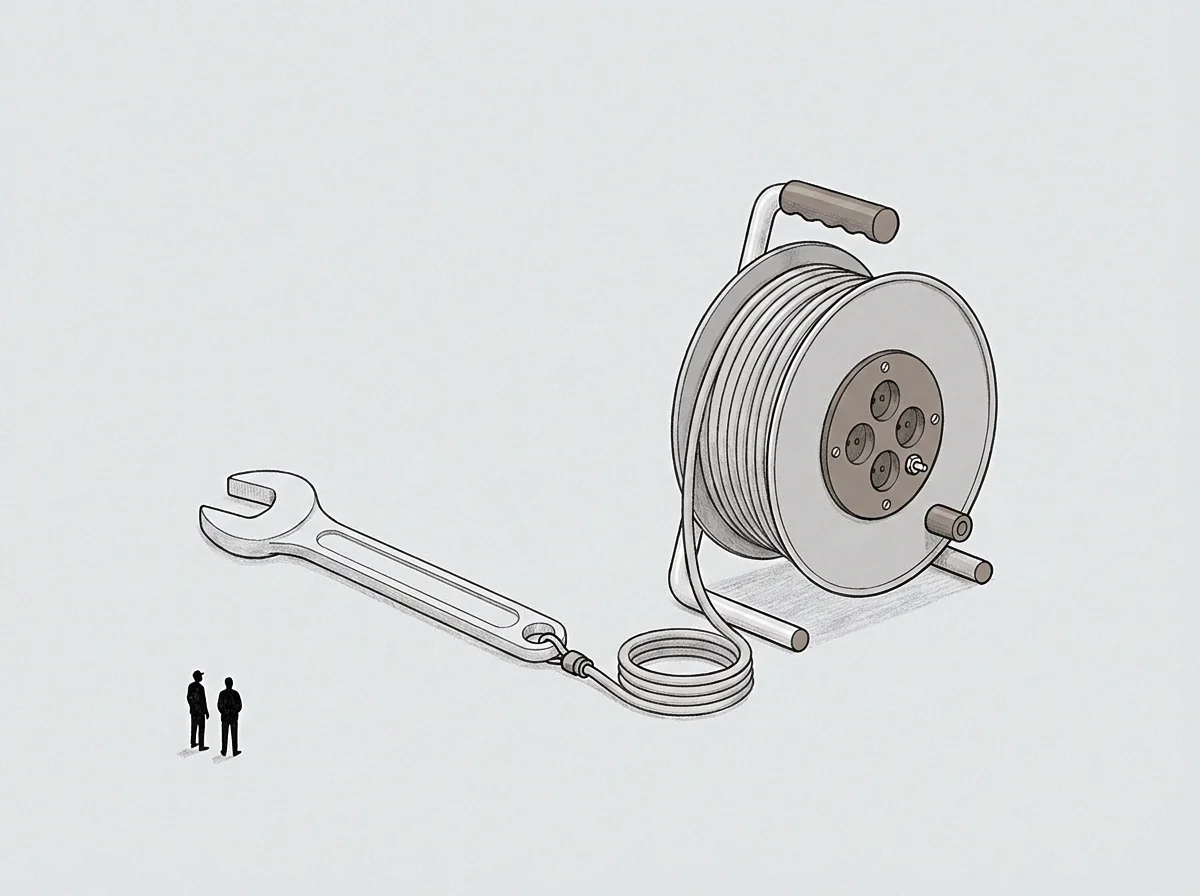
Converting implicit personal knowledge into written procedures makes task delegation workable. By logging daily tasks, technical dependencies, and decision rules over four weeks, the operator creates standard operating manuals. These allow others to run routine operations with consistent quality, reducing reliance on a single key person.
Thorough documentation is what makes delegation possible in practice.

Structuring Formal Operational Handover Sequences
Handing over an operational role from an owner to an employee requires a phased schedule. Authority shifts in stages as competence is demonstrated: the owner executes while the employee observes, the employee executes under supervision, and finally the employee takes over fully.
- Activity Logging records every execution task performed over twenty business days to establish baseline labor requirements.
- Procedure Standardization converts recorded daily workflows into step-by-step written documentation for training others.
- Supervised Execution assigns routine operational tasks to qualified staff while retaining supervisory review.
- Full Autonomous Transfer hands off direct execution oversight and shifts capacity entirely toward governance duties.
An operational duty that lacks documented execution metrics remains dependent on the specific individual who created it.
Any operational responsibility left without written execution criteria automatically falls back on the owner whenever disruptions occur.
Cost
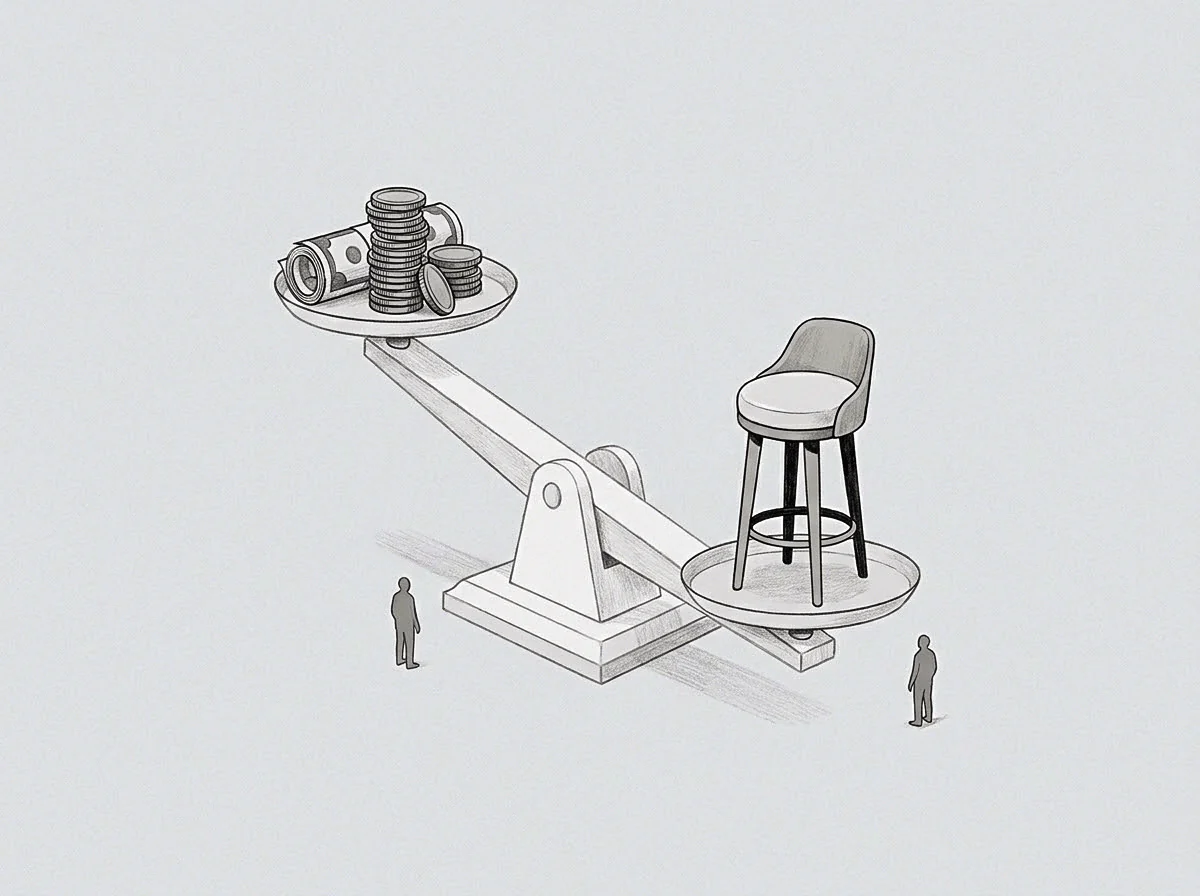
Separating capital ownership from daily operational labor is essential to mature business design. Equity yields long-term returns through capital appreciation and enterprise value, while operational labor earns compensation matched to market wage rates. Mixing labor pay with equity distributions distorts profitability and hides true operating margins.
Paying market rates for technical and managerial work establishes clean financial reporting.
Capital growth requires patience, whereas labor requires fair market pay to maintain clear financial transparency and protect valuation.

Separating Governance Returns from Labor Compensation
Distinguishing salary earned through labor from dividends received on capital reveals true financial performance. When an owner draws an artificially low salary, business profitability looks higher than market reality justifies. Replacing that owner with paid staff exposes hidden labor costs that cut into net margins.
Setting market compensation for every role shows whether the business model is genuinely viable.
Establishing distinct legal, financial, and operational boundaries around each role allows the business to function independently of any single person. Corporate assets stay protected while operational duties transfer smoothly to professional staff over time.