
Executive Seat Unbundling During Corporate Scale Expansion
Executive seat unbundling transfers specialized operational and technical authorities to dedicated officers to eliminate organizational bottlenecks at scale.

Floor
A founder signs banking authorizations at midnight, checks code thirty minutes later, and finishes a commercial proposal before dawn. Three distinct executive functions sit at that single desk: technician, operational manager, and corporate officer answering for legal capital. Early momentum depends on that compression.
Housing different authorities inside one person eliminates coordination latency while capital remains scarce. Decisions move as fast as an internal monologue.
Physical exhaustion arrives before organizational failure becomes obvious. When headcount expands past thirty people, the attention needed to evaluate technical trade-offs collides with the hours demanded by managerial arbitration. The person in the combined position tends to treat this friction as personal failure, though the enterprise has simply outgrown housing compound domains in a single seat.
Combining technical execution with legal governance accelerates early decisions while depleting the single person carrying both mandates.
Scale forces the arrangement apart. The original executive seat was never an indivisible post; it was an informal bundle of authority, tacit institutional habits, and daily interventions. As units expand, that compound seat splits along functional seams.
The corporate officer yields line management, retains capital allocation, and isolates technical oversight into specialized departments.
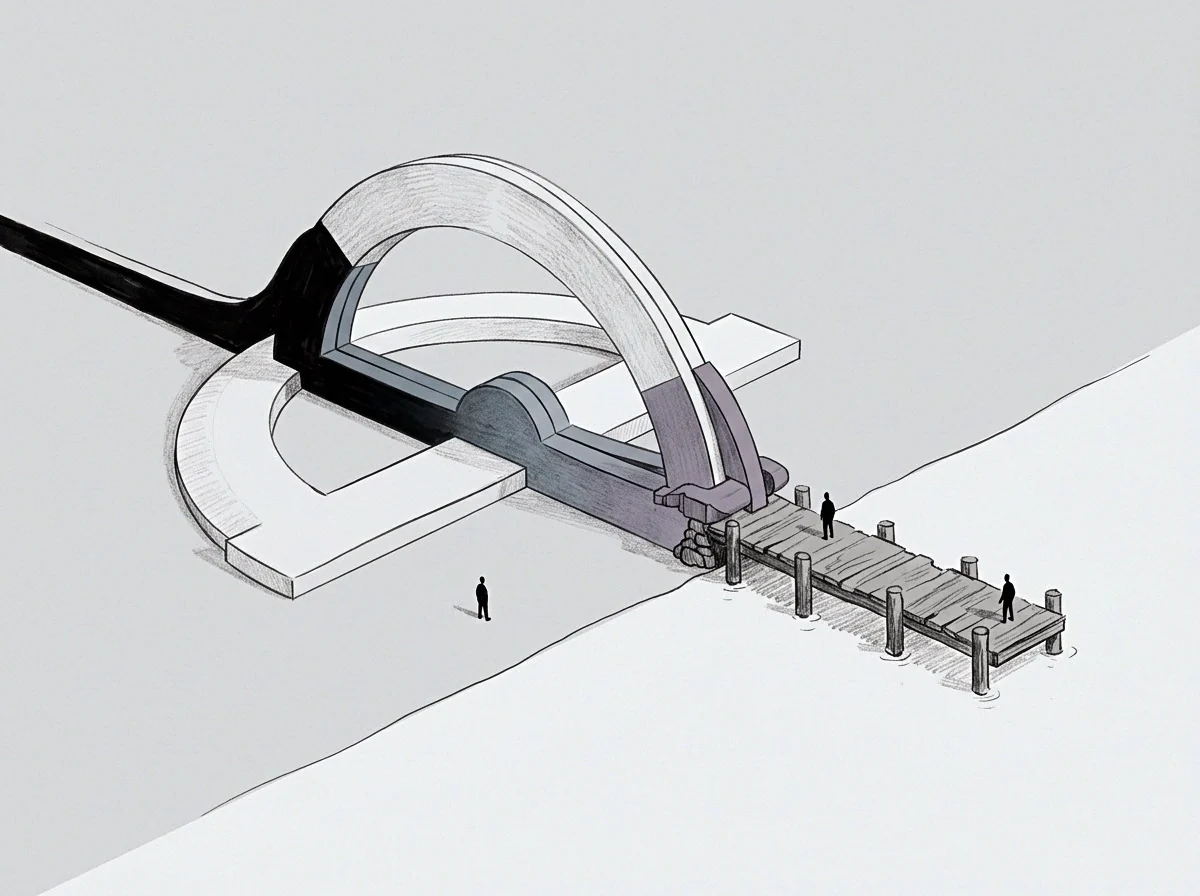
Compression Strains Across Executive Expansion
Growth invalidates that early compression. In a small venture, informal coordination compensates for undefined role boundaries, and short communication paths make rapid context switching work. Once an operating organization crosses fifty people, that informal coordination decays under communication overhead.
Each added hire multiplies communication paths across every active mandate. An executive holding combined responsibilities becomes an operational choke point. Subordinates stall waiting on approvals across divergent categories: technical architecture reviews, vendor contracts, operational workflows, and capital distributions.
The single seat turns into an artificial bottleneck that arrests downstream initiative.
Unbundling requires formal role decomposition. Decoupling starts with cataloging the operational mandates buried within the title: identifying where discretionary authority resides, what recurring approvals consume calendar blocks, and where institutional knowledge remains purely tacit. Only explicit separation makes delegation sustainable.
Project leads require direct authority over the schedule, or the executive takes back the project deadline.
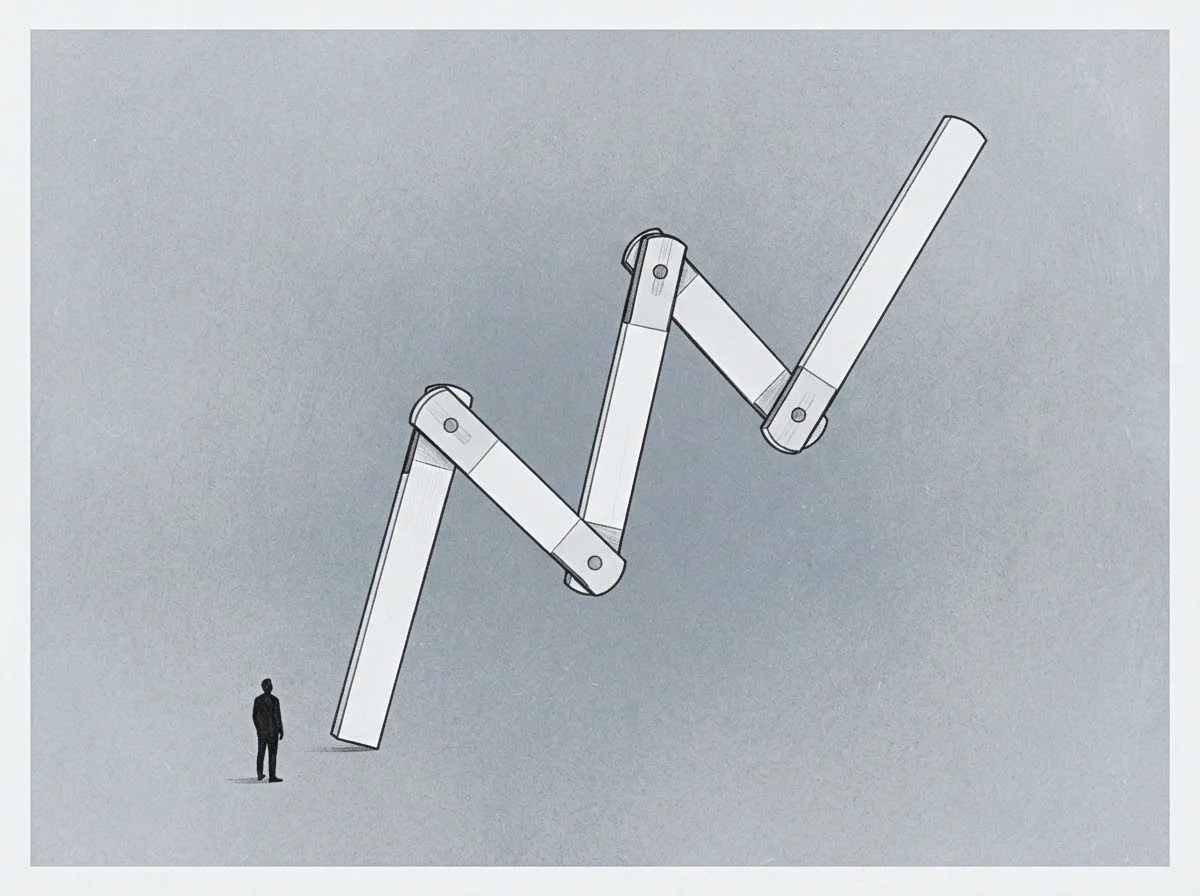
Strain
Role strain emerges whenever divergent behavioral expectations converge on one person. Researchers document this pattern in high-velocity operating environments where an executive simultaneously inhabits the seats of operator, supervisor, and corporate trustee. The supervisor monitors compliance; the technician designs architecture; the corporate trustee allocates equity.
Carrying all three mandates inside sixty weekly hours forces perpetual cognitive switching.
Switching costs take a compounding operational toll. When an executive pivots from long-term capital allocation to resolving customer implementation bugs, focus fractures. Task-switching research shows that complex conceptual transitions leave residual attention stuck to previous tasks, impairing immediate analytical precision.
Decisions turn hurried, shallow, and defensive.

Behavioral Pressures in Compound Posts
The friction between technical and managerial identities creates predictable problems. An executive trained as an engineer or product architect frequently retreats into technical troubleshooting during periods of strategic ambiguity. Tactical firefighting is concrete, measurable, and immediately satisfying, while strategic governance feels ambiguous and slow.
That operational retreat deprives the enterprise of needed governance. While the officer debugs production code, organizational design languishes, executive recruitment stalls, and capital efficiency declines. Subordinate managers find their authority undermined whenever the executive intervenes in tactical decisions, leaving line staff with contradictory directions from their direct manager and the intervening officer.
- Cognitive fragmentation drains analytical capacity when an executive alternates between strategic capital governance and daily tactical crisis response across consecutive hours.
- Subordinate disempowerment occurs whenever an executive bypasses appointed department leads to resolve technical disputes directly on the production floor.
- Governance omission leaves long-range planning, investor reporting, and compliance reviews neglected because operational emergencies monopolize calendar availability.
- Information hoarding traps institutional context inside personal memory because documenting procedural workflows takes second priority to immediate firefighting.
Tacit operational knowledge worsens the issue. An executive who built the early operating systems carries operational assumptions that were never written down. When scale demands delegation, the executive expects new hires to absorb priorities through ambient observation.
Lacking documented parameters, delegation becomes an operational trap.
Unstated procedural assumptions turn operational delegation into systemic disappointment.
Neglecting formal separation traps the growing organization in continuous managerial gridlock, while burning through the executive’s physical stamina.

Parcel
Unbundling means dissecting compound roles into discrete mandates. The title of chief executive officer routinely conceals at least four distinct jobs during scale transitions: technical visionary, head of talent, chief operating officer, and fiduciary board manager. Corporate stability depends on extracting these functions and lodging them in dedicated executive posts.
The separation exposes competing operational priorities across domains. Tactical execution requires short feedback loops, standardized metrics, and direct supervision. Corporate strategy demands longitudinal analysis, external market engagement, and capital preservation.
Forcing both responsibilities onto a single desk degrades how both are handled.
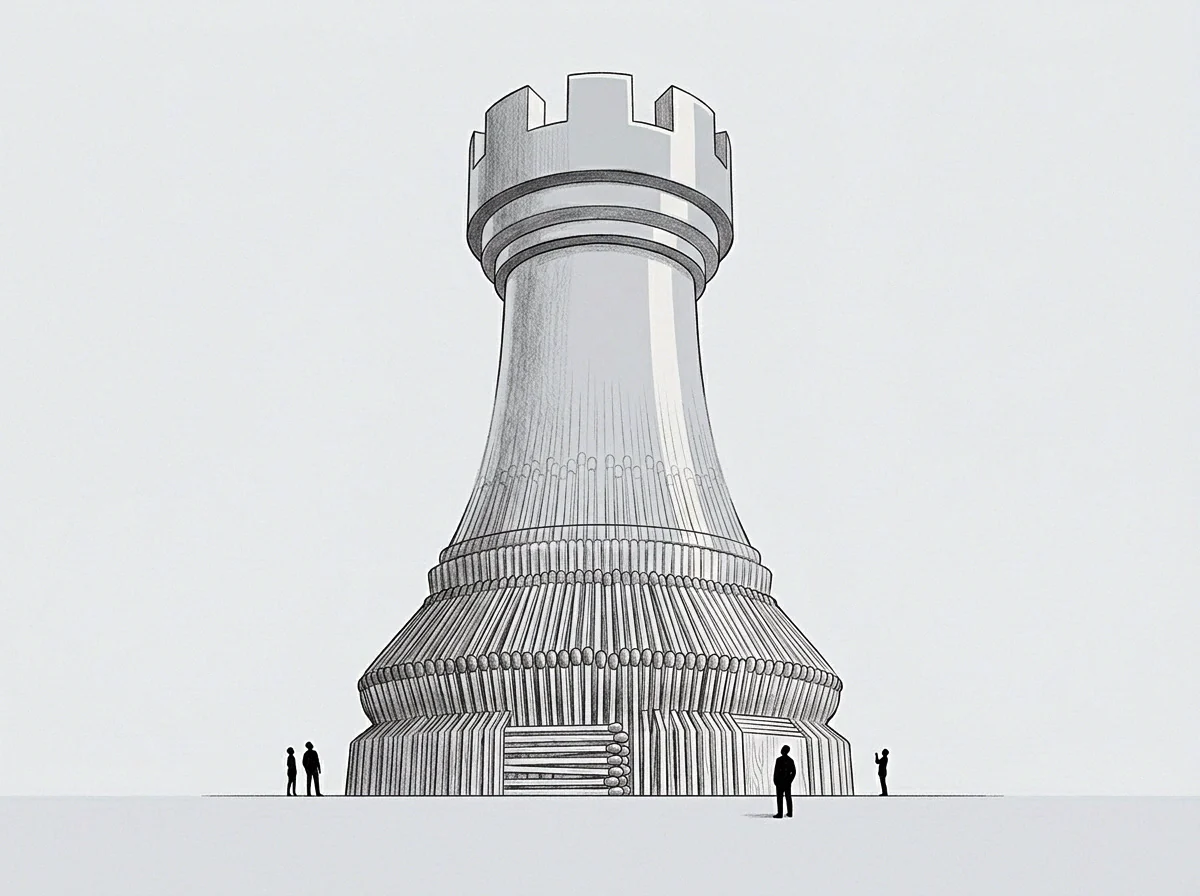
Which Operational Mandates Separate First?
Sequencing the transfer of authority prevents disruption during expansion. The enterprise has to identify which authorities to release immediately and which mandates stay in the central executive seat. Functional line management routinely separates before capital allocation.
| Domain | Primary Mandate | Decision Horizon | Optimal Successor Profile |
|---|---|---|---|
| Operational Cadence | Workflow throughput and line execution | Daily to quarterly | Experienced chief operating officer |
| Technical Architecture | System scalability and platform integrity | Six months to two years | Specialized engineering executive |
| Capital Allocation | Equity structuring, debt, and treasury | Annual to multi-year | Corporate finance lead or board committee |
| Commercial Expansion | Revenue acquisition and pipeline scaling | Quarterly to annual | Dedicated enterprise sales officer |
These functional boundaries define the separation. Operations and technical architecture require domain expertise that diverges sharply from treasury management. Unbundling isolates those disciplines, assigning each to specialists evaluated on separate operational metrics.
The division of labor follows an established industrial principle. In eighteenth-century pin manufacturing, separating draw, cut, and head formation multiplied productivity thousandfold. Scaling an enterprise follows the same mechanical rule: specialized focus reduces operational drift and accelerates throughput across departments.
The board formalizes this reallocation through written resolutions that transfer operational signing authority to newly appointed functional officers.

Transfer
Executing functional separation requires deliberate structural mechanics. Passing authority to incoming executives cannot rely on casual verbal agreements. An effective transfer codifies decision boundaries, reporting lines, and budgetary thresholds in unambiguous operating documentation.
The transfer sequence follows a staged progression. Early phases establish mutual visibility without shifting ultimate accountability. Intermediate phases grant operational discretion within bounded financial and strategic guardrails.
Final stages complete the transition by handing formal veto power to the incoming executive.
- The departing executive records unwritten operational heuristics, vendor terms, and tacit workflow criteria in clear operating manuals.
- The incoming specialist shadows existing decision routines for sixty days, evaluating system dynamics without executing unilateral policy modifications.
- Formal corporate resolutions establish explicit operational spending limits and personnel authorities reserved exclusively for the new officer.
- The central executive vacates operational check-ins, rerouting direct line inquiries to the new departmental leadership.
In an enterprise growing from forty to one hundred eighty employees over eighteen months, a founder might simultaneously direct engineering and hold the corporate chief executive title. Product deployments stall because that executive conducts every architecture review while negotiating Series B equity financing. The board intervenes to recruit an external vice president of engineering.
Under this intervention, the executive transfers engineering compensation reviews, release approvals, and infrastructure procurement to the new hire over ninety days, preserving board-level oversight and product alignment. Engineering throughput increases forty percent within six months of role isolation, and the officer recovers twenty-five weekly calendar hours for capital allocation.
Authority follows documented accountability rather than historical tenure.
Succession proceeds smoothly when authority migrates to explicit documentation before interpersonal friction develops.
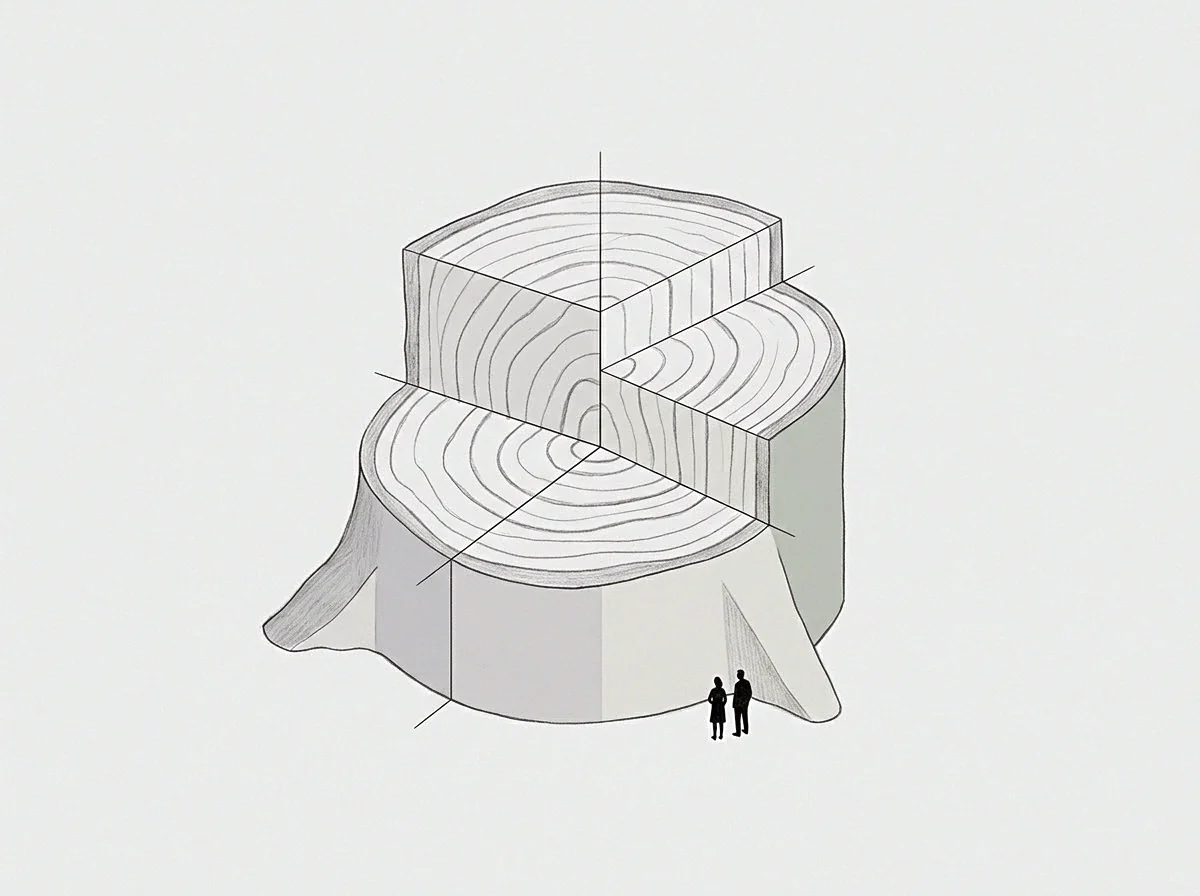
Post
The structural transformation leaves the original corporate officer occupying a drastically altered desk. Relinquishing line operations, technical evaluations, and day-to-day supervisory arbitration feels disorienting. As the calendar clears of tactical emergencies, it fills with long-range capital stewardship, shareholder governance, and institutional design.
This final seat carries administrative isolation. Operational feedback loops lengthen from hours to quarters. An executive unbundled from daily execution can no longer measure output by pull requests merged, sales closed, or tickets resolved; performance becomes structural and systemic.
Effective governance requires resisting the impulse to reclaim ceded ground. During turbulence, unbundled executives face constant temptation to step back into delegated domains. Reasserting operational control erodes newly established processes and signals clear distrust in appointed leadership.
The post requires the discipline to let appointed executives handle their own operational crises.
The efficacy of executive unbundling rests on an operational question: whether an organization can sustain its initial creative momentum once spontaneous founder instinct yields entirely to formalized functional administration.