
Maintaining Strict Role Boundaries Across Scaling Revenue Teams During Market Volatility
Revenue team performance degrades during volatility when unmanaged scope expansion causes high-cost acquisition roles to absorb post-sale support tasks.
Strain
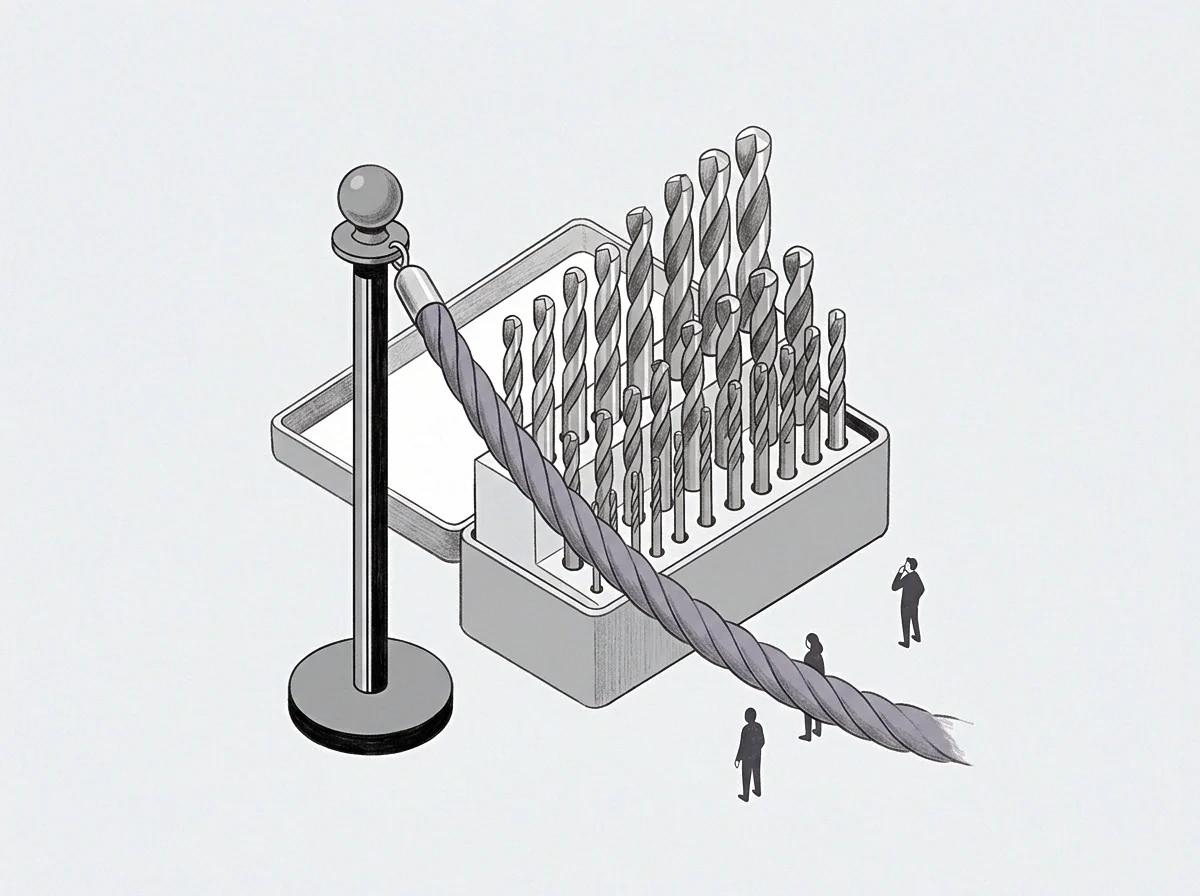
In the third quarter of a market downturn, an enterprise account executive spends four hours configuring an integration patch for an existing client because customer success staffing fell by half. The rep does it to protect an upcoming expansion payment while three target prospective leads sit uncontacted in the pipeline. Under market pressure, revenue organizations regularly drift like this: specialized roles give way to tactical patch work, hiding the true cost of customer retention.

Pipeline Contraction and Operational Bleed
When buyer demand contracts, reps face immediate quota pressure. To offset slower inbound leads, individual team members stretch their daily work into adjacent roles. Account executives take over implementation, customer success managers handle contract renewal negotiations without commercial training, and sales engineers end up building custom fixes for legacy accounts.
Stretching scope like this feels necessary to save near-term contract value, but it replaces planned specialization with reactive coverage. Studies on role boundaries show that operational ambiguity speeds up burn rates while disguising staffing shortages. Once responsibilities blur, leadership loses sight of actual unit metrics, skewing capacity planning.
When market volatility slows deal velocity, unmanaged scope expansion hides capacity deficits behind unsustainable individual effort.

Structural Friction Across Revenue Seats
Every commercial role relies on a distinct balance of speed, technical depth, and relationship management. Forcing roles together breaks that design. Converting a cold prospect takes an entirely different skill set than driving product adoption or resolving support tickets.
Pushing these tasks onto one person creates sharp role conflict. An account rep negotiating commercial terms cannot act as an impartial technical advisor during post-sale onboarding without undermining trust or dragging out the deal schedule. Switching constantly between sales and service cuts effectiveness on both fronts, lowering win rates and delaying deployments.
Allowing reps to cross role boundaries during a downturn trades long-term scale for temporary patches. The real cost shows up six months later: when demand rebounds, the sales team lacks the outbound prospecting bandwidth to rebuild the pipeline.

Span
Clear seat definitions prevent overlap and preserve core functional capacity during organizational stress. Keeping acquisition, expansion, technical validation, and retention strictly separate maintains clear metrics regardless of market conditions.

Decomposing the Revenue Architecture
Maintaining clarity requires breaking the commercial organization into discrete roles with distinct expectations. Each position handles specific conversion milestones and operational outcomes across the customer lifecycle.
- Account Executive Seat Focuses strictly on new logo acquisition and contract execution, evaluated on gross new recurring revenue and deal cycle speed.
- Account Manager Seat Manages account health, renewals, and expansion within existing clients, evaluated on net retention rates.
- Solutions Engineer Seat Validates technical feasibility and runs product demonstrations, evaluated on technical win rate and trial completion velocity.
- Customer Success Manager Seat Drives product adoption, usage depth, and value realization, evaluated on monthly active user metrics and gross churn prevention.
Limits of Individual Capacity
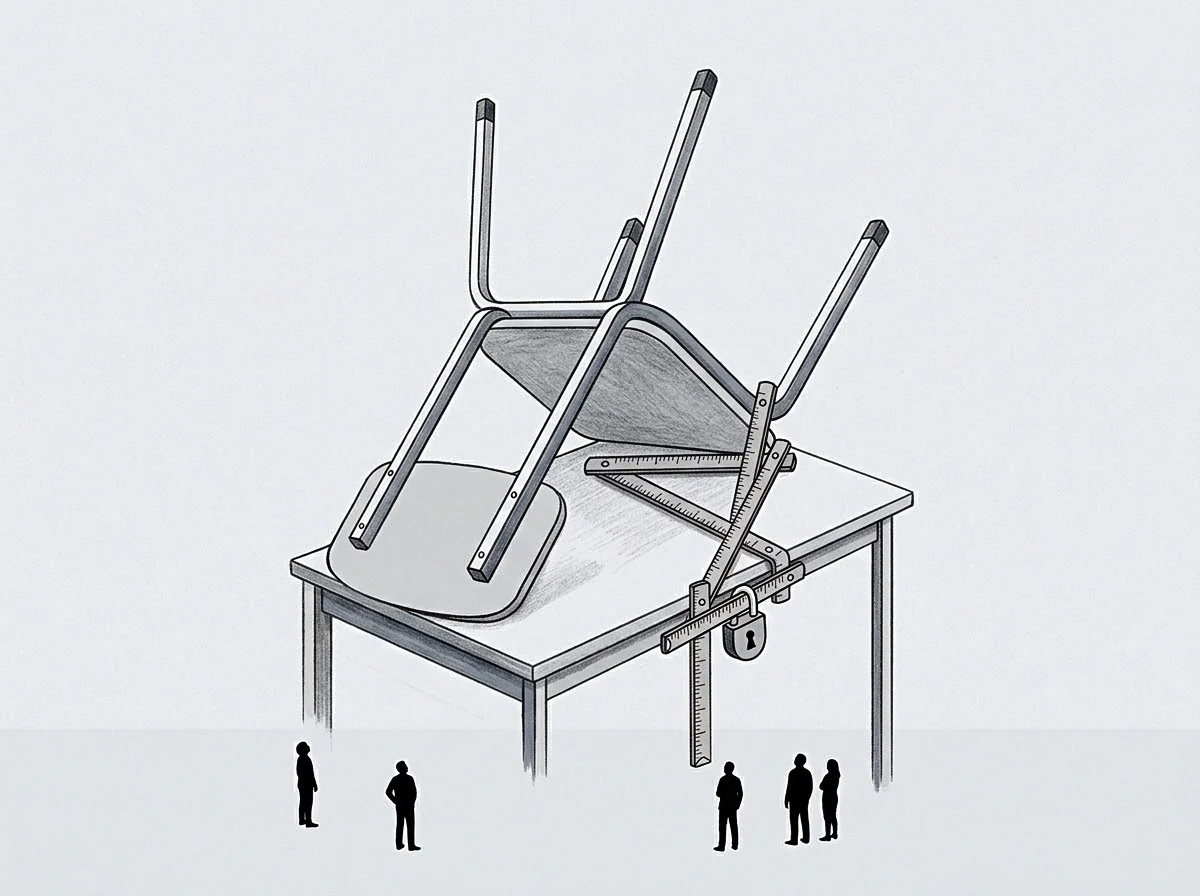
Every seat has a finite weekly capacity measured in direct execution hours. Adding work outside the core scope directly cuts into revenue-generating time. When an acquisition rep spends ten hours weekly resolving customer support tickets, new pipeline creation drops by twenty-five percent.
Capacity models need clear limits on non-core work. When outside demands exceed ten percent of weekly capacity, the role degrades, forcing reps to compromise quality or work unsustainable hours. Leaders who protect these boundaries maintain operational predictability through market swings.
A revenue role protected by firm operational boundaries delivers consistent unit economics in both growth and downturn cycles.

Leak
Tacit operational tasks slip into scaling companies whenever handovers between specialized roles leave unassigned gaps. During downturns, those gaps widen as reps try to protect revenue by picking up unowned work without formal assignment or compensation.

Mechanisms of Tacit Work Accumulation
Tacit work accumulates quietly through informal arrangements between reps and clients. An account rep promises ongoing post-sale help to push a hesitant buyer over the line during a tough quarter. The client keeps reaching out directly for service issues long after onboarding finishes.
This creates a shadow workflow parallel to formal commercial processes. The rep spends hours troubleshooting administrative issues while customer success stays blind to account risks. The company pays twice over: expensive sales hours go toward routine administration, while formal support lacks account context.
Unmapped handovers convert high-value acquisition hours into unrecorded administrative support.
Seat Comparison Across Market Scenarios
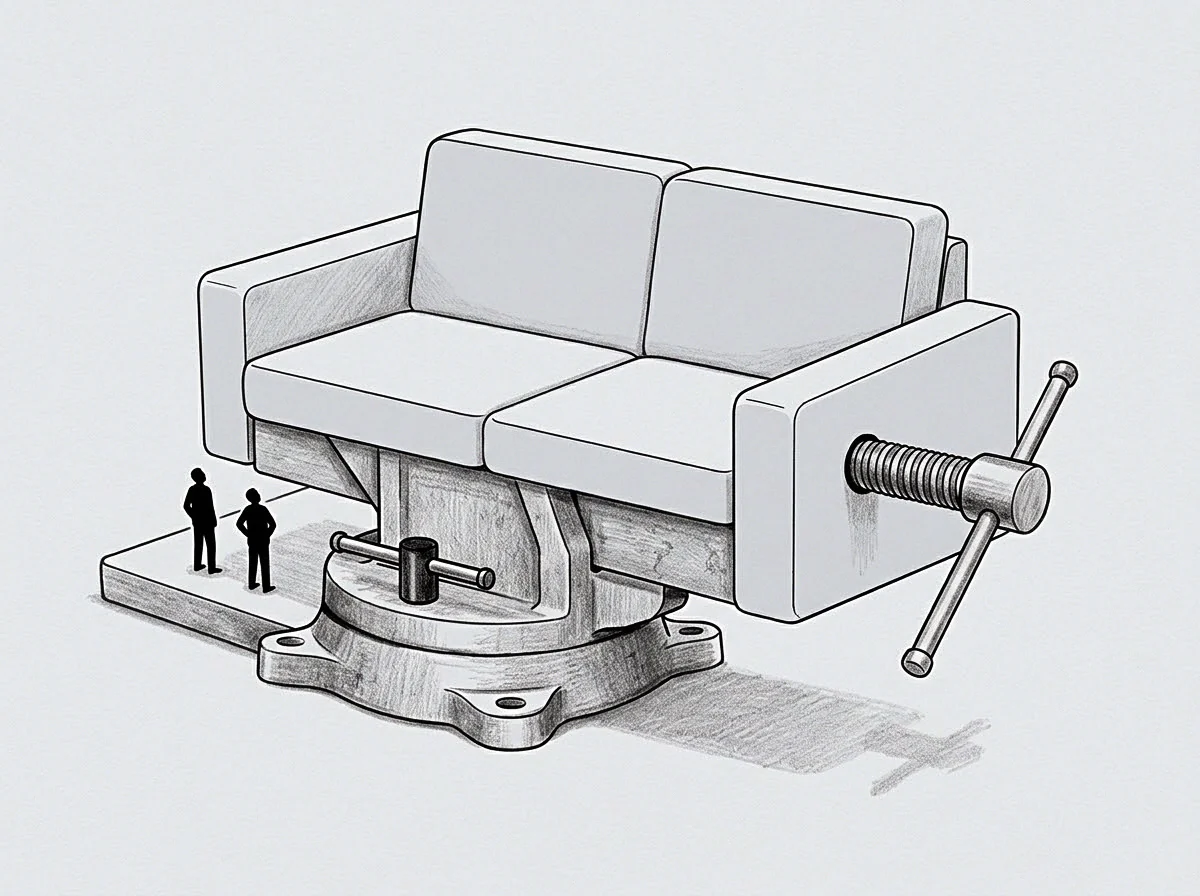
To see how volatility distorts role boundaries, consider the structural shifts across revenue positions during demand contractions.
| Position | Standard Allocation | Volatile Drift State | Performance Impact | Correction Mechanism |
|---|---|---|---|---|
| Account Executive | 80% Prospecting / 20% Admin | 40% Prospecting / 40% Support / 20% Admin | 50% drop in new qualified opportunity creation | Enforce hard handoff SLAs at contract sign-off |
| Account Manager | 60% Expansion / 40% Renewals | 20% Expansion / 60% Support / 20% Renewals | 30% decline in net account growth rate | Reallocate technical queries to tier-two support |
| Solutions Engineer | 70% Pre-Sale / 30% Demo Build | 30% Pre-Sale / 50% Post-Sale Fixes / 20% Demos | Extended deal validation timelines | Establish post-sale technical support caps |
| Customer Success | 70% Adoption / 30% Account Health | 30% Adoption / 50% Escalations / 20% Admin | Increased user churn at primary renewal dates | Implement automated ticket routing protocols |

Worked Situation: The Contraction Cascade
Take a scaling enterprise software team with twenty account executives and five customer success managers. After a thirty percent drop in new buyer demand, account executives hit quota trouble. To protect newly signed accounts from churning, reps handle onboarding themselves, bypassing the customer success queue.
If each rep spends six hours weekly on onboarding, the team absorbs one hundred twenty hours of support labor every week. That equals three full-time support positions performed by sales professionals paid double support rates. Meanwhile, outbound meeting creation drops by forty percent across the team, starving next quarter’s pipeline.
This triggers a self-reinforcing downward spiral. As pipeline shrinks, reps cling tighter to existing accounts, spending even more time on non-sales work and further cutting acquisition capacity. Leadership misinterprets this as a soft market when it is fundamentally an internal boundary failure.
Master commercial contracts must explicitly define post-sale support terms, shifting all operational inquiries to designated customer success reps immediately upon contract signing.

Yield
Commercial performance depends on focus and firm operational boundaries. Splitting attention across competing priorities sharply cuts overall output.

Is Cross Role Substitution Sustainable During Extended Contractions?
When leadership permits role substitution to weather a downturn, reps pay a heavy context-switching penalty. Cognitive load research shows that switching between distinct task types consumes up to forty percent of productive mental capacity. An account rep juggling cold outreach, technical troubleshooting, and renewal negotiations produces lower output across all three.
Believing role flexibility saves headcount ignores this tax. In a specialized setup, an account executive converts target prospects at twenty percent. Add post-sale support tasks, and that conversion rate drops to twelve percent from split attention and delayed follow-ups.
The revenue lost from lower conversion rates easily exceeds the cost of dedicated support staff.
Context switching across mismatched tasks destroys conversion efficiency faster than a market downturn contracts buyer demand.

The Price of Systemic Role Dilution
Systemic boundary failure damages team culture and drives attrition. Top acquisition reps leave when administrative burdens block quota achievement. Customer success teams lose authority when sales reps bypass standard protocols to manage accounts directly.
Role dilution also ruins data integrity. When account executives handle support tickets through email or chat apps, customer feedback never reaches product teams. Management then relies on distorted pipeline data, driving poor hiring and capital decisions during volatile periods.
How much revenue must an organization lose before leadership restores structural boundaries to commercial positions?

Term
Restoring boundary integrity across scaling revenue teams takes explicit operational contracts, SLAs, and active management governance. Re-establishing clear roles requires systematic enforcement rather than informal guidance.

Contractual Boundaries and Service Level Agreements
Operational boundaries need to be documented in Service Level Agreements that spell out handoff conditions between revenue functions. These SLAs set explicit entry and exit criteria for every phase of the sales cycle.
A structured operational reset relies on five governance steps:
- Audit current weekly time allocation across all commercial roles to identify unauthorized task bleed.
- Draft explicit Service Level Agreements defining handoffs between sales, technical solutions, and customer success.
- Establish hard contract triggers where account ownership transfers completely from account executive to account manager.
- Implement CRM validation gates that prevent deal progression unless required role handoff fields are complete.
- Align incentive structures strictly with defined role metrics, removing overlapping commission credits that encourage scope drift.

Restructuring Operational Handovers
Handovers are the highest-risk points for boundary failure. When a deal closes, the account executive must transition primary client communication to customer success within forty-eight hours through a formal kickoff meeting.
The account executive can participate in expansion discussions at scheduled renewal intervals, but direct client contact for day-to-day operations ends at contract signing. This clean boundary protects prospecting capacity while giving customer success full ownership of account health.
Formal handoff criteria prevent high-cost acquisition reps from turning into permanent administrative coverage.
Clients expect a dedicated customer success representative to handle post-sale operational requests, as outlined in the service agreement.