
Managing Founder Context Switching Between Daily Execution And Strategy
Context switching between daily execution and strategic governance is managed through temporal partitioning, explicit escalation protocols, and systematic operational handover.

Post
A builder answers server alerts at dawn, rewrites onboarding copy before noon, and tries to allocate resources directionally before the evening closes. Every incoming defect demands immediate attention, while architectural planning offers no quick validation or obvious endpoint. The operational seat delivers continuous stimuli, tight feedback loops, and clear outcomes that reward immediate action.
When one person occupies both the production station and the executive chair, short cycles consistently crowd out long ones.
Role theory identifies this condition as intra-role strain within combined executive-operator assignments. In organizations with fewer than twenty personnel, technical duties compete directly with governance for limited cognitive capacity. The technician measures progress by concrete outputs: deployed code, closed tickets, completed customer conversions.
The firm’s designer measures progress through structural coherence, capital longevity, and market positioning. When these functions share an unstructured workday, immediate technical work consumes the focus needed for broad coordination.
A production task with an immediate deadline displaces structural planning whenever both occupy the same calendar window.
The operational environment runs on continuous reaction. Client inquiries arrive with timestamps, bug reports present reproducible failures, and vendor negotiations demand quick adjustments. These interruptions create task-switching loops that prevent deep organizational modeling.
An operator who spends four hours resolving database bottlenecks enters strategic planning with depleted working memory and scattered attention.

Structural Separation of Operating Stations
Holding distinct roles within a single work identity requires deliberate separation. When an executive steps into direct production, the desk, messaging apps, and open documents shift to line execution. Trying to evaluate five-year market changes from that immediate posture creates cognitive interference, as the environment of active production keeps attention primed for quick intervention.
Treating leadership and production as the same work stream leads to systematic misallocation of capital and attention. When directional planning gets only the leftover hours after operational firefighting, the enterprise runs on outdated assumptions while polishing minor features.

Residue
Research on task interruption shows that switching from an unfinished task to another domain leaves significant mental residue. The previous problem continues to occupy working memory while the operator tries to evaluate balance sheets or competitor acquisitions. An operator who leaves a code repository for an investor call remains partially anchored to unresolved syntax errors on the second screen.
Attention splinters under rapid inputs. In a small company, shifting between fine details and high-level governance causes long ramp-up periods, decision fatigue, and shallow strategy. The operator tries to solve structural problems using the speed and habits of operational firefighting.
Several distinct cognitive states explain why simultaneous execution degrades governance quality:
- Attentional fragmentation degrades the ability to hold complex models in mind during high-stakes strategic decisions.
- Temporal myopia favors tasks with immediate deadlines over multi-year capital strategy that lacks short-term feedback.
- Decision exhaustion lowers resistance to short-term shortcuts after hours of technical problem-solving.
- Identity confusion occurs when an executive evaluates company performance solely by their own daily output.
Mental residue from unresolved operational tickets degrades the depth applied to subsequent governance.
Technical execution provides continuous reinforcement from completed micro-tasks, while directional planning brings ambiguity, long evaluation periods, and delayed feedback. Faced with open-ended strategic uncertainty, a founder naturally drifts toward the predictable satisfaction of shipping small incremental updates.
This dynamic leaves open whether an early-stage operator can maintain strategic parity with dedicated executives without fully delegating production duties.

Cadence
Managing competing responsibilities requires distinct time blocks rather than mixing tasks throughout the day. Interleaving forces constant switching of mental models, adding an estimated twenty percent operational drag per major shift. Setting aside unbroken, multi-day blocks for specific roles creates cognitive stability.

Does Temporal Separation Protect Strategic Capacity?
Dividing the work week into dedicated execution days and governance days prevents mid-day context switches. During execution days, communication channels stay open, dashboards remain active, and production takes priority. During governance days, real-time channels close, notifications are muted, and focus shifts to organizational design, hiring, and capital allocation.
| Operational Dimension | Execution Posture | Directional Posture |
|---|---|---|
| Primary Objective | Throughput and defect resolution | Structural alignment and resource deployment |
| Evaluation Horizon | Hours to days | Quarters to years |
| Feedback Latency | Immediate and deterministic | Delayed and probabilistic |
| Communication Profile | Synchronous and high frequency | Asynchronous and low frequency |
| Interruption Tolerance | High during routine production | Zero during model construction |
Without deliberate boundaries, production work quickly consumes governance time. Establishing explicit calendar blocks protects long-range analysis from being eroded by urgent technical requests. When team members know that Tuesday and Thursday are reserved for structural planning, non-critical questions gather into batch updates instead of constant interruptions.
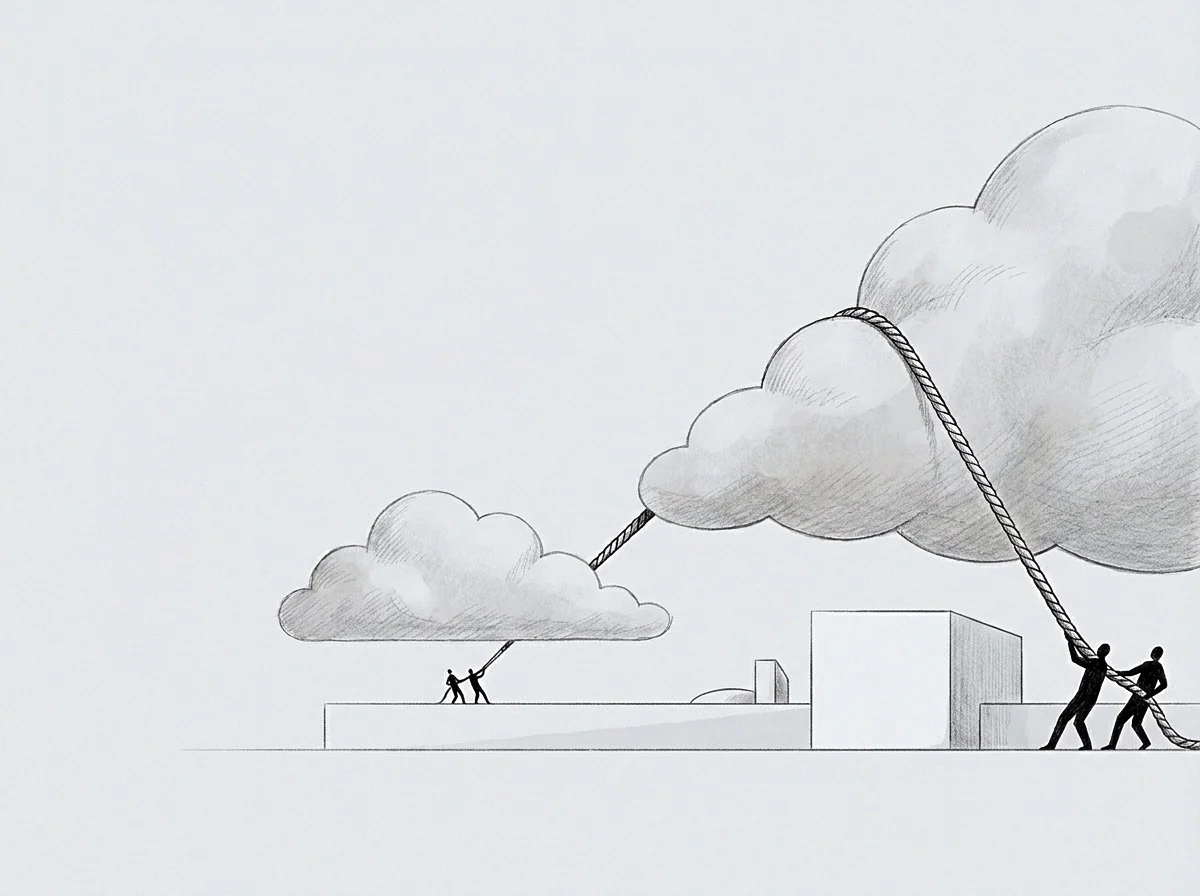
A formal operating agreement reserving two full days per week for strategic planning changes how the organization schedules escalations and routes routine questions.
Protocol
Maintaining clear distinctions between operational roles requires written protocols. Without explicit escalation thresholds, systems default to routing all ambiguity directly to the principal builder. Documenting clear criteria for what constitutes a true operational emergency allows the leader to stay focused during dedicated governance blocks.
Transitioning between roles requires clear physical and procedural boundaries to signal cognitive shifts. Moving from line operations to strategic evaluation works best with distinct workstations, separate digital profiles, and clear transition routines that clear operational residue before starting analytical work.
Written operational protocols protect strategic planning blocks by setting clear criteria for emergency interruptions.
Operational drift accumulates over time. When leaders fail to formalize functional boundaries, operational debt builds quietly across the organization, as the enterprise relies on the executive to act as a permanent shock absorber rather than developing decentralized capabilities.
A robust operational protocol contains several interlocking provisions:
- Escalation criteria specify explicit revenue or downtime thresholds required to interrupt a scheduled strategic work block.
- Asynchronous batching requires non-urgent operational updates to gather in written summaries rather than direct interruptions.
- Delegated decision bands give team members explicit authority to resolve operational spending below set financial limits.
- State transition buffers build in thirty minutes of decompression between technical execution and high-level governance sessions.
A founder who avoids documenting operational thresholds remains the primary bottleneck for every routine technical decision.
Transfer
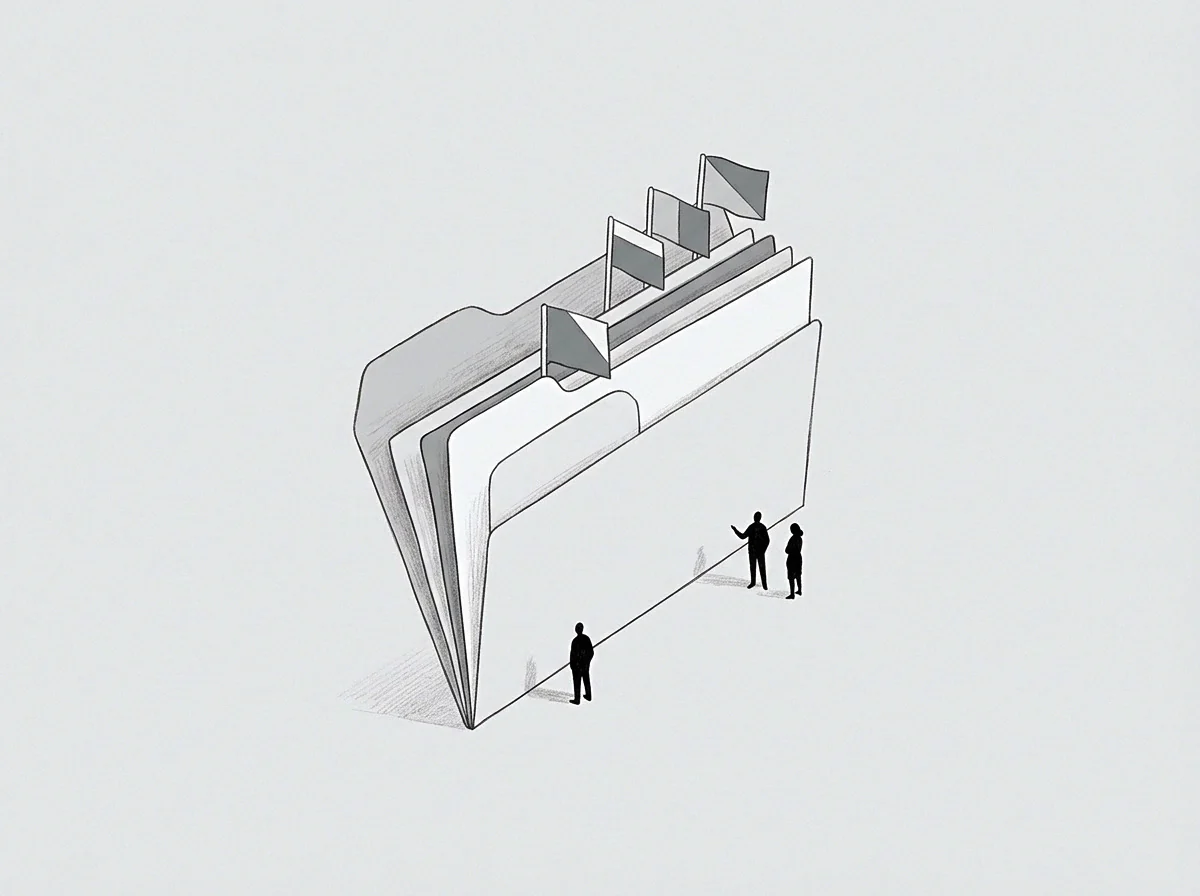
The long-term solution to context fragmentation is the systematic transfer of operational roles to specialized personnel. Holding multiple seats is a temporary stage of early growth, requiring documented workflows for handover. As the enterprise expands, maintaining direct control over technical execution limits overall throughput.
Documenting implicit operational knowledge turns personal habits into standard procedures that team members can execute independently. The leader must transition from doing the work to designing the system that runs it, trading direct operational control for organizational scale.
A role that is not systematically documented cannot be transferred to an incoming operator.
When leadership successfully hands off line execution, cognitive capacity shifts permanently toward strategic direction, market positioning, and capital allocation. Strategic clarity emerges when the leader deliberately steps back from daily operational seats.
The organization requires the leader to define direction for the coming quarter rather than fixing database migrations alongside the engineering team.