
Preserving Documented Role Boundaries During Enterprise Workload Surges
Role limits survive workload spikes only when automated intake controls prevent informal task spill into senior governance seats.
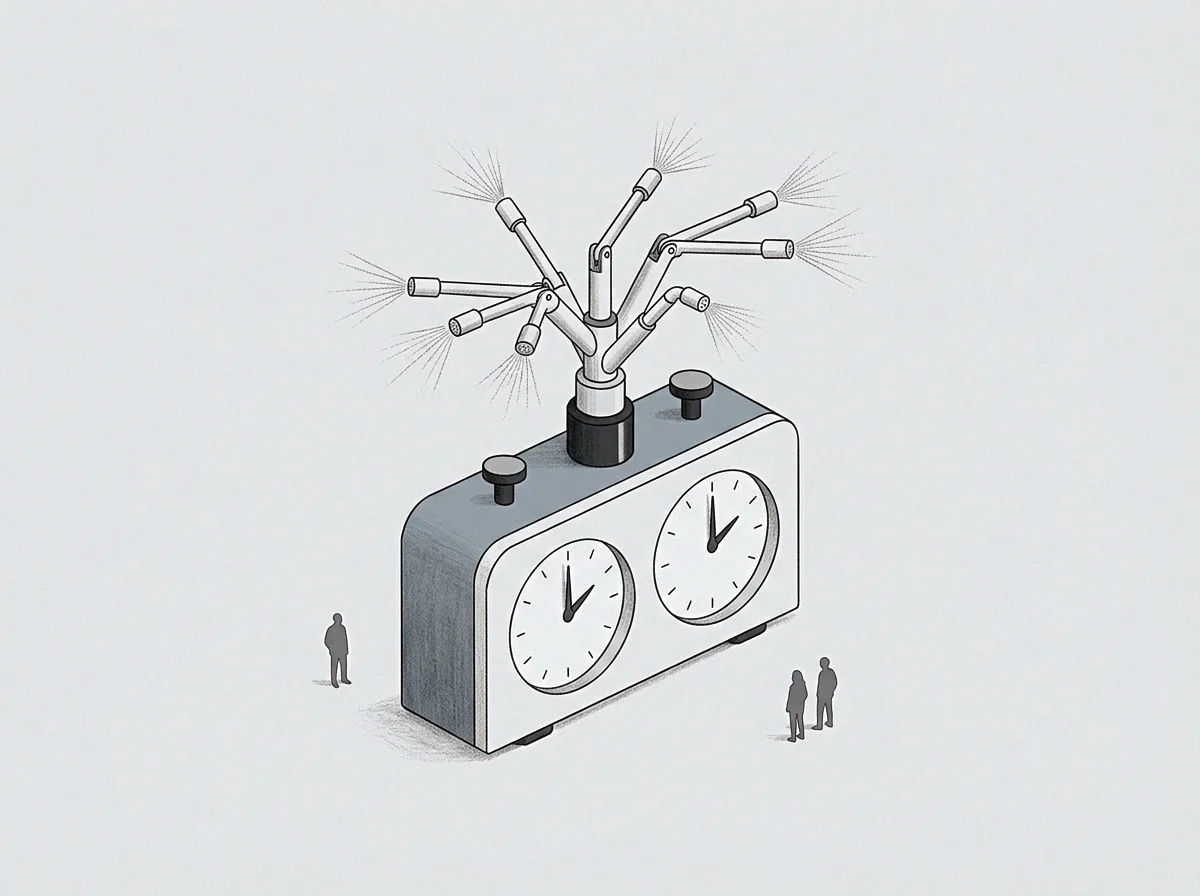
Press
An enterprise expansion contract clears legal review at five on a Friday, adding thirty client accounts to a queue built for ten. By midnight, an operating officer sits alone under fluorescents, manually reconciling customer database schemas because the tier-one technicians lack permission and the engineering lead refused the ticket. Though the documented job description assigns this officer high-level operational design, the immediate queue forces manual reconciliation of corrupted data entries.
When corporate transaction volume increases three hundred percent in forty-eight hours, operational structure yields to immediate triage, and the formal division of labor vanishes under raw volume.
Sudden workload acceleration reveals the difference between a documented seat and a worn seat. A documented seat exists on signed position charters and governance diagrams, bounded by explicit responsibilities, defined authority thresholds, and scheduled review cycles. A worn seat is the functional reality of everything a person absorbs during an operational crisis to prevent systemic stall.
During enterprise spikes, unallocated tasks cascade downward and sideways, settling onto whichever senior operators possess the system permissions and procedural fluency to execute them without approval delays. The organization converts executive attention into temporary frontline throughput.
A surge in transaction volume routes unassigned operational tasks to the most capable operator regardless of documented authority.
This operational absorption carries an immediate functional toll. While the operator fixes data entries, scheduled architectural reviews and vendor evaluations stop completely. The business buys immediate execution by borrowing hours from governance and systemic maintenance.
Because the database entries clear and client onboarding finishes without public failure, executive leadership reads the outcome as proof of organizational elasticity, while the tacit labor remains invisible on the balance sheet.
The client accounts remain active, but the underlying infrastructure stands unmaintained for another quarter.
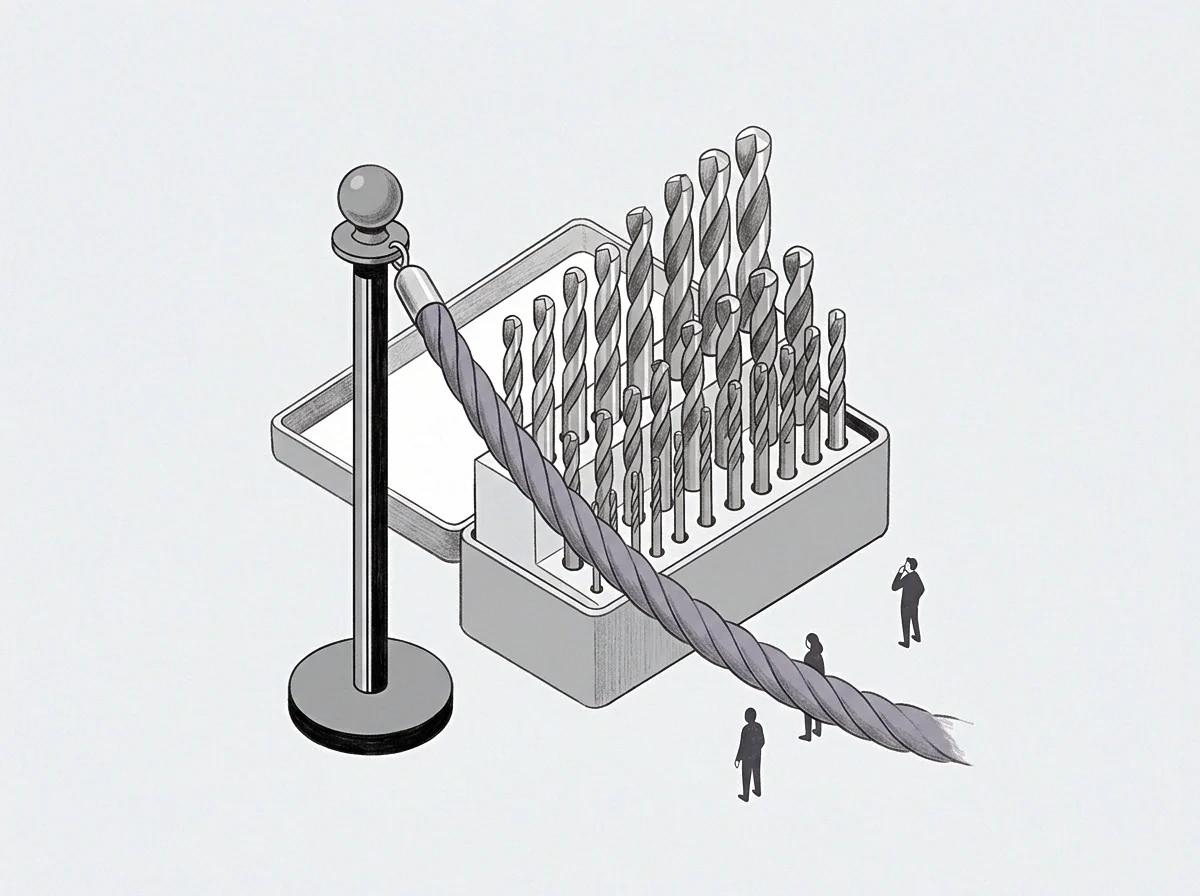
Spill
Role degradation follows a predictable mechanical progression when enterprise demand outpaces operational staffing. When queue depth crosses sustainable throughput, work spills across defined functional limits along paths of least procedural resistance. Role research demonstrates that without rigid intake governors, cross-functional role strain escalates proportionately with transaction density.
An operator holding a managerial seat begins executing frontline diagnostic work, abandoning performance tracking and queue oversight to maintain basic output rates.

Structural Mechanics of Role Degradation
The decomposition of an operational role reveals three distinct structural layers operating simultaneously within one title: the technician layer, the manager layer, and the executive layer. In steady-state conditions, an enterprise operator allocates sixty percent of weekly capacity to managerial coordination, thirty percent to executive resource planning, and ten percent to technical intervention. A sudden influx of complex client work inverts this ratio entirely within two operational cycles.
| Operational State | Technician Capacity | Managerial Capacity | Executive Capacity | Primary Failure Mode |
|---|---|---|---|---|
| Documented Steady State | 10 percent | 60 percent | 30 percent | Minor processing latency |
| Acute Surge Wave | 75 percent | 20 percent | 5 percent | Total governance suspension |
| Protracted Backlog | 55 percent | 40 percent | 5 percent | Chronic operator attrition |
The data demonstrates that technical execution expands directly at the expense of executive oversight. When an acute surge persists beyond six weeks, the temporary technical absorption solidifies into an informal operating standard. Colleagues begin routing raw technical problems directly to the senior operator, bypassing documented ticket queues entirely because the senior operator demonstrated rapid execution during the initial crisis.
When technical execution displaces administrative governance for two consecutive cycles, the degraded division of labor becomes the informal baseline.
This informal normalization generates acute role conflict across adjacent teams. Junior analysts stop developing specialized diagnostic skills because complex tickets are routinely intercepted and resolved by their managers. The enterprise pays senior compensation rates for frontline triage labor while starving strategic initiatives of necessary capacity.
The switching cost between high-level governance and granular troubleshooting destroys deep analytical focus, reducing overall operational productivity across all three occupied seats.
Unchecked role spill leaves the enterprise structurally fragile, dependent on individual heroism rather than documented organizational competence.

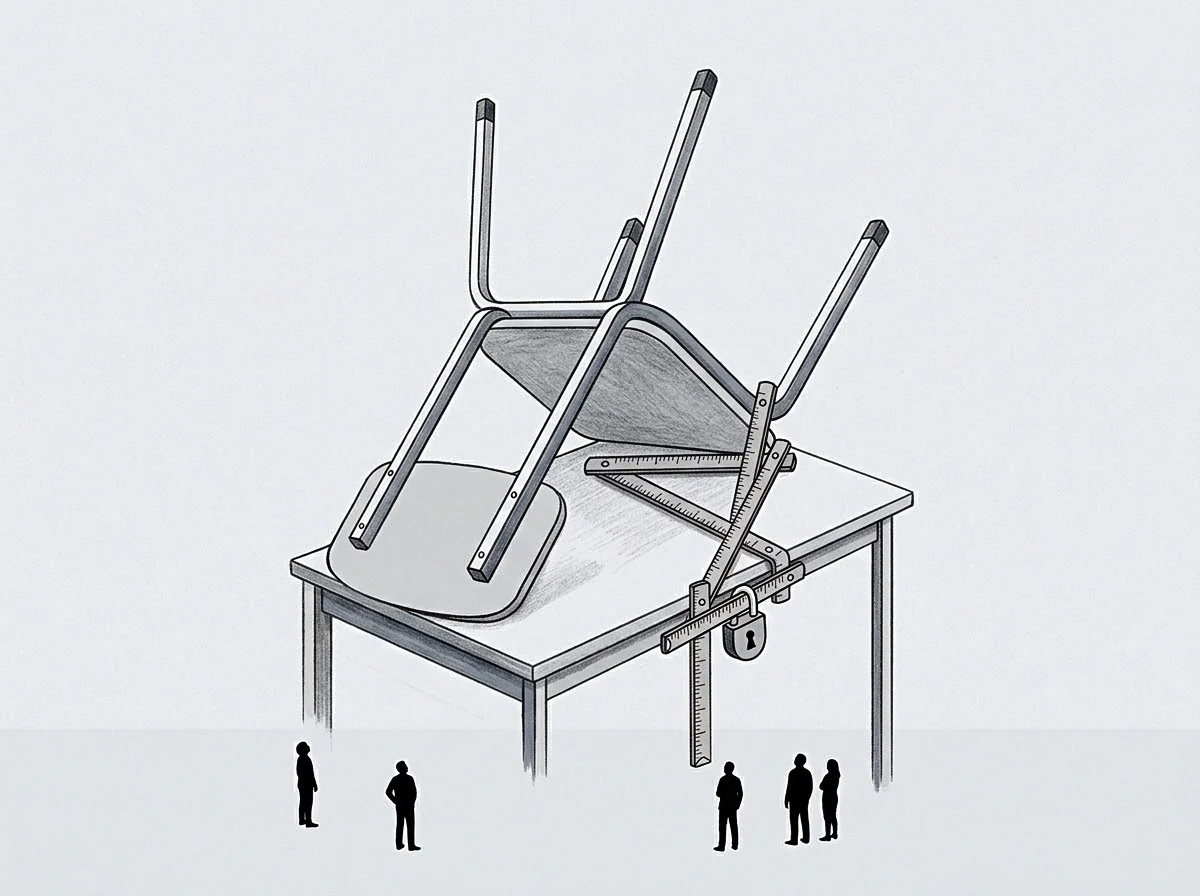
Clamp
Preserving operational limits requires mechanical intake governors rather than personal willpower. An enterprise that relies on individual workers to maintain role discipline during volume spikes inevitably experiences structural decay. Protective systems must sit between incoming workload and functional seats, deflecting or queuing excess volume before it reaches operational personnel.

Mechanical Safeguards for Boundary Preservation
A resilient operating architecture deploys explicit regulatory controls that restrict task overflow across functional tiers:
- Hard ticket gating enforces technical validation rules that automatically reject requests lacking complete diagnostic logs, preventing frontline triage work from reaching senior operational desks without preliminary screening.
- Intake circuit breakers halt non-essential onboarding pipelines when active queue volume exceeds eighty percent of documented baseline capacity, defending existing service level agreements against degradation.
- Delegation firewalls prevent senior staff from accepting tasks assigned to junior job families unless an executive emergency declaration explicitly authorizes the temporary reallocation of operational hours.
These architectural mechanisms function as structural dampeners during demand spikes. Consider a logistics management platform handling a forty percent holiday transaction surge. Under unconstrained routing, senior systems architects spend forty weekly hours resolving individual shipment exceptions.
Under a gated intake regime, shipment exceptions queue automatically in a buffer pool, triggering pre-negotiated third-party surge staffing while architects retain their scheduled focus on infrastructure stability and error-rate monitoring.
A documented boundary survives operational pressure only when an automated gate enforces task rejection.
The installation of programmatic clamps forces executive visibility into capacity shortfalls. When work cannot spill into undocumented senior labor, backlogs accumulate in visible tracking queues, compelling leadership to make deliberate trade-offs between delivery velocity and operational integrity rather than relying on covert overtime.
The service charter states that unresolved frontline tickets enter an overflow escrow queue rather than escalating to architectural personnel.

Pact
Every operational arrangement rests on documented and tacit agreements between managers, operators, and executive leadership. A held seat is an operational position whose limits, capacity constraints, and escalation protocols are explicitly negotiated in writing before demand spikes occur. When an operator agrees to hold a seat, both parties establish explicit conditions governing how temporary overages are handled, billed, and remediated.
Whose Hours Absorb The Undocumented Deficit?
When enterprise contracts expand without corresponding labor adjustments, an unspoken covert contract often replaces documented boundaries. Executive leadership assumes the operational team will absorb the additional volume out of professional pride, while the operational team assumes executive leadership will notice the extraordinary effort and provide immediate compensation or structural relief. Neither assumption is stated in writing, leaving both parties operating under mutual misunderstanding.
The resolution of this tension requires an explicit surge compact that details exact parameters for emergency execution:
- Activation triggers define specific metric thresholds, such as queue volume exceeding one hundred fifty percent of standard rolling average for three consecutive business days, that formally initiate temporary operational measures.
- Sunset clauses mandate the automatic expiration of emergency task reallocations after fourteen calendar days, requiring formal executive review and budget expansion to authorize any subsequent operational extension.
- Capacity true-ups specify compensatory rest hours or auxiliary contractor funding to replenish personal and technical capacity consumed during the emergency period.
An operator who holds a seat with documented surge compacts preserves professional efficacy and personal capacity. The clear documentation removes emotional friction from workload negotiations, replacing subjective appeals for relief with objective performance metrics and contractually defined limits.
Documented agreements protect operational integrity far better than personal goodwill during high-volume commercial events.
Latch
Returning an organization to documented roles after an enterprise surge requires an active structural reset. Left to natural organizational inertia, temporary triage habits become permanent operational procedures. Technicians continue routing anomalous cases to senior desks, while senior operators retain administrative access to frontline queues, perpetuating informal dependencies that erode operational scalability.

Execution of the Post-Surge Handover
A rigorous operational handover disconnects the emergency bypasses established during the demand peak. The operator systematically documents every novel troubleshooting procedure executed during the crisis, converting tacit diagnostic knowledge into standardized operating manuals. Permissions granted during the surge are formally revoked in identity management directories, physically preventing senior personnel from performing routine frontline operations during standard business cycles.
This handover process surfaces critical architectural debt that accumulated while governance stood suspended. Systems that operated at maximum capacity during the volume peak inevitably reveal latent failure points, fragmented documentation, and unmonitored configuration drift. The enterprise allocates dedicated engineering sprints to remediate these vulnerabilities before accepting new commercial obligations.
Whether enterprise leadership will choose to fund permanent structural capacity before the subsequent workload surge arrives remains an open question.