
Preserving Product Integrity After Founder Exit From Line Operations
Product integrity survives founder line exit when tacit qualitative standards are converted into binary metrics and enforced by independent stopping gates.
Room
Line exit begins on the morning a founder stops walking the assembly floor to adjust physical tolerances by hand. In early operations, product standards live inside individual sensory judgements: the specific tension applied to a fastener, the tactile check of a finished surface, or the intuitive rejection of a component that meets raw blueprint tolerances but fails an unwritten aesthetic standard. These unspoken criteria operate effectively while the founder occupies the technician seat on the line.
When that seat is vacated, line operators inherit written specifications that omit the tacit judgements previously governing quality control.
Quality leaves through silence. Operational transitions frequently collapse product integrity because documented procedures cover only binary dimensions, omitting the qualitative boundaries held in memory. Without explicit codification of qualitative limits, line workers default to speed targets and volume quotas.
The physical output changes before metrics reflect the degradation.
An assembly team measures success by unit output until an explicit barrier stops the line.
The transition from line operations requires converting intuitive visual and physical inspections into objective measurement steps. When an operator receives a drawing without explicit subjective boundaries, component acceptance relies on personal interpretation. Unstated criteria produce friction.
A manufacturing line running under unwritten expectations generates variable batches, driving rework costs up while customer compliance reports slide.
Leaving line operations without transferring tacit quality definitions degrades output standards to the lowest verifiable metric within two fiscal quarters.
Mold
Product integrity depends upon the precise distinction between codified specifications and unstated quality judgements. Founders routinely confuse personal oversight with systemic quality assurance, assuming that years of observed standards naturally transfer to operational teams. Role analysis reveals that line operators execute documented tasks rather than historical intent.
When line governance shifts from founder observation to structured oversight, the mechanism of verification changes entirely.
Tacit Knowledge in Quality Assessment
Unwritten standards reside in individual memory, accumulated through hundreds of production repetitions and direct material corrections. Tacit knowledge resists documentation. A founder recognizes an invalid assembly through micro-variations in sound, resistance, or alignment that never appear in standard operating manuals.
Decomposing these sensory signals into measurable metrics is the baseline requirement for operational handover. Line exit demands clear terms.
Codification of Subjective Standards
Translating intuitive inspection habits into physical parameters creates repeatable benchmarks for operational teams. Where a founder once evaluated surface finish by feel, the production specification requires a surface roughness average parameter measured in micrometers. Where an engineering decision rested on visual symmetry, line instructions mandate target alignment fixtures with defined high-and-low spatial bounds.
Subjective quality criteria become operational standards only when translated into binary physical metrics.
Implicit checks hide structural defects. Replacing personal founder inspections with systematic protocols requires explicit structural shifts in how quality gets measured across the manufacturing sequence.
| Evaluation Dimension | Implicit Founder Inspection | Explicit Systemic Verification |
|---|---|---|
| Quality Baseline | Unwritten sensory memory and historical preference | Documented tolerances and physical limit gauges |
| Decision Authority | Centralized in personal founder review | Distributed to line operators via binary gates |
| Defect Detection | Reactive correction during final assembly | Automated prevention at component stage |
| Knowledge Storage | Vulnerable to individual seat vacancy | Embedded in operational instruction sheets |
| Scaling Velocity | Constrained by founder availability and hours | Unconstrained across parallel assembly lines |
Operational stability increases as personal inspection steps transition into documented physical limits. The standard holds or collapses.
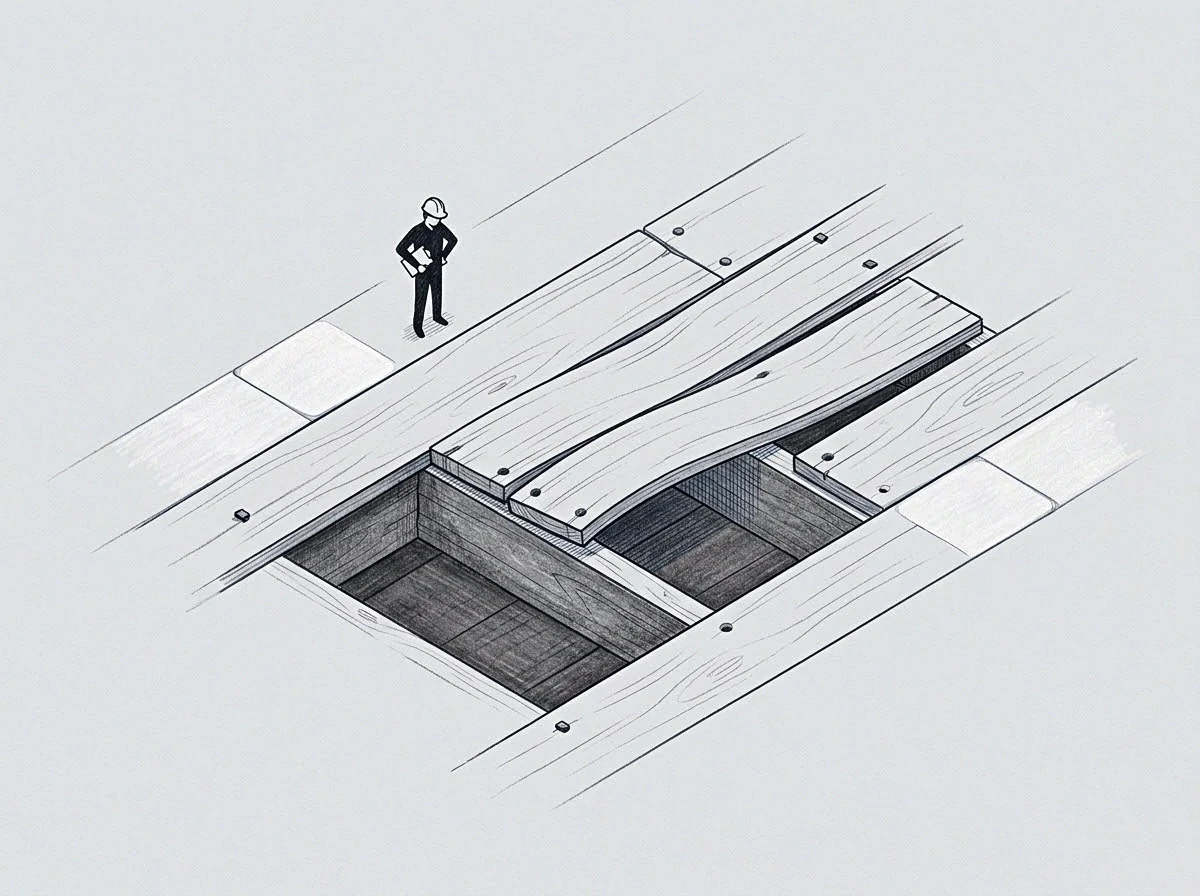
The product matches every engineering tolerance listed on the drawing.
Lock
Systemic authority over product approvals shifts from individual discretion to hard structural gates during line exit. Delegation without structural verification mechanisms creates operational drift. When line managers possess authority to bypass inspection steps under shipping pressure, quality compromises compound across successive batches.
Structural Gates and Line Authorization
Operational checkpoints prevent non-conforming materials from advancing through manufacturing steps. A functional quality gate isolates approval power from volume incentives. When production leadership holds simultaneous authority over line speed and final quality sign-off, volume goals systematically override defect thresholds.
Verification moves to systematic checks.

Worked Situation of Escalation Thresholds
Take an electronics manufacturer operating two assembly plants under identical technical documentation. In Plant A, the founder stepped away from line operations while retaining informal verbal approval power over component deviations. In Plant B, the founder established a rigid escalation protocol governed by written technical sign-offs before vacating the technician seat.
Over six months, Plant A experienced a forty percent increase in customer returns due to unrecorded component substitutions authorized during night shifts to hit delivery targets. Plant B maintained zero field defects because non-conforming materials triggered an automatic line shutdown that required written engineering authorization to clear.
- Baseline Spec Verification Line operators confirm incoming material dimensions against raw engineering sheets before assembly begins.
- Automated Gate Trigger Any deviation beyond five percent automatically halts line execution and alerts the quality manager.
- Formal Sign-off Authority Releasing non-conforming batches requires dual signatures from engineering and operations leadership.
- Post-Release Forensic Audit Sampled units undergo destructive testing monthly to verify long-term failure thresholds.
A quality gate without unilateral stopping authority creates structural degradation across production cycles.
Authority moves with signing power. Isolating quality sign-off from volume targets protects output integrity when daily founder oversight ends.
Authority over quality stays where the stopping power resides.

Shelf
Tolerance stacking occurs when minor acceptable variations across individual components compound into structural product failure. Each supplier delivers parts within authorized engineering limits, yet the assembled whole fails operational testing. Founder line presence masks tolerance stacking because the founder manually selects matching parts during assembly, resolving component fit issues through unrecorded bench modifications.

Does Quality Drift Occur Through Tolerance Stacking?
Minor component variations accumulate across complex assemblies to compromise total system performance. Line operators working strictly from individual component blueprints lack visibility into total stack-up effects. Tolerance stacking creates hidden failure.
When individual components pass isolated checks, line teams release sub-assemblies that bind, chafe, or overheat once fully integrated.
Every exception carries a price. Establishing rigorous stack-up analysis protocols replaces the manual fitting habits founders use to bridge engineering gaps on the floor.

Audit Protocols for Post-Exit Operations
Random sampling of finished inventory detects systemic degradation before units reach end clients. Audit mechanisms operate independently of line supervision schedules, focusing on dimensional drift and structural compliance over time.
- Specification Creep Local modifications made by line operators to improve throughput slowly erode intended physical tolerances.
- Inspection Substitution Visual checks replace measured physical testing when production schedules experience pressure.
- Information Asymmetry Line supervisors conceal minor defects to maintain clean efficiency reports for executive review.
- Feedback Loop Decay Field warranty data fails to reach design teams, leaving repeated component failures unaddressed.
Unmeasured operational drift accelerates when formal audit schedules become optional.
The seat governs the output. Regular structural audits expose hidden assembly compromises before product integrity degrades publicly.
It remains uncertain how long a delegated quality system maintains structural integrity before uncodified founder knowledge must be re-injected into line design.

Board
Governance seats execute quality oversight by auditing systemic compliance rather than intervening in daily line decisions. When a founder exits line operations, the remaining seats occupied by that founder shift to ownership and board governance. Intervening in daily line decisions while sitting in a governance seat destroys operational authority and creates organizational role strain.

Governance Terms for Line Independence
Clear boundary definitions protect operational leaders from informal intervention by founder-owners. Line operators obey measured thresholds. When a founder walks the floor and issues direct assembly orders to line staff, management authority dissolves, leaving line supervisors unable to enforce systematic protocols.
Governance replaces daily intervention. Board-level oversight monitors quality integrity through formal quarterly metrics: field return percentages, warranty claim expenditures, internal scrap rates, and audit compliance indices. Line operations demand explicit boundaries.
If these metrics remain within pre-stated acceptable bands, the governance seat remains passive, allowing operational leadership full autonomy over execution.
Inserting a formal veto clause over product engineering changes into the board charter restricts founder intervention strictly to major design revisions.