
Resolving Long Term Equity Rights For Founders Transitioning Out Of Executive Control
Converting executive founder common equity into non-voting preferred shares separates historic ownership value from ongoing corporate governance control.

Slate

Operational Tenure Versus Foundational Capital Ownership
Operational executive service and equity capitalization reward distinct forms of value creation. An executive receives cash compensation and incremental vesting shares for active operational labor. A founder holds foundational equity that reflects initial risk, capital contribution, and core intellectual property creation.
When a founder transitions out of executive management, these two value streams diverge. The executive seat becomes vacant, but the capital seat remains occupied.
Misinterpreting these distinct seats causes severe structural friction during corporate transitions. Boards often treat departing founders as departing employees, attempting to retrieve equity earned during early formation. Founders often treat passive ownership as an entitlement to ongoing operational authority.
Clarifying this separation forms the baseline for every equitable departure arrangement.
In equity architecture, capital claims outlast operational labor.
Capital outlives operational tenure inside early growth ventures.
Consider a venture formed by two partners holding equal equity splits. For four years, both founders execute product development, sales, and capital allocation. At year four, one founder steps out of executive operations while the venture continues its growth trajectory.
The remaining executive founder assumes full operational load, generating sub-market executive compensation while building equity value for both owners. The departing founder retains half the enterprise equity while contributing zero ongoing operational labor. Without contractual adjustment, this asymmetry drains operational morale and prevents subsequent equity grants for incoming executive replacements.
The primary operational cost manifests as lost capacity.
Unresolved ownership splits force growing enterprises to issue dilutive equity pools to replace missing executive operational capacity.

Tranche

Acceleration Clauses and Unvested Equity Forfeiture
Executive departure triggers specific contractual adjustments across unvested and vested equity pools. Standard vesting schedules tie equity accumulation directly to continuous monthly service. Unvested equity remaining at the departure date routinely returns to the unallocated option pool.
Single-trigger vesting acceleration clauses grant full unvested equity immediately upon separation, creating deadweight equity allocations. Double-trigger vesting acceleration clauses balance protection by requiring both operational exit and a corporate change of control before accelerating unvested tranches.
Contractual departure definitions determine how vested stock is treated upon separation. These definitions govern equity preservation based on the nature of the executive exit.
- Good Leaver Stipulation allows departing executives to keep fully vested shares while forfeiting unvested tranches, preserving capital equity earned during active operational service.
- Bad Leaver Provision forces the immediate forfeiture or nominal-cost repurchase of all equity, including vested stock, following contractual breaches or gross misconduct.
- Early Retirement Protocol converts operational equity into non-voting equity classes over a structured transition schedule without forcing immediate share liquidation.
- Disability Acceleration Mechanism vests pending equity tranches automatically when physical or medical constraints force an involuntary executive departure.
Unvested equity forfeits upon operational separation.

Good Leaver and Bad Leaver Valuation Mechanics
Departure definitions dictate the financial settlement terms for accrued ownership. Good leaver clauses specify that vested equity repurchase options execute at fair market value. Fair market value reflects independent valuation metrics or recent arm’s-length financing valuation benchmarks.
Bad leaver definitions enforce repurchase options at historical nominal par value or adjusted net book value, effectively stripping accrued financial gains from breaching founders.
Stating leaver conditions prior to operational conflict eliminates valuation disputes during departure negotiations. The repurchase option timeline typically spans ninety to one hundred eighty days post-separation. Failure to exercise repurchase rights within the contractual window transforms the option into passive equity holdings.
Good leaver triggers preserve accrued equity while terminating operational vesting schedules.
The clawback clause converts vested common equity into non-voting shadow stock upon any breach of non-compete covenants.

Vault
Which Voting Mechanics Prevent Post Exit Board Deadlock?
Governance rights remaining in non-executive hands routinely obstruct subsequent financing rounds. Departing founders holding major voting blocks retain the statutory power to block corporate charter amendments, equity pool expansions, and merger authorizations. Investors evaluating follow-on capital injections routinely reject capitalization tables with substantial voting blocks held by former executives.
Isolating governance rights from financial ownership protects operational decision speed.
Voting agreements and proxy transfers convert active voting rights into neutral corporate governance structures. A proxy agreement assigns the departing founder’s voting rights to the active Chief Executive Officer or board chair. A drag-along agreement binds former executives to vote their share percentage alongside the current board during approved strategic transactions.
Governance structures require balance across stakeholder roles.
The active board retains decision control.
Governance rights retained without executive duties introduce deadlocks during subsequent financing rounds.
The comparative impact of active executive equity versus transitioned passive equity illustrates how corporate governance and economic rights adapt across the founder departure boundary.
| Equity Property | Active Executive Posture | Passive Transitioned Posture |
|---|---|---|
| Voting Rights | Full voting rights attached to common stock class | Voting proxy transferred or converted to non-voting stock |
| Board Representation | Direct executive seat with board voting privileges | Board seat surrendered or converted to non-voting observer |
| Information Rights | Unrestricted operational data and financial access | Standard statutory shareholder quarterly reporting rights |
| Vesting Mechanics | Active monthly time-based or milestone vesting | Vesting halts immediately on operational separation date |
| Dilution Protection | Pro-rata preemptive rights in subsequent raises | Standard anti-dilution without preemptive participation |
Passive equity holdings tend to accumulate friction.
Board seats occupied by non-executive founders generate friction during internal compensation reviews and leadership evaluations. Removing departing founders from fiduciary board seats protects internal governance while leaving capital rights fully intact. Board observation rights grant access to corporate proceedings without bestowing operational veto powers.
Passive equity holders expect persistent board observation rights until a liquidity event provides full capital exit.

Yield

Recapitalization Into Non Voting Share Classes
Converting equity rights from an active contribution posture into a passive capital asset requires structural adjustments to financial distributions. Common stock held by active executives carries voting power but rarely receives liquid cash returns prior to exit events. Departing founders seeking financial returns without operational involvement require distinct equity structures.
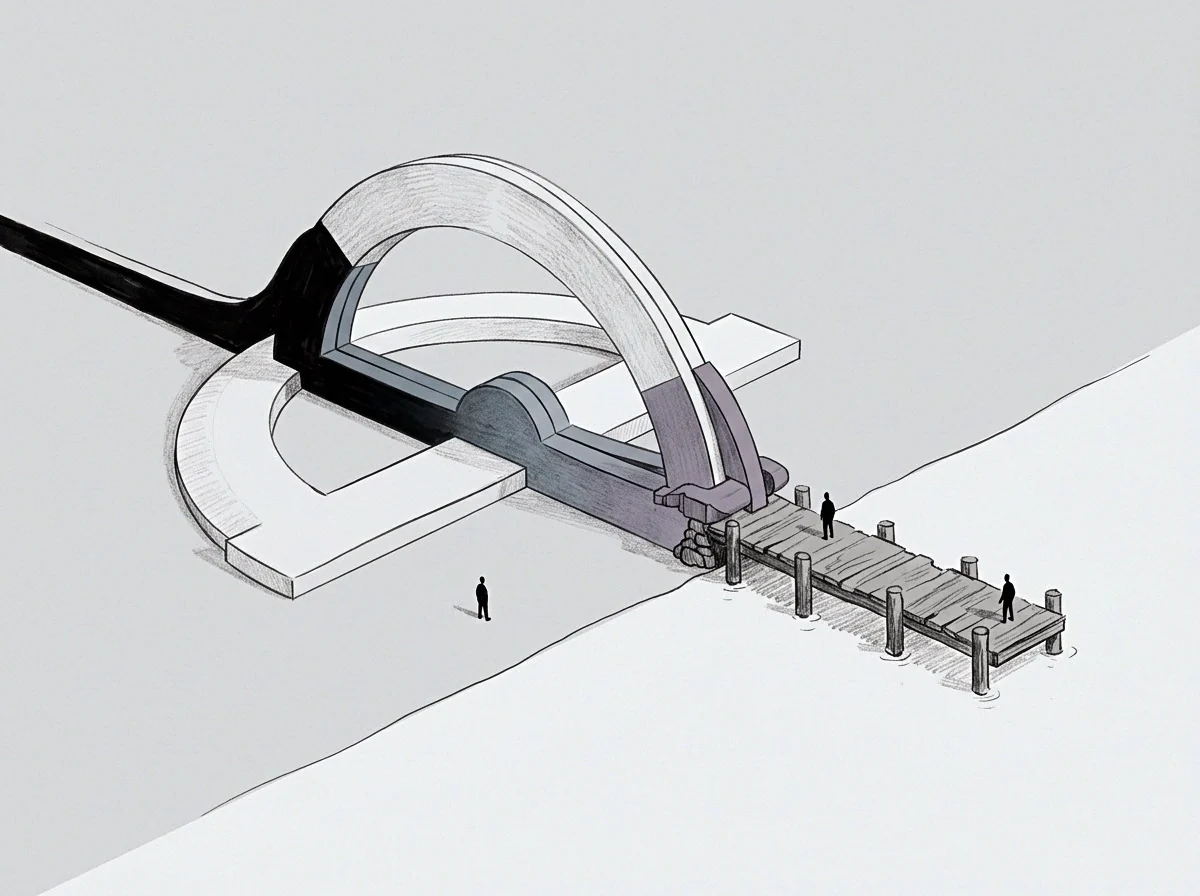
Exchange recapitalizations replace common voting shares with non-voting preferred share classes.
Recapitalization formally alters the underlying equity class.
Dividend payments take the place of executive draws.
Converting voting equity to preferred non-voting stock protects liquidity rights while insulating operational governance.
Executing an equity class recapitalization during an executive transition follows an established legal sequence.
- Board authorization approves a charter amendment establishing a specialized non-voting preferred stock class.
- Fair market valuation assigns conversion parity ratios between active common shares and newly minted preferred shares.
- Shareholder vote ratifies the equity class conversion protocol and voting proxy surrenders.
- Exchange agreements execute, surrendering active common certificates in exchange for non-voting preferred instruments.
- Updated capitalization tables file with corporate registration authorities detailing modified class structures.
Retained voting rights generate ongoing governance drag.
Non-voting preferred equity classes carry targeted dividend distributions or liquidation preferences that compensate departing founders for giving up operational control. Cumulative dividend preferences guarantee fixed annual yield accruals paid out during future liquidity events or recapitalizations. Non-cumulative dividends grant financial returns only when the board declares enterprise profit distributions.
These dividend structures provide financial yield to former founders without draining operational cash reserves during lean development phases.
Distributing non-voting preferred dividend stock balances economic historical contribution against future capital needs.

Accord

Mandatory Buyback Formulas and Liquidity Schedules
Valuation models for non-public equity buybacks rely on predefined metrics to eliminate negotiation friction. Mandatory repurchase options allow the enterprise to buy back passive equity from departing founders over structured timeframes. Formula-based valuations utilize trailing twelve-month revenue multiples, earnings before interest and tax benchmarks, or net asset appraisal values.
Fixed formula buybacks avoid costly appraisal disputes and establish deterministic financial obligations for the company.
The agreed repurchase price reflects asset illiquidity.
The departure contract binds both enterprise and founder.
Formula-based repurchase schedules prevent prolonged valuation disputes during non-public equity redemption negotiations.
Structured payout schedules amortize share redemption costs across multiple calendar quarters or fiscal years. Immediate lump-sum buybacks drain corporate cash reserves needed for ongoing executive operations. Deferred payment arrangements, structured via subordinated promissory notes, protect corporate liquidity while granting departing founders guaranteed debt returns secured by non-core corporate assets.
Unstated separation terms create implicit liabilities.
Whether private enterprise buyback valuations track historical revenue multiples or future discounted cash flow yields remains an unresolved contractual question in founder transitions.