
Separating Technical Labor From Management In Small Firms
Separating technical work from management in small firms requires partitioning production craft from supervisory oversight into distinct calendar blocks and explicit roles.
Desk
A technical worker who also runs the enterprise finishes client deliverables at midnight because daylight gets consumed by administrative interruptions. In a firm of fewer than twenty people, technical labor and managerial oversight usually sit with the same person. The tools of production rest right next to company governance on a single desk.
A schematic or codebase stays open on the left screen while payroll exceptions and staffing schedules take up the right. The setup looks efficient during early formation, when execution feels immediate because coordination happens inside one head without meetings or written specifications.
Unwritten coordination collects a quiet structural tax. When one person drafts architectural drawings while supervising the technicians doing the same work, two operational rhythms collide. Technical work demands sustained, unbroken focus across multi-hour blocks; management runs on brief intervals, fast triage, and immediate response.
Combining both roles into one workweek degrades deep execution while leaving staff without steady direction.
A blended seat produces fragmented technical execution while starving subordinates of operational direction.
Firms often stall at eight to twelve employees because the lead producer is caught between production and administrative oversight. The enterprise cannot take on larger client contracts while the senior technician is stuck reviewing timesheets. At the same time, junior staff go undeveloped because that same technician has no time to build training systems or set operational standards.
Operating capacity hits a ceiling set entirely by the waking hours of one person.
The Collision Of Output And Coordination
Direct production creates immediate billable work, while supervision builds capacity for future value. As client deadlines tighten, the operator retreats to technical tasks where progress is clear and measurable. Fixing a broken software build or finishing a mechanical drawing offers immediate closure.
By contrast, reviewing an underperforming employee or designing a departmental workflow feels vague, so it gets pushed aside.
Managerial tasks pile up in the background during heavy production runs. Performance drift in junior staff goes unchecked, invoicing lags by several weeks, and operational documentation stays unwritten as technical deliverables consume every available hour. The business becomes fragile, kept afloat by ad hoc heroics rather than steady routines.
When supervision remains secondary to production deadlines, the business suffers chronic administrative backlogs, missed billing cycles, and steady attrition among junior producers left without systematic oversight.
Wear
Switching between deep craft work and administrative coordination creates immediate cognitive drain. Research in cognitive ergonomics identifies task-switching as a main driver of operational errors and fatigue. Reconfiguring attentional networks from analytical work to negotiation takes time; an architect interrupted during structural calculations needs upwards of twenty minutes to reconstruct the mental model of the load paths.
Three administrative interruptions in a single morning can drop technical output near zero.
Role strain develops when conflicting expectations land on one person. As a technician, the work demands precision, technical elegance, and deep focus. As a manager, that same person must manage compromise, commercial deadlines, staff dynamics, and peripheral context.
Switching between these postures across an afternoon brings chronic irritability and decision fatigue.
Frequent switching between analytical creation and personnel triage multiplies error rates while shortening the span of concentration.
The toll accumulates over quarters rather than days, showing up as disrupted sleep, poorer working memory, and constant physical tension. The practitioner feels like they are working eighty hours a week while finishing nothing of lasting substance. Craft quality drops because technical work happens in rushed fragments late at night, while team members feel abandoned during the day by a supervisor who seems perpetually distracted.

अटेंशन Splitting And Role Strain
Organizational research distinguishes clearly between role conflict and role overload. Role conflict occurs when performance metrics clash directly: technical work demands refinement, while managerial control requires shipping on budget. The technician-manager feels that friction whenever an imperfect deliverable goes out the door to protect a project’s margin.
Role overload develops when total work across both positions exceeds available hours. Operators try to absorb the deficit through personal compression—cutting into sleep, family life, and downtime. The return diminishes quickly: error rates rise in technical calculations, and managerial responses become sharp and reactive.
Technical work thrives on unbroken solitude, while administrative oversight requires accessible coordination.
Line
Separating the roles requires hard boundaries inside the working calendar. Division relies on explicit role decomposition rather than vague resolutions to prioritize better. The firm has to treat production and administration as distinct economic positions, even when one person handles both during transitional growth.
Decomposition starts by sorting every weekly activity into production output or supervisory infrastructure. Production covers direct billable work: building engineering models, diagnosing client faults, drafting legal arguments, or writing core software. Supervisory infrastructure handles resource allocation, project scheduling, quality checks, reviews, and client communication.
Once sorted, execution gets locked into discrete blocks of time protected by firm-wide agreements.
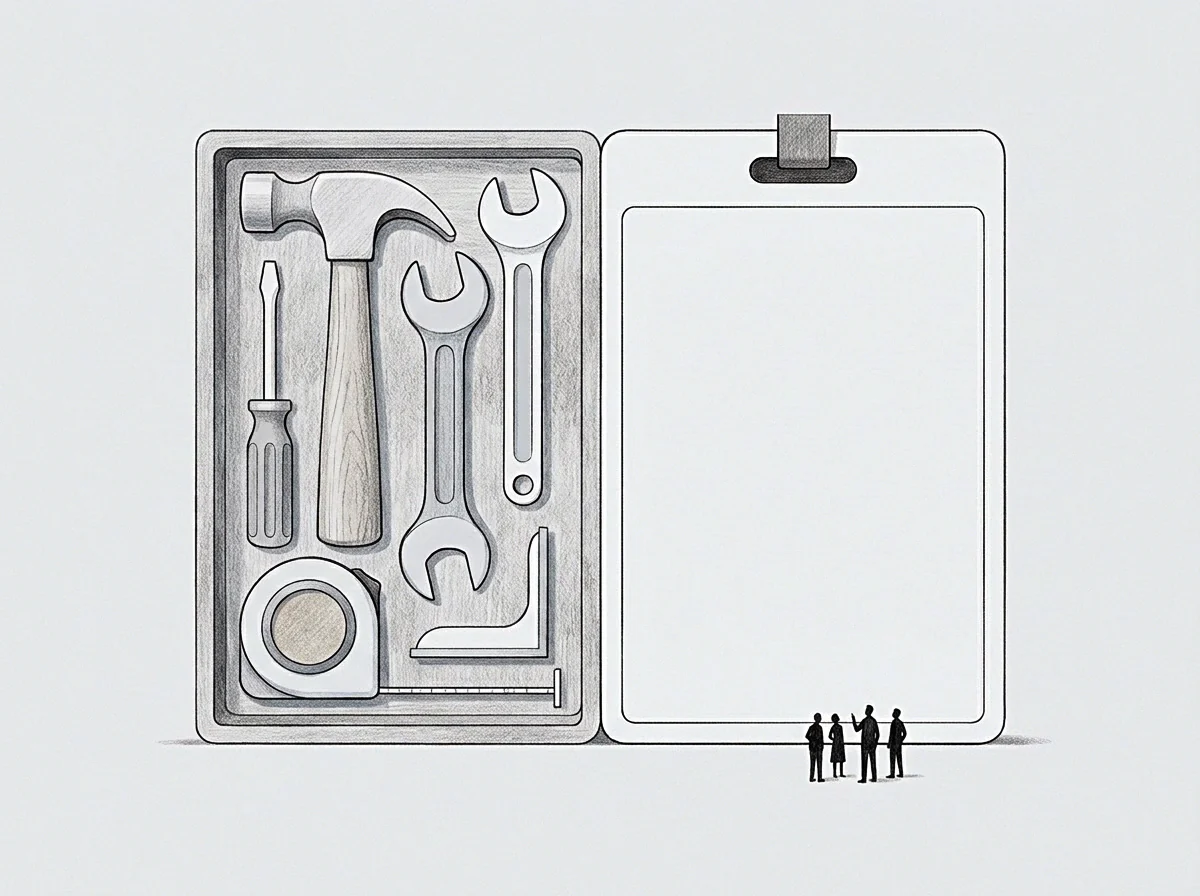
Where Does Craft End And Oversight Begin?
The distinction between craft and supervision shows up clearly across operational dimensions. Small firms run into trouble when they treat management as an informal side effect of senior technical status. Management is a distinct discipline that requires its own tools, feedback loops, and performance criteria.
| Operational Criterion | The Technical Labor Seat | The Management Seat |
|---|---|---|
| Attentional Mode | Singular focus, deep analytical immersion, low interruption tolerance | Fragmented focus, broad situational awareness, high responsiveness |
| Primary Work Product | Tangible specifications, functional code, fabricated components, client assets | Operating cadences, resource allocations, clear decisions, capable staff |
| Feedback Latency | Rapid physical feedback through test suites, calculations, or client review | Delayed social and financial feedback across quarterly operating cycles |
| Value Horizon | Immediate commercial delivery against current project scopes | Systemic firm capacity, risk reduction, and future execution capability |
| Primary Failure State | Technical defects, specification errors, architectural rework | Staff attrition, uncoordinated labor, margin compression, missed milestones |
Temporal separation relies on calendar partitioning. One practical approach reserves entire days for uninterrupted technical work, confining managerial tasks to specific blocks. On production days, the operator turns off communication channels, closes scheduling software, and focuses purely on deliverables.
On management days, that same operator runs one-on-ones, handles billing disputes, reviews pipeline health, and adjusts operational procedures.
Physical separation reinforces calendar boundaries. Working from a different desk, another room, or an offsite space during management blocks signals a shift in role to both the team and the brain. Subordinates quickly learn that interruptions during technical blocks are reserved for genuine crises, protecting the focus needed for complex work.

Artifacts Over Informal Memory
Small enterprises remain constrained by founder capacity until informal technical methods become explicit artifacts. Tacit knowledge stays trapped in an individual’s intuition; explicit knowledge lives in written specifications, checklists, and acceptance criteria. As long as quality depends on the unwritten judgment of a single veteran, that person cannot step away from production.
Documenting this craft means creating definition-of-done rubrics, standard procedures, and automated test suites. These artifacts let junior staff check their own work without constant supervision, allowing the senior operator to move from direct production to auditing quality standards.
Junior staff wait for hours to get work reviewed because the founder remains locked away coding the primary module.

Price
Every hour spent on technical production carries an opportunity cost in unrealized company growth. Senior operators in small firms often misprice their time by treating internal labor as free. Because no invoice arrives for the founder’s extra hours, the business hides the real cost of combining production with management.
Consider a small structural engineering consultancy with eight staff members. The principal operator generates sixty billable hours monthly at two hundred dollars per hour, bringing in twelve thousand dollars in direct monthly billing. Handling those calculations, however, leaves no time to recruit two additional engineers, refine proposal pricing models, or build standardized CAD libraries.
If operational improvements increased team utilization across the eight junior engineers by fifteen percent, the firm would capture thirty thousand dollars in additional monthly gross margin.
True capacity cost equals the institutional value destroyed by keeping senior judgment chained to routine execution.
Company economics stay distorted until technical hours are accounted for at market replacement rates. When a principal writes code, designs machinery, or drafts copy, that labor needs to be budgeted as if an external contractor were hired. Combining these accounts conceals underlying unprofitability, letting owners believe the business model works when it is really sustained by unpaid overtime.
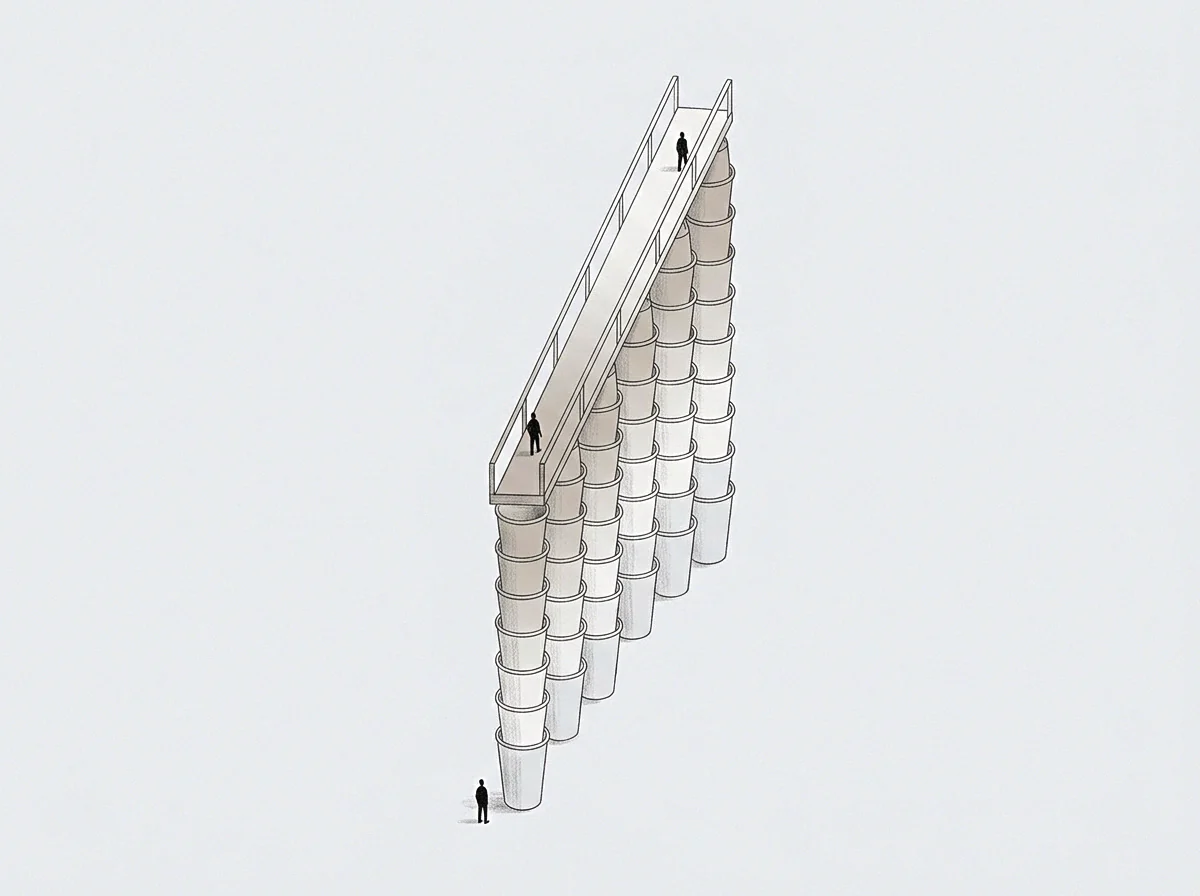
The Replacement Math For Small Firms
Handing technical execution over to staff requires financial planning. An owner needs to calculate the full cost of replacing their technical work with payroll personnel, factoring in base salary, employment taxes, benefits, workstations, software licenses, and a twenty percent management overhead allocation.
- Baseline labor decomposition requires auditing ninety continuous days of work to establish the ratio between technical output and managerial supervision for every pay period.
- Replacement cost modeling means determining the market expense of hiring an experienced professional to cover seventy percent of tracked production tasks.
- Capacity reinvestment targets focus on high-leverage supervisory and commercial activities capable of generating enough margin to absorb replacement payroll within six months.
The numbers often show that hiring a mid-level technician releases immediate enterprise value. The principal steps away from line production, redirecting freed attention toward business development, workflow improvements, and staff coaching. Overall billable output expands quickly enough to absorb the new hire’s payroll.
Paying an executive salary for routine drafting labor guarantees stagnation through self-inflicted margin erosion.

Relief
Stepping out of the technical seat requires a deliberate sequence of handovers rather than a sudden exit. Abrupt departure creates production gaps, client friction, and quality drops. The practitioner has to transfer authority systematically while retaining ultimate accountability for business outcomes.
Delegation moves from routine tasks to high-stakes architecture. At first, the senior operator assigns bounded technical tasks with strict acceptance criteria. The employee carries out the work while the senior operator reviews the final deliverable before client handoff, establishing trust without exposing the firm to unhedged operational risk.

The Handover Cadence
True relief comes only when decision-making authority moves alongside execution responsibilities. Under a traditional apprenticeship framework, the senior practitioner works while the junior watches, then the junior works under observation and coaching, and finally the junior acts independently, bringing in the senior only when edge cases exceed set guidelines.
- Shadow review cycles pair a senior operator with a technical specialist across four complex client engagements to expose the tacit evaluation criteria used during real-time problem solving.
- Staged authority release grants the technician autonomous sign-off power over standard project milestones while keeping senior approval for novel scopes or commercial exceptions exceeding five thousand dollars.
- Operational post-mortems replace ad hoc corrections with weekly reviews that evaluate output quality against documented rubrics rather than personal stylistic preferences.
Management becomes the primary role. The operator spends time clearing roadblocks for the production team, securing tools, clarifying client needs, and keeping project budgets on track. The focus shifts from performing as a lead soloist to conducting the ensemble.
A psychological barrier often complicates this transition. Many founders tie their identity and self-worth to technical craft. Moving away from production to manage schedules and personnel can feel like stepping down into routine administrative chores.
Overcoming that hesitation means viewing the creation of a durable, self-sustaining firm as an engineering problem in its own right.
What remains unsettled is how a business preserves its core technical standard once the original craftsman stops handling the daily product.