
Designing Role Boundaries to Prevent Operator Strain in Commercial Firms
Operator strain decreases when firms formally separate technician, manager, and owner seats through documented charters, explicit authority limits, and handoffs.
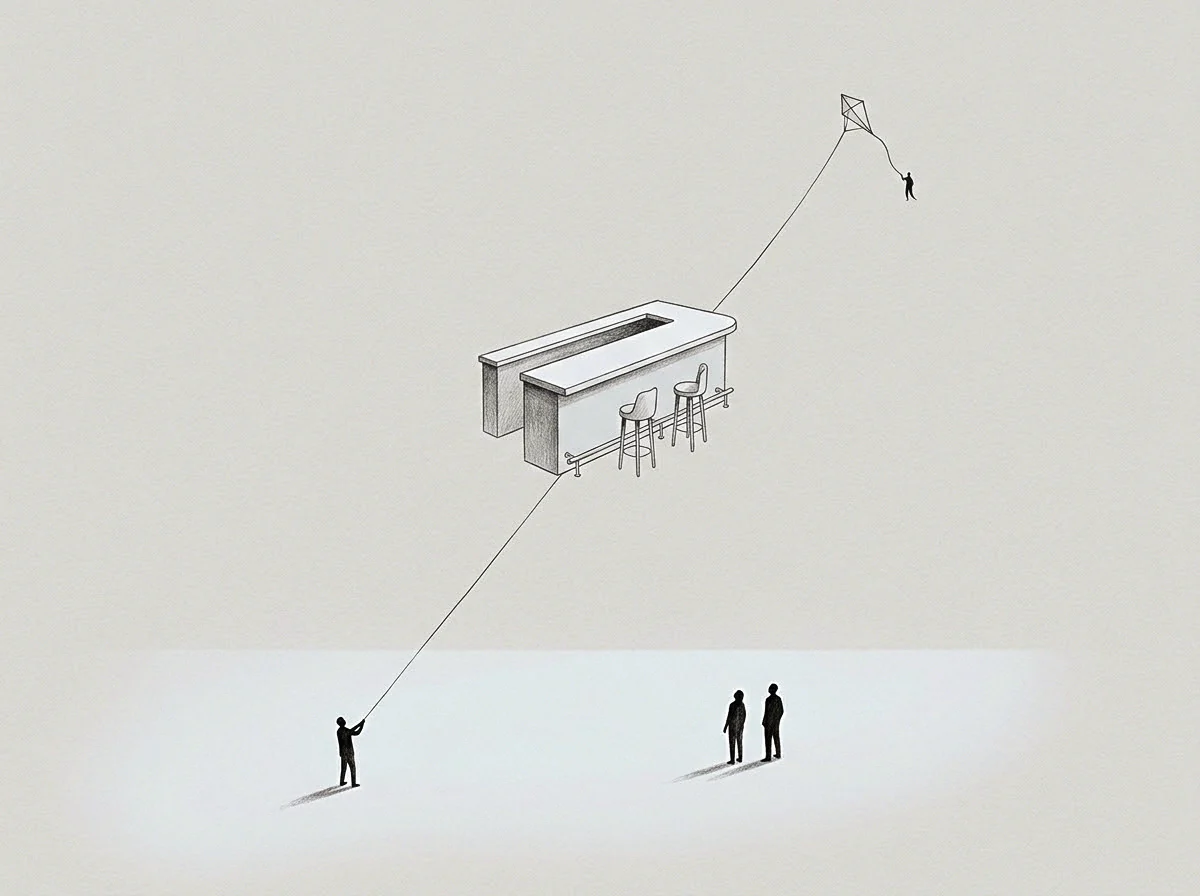
Shelf
An operator sits down at midnight to finish reconciling accounts receivable after ten hours on the warehouse line. A production shortfall occurred during the day shift. The operator resolved the machinery malfunction directly, answered supplier delivery disputes from the factory floor, and postponed all balance sheet reviews until the building emptied.
Commercial firms experience this compression when one individual occupies several operating positions at once without formal operational lines between them. Role strain develops as the natural consequence of contradictory expectations, divided attention, and competing priorities concentrated in a single human nervous system.
Every commercial firm contains three structural positions: the technician, the manager, and the owner. The technician seat carries the immediate production of goods or delivery of services. The manager seat coordinates people, schedules, resource flows, and internal control systems.
The owner seat allocates capital, assumes ultimate residual risk, and directs long-term strategy. In early-stage commercial enterprises, a single individual routinely fills all three offices simultaneously. Role ambiguity appears because the operating charter fails to state which office the individual occupies at any specific hour of the working week.
Role conflict emerges when performance demands across these concurrent assignments clash directly. Direct technical work requires uninterrupted stretches of sustained focus, deep procedural immersion, and localized problem-solving. Managerial control demands continual environmental scanning, rapid context switching, and interpersonal mediation.
Strategic ownership requires detachment from operational friction to evaluate capital deployment and structural risk. Holding these contradictory behavioral demands without boundary architecture produces measurable physical fatigue, loss of cognitive capacity, and operating paralysis.
Role strain accelerates when production crises systematically consume the attention allocated to enterprise coordination.
Preventing operator breakdown requires the deliberate decomposition of the operator position into discrete, bounded roles. The firm separates operational authority from ownership rights. The operator treats every function as a formal post possessing defined inputs, explicit operating mandates, and documented handoffs.
Boundaries function as structural bulkheads, preventing failure in production from flooding the executive apparatus of the enterprise.
When leadership leaves roles informal under the assumption of team agility, the firm relies on tacit work. Tacit labor consists of the invisible coordination, spontaneous firefighting, and unspoken problem resolution performed by an operator without formal recording. This unrecorded labor distorts managerial accounting.
The company appears operationally viable only because the operator donates uncompensated cognitive capacity to bridge structural gaps. The firm pays for these hidden inputs in operational fragility, missed deliveries, and eventual executive collapse.
A founder steps into the factory floor to correct a fabrication error, completes the shift as a line mechanic, and leaves executive payroll unreviewed until dawn.
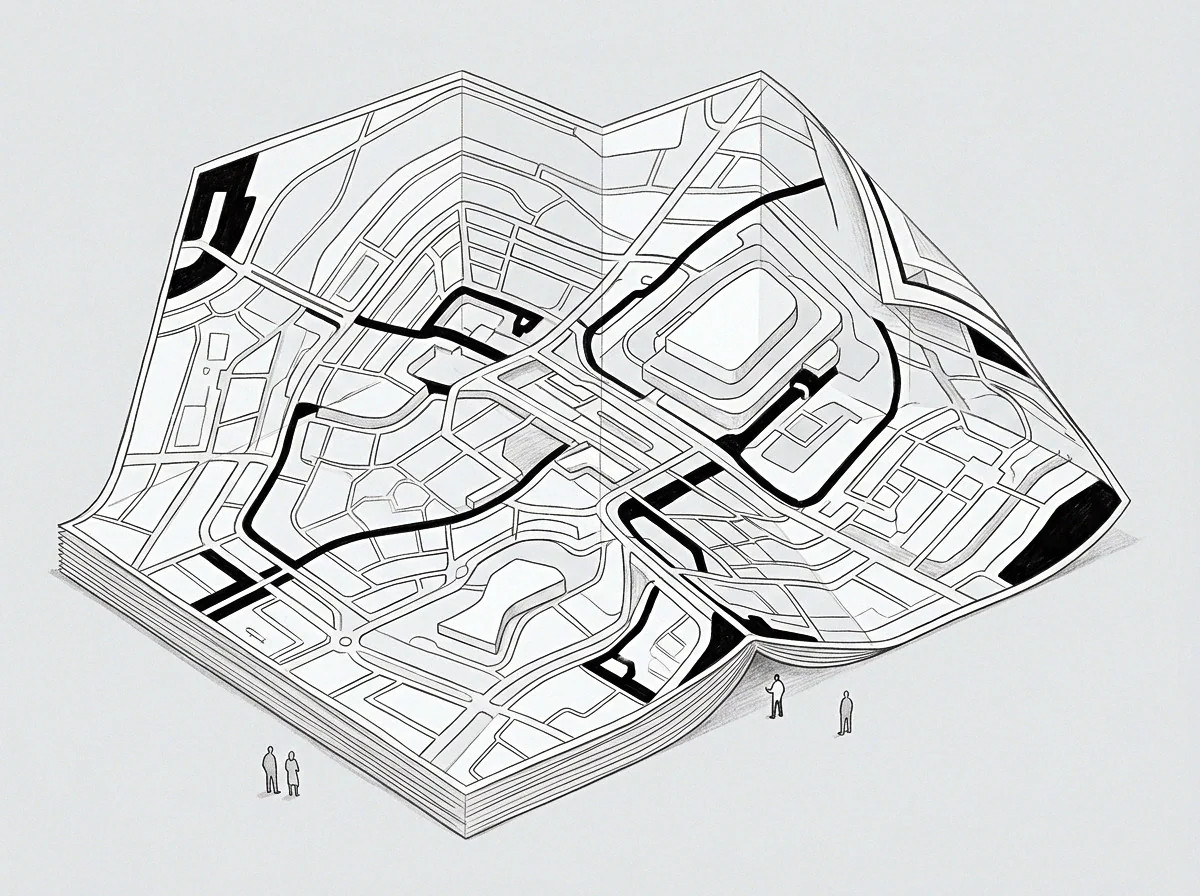
Friction

Structural Determinants of Operator Fatigue
Fatigue in operating environments traces to structural misalignments rather than personal stamina limits. When a commercial firm expands, production transaction volumes rise faster than coordination architecture. The operator attempts to absorb the resulting coordination drag through sheer personal exertion.
Role theory models this phenomenon as role overload: a condition where the cumulative role expectations across multiple active positions exceed the temporal and physiological resources of the individual.
Psychological contracts in commercial partnerships often worsen this structural failure. Founding teams operate on unstated reciprocal assumptions regarding effort, sacrifice, and discretionary contribution. The operator assumes that co-owners recognize the physical toll of continuous operational firefighting.
The co-owners assume the operator prefers absolute tactical authority over production. Because neither party states the operational boundaries explicitly, resentment accumulates silently. Unexpressed expectations create latent interpersonal volatility that erupts during routine operational bottlenecks.
Switching costs impose an invisible operational tax on the combined executive. Neuroergonomic research on mental workload confirms that shifting focus between discontinuous tasks degrades working memory, increases operational error rates, and elevates allostatic load. The operator who transitions between negotiating commercial debt terms and diagnosing a shipping line failure pays an attention residue penalty during every exchange.
The human brain cannot recalibrate from detailed technical manipulation to abstract strategic forecasting instantaneously. Sustained task fragmentation destroys analytical reasoning.
A commercial firm that depends on discretionary heroics to complete routine orders operates on structural debt.
Commercial firms frequently confuse equity ownership with daily managerial accountability. An equity stake grants a property right in the firm’s profits and terminal valuation. It conveys zero inherent qualification for operational coordination.
When an owner occupies an operating chair without a defined employment agreement, the management layer loses structural authority. Subordinates hesitate to direct or correct an executive who holds voting control of the company. The resulting power asymmetry paralyzes accountability systems and traps the operator in perpetual direct intervention.
The operational cost is severe: three hours of fragmented managerial triage burns more mental energy capacity than six hours of uninterrupted engineering.
The firm cannot scale beyond the physiological boundary of the single operator until role segregation occurs. The owner accepts the discipline of reporting relationships, the manager acquires measurable performance metrics, and the technician operates within standardized operational parameters.

Cleave
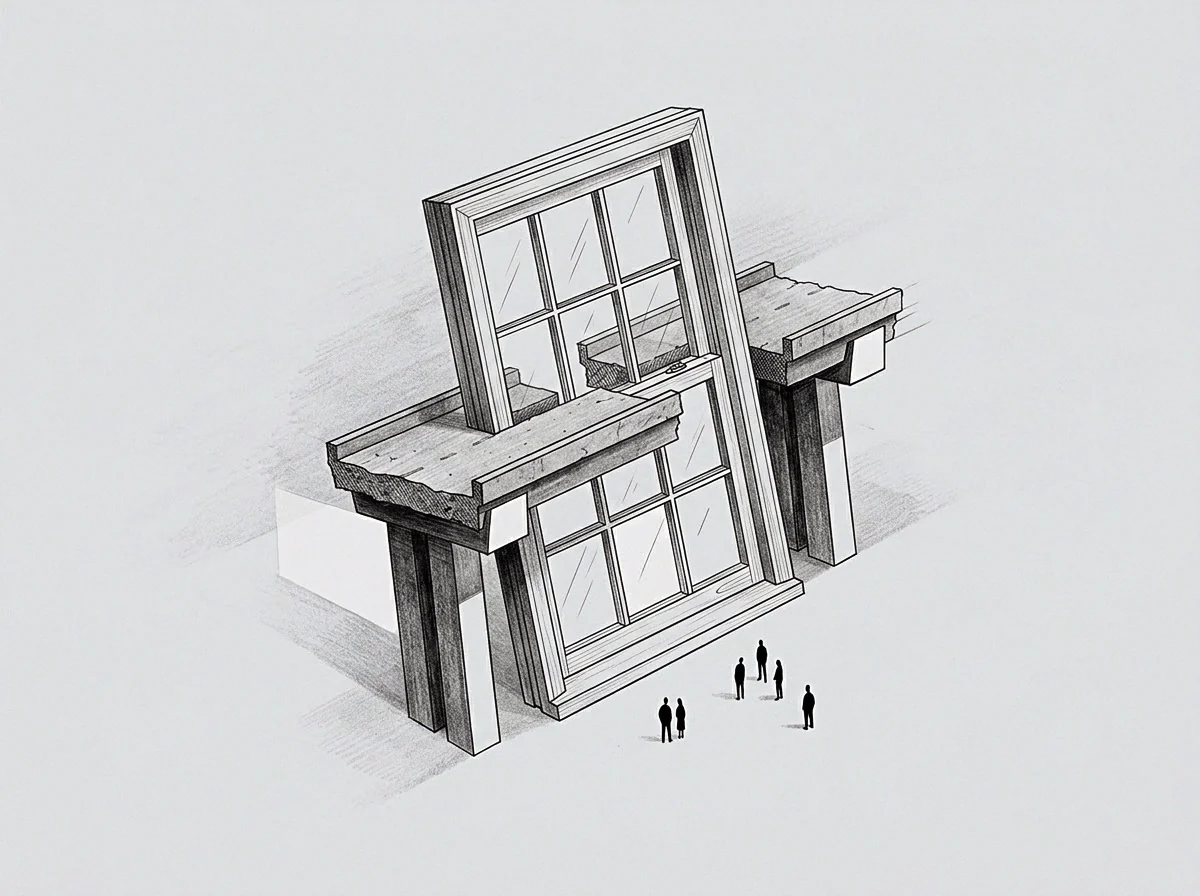
Systematic Role Decomposition Protocols
Decomposing an aggregated operator position begins with a strict time and task inventory. The firm records all operational actions executed across four consecutive weeks, categorizing every logged block into technician output, managerial coordination, or owner governance. This forensic accounting reveals the hidden volume of tacit work sustaining current performance.
Operations previously assumed to require fifteen minutes of daily supervision often consume twenty hours of irregular firefighting across an operating cycle.
Once documented, the organization unbundles the aggregated position into discrete functional seats. Each seat receives an explicit operating charter specifying its functional jurisdiction, operational inputs, required transformation processes, and verifiable deliverables. The charter establishes non-negotiable jurisdictional boundaries, defining what falls inside the post and what is explicitly excluded.
The firm treats the seat as an independent corporate position, detached from the personality or legacy status of the individual currently occupying it.
| Operational Dimension | Technician Seat | Manager Seat | Owner Seat |
|---|---|---|---|
| Primary Mandate | Direct material execution and service delivery | Resource orchestration and operational consistency | Capital allocation and strategic governance |
| Temporal Orientation | Current hour to current operating shift | Weekly schedules to quarterly targets | Annual capital horizons to multi-year liquidity |
| Attention Pattern | Continuous, deep procedural concentration | Periodic scanning and synchronous triage | Asynchronous review and detached evaluation |
| Governing Metric | Direct labor throughput and defect rates | Capacity utilization and operational variances | Return on invested capital and firm solvency |
| Interaction Mode | Solitary craft or direct customer interface | Supervisory directives and workflow coaching | Board deliberations and shareholder resolutions |
Role segregation demands explicit protocol design around operational handoffs. When an operator moves from the technician seat to the manager seat, communication conventions change entirely. Technical execution relies on physical tools, technical documentation, and immediate physical adjustment.
Managerial control relies on standardized operating procedures, exception logs, and workflow schedules. The operator establishes distinct temporal windows for each role, barring managerial communication during dedicated technical production blocks.
Operational boundary defense requires structural mechanisms rather than personal willpower. An operator cannot rely on resolve to avoid answering urgent production inquiries while conducting strategic cash flow forecasting. The firm implements physical and digital isolation protocols to protect analytical capacity:
- Time-block partitioning allocates specific calendar days or uninterrupted morning windows exclusively to technical production or managerial reviews, preventing erratic context shifts across operating hours.
- Dedicated communication channels separate tactical line escalations from executive governance exchanges, routing immediate technical requests through ticketing queues rather than direct mobile access.
- Authority threshold limits grant frontline supervisors complete spending and decision rights up to precise financial benchmarks, removing the executive from minor daily approvals.
- Documented escalation paths define the exact operational criteria that justify interrupting executive focus, terminating routine interruptions for predictable operational variances.
Consider a manufacturing firm with ten million dollars in annual turnover. The operating founder holds sixty percent equity, oversees mechanical assembly, handles supplier procurement, and signs off on credit limits. Under this concentration, inventory errors rise thirty percent during peak sales seasons.
The founder institutes role decomposition. The mechanical assembly responsibilities shift to an appointed floor supervisor armed with standardized run sheets. The founder retains procurement and cash management under formal scheduling.
Within one operating quarter, operational error rates drop, cash forecasting stabilizes, and the founder reduces total weekly operating hours from seventy-four to forty-eight.
An institutional investor would refuse to fund an enterprise whose governance architecture collapses the minute an executive catches influenza.

Wire
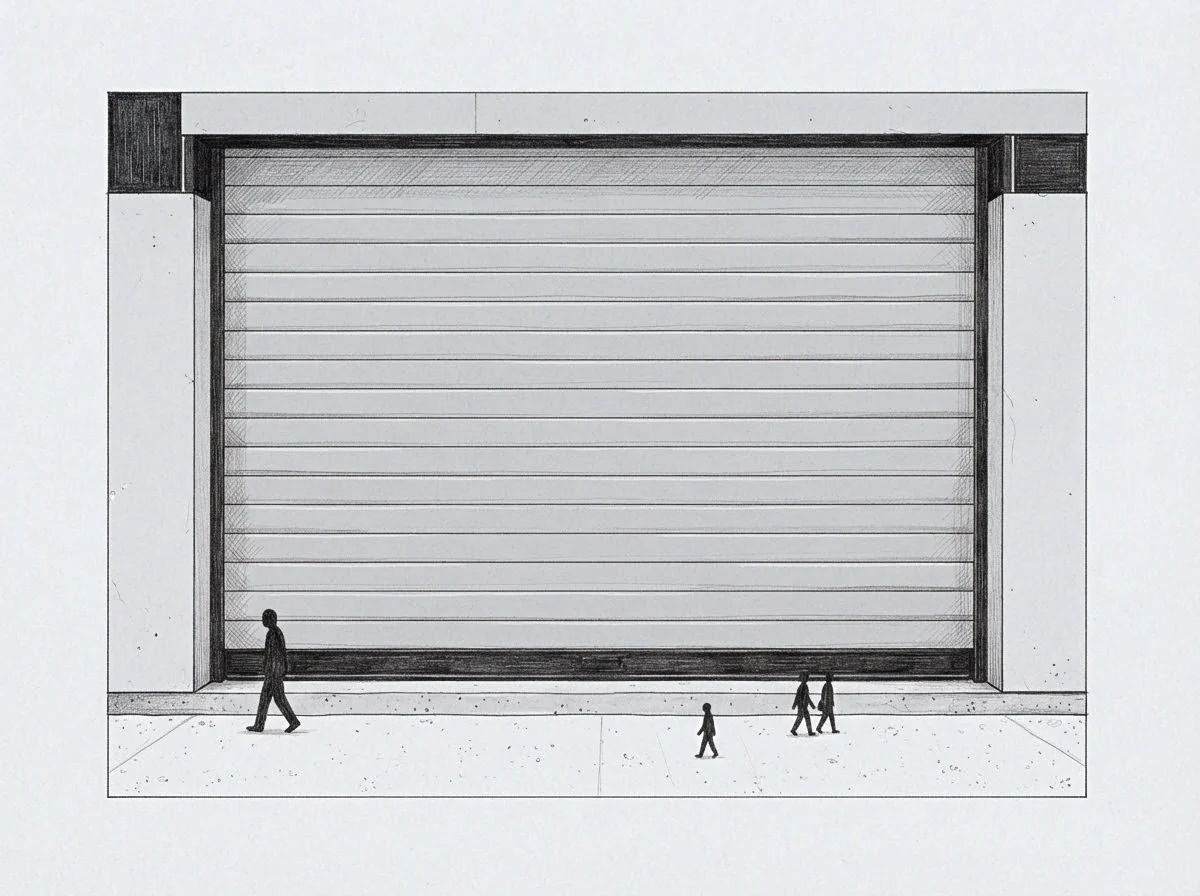
Establishing Explicit Handover Protocols
Delegating operational jurisdiction requires the systematic extraction and externalization of tacit knowledge. The operator possesses procedural knowledge acquired through years of direct exposure to production anomalies. This knowledge resides as intuitive heuristics: the sound of a stamping press indicating bearing wear, or the subtle phrasing in a customer inquiry signaling an impending cancellation.
Because these heuristics remain unwritten, the operator cannot transfer the seat to a successor without catastrophic drops in output quality.
Externalization converts these unwritten heuristics into codified standards. The operator records instructional video, writes standard operating manuals, and defines decision trees for common operating variances. The documentation addresses edge cases, failure states, and acceptable tolerances rather than idealized workflows.
Codification succeeds only when an inexperienced replacement can execute the operational task within established defect limits without consulting the departing operator. This systematic documentation converts subjective craft into scalable corporate capital.
Once codification reaches an acceptable baseline, the firm initiates a staged delegation transition. Handover is an operational sequence with discrete milestones, never an instantaneous departure. The transition advances across four measurable operating phases:
- The incumbent performs the operational process while the designated successor observes and annotates variances between the written procedure and real-time execution.
- The successor performs the process under direct observation of the incumbent, who intervenes only when operational safety or contractual commitments are compromised.
- The successor assumes sole execution responsibility while the incumbent reviews daily exception logs, tracking quality deviations against historical baselines.
- The successor obtains full jurisdictional authority, and the incumbent relinquishes review rights, shifting to quarterly governance audits.
Documentation transfers operational jurisdiction; inspection enforces accountability.
The incumbent experiences significant cognitive discomfort during early delegation phases. The successor inevitably executes tasks through alternative methods or accepts non-critical variances the original operator would eliminate immediately. The original operator feels an acute urge to step back into the production seat to preserve historical standards.
Yielding to this impulse destroys the delegation process, disempowering the successor and re-establishing the operator as the universal bottleneck. Boundary integrity requires the incumbent to accept minor local inefficiencies to secure systemic organizational scalability.
The contract specifies that full operational signing authority transfers to the incoming manager upon completion of sixty consecutive days of zero critical delivery defects.

Gauge

Can an Operator Hold Multiple Seats Without Experiencing Breakdown?
A persistent debate among governance practitioners centers on whether an executive can sustainably occupy both an operational post and an ownership seat over extended timeframes. One school of organizational design argues that role consolidation creates chronic dysfunction in commercial enterprises exceeding twenty employees. This position holds that conflicting incentives between short-term operating expediency and long-term capital preservation inevitably compromise executive decision-making.
Proponents of this view advocate for an immediate, aggressive separation of managerial execution from strategic ownership as early as financial viability allows.
An alternative perspective asserts that consolidated leadership provides high strategic velocity and operational cohesion. Proponents of integrated operator-ownership demonstrate that an executive possessing deep technical mastery makes capital allocation decisions with superior context and minimal administrative friction. In capital-constrained environments or highly volatile niche markets, the overhead of formal bureaucratic separation can bankrupt an emerging enterprise.
This model insists that rigorous personal discipline, combined with structural time-blocking, enables a single capable operator to hold multiple seats sustainably.
The field’s research on span of control and cognitive load suggests the validity of either stance depends strictly on operational volume and environmental complexity. Under low transaction complexity, where production processes are stable and market demands predictable, an operator manages dual seats with minimal strain. As commercial volume scales, or when regulatory and competitive instability increases, cognitive load compounds exponentially.
At this threshold, multi-seat occupancy degrades decision quality, raises operational error frequencies, and inflicts severe physiological wear on the operator.
A digression into mechanical power transmission clarifies the structural reality. An internal combustion engine relies on a transmission to decouple crankshaft velocity from wheel speed. Forcing an engine to drive wheels directly without gearing stalls the system at low speeds and destroys it at high velocity.
The organizational boundaries separating technician, manager, and owner act as the transmission of a commercial enterprise, matching human cognitive bandwidth to operational velocity.
The desk cannot fully defend an exact universal employee headcount threshold where multi-seat consolidation becomes impossible. Commercial complexity varies widely between software publishing, contract manufacturing, and specialized professional services. A prudent owner tracks internal operational signals: rising delivery delays, increasing reliance on unlogged late-night administrative work, and emotional volatility in routine coordination.
When these indicators surface concurrently across two consecutive operating quarters, the multi-seat model has reached operational exhaustion.
What remaining organizational friction must an operator accept when ownership rights and managerial execution remain legally bound to the same balance sheet?