Meaning
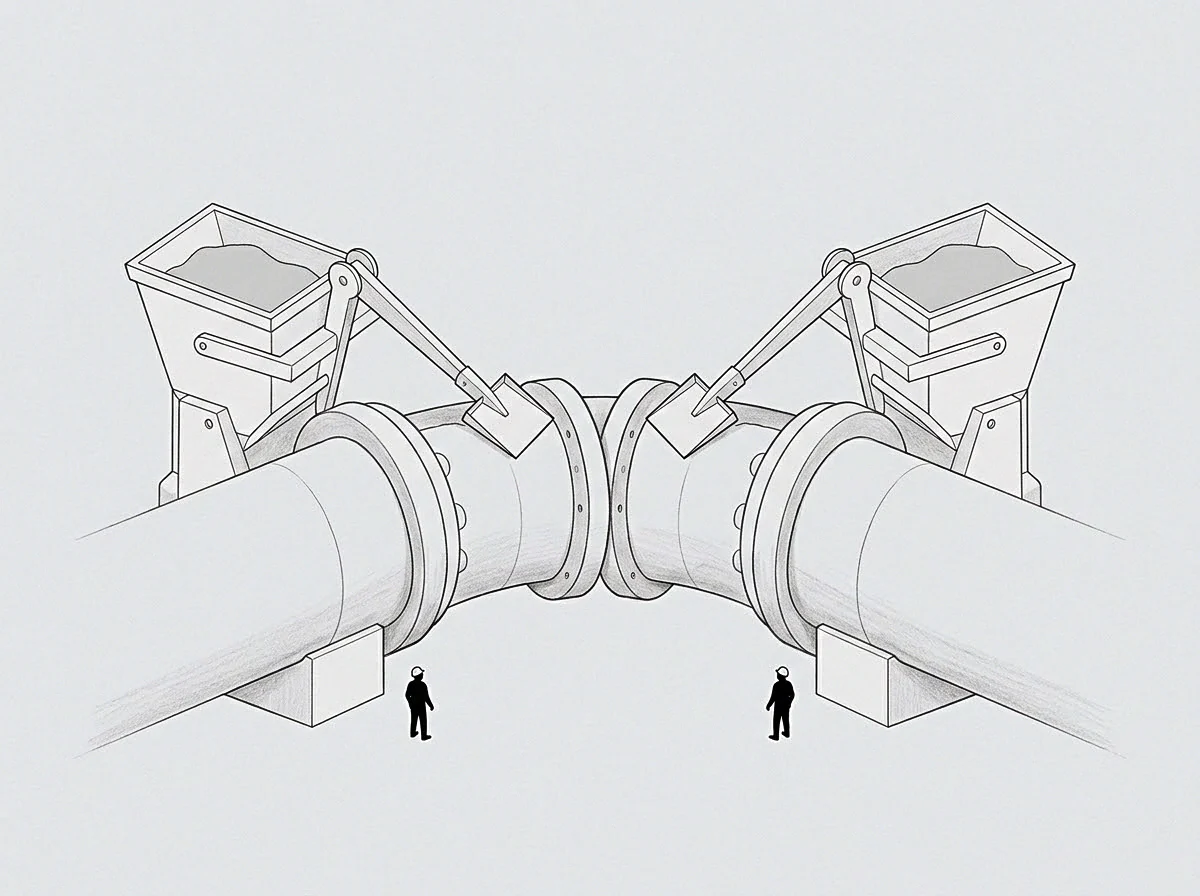
Operational framework used during a transition where two people share the responsibilities of a single executive seat to ensure continuity. This arrangement places the founder and the successor in a collaborative environment where they must agree on every major decision before it is implemented. Using dual-execution mechanics prevents a sudden vacuum of knowledge and allows for a gradual transfer of institutional memory.
It requires a high level of coordination and a willingness to debate choices in real time. The person in the exiting seat pays a high cost in hours spent in meetings, while the incoming person pays in the reduction of their autonomy.
Decision Flow
Managing a company with two heads requires a rigorous process for handling disagreements. Under dual-execution mechanics, a specific set of rules determines who has the final vote in different categories, such as product development or financial expenditures. This division prevents the organization from becoming paralyzed by a split at the top.
When the rules are followed, the staff receives a unified message even if the two leaders are still working through the details in private.
Knowledge Transfer
Deep historical knowledge often exists only in the mind of the founder and is not recorded in any document. These dual-execution mechanics facilitate the transfer of this knowledge by forcing the founder to explain their reasoning for every action taken. The successor hears the logic behind previous failures and successes, which builds a foundation for future independent work.
This phase is often the most time-intensive part of a leadership transition.
Model Transition
Moving away from this model happens once the successor demonstrates they can predict the founder’s decisions with high accuracy. At this point, the dual-execution mechanics are phased out in favor of a standard reporting structure. This model concludes when the successor attains full operational independence.