
Governing Strategic Capital Allocation When Operational Execution Demands Complete Daily Founder Engagement
Capital allocation collapses when daily execution consumes executive capacity, requiring proxy seats to isolate balance sheet governance from maintenance.

Bench
A critical client escalation arrives at seven in the morning, followed by three software deployment errors that claim eleven continuous hours of direct execution. By nightfall, an investor memorandum evaluating a two-million-dollar production facility expansion sits unopened on the desktop screen.
When daily execution demands total physical and mental presence, the functional seat governing balance sheet allocation empties. Capital governance is rarely abandoned out of negligence; operational work carries immediate consequences if ignored, whereas capital allocation delays take months to surface. Over time, financial decisions compress into emergency reactions made under severe cognitive exhaustion.
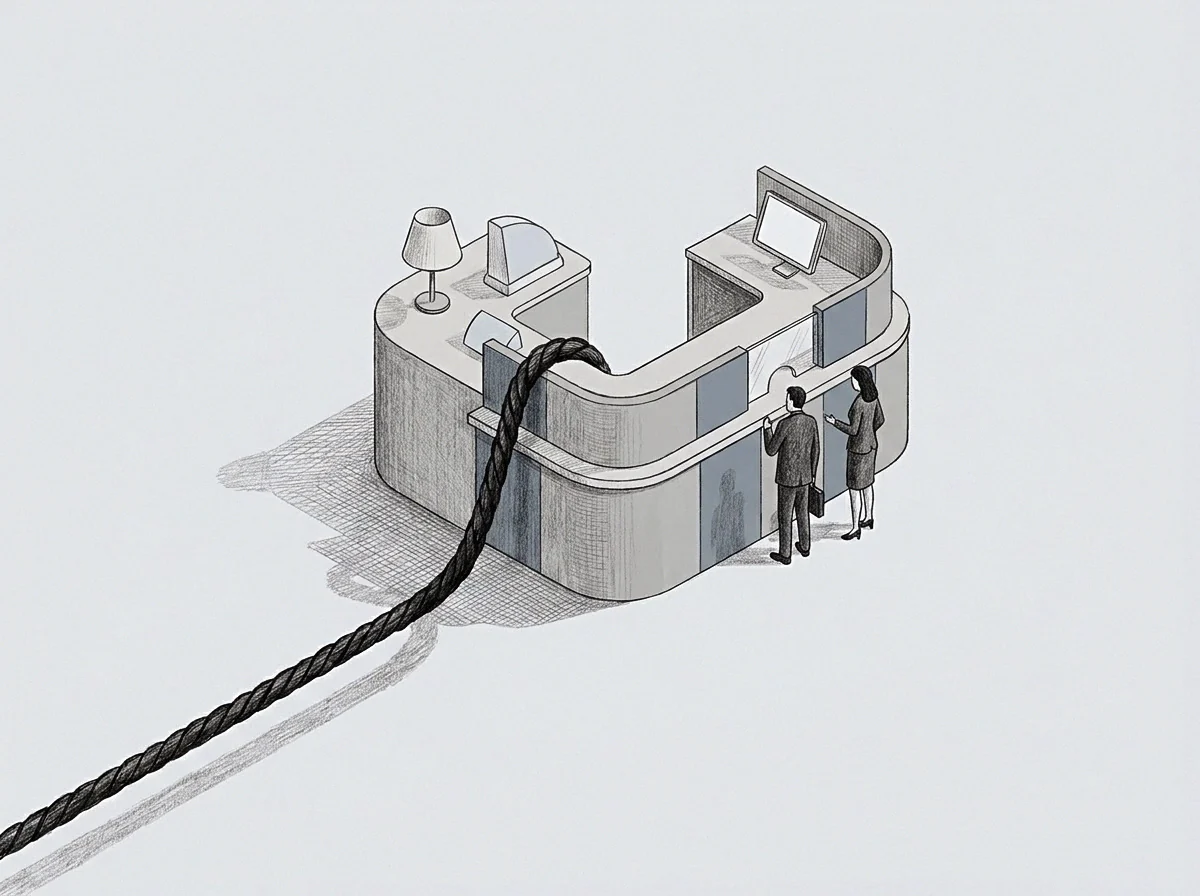
Execution Saturation and Executive Capacity
Daily technical maintenance consumes available attention before financial decisions reach the desk. When an owner spends forty hours a week debugging software or managing supply chain disruptions, the mental models needed to price strategic risk degrade when quiet hours are unavailable. Balance sheet commitments then receive either passive approval or perpetual deferral, both of which erode enterprise value.
The position breaks down into three distinct operating seats: the technician who performs the physical output, the manager who schedules the workflows, and the owner who deploys assets for future yield. When one individual occupies all three positions concurrently under high operational stress, the technician seat systematically starves the owner seat of temporal and cognitive capacity.
When daily technical tasks occupy the entire working week, financial decisions default to immediate operational convenience rather than long-term equity returns.

Structural Separation of Allocation from Operations
An owner managing daily delivery merges two incompatible functional seats into a single workday. Operational execution requires rapid, micro-level decision loops focused on immediate risk mitigation. Balance sheet deployment requires slow, macro-level evaluation of alternative asset returns, payback periods, and capital structure risks.
Attempting to execute capital allocation during brief gaps between customer support calls leads to systematically flawed risk pricing, as fatigue lowers hurdle rates. The individual defaults to funding whichever project promises immediate operational relief, regardless of its long-term financial yield. Current governance arrangements often force asset deployment decisions into the residual margins of an exhausted operating week.

Vault
Formal governance structures create dedicated boundaries around investment decisions. Without explicit capital deployment frameworks, balance sheet reserves risk becoming an unmonitored pool for temporary operational fixes.

Allocation Governance under High Tactical Pressure
Board structures often assume an executive with free capacity to evaluate capital deployment opportunities. When daily execution consumes that capacity, governance must shift from unstructured executive discretion to deterministic allocation rules. Establishing clear spending limits and deployment triggers isolates balance sheet risk from daily operator strain.
| Governance Mode | Operational Isolation | Capital Speed | Investment Rigor | Primary Risk |
|---|---|---|---|---|
| Ad-hoc Founder Approval | Zero isolation | Variable | Degrades under stress | Operational capture of reserves |
| Delegated Capital Proxy | High isolation | Fast within scope | Formulaic compliance | Misalignment with equity strategy |
| Dual-Key Investment Board | Complete isolation | Deliberate | High analytical depth | Execution delay during market shifts |
| External Governance Firewall | Maximum isolation | Structured cycles | Institutional standard | Rigidity in capital reallocation |
Selecting an appropriate mode depends on the volume of tactical maintenance required by the operating asset. When operational delivery demands full daily presence, ad-hoc approval guarantees that asset allocation suffers from continuous distraction. Delegated proxies or dual-key boards preserve financial discipline by taking investment authority out of the active operator’s hands.
Capital allocation decisions made after twelve hours of tactical firefighting carry higher variance than decisions deferred to dedicated financial sessions.
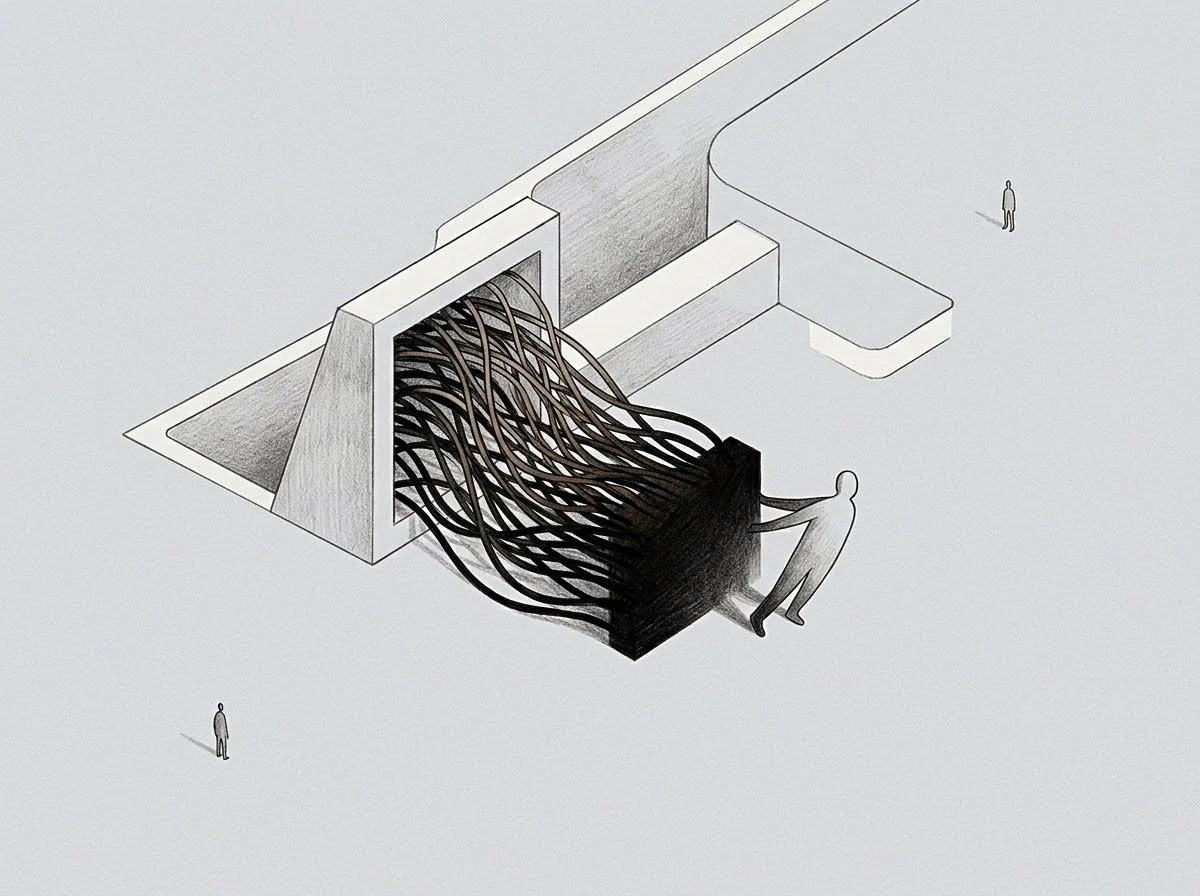
Notch
Hurdle rates adjusted for executive exhaustion reveal the hidden expense of tactical immersion. When an operator evaluates capital commitments while managing daily delivery, the discount rate applied to future cash flows becomes distorted by immediate physical strain.

Temporal Decay in Investment Evaluation
Decision fatigue degrades risk assessment long before physical exhaustion stops an executive from working. As cognitive reserves drain throughout an operational shift, the ability to model complex scenarios declines, leading operators to treat high-risk capital expenditures as simple binary choices while ignoring tail risks and liquidity constraints.
A capital deployment hurdle set without accounting for tactical workload leads to premature asset liquidation during operational crises.
Take a software enterprise generating four million dollars in annual recurring revenue with two equity partners. Assume the lead engineer holds fifty percent ownership while writing sixty percent of the production codebase. The firm holds one million dollars in unallocated cash reserves, intended for expanding enterprise sales channels.
A major server outage occurs during a quarter-end sales campaign, demanding seventy-two hours of continuous engineering remediation from the lead owner. Simultaneously, a proposal arrives to acquire a smaller competitor for eight hundred thousand dollars in cash, requiring a forty-eight-hour decision window. Under extreme physiological strain and technical firefighting, the lead owner evaluates the acquisition exclusively through the lens of technical integration relief rather than stand-alone return on invested capital.
The lead owner approves the transaction to absorb the competitor’s senior infrastructure engineers, attempting to solve an immediate operational bottleneck using strategic capital. Six months later, the acquired codebase proves unusable, the core server issues persist, and the enterprise balance sheet lacks the liquidity required to fund the original sales expansion plan.
Evaluating capital allocation during active technical crises converts balance sheet strength into expensive, inefficient operational insurance. The cost of this capture appears as lower return on equity across subsequent operating cycles.

Wedge
Inserting a structural buffer between daily software delivery and financial governance protects asset allocation integrity. Strategic capital governance requires an explicit firewall that stops operational urgencies from consuming investment review periods.

Sequencing Capital Governance Protocols
Setting explicit calendar triggers separates operational reporting from investment decisions. Capital deployment protocols perform best when executed through clear, sequential steps rather than fluid executive discussions.
Delegated capital authority remains effective only when operational metrics stay completely isolated from investment approval committees.
- Establish an autonomous operational capital threshold where plant or software expenditure requires no governance intervention.
- Appoint an independent proxy seat with explicit veto power over balance sheet redeployment during active technical incidents.
- Schedule capital allocation reviews strictly on non-operational days to prevent tactical fires from altering hurdle calculations.
- Lock investment mandates behind written investment memos drafted prior to operational crises.
When these steps remain unexecuted, strategic equity reserves are routinely reallocated to extinguish daily operational fires without board visibility.
Strategic investments stall perpetually because every available dollar is redirected toward immediate customer firefighting.

Mark
Covenants defining capital governance prevent operational capture of equity resources. Stated rules replace implicit trust when executive capacity becomes saturated by daily execution.

Covenants Defining Ownership Authority
Written agreements explicitly separating management duties from capital deployment preserve enterprise value across market cycles. These legal and structural instruments establish clear operating boundaries, ensuring that tactical exhaustion does not compromise asset management discipline.
An unwritten agreement regarding capital governance defaults to whichever operational fire demands attention at midnight.
- Operational Threshold Covenant specifies the exact expenditure limit an operator may execute without balance sheet review.
- Capital Proxy Mandate defines the specific circumstances under which a non-operating equity holder assumes deployment authority.
- Emergency Freeze Provision halts all uncommitted capital expenditure automatically whenever production downtime exceeds established thresholds.
- Dedicated Reserve Charter restricts balance sheet allocations to pre-approved strategic initiatives, preventing capital siphoning for routine maintenance.
An explicit capital reservation clause restricting balance sheet deployment during operational outages forces management to resolve system fragility before expanding production capacity.