
Codifying Tacit Decision Models in Executive Transitions
Executive transitions require structured cognitive extraction and live calibration to codify tacit decision heuristics into explicit operational guidelines.

Artifact
The outgoing chief executive sits at an empty desk at midnight, attempting to document how capital allocation decisions were evaluated during market panics. Standard operating procedures capture linear execution, while the mental models that dictate high-stakes trade-offs remain unwritten. Decades of cognitive research in organizational behavior confirm that expert performers struggle to verbalize the intuitive heuristics that govern their choices.
Knowledge transfer literature categorizes this dynamic through the distinction between explicit information and tacit knowledge. Explicit information moves easily through text, manuals, and schemas. Tacit knowledge resides in pattern recognition, micro-signal interpretation, and situational awareness developed across thousands of operational hours.
Intuition leaves traces. When an executive steps down from a seat built over years, the incoming officer inherits the visible infrastructure of the role without the underlying decision engine. Operational manuals explain how to run a investment committee meeting, yet omit the exact perceptual thresholds that prompt a veteran leader to veto a project.
The gap between documented process and actual decision logic introduces operational volatility during executive transitions.

Mental Models Beyond Standard Operating Procedures
Standard operating procedures assume predictable inputs and linear cause-and-effect relationships. Executive leadership occurs primarily under conditions of ambiguity, incomplete data, and conflicting stakeholder priorities. In these environments, leaders rely on tacit mental models, internal representations of how complex systems respond to specific interventions.
Unstated rules govern resource allocation. The seat demands rapid judgment. These cognitive structures operate below conscious awareness, functioning as rapid pattern-matching mechanisms rather than formal analytical steps.
Research on naturalistic decision-making demonstrates that experienced leaders rarely evaluate multiple options simultaneously during crises. They recognize situational patterns and immediately select an action plan based on stored mental simulations. When an executive transitions out of a seat, these stored simulations remain tied to the individual.
The legacy organization often mistakes the executive’s personal judgment for institutional capability, discovering the difference only after the transition completes.
Handover documentation frequently records the administrative steps of a seat while omitting the perceptual thresholds that trigger strategic intervention.

The Structure of Hidden Heuristics
Hidden heuristics form the core of executive tacit knowledge. These mental shortcuts encompass specific risk thresholds, non-negotiable trade-offs, and implicit rules for timing market interventions. A founder may maintain an unwritten rule never to allow cash reserves to drop below four months of operational expenditure during product launches, regardless of revenue projections.
Another officer might utilize implicit cues from client churn rates to determine when to restructure sales teams long before board metrics flag financial underperformance.
Because these heuristics develop through trial and operational pressure, leaders frequently express them as gut feeling. Codifying these models requires deconstructing intuitive judgments into observable cues, baseline assumptions, and conditional branch logic. Without deliberate extraction, the incoming executive operates without the historical boundary conditions that preserved organizational stability.
Failure to extract implicit decision criteria leaves incoming leadership reliant on trial and error, increasing capital expenditure variance during the first six months of executive tenure.

Heuristic
Cognitive task analysis reveals that executive choices depend on pattern recognition developed across decades of operational exposure. Extracting these implicit structures requires moving beyond traditional interview techniques, which often yield superficial justifications rather than actual decision mechanics. Outgoing leaders routinely attribute choices to formal strategies when retrospective questioning occurs, obscuring the pragmatic shortcuts applied in real time.
Predecessors hold unwritten criteria. Shadowing reveals perceptual gaps. Specialized elicitation methodologies extract the underlying logic by subjecting historical decisions to counterfactual analysis.
Analysts examine specific critical incidents where the outgoing executive altered strategy, bypassed policy, or made high-stakes calls under extreme uncertainty.

Deconstructing Operational Intuition
Deconstructing operational intuition requires structured retrospective probes. The extraction process targets specific critical decisions rather than generalized management philosophies. Interviewers walk the departing leader through historical scenarios step by step, isolating the precise information cues available at each juncture.
Questions focus on identifying what cues were monitored, what alternative actions were dismissed immediately, and what specific outcomes were feared.
Unwritten rules govern risk assessment. By mapping the distance between baseline procedures and actual choices, analysts isolate the tacit rules that governed executive behavior. This process converts subjective impressions into explicit conditional statements that incoming leaders can evaluate and apply.

Elicitation Methodologies for Executive Decisions
Different extraction techniques yield distinct aspects of an executive’s mental model. Selecting the appropriate elicitation framework depends on the complexity of the domain and the time available before the transition closes.
| Elicitation Method | Primary Focus | Required Time Allocation | Codification Output |
|---|---|---|---|
| Critical Decision Method | High-stakes historical incidents and crisis responses | 12 to 18 hours across targeted sessions | Decision timeline maps and perceptual cue tables |
| Shadow Decision Pairing | Real-time observation during live operational trade-offs | 4 to 8 weeks of continuous co-location | Comparative choice logs and real-time commentary |
| Counterfactual Audit | Stress-testing past choices against altered parameters | 8 to 12 hours of scenario review | Boundary condition matrices and risk rulebooks |
| Cognitive Mapping | Visual representation of systemic causal assumptions | 10 to 15 hours of diagramming sessions | Causal loop schemas and strategic dependency trees |
Elicitation succeeds when discussions focus on specific historical trade-offs rather than abstract principles of management.

Paper
Translating non-verbalized instincts into structured formats demands systematically converting implicit assumptions into accessible documentation. Every decision leaves a paper residue. Decision matrices formalize instinct.
Codification requires translating raw transcripts and interview data into structured decision artifacts, including logic trees, risk-threshold matrices, and scenario-contingency playbooks.
The codification process does not attempt to replace executive judgment with automated rules. It creates an explicit baseline that allows an incoming officer to understand the inherited operational logic before making deliberate alterations. Written artifacts establish a clear reference point, reducing reliance on informal communication channels during the transition period.
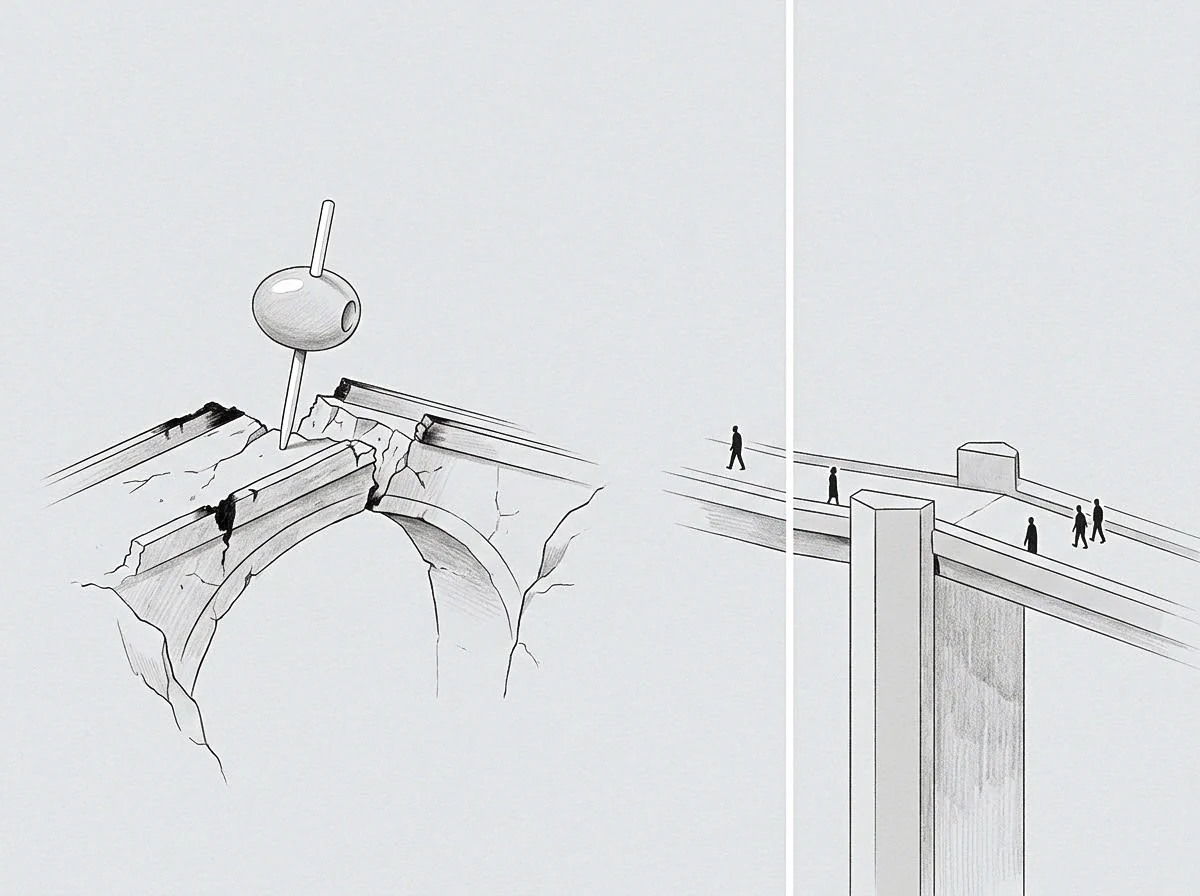
Where Does Tacit Knowledge Resist Documentation?
Certain elements of executive decision-making resist complete capture on paper. Complex negotiation tactics, political maneuvering within board environments, and subtle team dynamics depend heavily on real-time interpersonal processing. While the underlying values and strategic objectives governing these interactions can be documented, the execution relies on live perceptual feedback.
Organizing written artifacts into categorized operational schemas prevents handover materials from becoming overwhelming reference binders that successors ignore.
- Decision Scenarios detail specific market conditions that trigger non-standard resource reallocations.
- Threshold Rules define the precise risk boundaries that dictate executive intervention.
- Veto Conditions state the non-negotiable operational boundaries that immediately halt expenditures.
- Exception Protocols outline circumstances under which standard governance steps are bypassed.
When strategic parameters are explicitly mapped against boundary conditions, incoming leadership evaluates novel trade-offs with reduced variance.
The written handover explained what was done, but failed to explain why alternative choices were rejected.

Calibration
The grip stage marks the transitional phase where the incoming officer operates the seat while the outgoing predecessor observes performance. Transferring complex mental models requires active calibration, wherein theoretical knowledge gained from written artifacts is tested against live operational challenges. Successors inherit operational responsibility quickly.
The transition period shrinks rapidly.
Without structured calibration, incoming leaders tend to interpret codified guidelines literally, failing to adapt rules when environmental conditions shift. Calibration aligns the successor’s perceptual filters with the requirements of the seat through progressive delegation and joint debriefing.

Structured Shadowing and Decision Pairing
Structured shadowing moves beyond passive observation by requiring the incoming executive to render preliminary judgments before the outgoing leader acts. During live meetings or strategic reviews, the successor notes their intended decision and underlying rationale independently. Following the event, the two leaders compare notes to analyze discrepancies in pattern identification, risk evaluation, and timing.
This comparative debriefing highlights subtle misalignment in decision criteria that written documents cannot surface. Over multiple iterations, the incoming executive recalibrates their internal models to match the operational demands of the seat.

Scaffold Removal and Authority Transfer
Transferring executive authority demands a controlled sequence of scaffold removal to prevent structural failure while building successor autonomy.
- The successor observes live strategic calls without active participation.
- The successor logs predicted decisions for ongoing negotiations in an independent record.
- The predecessor compares predicted outcomes with executed choices during scheduled debriefs.
- The successor assumes decision authority while the predecessor maintains advisory availability.
Premature removal of scaffolded oversight forces incoming executives to re-derive baseline judgment through operational error.
A six-week structured debrief clause shifts the evaluation of incoming leadership from immediate output to alignment with core risk thresholds.

Transmission
Certain operational elements evade written documentation despite rigorous extraction protocols during executive handovers. Implicit models shape capital distribution. The engine stays behind.
The residual taste, personal network leverage, and intuitive timing of a long-tenured founder represent human capital that remains tied to the departing individual. Succession plans must account for this uncodifiable residual capacity rather than assuming absolute transferability of leadership performance.
Designing an executive transition as a complete structural handover requires recognizing the boundary between transferrable mental models and unique individual talent. Organizations that acknowledge this limit build resilient support structures around incoming leadership rather than expecting a seamless copy of predecessor judgment.
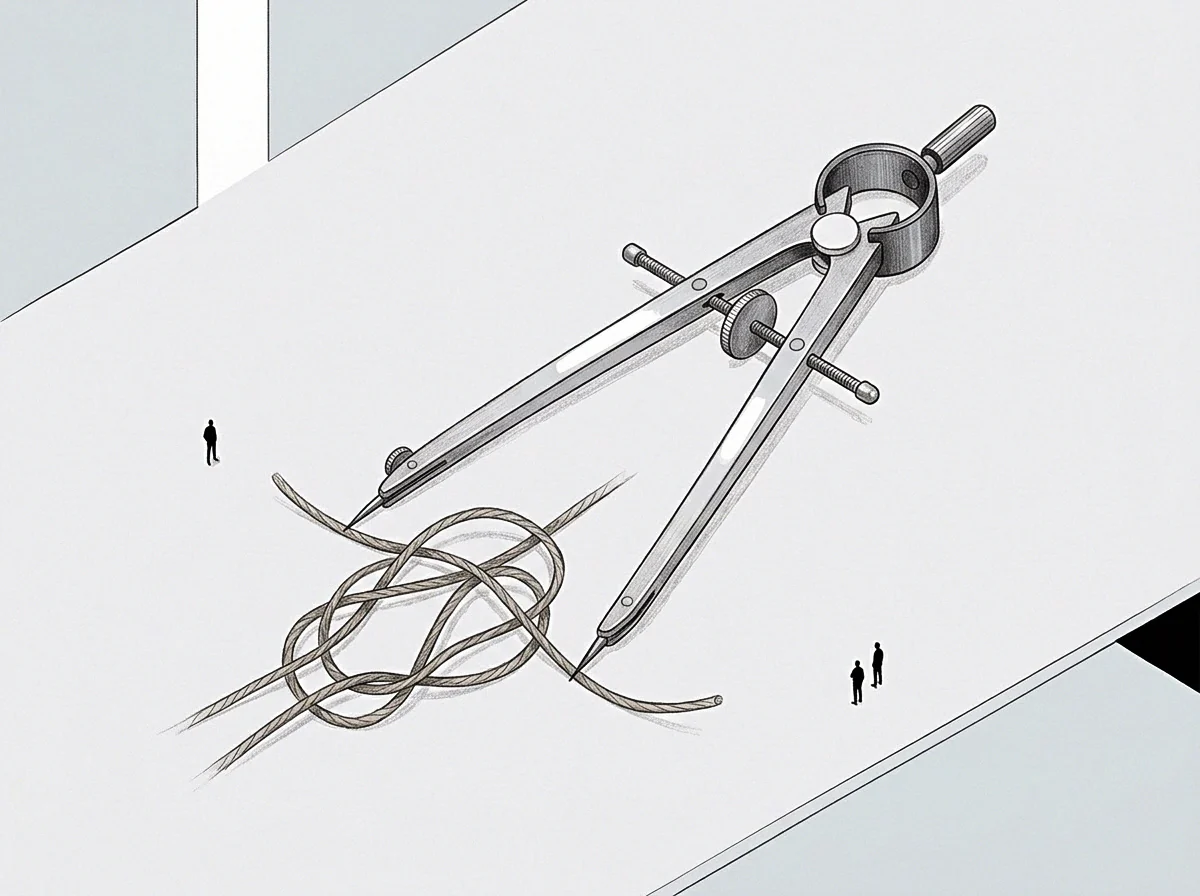
The Uncodifiable Residual Engine
The uncodifiable portion of an executive’s seat consists largely of contextual memory and relational influence built over long tenures. While decision rules regarding risk tolerance can be recorded, the informal trust networks that enable rapid execution cannot be transferred via documentation. Incoming leaders build their own relational authority across different timelines and through distinct personal mechanisms.
Recognizing the limits of codification prevents outgoing officers from over-engineering handover processes. Energy shifts toward capturing critical risk parameters and strategic dependencies, allowing the successor room to develop original decision models within established boundaries.

Finishing the Seat as a Designed End
Finishing a seat cleanly requires an explicit exit date that terminates the outgoing officer’s operational involvement. Prolonged or ambiguous transition periods undermine successor authority and create duplicate power structures within the executive team. Once structured calibration completes and key decision heuristics are documented, the predecessor must vacate the seat fully.
A designed end converts the handover from an open-ended advisory arrangement into a bounded professional sequence. The organization shifts focus from capturing past judgment to supporting the incoming leader’s operational execution.
Complete codification remains an unattainable ideal, leaving successor performance dependent on structured experiential overlap.
Whether an incoming executive can replicate an outgoing founder’s instinctual timing without shared history remains an open question in corporate governance.