
Staging Successor Introductions During Founder Account Transfers in Small Agencies
Staging successor introductions requires phasing operational authority across structured observation, joint delivery, and executive retraction stages.

Room
An account lead opens an email thread on a Thursday evening that includes seven months of informal promises made over dinner. The client expects delivery against terms that exist only in the founder’s memory. The incoming operator opens the project tracker to find three columns blank, while the client lead texts the founder directly to ask why an unfamiliar name is suddenly on the quarterly review calendar.
Small agency account handovers break where relational authority collides with operational procedure. The person who built the business holds client trust as personal equity built through early crisis responses, unspoken concessions, and shared tenure. When that person leaves the day-to-day seat, the client treats the successor as a downgrade in service tier.
The transfer fails when handled as an email announcement instead of an operational sequence that resets the authority structure of the engagement.
A successor introduced without executive decision rights on the account remains a note-taker in the eyes of the client.
A stable transition moves in stages. The founder transfers operational control, communication dominance, and strategic sign-off over defined intervals. For this to hold, the agency has to turn tacit concessions into explicit scope agreements before the successor takes the primary seat.

Client Perception of Vulnerability
Clients at owner-managed agencies buy direct access to the economic principal. They tolerate higher fees or operational quirks because they assume the person whose name is on the company paper will step in if something breaks. Bringing in an account successor upsets that expectation.
The client tests the new boundary right away: sudden out-of-scope requests, demands for pricing exceptions, or backchannel notes to the founder questioning the successor’s experience level. When the founder answers these backchannels directly, the transition resets to zero. The client concludes the formal introduction was cosmetic and that actual authority stayed in the original seat.
The handover requires visible proof of competence, specifically the successor resolving a stalled issue without founder involvement. Tacit context regarding client temperaments, historic friction, and unbilled work has to move from the founder’s head into written account files before any introduction. Without that preparation, the successor walks into established operational traps that erode client confidence during the first month.
Tether
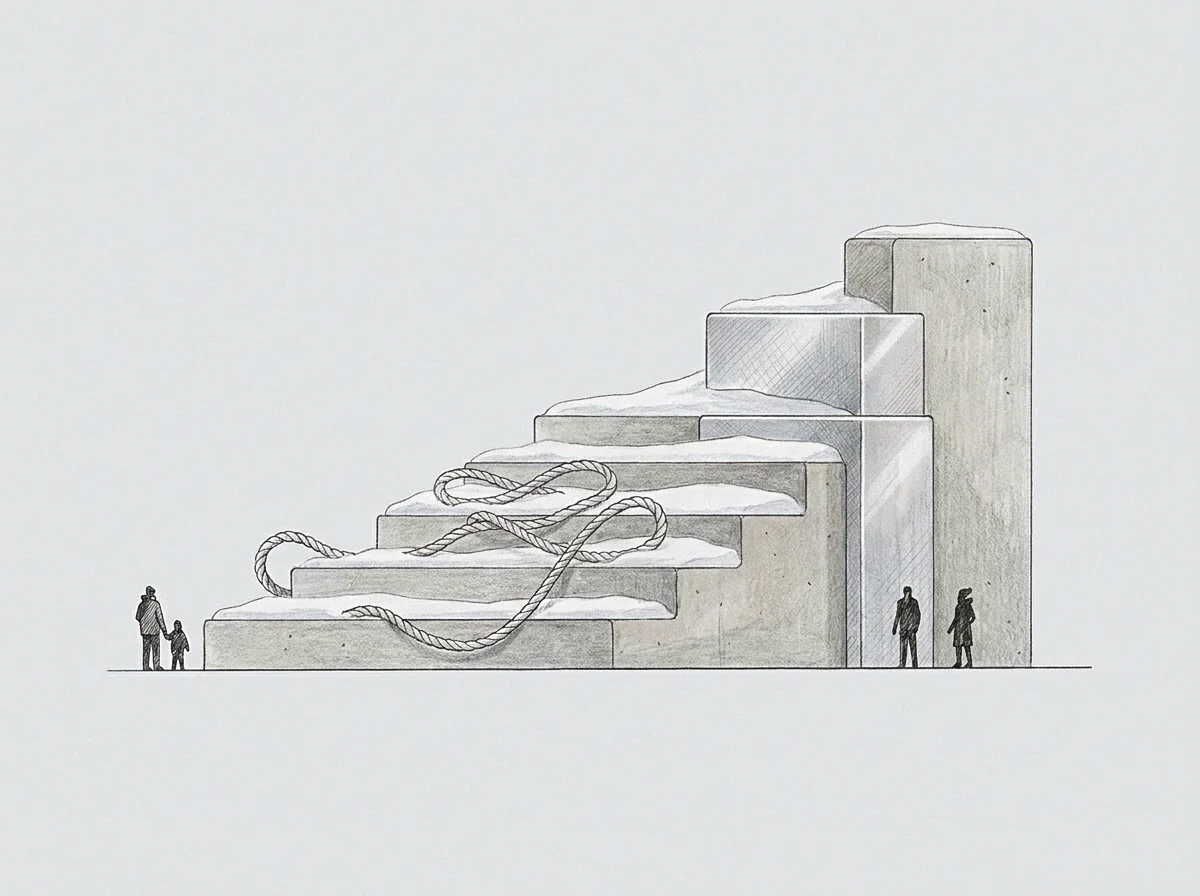
The operational link between founder and client consists of signed agreements alongside informal working habits. These habits, formed over years of ad-hoc problem solving, create a tether that resists delegation. Breaking it requires categorizing the specific interactions that sustain it.
Consider an agency generating two million dollars in annual revenue where the founder directly manages five core client accounts representing sixty percent of total fee income. Assume each account carries three undocumented scope concessions and an average tenure of four years. The founder spends fifteen hours each week fielding direct calls and messages from these five clients, resolving issues assigned to account managers on paper.
The agency starts a transition protocol by mapping every recurring founder-client interaction across three operational layers:
- Strategic Direction encompasses long-term roadmap planning, capital allocation reviews, annual contract renewals, and executive escalation protocols where organizational leverage is required.
- Commercial Execution covers weekly status calls, deliverable approvals, scope change estimations, and resource management across creative or technical teams.
- Informal Relationship involves direct text messaging channels, unscheduled evening calls, personal check-ins, and historic social courtesies that bypass project management tracking tools.
The informal layer carries the greatest operational risk during a handover. It holds the tacit compromises that keep a client satisfied despite project delays. The incoming account lead cannot replicate that shared history, and attempting to mimic founder familiarity feels artificial and creates friction.
The successor builds credibility through clean execution, consistent delivery schedules, and clear scope boundaries.
Informal communication backchannels left active during a handover siphon authority away from the incoming operator.
The agency cuts off informal channels by enforcing strict communication rules. When a client texts the founder directly, the founder holds the reply for four to six hours, then responds by email with the successor copied, shifting the conversation to official agency channels. The note confirms that the successor has full operational authority to handle the issue.
Repeating this redirection closes the backchannel and shows the successor has genuine backing.
An unstated term in the original client agreement creates immediate friction when the successor assumes the seat, because the new lead charges for work the founder provided for free.

Phasing
Account transitions in small agencies succeed or fail on pacing. Forcing the handover into a single introductory meeting triggers account churn; dragging it across six months blurs roles and doubles account management payroll. An effective transfer uses an asymmetric four-stage introduction window spanning eight to twelve weeks.
| Phase | Duration | Founder Role | Successor Role | Primary Communication Lead |
|---|---|---|---|---|
| Shadow Operation | Weeks 1 to 3 | Leads all calls; runs strategic agendas; handles commercial approvals | Attends silently; documents unwritten account rules; maps client politics | Founder (100%) |
| Joint Delivery | Weeks 4 to 6 | Introduces successor as execution lead; supports during technical reviews | Leads tactical agenda items; delivers status reports; issues scope logs | Shared (50% / 50%) |
| Reversed Shadow | Weeks 7 to 9 | Attends silently; provides executive air cover; intervenes only upon request | Leads full agenda; manages client objections; sets weekly project targets | Successor (80%) |
| Executive Retraction | Weeks 10 to 12 | Absent from routine meetings; available strictly for quarterly reviews | Holds complete operational ownership; signs off deliverables; leads planning | Successor (100%) |
The shadow operation stage requires absolute silence from the successor on live client calls. The incoming lead acts as an observer, noting communication pace, vocabulary, unstated sensitivities, and decision habits. The successor also reviews past proposals, change requests, and project retrospectives to understand how the founder resolved previous standoffs.
The transition moves to joint delivery when the successor takes over tactical agenda items while the founder steps into a secondary role. The founder presents the successor as an operational authority who expands agency capacity on the account, not as an assistant. During this stage, the successor resolves complex technical or creative problems, demonstrating competence directly to client leadership.

The Shift in Operational Control
The reversed shadow stage is where authority actually shifts. The successor leads the meeting, works through client pushback, and sets deliverable dates. The founder stays on mute, speaking only if the client pushes to reopen commercial terms or asks for structural commitments from the agency.
Clients often try to pull the founder back into operational details during this phase. A client might bypass the successor to ask the founder whether an aggressive deadline is realistic. The founder redirects the question: the successor manages delivery capacity and sets the schedule.
That explicit deference cements the transfer of operational authority.
Executive retraction removes the founder from day-to-day meetings. The founder drops off the weekly calendar entirely, appearing only for quarterly reviews or annual contract talks. Day-to-day execution, strategic output, and operational reliability now sit with the successor.

Scripts
Language choices during an account transfer set the line between founder oversight and successor management. Vague framing invites client resistance and undercuts the successor. The founder presents the change as an investment that improves account service levels, not an executive departure that reduces attention.
Introducing an account successor as a replacement signals loss; framing the successor as dedicated operational leadership signals organizational expansion.
The formal handover communication follows a sequential briefing protocol across written channels and live meetings:
- The Written Alignment establishes the operational narrative before the introductory call, outlining the successor’s specific background, domain expertise, and executive mandate over agency resources for the client.
- The Executive Handover Meeting convenes client leadership and agency principals, where the founder formally assigns account governance, budget management, and operational decision-making to the successor.
- The Operational Cadence Confirmation follows within twenty-four hours, delivered directly by the successor, establishing new communication protocols, weekly milestone schedules, and immediate project deliverables.
In the executive handover meeting, the founder uses plain, direct language to define the successor’s role. The founder explains that agency growth requires dedicated operational leadership for major partners, and that the successor has full authority over team staffing, delivery timelines, and sign-offs. The founder confirms that the successor’s decisions carry the full backing of agency leadership.
When the client questions founder availability, the message stays clear. Stepping away from daily execution frees executive attention for the client’s broader strategic direction during quarterly reviews. The successor then anchors the discussion to near-term deliverables, establishing control over the active agenda.

Friction
Account transitions surface hidden agency vulnerabilities. When a transfer begins to destabilize, the failure almost always stems from unwritten scope drift, mismatched operational profiles, or founder intervention relapse.
Uncodified scope drift appears when a successor tries to enforce the written contract on an account where the founder gave away free work. The client views standard contract terms as a drop in service quality. This leaves the successor with a bad trade-off: absorb unbilled hours and compress project margins, or enforce boundaries and trigger client friction.
The agency avoids this friction with an internal scope review before the transition starts. The founder and successor compare the last six months of deliverables against the signed master services agreement and log every informal concession. The founder then leads a alignment call with the client to write those concessions into updated commercial terms or end them explicitly before the successor takes the lead.

Can Successor Archetypes Match Client Demands?
A technical client who valued the founder’s systems architecture background will push back against a successor whose background is account coordination. A client focused on creative strategy will grow frustrated with an execution-focused project manager. Matching successor skills to client operating styles directly affects account retention.
When a mismatch occurs, the agency alters the governance model. If the primary successor is an operations lead and the client wants high-level creative discussions, the agency pairs the account lead with a senior creative strategist for key presentations. The account lead retains commercial and delivery control, while the strategist handles the conceptual discussions.
The founder stays out of the day-to-day seat.
The successor who tries to replicate the founder’s charisma fails; authority in the second seat comes from execution rigor and operational predictability.
Founder intervention relapse remains the most damaging failure mode. An anxious founder monitors email threads and steps into client disagreements, which publicly strips the successor of authority and confirms the client’s belief that the new lead is merely administrative. Once the founder steps into an active escalation, the agency must restart the transition from day one or accept that the account will permanently consume founder hours.
The founder protects the transition by establishing an internal escalation barrier: the successor reviews challenges with the founder internally, but all client-facing communication flows exclusively through the successor.
A client who refuses to accept the successor after the transition window closes signals an attachment to founder labour that the agency’s unit economics can no longer support.

Residue
The outcome of an account handover determines the agency’s long-term enterprise value. A small agency where accounts rely entirely on founder presence operates as a consultancy disguised as a firm. Transferring account management turns personal relationships into institutional assets.
The final step is balancing the founder capacity recovered against the margin retention of the transferred accounts. A clean transfer produces visible operational changes within ninety days of executive retraction:
- Founder Calendar Decoupling appears as an eighty percent reduction in recurring client-facing meetings, returning twelve to twenty hours per week to business development and organizational design.
- Successor Decision Velocity manifests as the unassisted resolution of scope change requests, project margin management, and staffing assignments without founder escalation.
- Account Revenue Stability demonstrates consistent quarterly fee collection and contract renewals negotiated independently by the new account leadership.
What does not transfer is the intuitive context built during the earliest days of the account. The successor will not share the memory of initial project crises or the unwritten aesthetic shorthand between founder and client. The agency does not attempt to replicate that dynamic; it replaces it with consistent reporting, predictable project timelines, and operational clarity.
The client relationship shifts from an informal alignment with an individual into an institutional partnership with an agency. The successor manages the commercial structure, protecting agency margins while hitting delivery benchmarks. The founder moves to governance, assessing account performance through utilization rates, client satisfaction metrics, and margin reports instead of midnight emails.
The agency achieves operational durability when the client no longer tracks whether the person who founded the company is in the room.