
Separating Core Operational Positions in Small Businesses
Separating core operational positions requires converting tacit daily execution into explicit position charters, market wages, and distinct time allocations.

Chair

The Overlap of Unnamed Operational Roles
An operational inbox opened at midnight shows thirty pending client requests, two payroll corrections, and a vendor dispute over late invoices. One person handles all thirty-three items before dawn, moving between technical execution, administrative repair, and strategic risk evaluation inside ninety minutes. The formal operating structure logs all of this under a single title, treating the work as one personal commitment instead of several distinct responsibilities.
Without clear position boundaries, the actual labor needed to keep basic delivery cycles running remains hidden.
Small business growth often hides structural weakness behind individual exhaustion. When one person covers technical production, management oversight, and capital allocation at the same time, personal effort absorbs the system’s friction. Roles stay merged because daily execution covers up organizational gaps: production errors lead to administrative workarounds, administrative delays take up executive attention, and neglected executive tasks cap revenue growth.
The business ends up running on constant firefighting instead of deliberate handovers.
Role confusion starts when tactical execution overlaps with supervisory authority. Organizational behavior research shows that role ambiguity correlates directly with declining performance and cognitive exhaustion. Without clear operational parameters, daily effort tilts toward immediate stress relief.
Tactical work pushes out analytical review because short-term operational problems demand immediate attention.
Holding multiple operational seats without explicit performance parameters guarantees that production emergencies will consume supervisory capacity.
Overlapping positions conceal the true marginal labor cost of delivery. Work done during unmonitored hours distorts profitability metrics, creating an illusion of efficiency. Financial accounts show high service margins only because managerial labor and supervisory overhead go unbilled and uncompensated.
When external investors or professional operators review those records, margins compress as soon as market-rate compensation is applied to the required seats.
Structural separation begins by recognizing that a position exists independently of the person filling it. A seat consists of defined accountabilities, predictable output metrics, specific authority limits, and a set weekly capacity. Bundling these into an undefined founder role destabilizes operations as soon as trading volume rises, forcing a choice between operational collapse and role formalization.

Audit
Decomposing Tacit Labor into Structural Roles
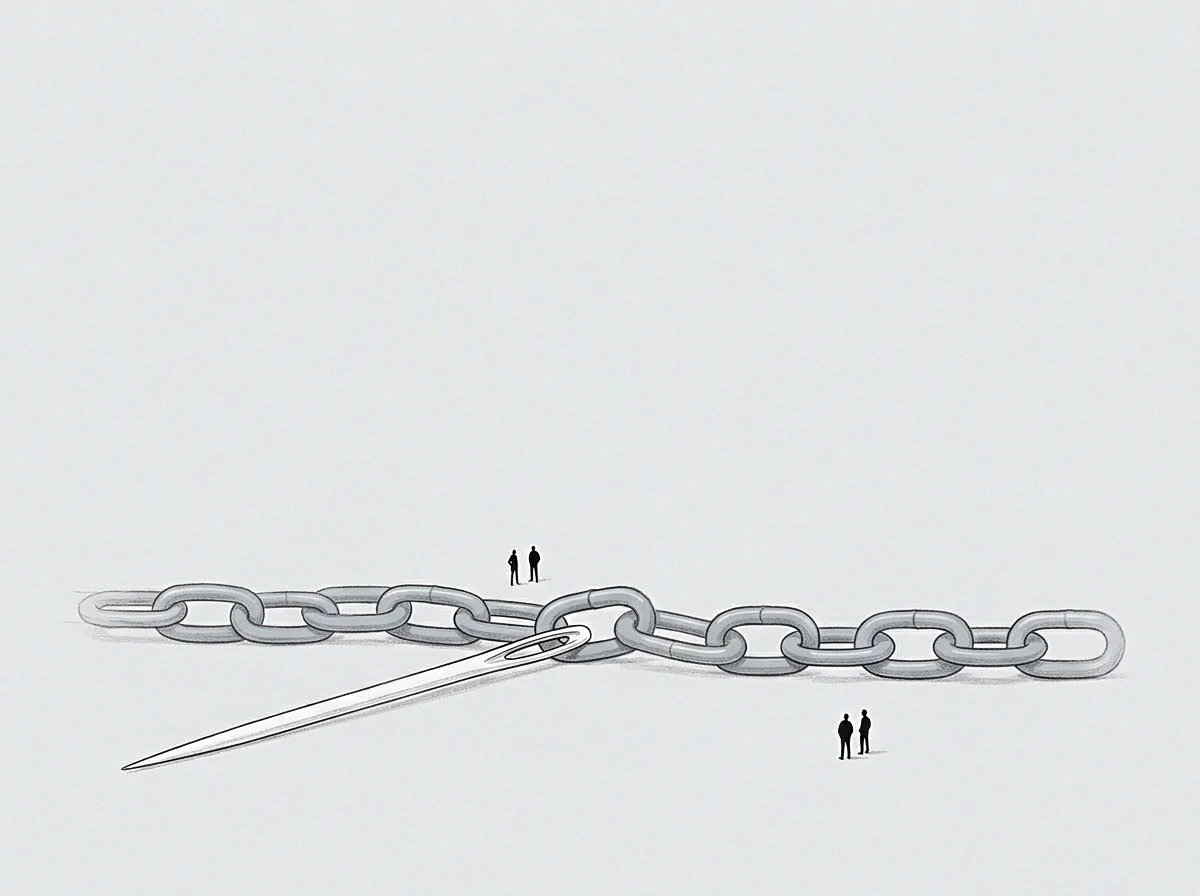
Deconstructing an operation requires mapping unstructured weekly activity into discrete seats. Tacit operational knowledge usually lives in individual habits, unwritten arrangements, and informal messaging channels. Pulling that knowledge into documented positions requires structured activity analysis over specified tracking intervals.
Organizational research divides enterprise operations into three functional seats, each operating on its own time horizon and cognitive register. The technical seat works in the immediate present, turning raw inputs or labor into client deliverables. The managerial seat looks at weekly and monthly horizons, coordinating workflows, maintaining quality, and allocating immediate capacity.
The executive seat operates on annual cycles, directing capital, setting commercial risk boundaries, and evaluating overall structural performance.
| Operational Seat | Primary Time Horizon | Core Objective | Primary Performance Metric | Dominant Cognitive Mode |
|---|---|---|---|---|
| Technician | Daily to Weekly | Execution of direct deliverables | Units produced per billable hour | Procedural and task-focused |
| Manager | Weekly to Monthly | Process stability and resource alignment | Workflow throughput efficiency | Tactical and coordination-focused |
| Founder | Quarterly to Multi-Year | Capital allocation and enterprise viability | Return on invested capital | Analytical and strategic risk evaluation |
| Data compiled from standard organizational role theoretical frameworks applied to owner-managed enterprises. | ||||
Separating positions requires systematically breaking down operational functions. Operating logs kept over consecutive fourteen-day periods supply the primary data needed to isolate work functions from personal identity. Assigning every log entry to a specific output category exposes hidden administrative drag and unallocated technical support.
Tacit operational knowledge remains personal property until captured in explicit operational procedures with assigned accountability metrics.
Failure to formalize core operational seats generates predictable organizational dysfunctions across small firms:
- Unpriced Operational Drag arises when specialized direct execution relies on unbilled administrative labor to complete primary customer deliverables.
- Accountability Obfuscation emerges when performance failures in technical delivery are shielded by executive authority overrides.
- Sub-Critical Delegation occurs when delegated tasks revert to executive control at the first sign of operational variance.
- Margin Illusion develops when enterprise profitability depends on owner-operators absorbing uncompensated manager-level coordination hours.
A common scenario shows the hidden cost of unseparated positions. Consider an enterprise generating two million dollars in annual revenue, run by two partners with equal equity shares. Partner A handles software architecture alongside client account management, while Partner B handles vendor relations, financial administration, and direct sales.
Neither partner tracks working capacity by functional category. When software delivery lags, Partner A blames account management demands, while Partner B blames declining sales conversions on administrative tasks. Because neither position has explicit hour allocations or output boundaries, operational conflict targets personal commitment instead of structural design.
Structural friction persists as long as performance standards attach to individual dedication rather than defined role boundaries.

Wedge
Mechanics of Structural Separation
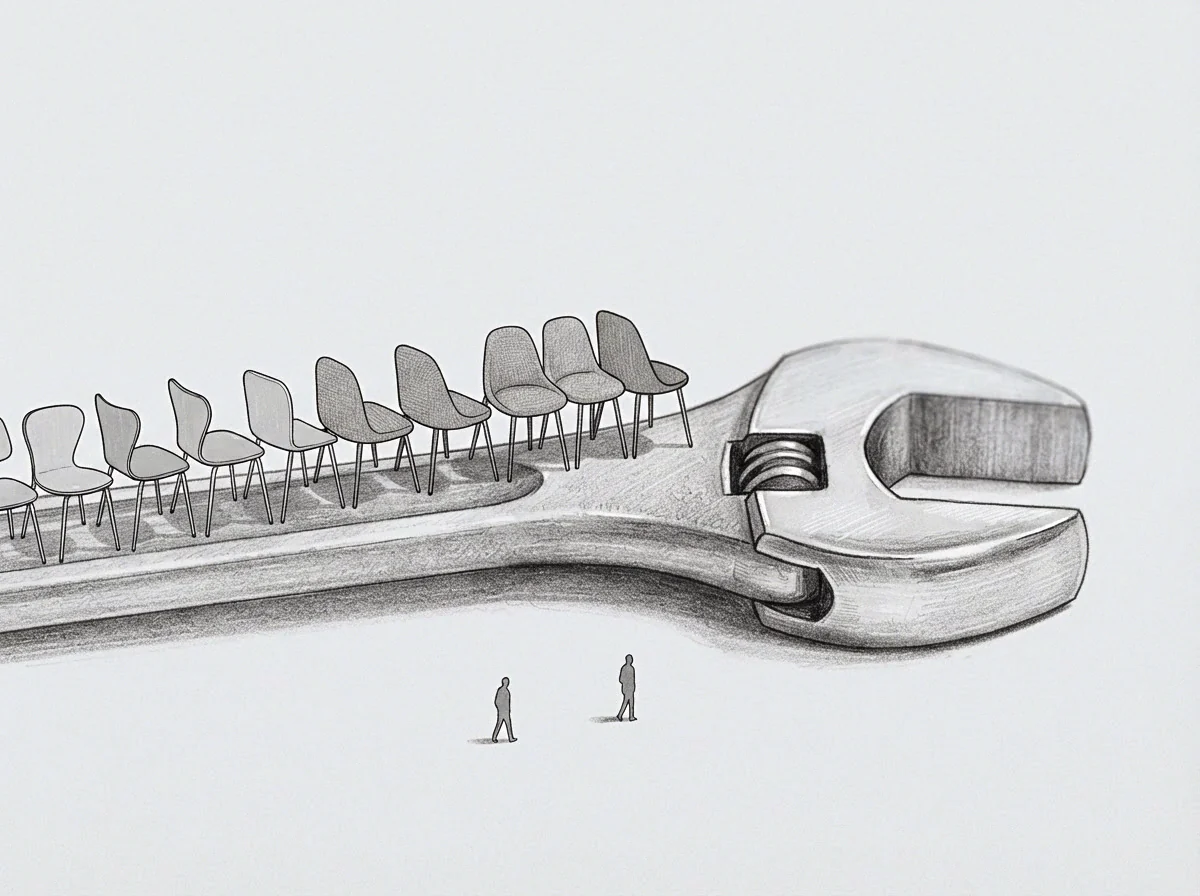
Separating merged positions requires establishing legal, operational, and financial distance between distinct seats. The process treats each seat as a contracted asset position filled by an external candidate operating under defined SLA terms. Decoupling personal equity ownership from operational role performance is the first structural step.
Operational positions require market compensation and independent accountability regardless of who holds the equity shares.
Executing a formal role separation follows a defined sequence to prevent operational disruption during transition phases:
- Isolate technical execution tasks from administrative workflows through task inventory audits.
- Draft objective position charters specifying accountabilities, required software access, and output thresholds for each seat.
- Establish market-rate wage schedules for each operational position, separate from equity dividend distributions.
- Formalize explicit handoff protocols defining how work transitions between technical execution and managerial oversight seats.
- Delegate direct execution authority to dedicated staff members while setting weekly supervisory review thresholds.
Documenting explicit handoffs converts individual operational habits into institutional assets. Standard operating procedures need to detail inputs, conversion steps, verification standards, and output channels. When documentation omits verification criteria, quality assurance defaults back to individual oversight, merging technical and managerial seats once again.
Separating positions introduces governance stability during commercial transitions or internal realignments. Setting compensation at market rates for each seat clarifies true operating income. A business paying an owner seventy thousand dollars for work with a two-hundred-thousand-dollar market replacement cost runs on inflated valuation metrics.
Recording realistic employment costs prevents financial strain when professional management replaces founding personnel.
Employment contracts for owner-operators should include explicit performance criteria matching standard third-party terms. Adding specific performance benchmarks, standard working hour expectations, and formal reporting lines to internal agreements protects institutional authority. Clear structural boundaries preserve organizational clarity when commercial disputes or underperformance require board intervention.
The operational charter specifies that failing to meet position output metrics triggers performance review protocols regardless of equity ownership status.

Clock
When Does Task Switching Overwhelm Operational Capacity?
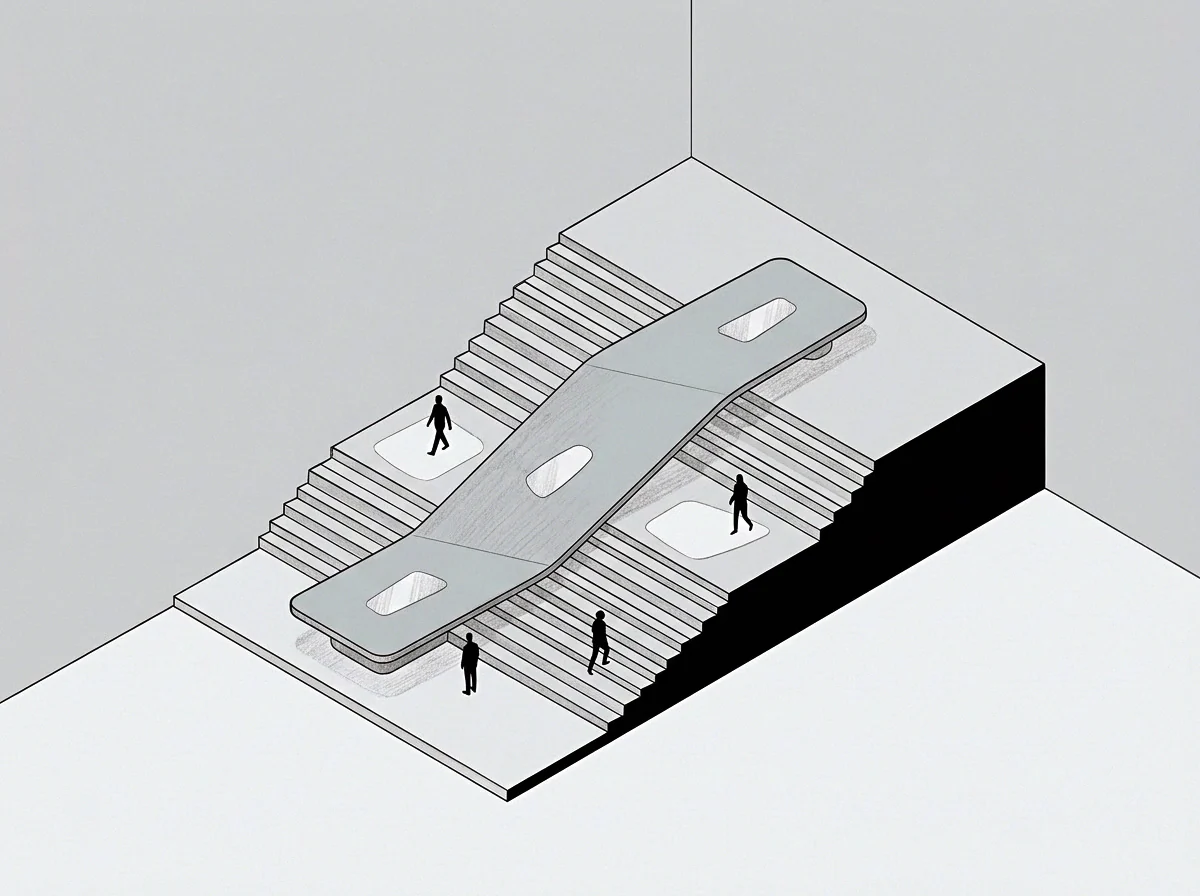
Cognitive switching costs limit the operational capacity of anyone trying to hold multiple distinct positions at once. Research in cognitive ergonomics shows that shifting task focus causes cognitive lag, raises error rates, and slows throughput. A founder moving between technical coding, employee reviews, and financial planning in a single morning incurs continuous reorientation costs.
Task switching frequency sets a hard upper boundary on daily operational capacity long before direct physical stamina fails.
Time-block architecture sets firm boundaries around separated seats. Allocating specific working days or structured half-day blocks to defined positions reduces switching frequency. A clear schedule assigns technical execution to morning blocks, reserves managerial oversight for specific afternoon intervals, and limits strategic governance to designated bi-weekly review windows.
Measuring role density exposes schedule congestion before operational delivery breaks down. Role density tracks the number of seat changes made within a ten-hour working window. High role density indicates fragmented focus, leading directly to delayed decisions, procedural oversights, and higher internal communication friction.
An operational audit of a manufacturing firm producing custom structural components illustrates this dynamic. The primary operator manages sales engineering, production scheduling, and executive supplier negotiations. Three weeks of operational data showed that direct manufacturing interruptions occurred every twenty-two minutes, forcing the operator to abandon strategic procurement analysis to resolve immediate floor alignment issues.
Weekly capacity dedicated to executive strategy dropped to three unfragmented hours, while technical production management absorbed thirty-four hours of reactive labor. Reallocating sales engineering to a secondary operator recovered eighteen hours of strategic procurement capacity within thirty days.
Managing cognitive load requires tracking time against specific position accounts rather than general operational buckets. Time spent resolving billing disputes logs under managerial administration, while time spent refining core service architecture logs under technical development. Accurate capacity accounting shows whether an enterprise has enough operational volume to justify hiring dedicated staff for individual seats.
What structural metric determines the moment an enterprise must transition from shared role coverage to hiring for a dedicated single seat?
Charter

Governance Boundaries for Separated Positions
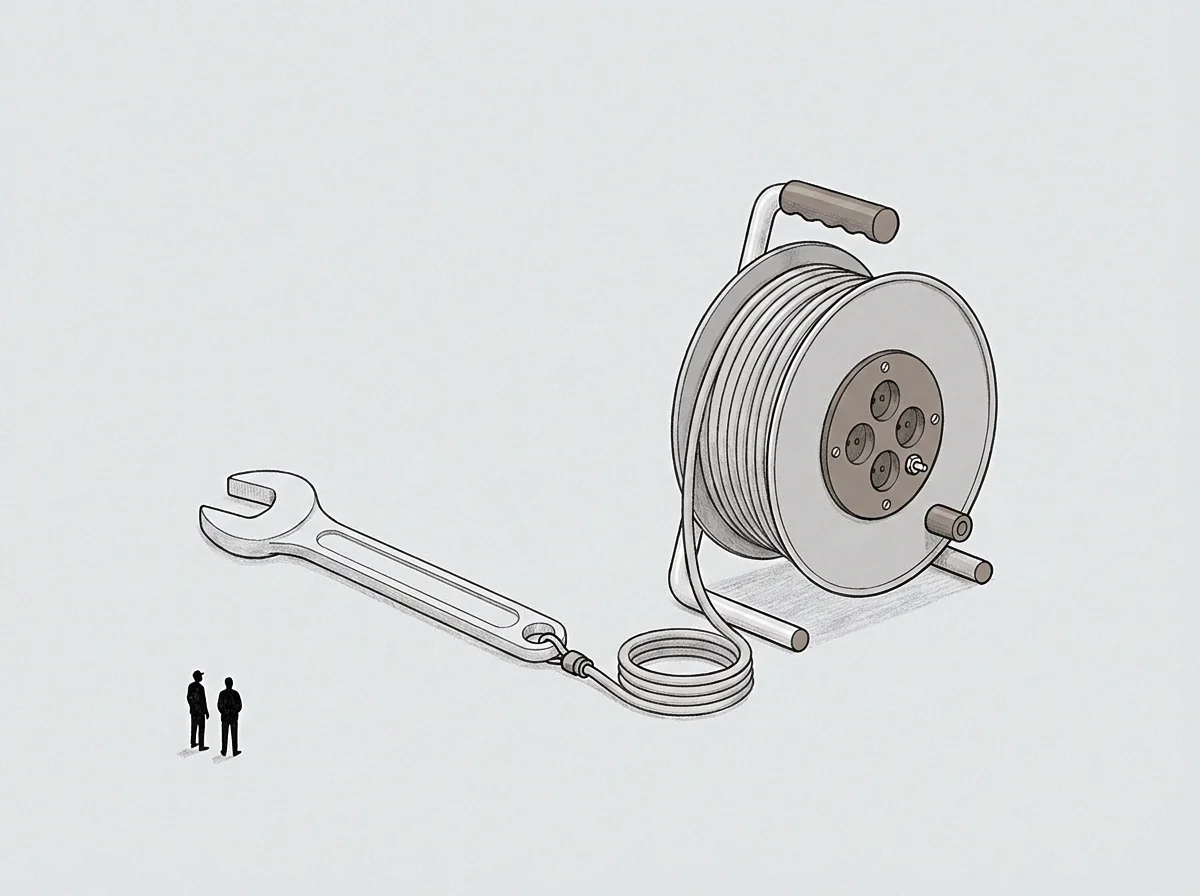
Sustaining separated positions over the long term requires governance mechanisms that survive changes in personnel. Position charters define explicit operational limits, decision-making boundaries, expenditure approvals, and formal reporting channels for every seat in the enterprise structure.
Formal contracts protect position boundaries against erosion during high-volume periods. When order volume spikes, operators often drift back into unstructured task switching. Formal governance rules require an explicit emergency declaration before an executive seat can override standard managerial procedures or absorb tactical execution tasks.
Every operational seat charter must incorporate five core governance structural elements:
- Scope Boundary Statement detailing the functional areas governed by the position and those strictly excluded from its authority.
- Expenditure Limits defining monetary thresholds for vendor commitments, payroll adjustments, and capital purchases without executive approval.
- Key Performance Indicators establishing quantifiable weekly and monthly output metrics required to maintain position standing.
- Escalation Protocols identifying operational conditions, variance levels, or legal risks that require immediate escalation to superior governance seats.
- Compensation Baseline specifying market-rate base wages, performance bonuses, and benefit schedules attached strictly to position execution.
Position governance clarifies the distinction between equity distributions and operational wages. Equity grants residual profit claims and voting rights; operational positions yield market wages for contractual labor. Confusing equity shares with employment compensation creates friction when one shareholder contributes daily labor while another acts purely as a passive investor.
Setting market-rate wages for each position ensures equity distributions reflect true residual economic value.
Separating operational positions in a small business transforms unstructured individual labor into scalable architecture. Documenting tacit procedures, enforcing schedule boundaries, and establishing explicit position charters builds an enterprise capable of continuous operation. The business secures its own market value when positions run on transparent systems rather than personal heroics.