
Technical Discovery and Account Audit Sequences
Technical discovery and account audit sequences systematically inventory infrastructure access, revoke legacy identity bindings, and verify operational continuity during technical seat succession.

Probe
A technical lead inherits a production infrastructure at midnight when the predecessor vacates the operator seat. Three initial credential files sit in a shared folder alongside an incomplete system diagram. The immediate operational challenge centres on determining whether those keys grant complete system entry or merely expose a outer perimeter.
Legacy service accounts, unmapped staging servers, and orphaned third-party webhooks frequently operate outside recorded documentation. Without a structured initial audit, an incoming team spends weeks discovering hidden dependencies through system failures rather than deliberate inspection.
Initial technical discovery establishes the boundary between documented architecture and actual operational reality. The process begins by tracing identity provider directories against active network endpoints. Single sign-on logs reveal which identity accounts hold active sessions, while cloud provider access logs record which programmatic keys execute operations against live databases.
Shadow infrastructure routinely surfaces during this initial pass: developer sandbox environments running on personal cloud accounts, unmonitored database replicas, and hardcoded API keys embedded within automated testing suites.
An unmapped production environment bills the incoming team in operational downtime before the first system architecture change takes place.
Credentials expire without notice. Access logs retain records. Shadow APIs leak configuration data.
System operators who delay mapping identity dependencies risk locking themselves out during primary credential rotation. The initial account audit must therefore isolate every credential entry point before any password or private key is modified.
- Identity Provider Enumeration inspects the primary directory service to catalog every user account, administrative group, and external guest permission.
- Programmatic Key Audit extracts every active API token, deployment key, and service account secret across all connected cloud platforms.
- Domain and DNS Verification cross-references registered domain names against active domain name system records, SSL certificates, and registrar account permissions.
- Third-Party SaaS Mapping inventories external build systems, error tracking tools, database hosting providers, and communication webhooks tied to production infrastructure.
Omitting any step in this discovery sequence leaves unmonitored access channels open to prior operators. The operational consequence of incomplete account discovery is persistent, unmapped administrative access that invalidates subsequent security audits.

Table
Structural differences separate the physical layout of software components from the identity structures that grant administrative access. Software discovery focuses on code repositories, database schemas, and deployment pipelines. Account discovery examines authentication tokens, identity provider roles, and billing owner assignments.
Conflating these two audit streams creates gaps where technical assets appear fully transferred while underlying identity control remains held by legacy accounts.
Code repositories contain explicit logic, yet infrastructure as code templates often rely on implicit variables injected at runtime. A deployment script may reference a database instance without specifying which identity role owns that database. The account audit locates the root credential that provisioned the database, verifying whether the transfer recipient holds full ownership rights or secondary read permissions.
The distinction determines whether the incoming technical operator can recover the environment during a primary infrastructure failure.
| Audit Vector | Verification Subject | Latent Risk Horizon | Mandatory Handover Artifact |
|---|---|---|---|
| Infrastructure as Code | Deployment scripts and cloud templates | Hardcoded environment variables and uncommitted template drifts | Version-controlled repository access with full commit history |
| Identity Provider Graph | Root accounts and single sign-on user directories | Dormant administrative accounts and unrevoked guest access | Exported user access matrix and root account transfer sign-off |
| SaaS Integrations | Payment gateways, monitoring services, and email providers | Orphaned API keys retaining write access after offboarding | Comprehensive API key registry and billing ownership assignment |
| Data Pipeline Storage | Database instances, object storage buckets, and backups | Unencrypted snapshot copies held in external developer accounts | Storage bucket policy registry and encryption key ownership |
Production databases hold state. Secret managers rotate keys. Legacy webhooks bypass firewall controls.
Unmapped servers bill monthly. Explicit documentation covers system design, while tacit knowledge governs how those systems survive operational incidents. When technical discovery focuses solely on repository commits, the operational context surrounding deployment scripts remains locked inside the memory of the departing engineer.
When deployment keys remain tied to individual developer seats, identity revocation disrupts production build pipelines.
Codifying this operational context requires pairing credential auditing with live verification runs. The incoming operator observes a complete build and deployment cycle while the departing operator executes the deployment. This observation step exposes hidden steps: manual configuration overrides, undocumented IP whitelist additions, and local environment variables that never entered the repository.
The account discovery protocol becomes binding upon execution of the root ownership transfer clause in the acquisition contract.
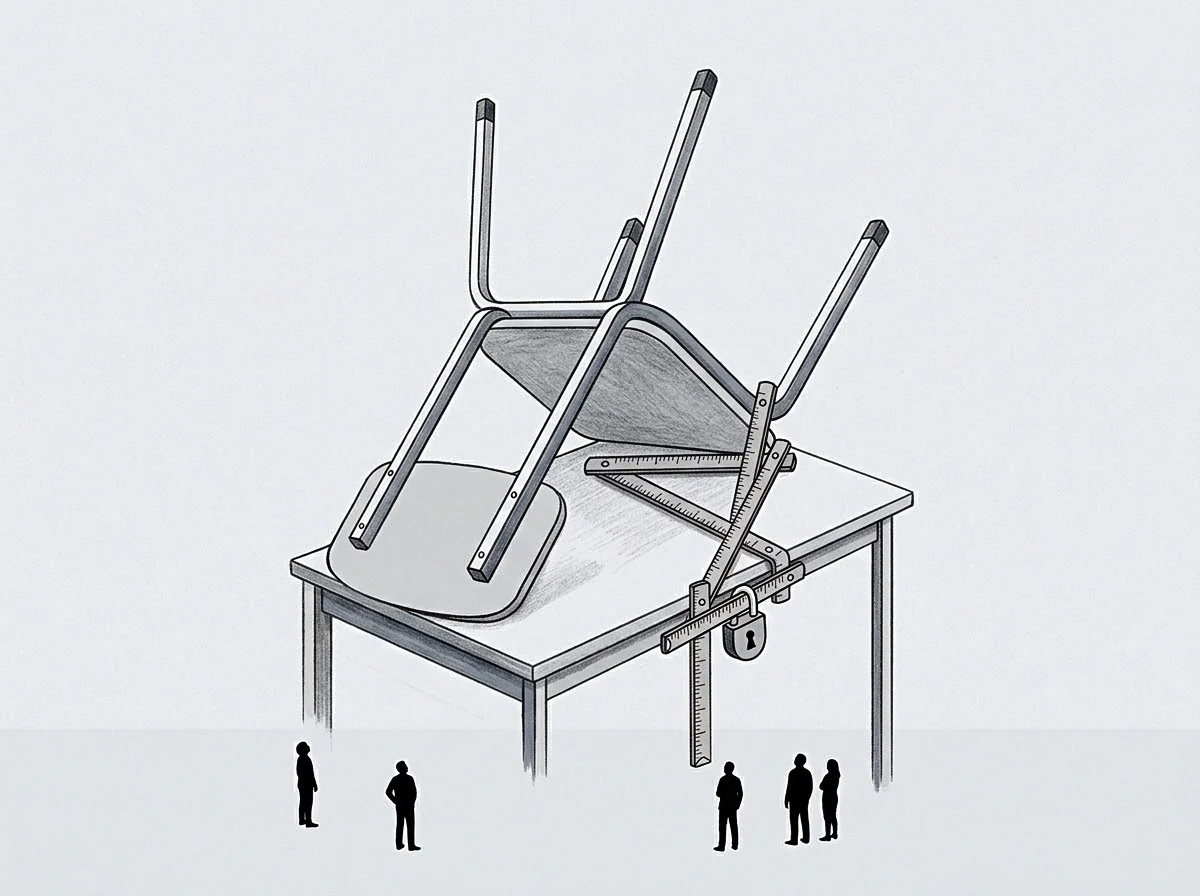
Vector
Software repositories routinely conceal implicit runtime dependencies that standard static code analysis passes over. Environment variables defined in local configuration files often fail to reach production documentation. Container registries may house base images built years prior by engineers who left no build instructions.
A thorough codebase discovery extracts these hidden vectors before identity access is severed.
What Codebase Dependencies Escape Automated Credential Scanning?
Automated security scanners flag plain-text passwords and standard API key formats within git repositories. These tools miss third-party services authenticated through IP whitelisting or legacy client certificates installed directly on virtual server instances. Automated tools also overlook operational dependencies anchored in personal developer accounts, such as external package repositories or private container registries hosted under individual user names.
Identity providers enforce session timeouts. System dependencies cascade silently. Third party tokens outlive seats.
Dormant accounts retain administrative rights. Uncovering these dependencies demands a manual review of build configurations, deployment manifests, and server initialization scripts.
The presence of hardcoded legacy webhooks guarantees secondary data leakage when external staging servers are decommissioned.
- Hardcoded Environment Overrides occur when runtime configuration scripts override version-controlled variables with values stored locally on legacy build servers.
- Orphaned OAuth Application Grants persist when third-party tools maintain authorized access tokens despite the primary user account being deactivated in the main directory.
- Unregistered Domain Name Dependencies emerge when internal software routines invoke microservices via secondary domains registered under personal registrar accounts.
- Embedded Third-Party Analytics Keys linger within client-facing mobile or web applications, sending telemetry data to account dashboards owned by former team members.
Identifying these hidden channels before executing account revocation prevents accidental service disruptions. A standard rule of thumb dictates that any third-party connection lacking a documented service account owner defaults to single-user ownership and requires immediate isolation.

Gate
Administrative control depends on the immediate capability to enforce permission boundary isolation across external SaaS boundaries. Revoking a user account in a primary single sign-on system does not automatically terminate access across downstream services. Many cloud applications retain active API sessions or OAuth tokens long after the primary identity record is disabled.
An account audit validates offboarding controls by systematically testing every endpoint for persistent access.
Public SSH keys stored within server configuration files represent a common persistent entry vector. Engineers frequently add personal SSH keys to server authorized files during emergency troubleshooting incidents. These keys bypass central single sign-on controls entirely.
The audit sequence mandates running configuration management scripts across all virtual instances to enforce explicit SSH key lists and purge unmapped public keys.
System audits that verify access lists without testing credential revoking capabilities leave hidden persistent entry points behind.
Audit logs record every entry. Shadow permission structures persist until root credentials rotate completely. The offboarding verification protocol requires resetting multi-factor authentication devices attached to administrative roles, rotating database master passwords, and regenerating all continuous integration deployment tokens simultaneously.
The departing operator paraphrases the reality of the situation flatly: the infrastructure remains accessible to old credentials until every root secret is reissued under exclusive new management control.

Custody
Final operational transfer requires formal severance of legacy session persistence across all registered cloud environments. The handover sequence terminates when the incoming team holds sole administrative authority over root accounts, billing profiles, domain registrars, and code repositories. Achieving complete operational independence requires verifying that no former operator holds secondary recovery methods, such as backup phone numbers or personal email addresses tied to account recovery workflows.
The operational scaffold supporting the technical transfer comes down in stages. During the initial week, the departing operator remains available to answer structural questions while the incoming lead executes all system changes. In the second stage, the incoming lead executes deployment cycles independently while the departing operator observes without intervention.
By the final stage, all access channels assigned to the departing operator are severed entirely, leaving the incoming team in sole possession of the production infrastructure.
Verification of the transfer completes when a cold-start deployment succeeds without relying on legacy assets or external advice. The incoming technical team initiates a clean deployment build from repository source code, provisions fresh virtual instances, and validates that all database connection strings authenticate against newly generated credentials. The technical discovery and account audit sequence concludes as the live production routing moves to the fresh environment, confirming that the new seat holder owns both the explicit technical architecture and the tacit operational authority required to run it.