
Decomposing Technical Leadership Seats To Prevent Operational Exhaustion
Partitioning technical governance, people management, and code architecture into distinct seats stops task switching from consuming executive cognitive capacity.

Heap
Production alerts ping a phone resting beside an open terminal at two in the morning. An engineer answers them, merges a hotfix to unblock payment processing, and wakes four hours later to review team hiring budgets before a board discussion on infrastructure commitments. The title on the equity agreement reads technical lead or chief technology officer, yet the work demanded over twenty-four hours spans three distinct operational positions.
Each position carries competing rhythms, different evaluation criteria, and irreconcilable definitions of an urgent task. When one person occupies all three positions without formal boundaries, the operational queue expands until cognitive exhaustion forces a systemic breakdown.
The accumulation of distinct functions into a singular post begins quietly during the initial build phase of an enterprise. One individual writes the foundational architecture, designs the database schema, directs external contractor assignments, and negotiates vendor pricing. Growth compounds the volume within each function.
The craft seat demands uninterrupted stretches of deep reasoning to trace memory leaks or isolate concurrency faults. Meanwhile, the administrative seat demands continuous availability to approve pull requests, resolve cross-team prioritization disputes, and handle performance reviews. The company director seat demands strategic forethought regarding long-term technical positioning, supplier leverage, and balance sheet exposure.
A technical title commonly functions as an uninspected container for three conflicting jobs.
Combining these responsibilities into an undifferentiated block generates chronic task switching. Experimental psychology measures the cognitive penalty of switching attention between divergent analytical models as an immediate decay in executive function. Shifting from high-abstraction system architecture to interpersonal personnel disputes introduces residue that degrades judgment in both domains.
The engineer attempts to resolve this friction by extending working hours into the night, substituting physical stamina for functional division. Sleep debt accumulates. The calendar absorbs every disruption.
The resulting operational exhaustion degrades technical quality and institutional cohesion. Subtle architectural flaws slip through hurried code reviews conducted between administrative check-ins. Junior developers wait days for architecture decisions because their lead is locked in compensation planning sessions with external advisers.
Executive peers perceive the technical leader as an operational bottleneck, interpreting physical depletion as organizational indecision. Unchecked functional accumulation across multiple seats eventually forces competent engineering leaders to abandon operational posts entirely.

Bench
Organizational role theory provides the analytical apparatus required to disentangle consolidated technical responsibilities. Robert Kahn and his colleagues demonstrated that role ambiguity and role conflict predict elevated somatic tension, diminished job satisfaction, and voluntary turnover in knowledge-intensive occupations. In an early technical organization, role conflict surfaces because the three underlying functions require contradictory cognitive postures.
Isolating these functions into discrete structural seats transforms an intractable personal burden into an objective staffing calculation.
Decomposing the combined technical executive position yields three distinct operational stations:
- The Architecture Craft Seat governs system reliability, codebase topology, protocol selection, and direct technical risk mitigation across all software assets.
- The Delivery Operations Seat directs headcount distribution, project cadence, team dispute escalation, compensation administration, and day-to-day workflow execution.
- The Technical Governance Seat oversees corporate technology strategy, supplier dependencies, intellectual property defensibility, balance sheet allocations, and investor relations.
The craft seat requires uninterrupted focus and deep technical mastery. The operations seat demands continuous relational availability and procedural coordination. The governance seat requires economic detachment and broad commercial appraisal.
Forcing a single individual to toggle between these three stations across an eight-hour workday guarantees severe role strain. Attention scatters across twelve queues.
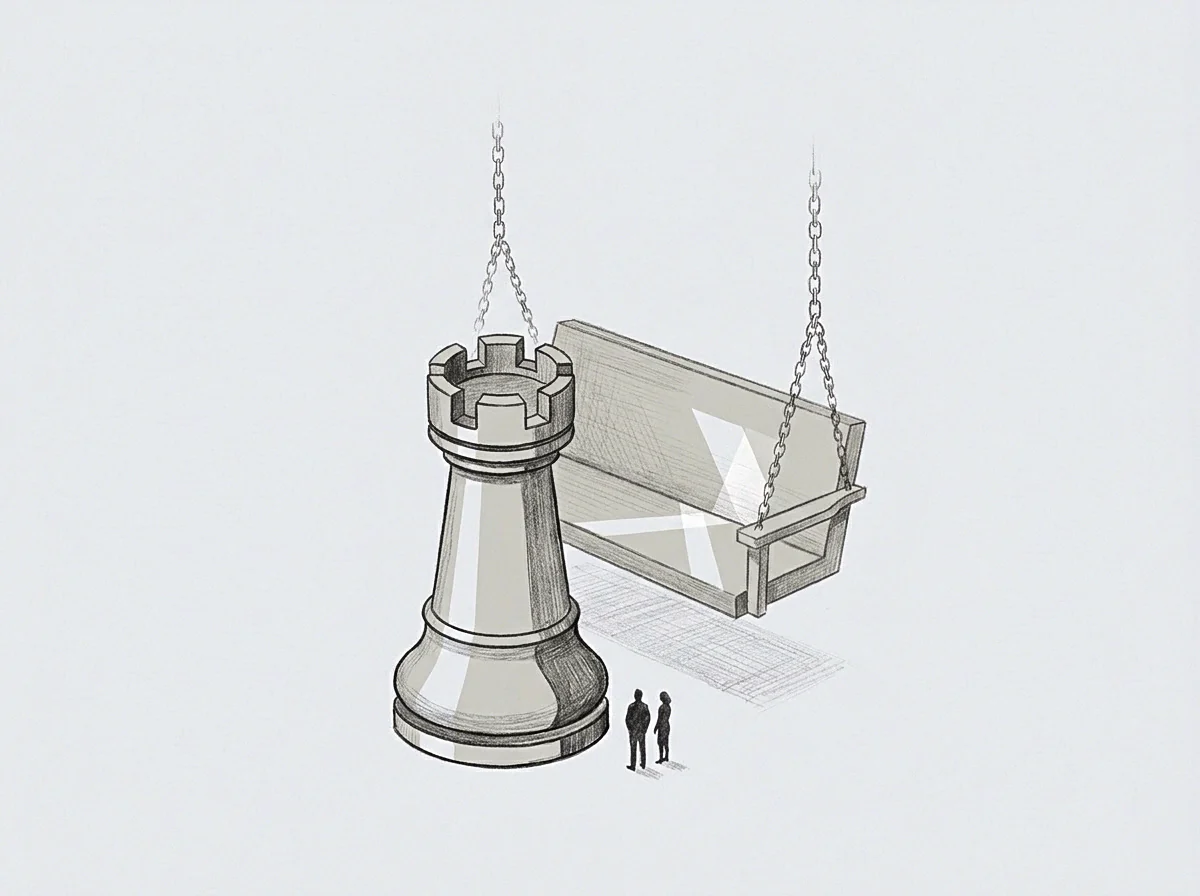
Does The Manager Seat Require Technical Authority?
Engineering cultures frequently insist that operational delivery managers must retain hands-on system authority to command peer respect. Field observations across mid-scale engineering departments demonstrate that this assumption creates structural instability. When the delivery lead also holds final architectural veto power, system design meetings devolve into scheduling compromises.
Technical decisions are made to hit quarterly delivery targets rather than to protect system integrity. Separating the seats allows the architecture lead to defend codebase health while the delivery lead manages schedule risk, creating healthy institutional tension.
Role conflict recedes only when distinct operational mandates receive separate structural owners.
The technician inspects the pipeline. The operational queue never empties. When technical founders wear multiple seats without formal decomposition, they treat their own physical capacity as an infinite buffer against poor organizational design.
Every unassigned task falls to the founder by default. Stating the boundaries of each seat allows the enterprise to measure the true operational burden required to sustain velocity.
A founder who refuses to partition operational seats purchases immediate coordination speed by sacrificing future institutional scalability.

Wedge
Separating the technical leadership positions requires comparing their operating parameters across clear functional dimensions. The table below delineates the three seats across cadence, primary output, horizon, cognitive load, and organizational failure signatures.
| Structural Seat | Decision Horizon | Primary Output | Cadence | Context Switching Tax | Primary Failure Signal |
|---|---|---|---|---|---|
| Architecture Craft | Eighteen to thirty-six months | System designs, interface contracts, technical risk reviews | Asynchronous, deep focus blocks | Severe cognitive drain when interrupted by operational meetings | Accumulated architectural debt, catastrophic service outages |
| Delivery Operations | One to two quarters | Sprint plans, staffing models, performance assessments | Synchronous, real-time coordination | Moderate fatigue from continuous interpersonal interaction | Missed product milestones, high engineering attrition |
| Technical Governance | Three to five years | Capital allocations, vendor contracts, intellectual property stance | Quarterly reviews, episodic transactions | Low switching tax, high consequence per decision | Regulatory exposure, crippling commercial terms |
The switching tax cataloged above explains why founders holding all three seats experience chronic mental fatigue. Shifting from the multi-year perspective of governance to the immediate synchronous triage of delivery operations shocks the prefrontal cortex. The code review waits.
The title conceals three jobs. The operator remains accountable.
A structural boundary unstated in writing will be erased by the first operational crisis.
A functional wedge must be driven between these stations. Consider a firm expanding from eight to thirty-five engineers. The original technical founder continues reviewing all critical pull requests, conducting bi-weekly one-on-one reviews with twenty reports, and negotiating enterprise compliance addenda.
Assuming forty hours per week, the founder spends fifteen hours on personnel coordination, fifteen hours unblocking pull requests, and ten hours on executive discussions. The arrangement leaves zero hours for deliberate architectural planning. Systemic technical debt grows unmonitored while the founder works sixty-five hours weekly to avoid total administrative collapse.
Capacity drops by half.
Dividing the responsibilities into explicit contracts alters this trajectory. Formal assignment of the Delivery Operations Seat to an experienced engineering director immediately reclaims thirty percent of the founder’s weekly cognitive bandwidth. The handover clause specifies that operational dispute resolution and performance evaluations transition fully to the new seat holder on a fixed calendar date.

Hand
Relinquishing an operational seat requires formalizing knowledge that previously existed only as personal instinct. Founding engineers frequently resist delegating operational seats because their architectural understanding is deeply intertwined with implicit organizational history. The engineer knows instinctively why a specific message broker was chosen, which client endpoints produce anomalous traffic, and which database migrations contain fragile dependencies.
Handing over the operations seat requires translating this tacit knowledge into visible architectural documentation and verifiable operational runbooks.
A disciplined operational transition follows an explicit operational progression:
- Explicit Mandate Definition documents the exact decisions, approvals, and budget boundaries reserved strictly for the designated seat.
- Tacit Knowledge Extraction converts undocumented architectural heuristics and system dependencies into readable engineering runbooks and architectural decision records.
- Shadow Coordination Protocol pairs the incoming operator with the incumbent through structured observation periods across standard delivery cadences.
- Complete Authority Transfer formally announces the cutover date after which the incumbent vacates the operational channel completely.
The transition fails whenever an incumbent attempts a partial transfer while maintaining back-channel veto power. When team members realize the former seat holder still overturns operational decisions, they bypass the new operator, re-establishing the original bottleneck. Complete separation requires total communicative discipline.
The founder absorbs the excess. Fatigue alters every calculation.
An operational seat remains occupied until the authority to make flawed decisions transfers to the successor.
Consider an engineering team with three squads struggling under release bottlenecks. The founding technical lead resolves to shed the Delivery Operations Seat. The lead hires an engineering manager, hands over the direct reports, but continues attending every sprint retrospective to correct workflow estimates.
The new manager feels undermined and ceases exercising initiative, while team members continue sending direct escalation messages to the founder. The founder remains exhausted, paying a salary for a managerial post that cannot function because the founder refuses to vacate the communication channel.
If the original technical lead refuses to exit the operational loop, the new director cannot establish functional authority with the team.

Shelf
Placing an operational seat onto the shelf of organizational history alters a technical founder’s relationship to the firm. When the delivery operations seat is fully staffed by an experienced engineering director, and the architecture craft seat is anchored by a principal engineer, the technical founder transitions exclusively into the technical governance seat. This transition frees hundreds of operational hours annually, replacing acute operational exhaustion with deliberate, strategic focus.
The calendar empties of transactional interruptions. High-order technical strategy receives the sustained cognitive commitment it requires.
This restructuring uncovers an unavoidable institutional tension regarding long-term alignment. While organizational literature confirms that role clarity reduces somatic strain, empirical research into closely held firms indicates that founders experience disorientation after vacating daily operational queues. The operational queue provided immediate dopamine validation through closed tickets, merged code, and unblocked colleagues.
The governance seat operates on an elongated feedback loop measured in quarters rather than hours. The board reads silence. The seat extracts its fee.
The distinction resolves the strain. Nobody writes the handover. A serious unresolved challenge remains regarding how small enterprises balance compensation and equity distribution when a founding technical leader vacates both the craft and operational seats, retaining only strategic board governance while non-founding executives carry the daily operational load.