
Executive Override Paths In Early Stage Governance Architecture
Executive override paths allow officers to countermand delegated authority, stabilizing existential enterprise threats while risking managerial operational paralysis.
Gate
A software deployment stalls at midnight when an executive enters the production environment directly, revoking credentials that an engineering lead validated hours prior. The technical lead discovers the intervention at dawn through an automated alert rather than an operating log. The technical hierarchy broke without notice.
The event exposes the operational seam between delegated management and ultimate corporate authority.
Early-stage operations often run on informal understandings until an executive intervenes against a subordinate decision. An executive override path is the structural mechanism through which an officer or director formally bypasses established operating channels to countermand a manager, reallocate resources, or halt an operational sequence. Corporate charters reserve general management power to directors and officers, yet day-to-day execution depends upon distributed authority.
Friction arises when an executive acts outside established administrative routines without an agreed trigger.
A reserved executive prerogative exercised without structural boundary dismantles the delegated manager seat before operational autonomy takes root.
Three seats exist simultaneously within the governing tier of a newly formed enterprise: the technician, the manager, and the founder. The technician builds the deliverable. The manager coordinates workflows, sets deadlines, and evaluates operational output.
The founder holds the legal shell, satisfies statutory obligations, and bears corporate solvency liabilities. When one individual holds all three seats, operational boundaries remain tacit. The confusion sharpens the moment an executive hires an external manager but continues to issue direct commands to technical personnel.
Direct intervention carries a structural tax. Subordinates stop relying on their direct supervisors when an executive countermands operational decisions at will. The middle tier becomes ornamental, holding responsibility for delivery while lacking authority over process.
This operational failure costs the enterprise supervisory credibility and stalls executive succession.

Route
Command structures in early enterprises follow two distinct trajectories during crisis points. The first channel travels through administrative delegation, while the second channel relies on extraordinary intervention codified in company bylaws or shareholder agreements. Operational stability depends upon whether these two channels interact through explicit thresholds or unstructured personal prerogative.
Formal instruments typically define how operational commands bypass intermediate supervisors. Statutory company law vests ultimate management authority in the governing board, which delegates operational execution to appointed officers. Those officers retain statutory rights to intervene under defined conditions, including financial insolvency risk, severe regulatory noncompliance, or direct breach of fiduciary duty.
Conflict surfaces when an executive claims these extraordinary powers during routine operational friction.
- Statutory receivership clauses define formal triggers where directors suspend operational spending to protect creditor capital during technical insolvency.
- Emergency executive orders authorize unilateral vendor contract terminations whenever counterparty conduct exposes the corporate entity to criminal liability.
- Direct administrative intervention countermands ordinary engineering protocols during continuous production outages exceeding designated financial damage thresholds.
- Reserved investor vetoes force immediate operational pivots through protective governance covenants when executive leadership breaches working capital minimums.
Each channel produces a specific structural reaction across the organization. Formal interventions governed by codified thresholds create minimal role confusion because the trigger remains visible to the entire team. Unilateral actions driven by executive anxiety bypass these mechanisms, reducing managerial authority to a polite fiction.
When operational staff observe that a manager cannot defend a technical plan against arbitrary executive intervention, communication flows abandon the manager seat entirely.
A codified emergency trigger protects managerial authority by defining the exact conditions under which operational hierarchy dissolves.
Tacit authority relies on personal influence, while codified authority operates through documented governance paths. When an enterprise transitions from two operators in one room to a layered organization, unwritten habits create systemic operational blind spots. The executive assumes personal intuition justifies overriding an operational lead, whereas the team reads the same action as capricious interference.
Operational continuity deteriorates whenever an intervention lacks an audit trail.
A corporate charter amendment specifying reserved matters directly changes how officers execute sudden operational reallocations.
Lever
Codifying unilateral authority requires balancing operational speed against managerial stability. Small enterprises face high existential hazards where waiting for formal consensus leads to catastrophic failure. Preserving managerial retention requires bounding executive intervention through explicit procedural levers.
Codified Escalation Against Operational Autonomy
Structural intervention models range between completely flexible executive prerogative and rigid administrative protocol. The choice of architecture determines whether an organization retains competent operating talent or degrades into a personal dictatorship masked by corporate titles. A formal balance balances emergency survival against daily functional autonomy.
| Mechanism Type | Trigger Threshold | Execution Speed | Managerial Seat Impact | Organizational Durability |
|---|---|---|---|---|
| Unilateral Founder Action | Subjective perception of enterprise hazard | Immediate | Severe role erosion and tactical paralysis | Low retention of operational managers |
| Codified Board Circuit Breaker | Statutory insolvency or material regulatory breach | Moderate delay for emergency notice | Preserves structural role definitions | High retention with verified compliance |
| Dual-Signature Executive Order | Defined capital expenditure or contractual threshold | Intermediate procedural verification | Distributes operational accountability | Sustainable institutional governance |
The comparative data highlights how informal overrides accelerate tactical reactions while damaging long-term organizational capacity. An executive acting alone can resolve an immediate operational impasse in ten minutes. That same action signals to professional operators that their employment agreements carry no real administrative authority.
The short-term tactical gain precipitates a long-term supervisory deficit.
Operational velocity purchased through arbitrary intervention extracts an immediate toll on managerial retention.
Could Codified Escalation Preserve Subordinate Operating Seats?
Codification creates a clear procedural circuit breaker. The structural design isolates operational emergencies from ordinary managerial errors. A competent engineer making an operational choice that produces suboptimal results represents routine business variance.
An executive who treats operational variance as an emergency override justification destroys the managerial feedback loop. True emergency interventions restrict themselves to events threatening corporate continuity.
Intervention mechanisms function reliably when the cost of execution exceeds the friction of consultation.

Loss
Intervention carries invisible costs that never register on corporate financial statements until executive turnover begins. When an officer steps into a technical process to override a lead architect, the technical lead steps out psychologically. The manager seat loses its structural integrity the moment an executive demonstrates that operating decisions remain contingent on personal executive mood.
Role strain accelerates when authority divides from accountability. An engineering director held accountable for product delivery timelines cannot function when an executive periodically cancels core technical initiatives without consent. The director experiences structural paralysis, caught between contractual accountability and an unpredictable governance hierarchy.
Organizational researchers identify this tension as structural role ambiguity, a condition that consistently triggers early executive departures.
- Tacit disengagement occurs when operating leads stop defending technical standards, deferring every consequential operational choice upward to avoid executive countermands.
- Administrative bypass develops as junior technicians route informal inquiries directly to the executive, treating the intermediate manager as an irrelevant procedural hurdle.
- Supervisory vacancy emerges when capable middle managers resign, leaving the founding executive to absorb the full operational burden of daily execution.
The operational cost compounds across subsequent hiring cycles. An enterprise that gains a reputation for arbitrary executive intervention fails to attract high-tier operating talent. Prospective managers demand excessive equity risk premiums or refuse to join an organization where executive overrides remain unpredictable.
The executive seat remains trapped in operational triage, unable to graduate into governance and strategic oversight.
Unbounded executive command converts professional managers into passive administrative scribes.
A founder who continuously exercises informal overrides spends thirty hours a week resolving operational disputes that delegated managers were hired to handle. That structural distraction prevents capital formation and market development. The enterprise trades strategic momentum for tactical meddling, suffocating managerial capacity under the pretense of operational vigilance.
The technical roadmap means nothing if the executive changes the architecture every Tuesday night.

Check
Constructing durable governance architecture requires limiting the executive override path before operational strain forces a corporate crisis. A durable governance framework separates ordinary administrative decisions from systemic enterprise risks. Codifying the override path protects both the executive officer and the operational staff from erratic interventions.
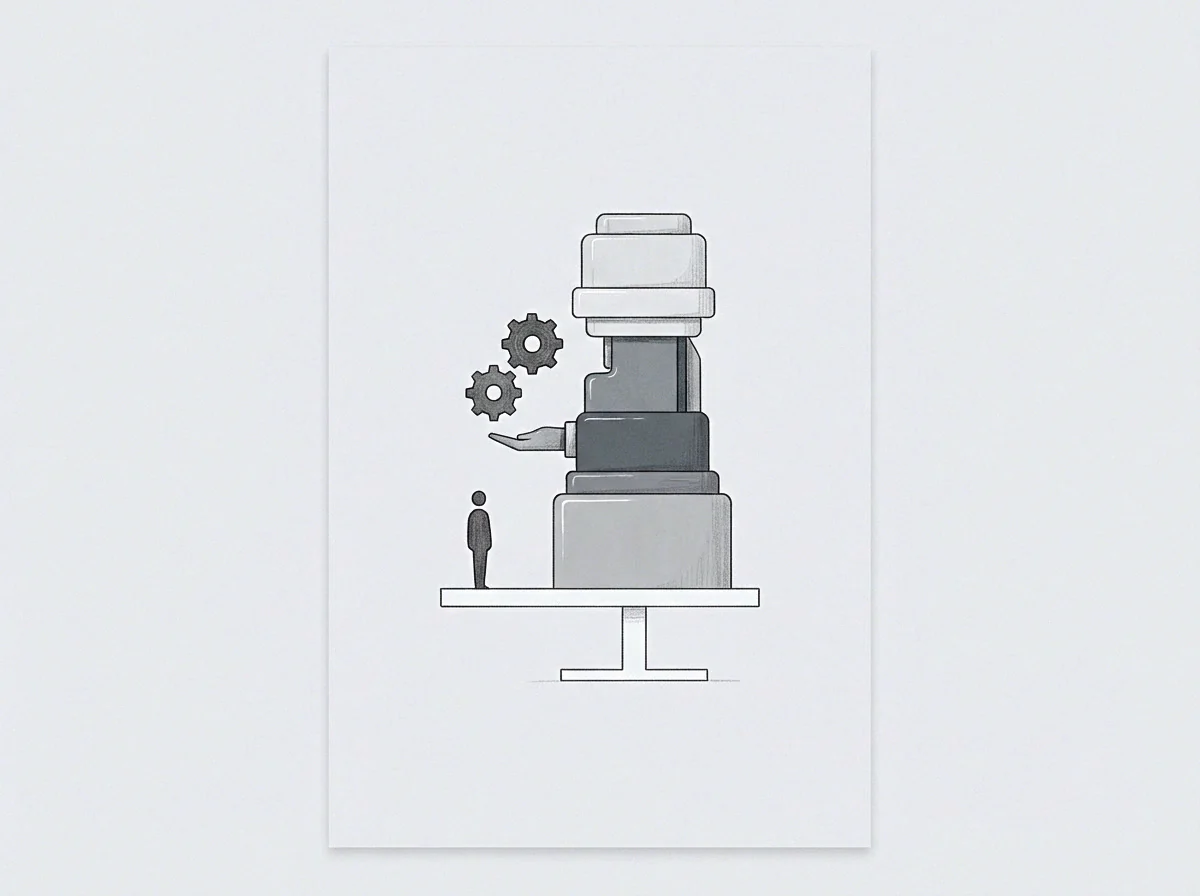
Structural Boundaries for Executive Intervention
A balanced governance design implements explicit boundaries around executive authority. These boundaries rely on contractual provisions, voting thresholds, and defined communication protocols. Rather than eliminating executive prerogative, the structure formalizes the override into a traceable, costly administrative move.
First, early-stage enterprises establish a written list of reserved operational matters. Routine hiring, software architecture choices, and supplier selections below a defined financial threshold remain under exclusive managerial jurisdiction. Executive intervention within these domains triggers mandatory board notification or requires written operational justification filed with corporate records.
Second, organizations construct emergency override pathways that require joint authorization. An executive seeking to countermand a department head must secure written concurrence from a co-founder, independent board director, or designated legal counsel. This procedural pause filters out emotional interventions while preserving rapid emergency response capabilities for catastrophic hazards.
Third, governance rules impose mandatory post-override reviews. Whenever an executive exercises a formal override, the governing board conducts an operational post-mortem within fourteen days. The review evaluates whether the intervention prevented enterprise ruin or simply reflected managerial impatience, creating institutional accountability for the exercise of raw executive power.
Whether early-stage enterprises can maintain codified override discipline when existential market pressures demand instantaneous executive unilateralism remains an open operational dilemma.