
Managing Structural Role Strain Between Executive Mandates And Engineering Capacity Constraints
Structural role strain between executive mandates and engineering capacity resolves when organizations replace absorptive personal labor with gated throughput quotas.

Wedge
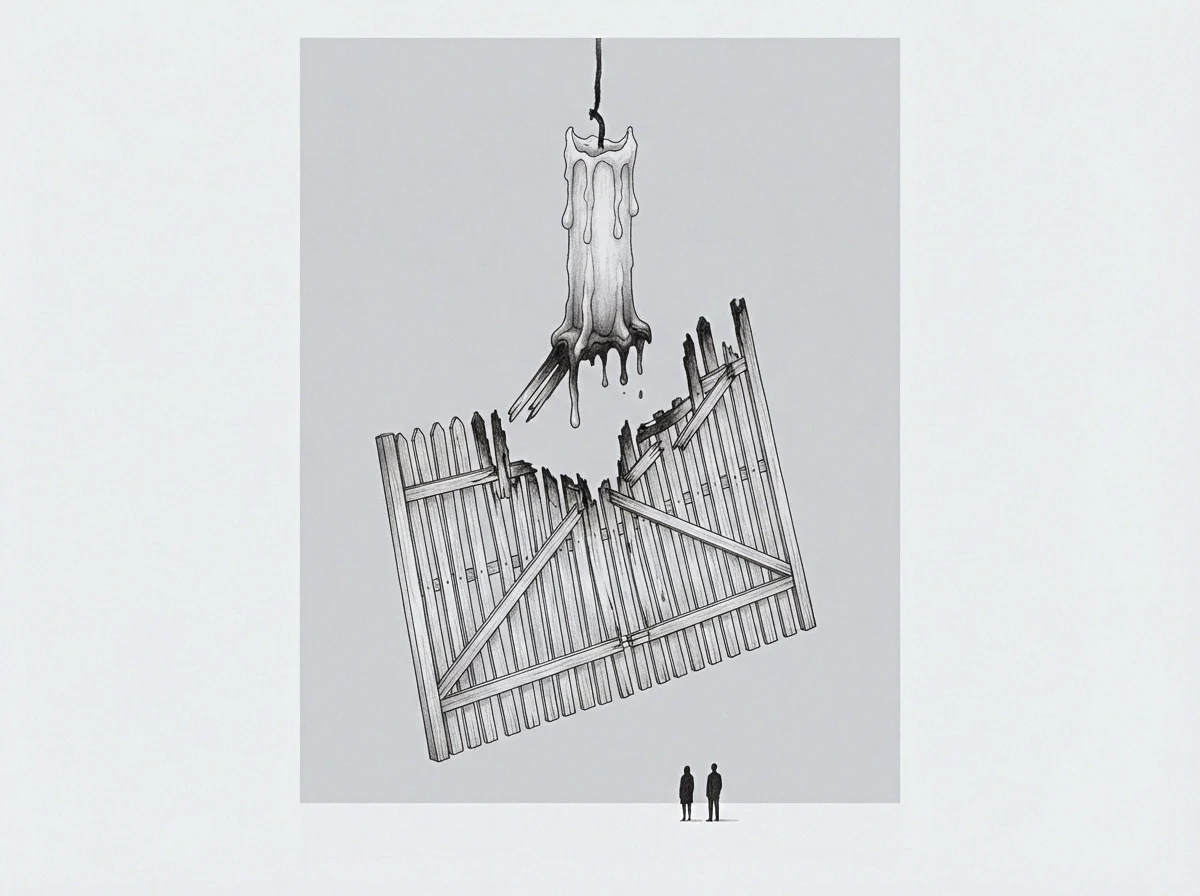
Executive commitments land on calendars with fixed dates, while production systems run against hard physical limits. Whoever sits between commercial leadership and technical execution takes the brunt of that conflict every week. When commercial promises outpace build capacity, the manager faces structural role strain, a condition where the expectations attached to a position exceed the resources, authority, and working hours available to meet them.
This strain is not a matter of personal competence or resilience. It stems directly from conflicting accountabilities: one role demands immediate responsiveness to commercial opportunities, while the other requires protecting system stability and engineering output.
A technical leader often occupies three functional seats at once, with no clear boundaries between them. In the technician seat, the engineer writes code, reviews pull requests, and fixes infrastructure outages. In the manager seat, that same person calculates velocity, balances team workloads, and unblocks dependencies.
In the founder seat or executive tier, they answer for capital deployment, revenue growth, and external commitments. Each role carries a different performance standard and an incompatible pace. Executive mandates treat engineering capacity as elastic, assuming urgency accelerates output.
The engineering floor operates on queue mechanics, where too much work in progress slows overall cycle time and introduces instability.
A production system loaded past eighty percent of practical throughput accumulates latency at an exponential rate.
When executive directives arrive as unilateral mandates, the boundary manager tries to bridge the gap with extra effort. The technical workload spills into the night to clear systemic debt built up during the day. Unstated expectations force the engineering lead to absorb the gap between commercial optimism and operational capacity.
The resulting context switching drains cognitive capacity, leaving little time for technical oversight or long-term planning. Left unchecked, role strain leads to structural failure: unexpected resignations, steady architectural decay, and missed delivery targets that undermine the initial commercial deals.

Load
Decomposing Engineering Capacity
Engineering throughput is finite, bounded by team composition, codebase complexity, and operational maintenance baselines. Technical capacity splits across four competing categories of labor:
- Net New Feature Production drives active commercial projects and customer acquisition goals during the quarter.
- Architectural Maintenance preserves code quality, updates dependencies, and reduces technical debt before core systems break under load.
- Unplanned Operational Triage absorbs unpredictable engineering time to fix infrastructure issues, regressions, and outages.
- Cognitive Overhead covers coordination meetings, documentation, architecture reviews, and constant context switching.
Executive planning often calculates capacity by multiplying headcount by nominal working hours. That model assumes every available hour goes to net new feature development, ignoring the constant maintenance of legacy systems and live incident triage. When commitments depend on gross capacity instead of net throughput, failure is predictable.
The engineering team absorbs the gap by cutting corners on testing, documentation, and architecture.
Unallocated capacity operates as an operational safety margin rather than wasted engineering time.
The hidden cost of continuous overutilization is mental fragmentation. When engineers balance more than two major projects at once, context switching can consume forty percent of their productive time. The engineering lead must repeatedly explain why increased urgency cannot shorten fixed technical sequences.
Software development follows dependencies grounded in operational reality rather than executive expectation. Yet commercial leaders often view queue constraints as friction, assuming sufficient effort can compress any timeline.

Gage

Which Engineering Commitments Break Down First?
The earliest casualty of unmanaged structural role strain is managerial clarity. Caught between executive commitments and team exhaustion, the leader abandons disciplined planning cycles and manages through emergency escalations. Daily firefighting replaces weekly planning, shrinking the horizon to twenty-four hours.
Sprint commitments lose predictive value, and strategic roadmaps turn into pitch decks disconnected from actual code repositories.
Role conflict worsens when the manager holds financial or operational responsibility for revenue. The executive role demands fast delivery to win enterprise deals, while the technical lead sees the underlying fragility of the code. Without explicit protocols to balance these demands, internal conflict causes operational paralysis.
The manager promises unrealistic delivery dates in executive meetings, only to face impossible technical realities when returning to the engineering team.
Working alignment between leadership and the engineering team degrades quickly under persistent overcommitment. Engineers see that delivery dates carry no real connection to technical estimates. Skepticism replaces pride in craft.
Senior engineers, who understand the system’s technical debt and architectural risks best, leave first. Their exit shrinks net capacity further, draining institutional knowledge. The organization often responds by issuing stricter mandates, worsening the structural strain that caused the initial breakdown.
Unstated role boundaries convert systemic technical friction into chronic personal depletion.
A sustainable operating model requires clear division between commercial priorities and capacity estimation. Executive leadership sets the order of business objectives. Engineering leadership determines the pace and allocation required to meet those objectives without breaking the system.
When executive leadership sets both the deadline and the scope, engineering management stops functioning as a control system. Teams that safeguard their technical core outlast those that sacrifice baseline stability for short-term targets.

Split

Comparing Structural Boundary Models
Resolving role strain requires moving from informal habits to defined operational seats. The table below compares three models for managing the interface between executive demands and technical execution, outlining their structural mechanics, operational costs, and functional limits.
| Boundary Model | Structural Mechanism | Primary Failure Mode | Capacity Allocation Impact |
|---|---|---|---|
| Absorptive Manager | Single technical leader absorbs executive friction through personal labor and informal mediation | Executive exhaustion, critical staff turnover, sudden architecture freeze | Opaque, unstable, continuously eroded by urgent escalations |
| Gated Capacity | Explicit quota splits between feature work, technical debt, and unplanned maintenance | Executive dissatisfaction during acute market shifts, rigid planning friction | Predictable, highly visible, protected by formal governance agreements |
| Decoupled Product Tier | Separate product management layer translates mandates into capacity-checked roadmaps | Communication latency, political turf disputes between product and engineering | Systematic, insulated from direct pressure, dependent on rigorous triage |
The absorptive model predominates in early-stage ventures because it requires no structural overhead. A founder or early engineering director simply works longer hours to absorb planning shortfalls. That cost stays hidden until system complexity exceeds what one person can sustain.
At that point, the lead either leaves, breaks under the pressure, or experiences a catastrophic outage. Transitioning to a gated capacity model sets explicit limits on engineering commitments.
Gated capacity works through fixed allocation rules. A standard model assigns fifty percent of capacity to strategic features, thirty percent to architecture and debt reduction, and twenty percent to unplanned triage. This split is non-negotiable.
When market demands require a strategic pivot, executive leadership must explicitly identify which planned projects to drop. Technical capacity remains fixed in the short term, preventing leadership from stacking new demands onto a full queue.
Formal intake rules replace ideological conflict with clear trade-off calculations. Every incoming request requires an estimate of engineering effort. If a mandate exceeds the available feature budget, it stays blocked until leadership cancels an equivalent piece of existing work.
Defined allocation boundaries ground managerial decisions in practical arithmetic rather than personal stamina.

Anchor
The final step converts personal boundary enforcement into formal operational structure. Technical leaders need to define the exact hours and scope assigned to each seat they occupy. If a leader spends fifteen hours a week in the technician role, that time must be accounted for before scheduling management or strategy work.
Unspoken tasks must be documented in official schedules, as hidden effort cannot be protected from competing demands.
Framing technical debt in financial terms puts engineering constraints on equal footing with commercial priorities. Technical leaders often struggle to influence executive teams when arguing from engineering preference rather than business risk. Refactoring, automated testing, and dependency updates carry measurable value because they safeguard delivery speed and platform uptime.
Presenting debt as an unhedged operational liability lets leadership balance short-term opportunities against long-term stability.
Leaders must step back from hands-on execution to maintain effective management. Constant intervention creates an organizational bottleneck, undercutting team leads and hiding real capacity limits from executive leadership. When a manager repeatedly saves unrealistic deadlines through extra personal effort, the organization never confronts its planning defects.
The underlying flaw stays hidden until the manager leaves.
Whether executive leadership respects capacity boundaries or treats operational constraints as pushback remains a recurring vulnerability in venture-backed companies.