
Measuring Interruption Transfer Rates Between Operational Incidents And Executive Allocations
Operational interruptions transfer into executive allocations when unmediated alerts and missing delegation thresholds divert strategic hours into triage.

Spill
A silent pager alert arrives at three in the morning, followed twenty minutes later by a direct escalation thread requesting authorization to fail over a regional database cluster. The operator sits upright at a kitchen table, verifying routing tables and latency logs while drafting points for a nine o’clock capital allocation review with prospective lenders. The technical fault clears by dawn, yet the morning calendar dissolves into ad hoc status updates, vendor incident triage, and forensic reviews.
The allocation review proceeds on borrowed time, staffed by an exhausted operator functioning with fragmented cognitive reserves. Operational disruptions rarely stay confined to production infrastructure. They migrate across organizational boundaries, converting frontline technical instability into fractured executive attention.
The rate of this transfer quantifies the proportion of executive hours redirected from long-range capital, commercial, and structural governance into real-time operational troubleshooting. When technical incidents trigger unmediated executive involvement, strategic calendars suffer immediate compression. Cognitive switching drains the energy required for deliberative trade-offs, leaving long-horizon planning indefinitely deferred.
Unscheduled operational escalations consume executive capacity long before the physical incident reaches technical resolution.
Three primary pathways govern this upward migration of friction:
- Direct alert routing dumps unvetted telemetry feeds straight into senior leadership communication channels, generating continuous cognitive intrusion regardless of operational severity.
- Ambiguous authorization thresholds force technicians to halt operational remediation pending senior administrative approval, guaranteeing that minor system deviations consume executive evaluation time.
- Tacit operational dependency leaves critical diagnostic knowledge isolated in the founding operator, transforming ordinary technical faults into mandatory executive triage exercises.
Each channel operates with distinct transmission dynamics. Direct alert routing injects micro-disturbances that fragment executive focus across the working day. Ambiguous authorization policies hold operational recovery hostage until an executive reviews technical parameters.
Tacit operational reliance compels senior leadership to execute hands-on diagnostic labor because organizational documentation remains incomplete. The cumulative effect degrades executive throughput across consecutive financial quarters.
Valve
Structural boundaries between frontline execution and executive governance depend on explicit escalation thresholds that function as hydraulic restrictors. In organizational role theory, boundary spanners regulate the volume and fidelity of operational information reaching higher administrative tiers. When these boundary controls fail, the interruption transfer rate approaches unity, meaning every operational incident extracts an equivalent quantum of executive deliberation.
Calculating this rate requires measuring the ratio of executive hours diverted per operational disruption event against total available executive capacity.

Escalation Velocity Metrics
Measuring the transfer rate requires isolating three distinct variables across an operational cycle: the initial response latency of the technician tier, the elapsed duration before executive notification, and the subsequent recovery interval required for executive focus to return to strategic tasks. In a sixty-hour working week, an executive who absorbs four operational escalations averaging two hours of direct intervention plus ninety minutes of post-incident administrative alignment experiences a transfer rate exceeding twenty-three percent of total weekly capacity.
A transfer rate exceeding twenty percent of total executive hours converts strategic governance into reactive technical supervision.
The severity of an operational fault does not correlate linearly with its interruption transfer rate. Minor operational anomalies frequently generate severe executive interruptions when reporting protocols lack filtering mechanisms.
| Incident Classification | Frontline Duration | Executive Intervention Time | Context Reacquisition Delay | Net Executive Capacity Diverted |
|---|---|---|---|---|
| Routine Service Degradation | 45 Minutes | 15 Minutes | 35 Minutes | 50 Minutes |
| Critical Infrastructure Outage | 180 Minutes | 120 Minutes | 90 Minutes | 210 Minutes |
| Regulatory Compliance Failure | 60 Minutes | 90 Minutes | 120 Minutes | 210 Minutes |
| Vendor Security Anomaly | 120 Minutes | 45 Minutes | 60 Minutes | 105 Minutes |
The table establishes that context reacquisition delays often equal or exceed direct intervention time. An executive who spends fifteen minutes reviewing a degraded database replica loses an additional thirty-five minutes regaining the deep attentional state necessary for complex financial modeling. Field research on task switching demonstrates that attentional disruption persists long after the interrupting stimulus ceases.
Cognitive resources remain tethered to the operational problem, diminishing analytical acuity in subsequent strategic decisions.
The operator who measures these intervals gains accurate visibility into organizational drag. The rule holds that an operational escalation permitted without a designated filter becomes an executive obligation by default.

Wire
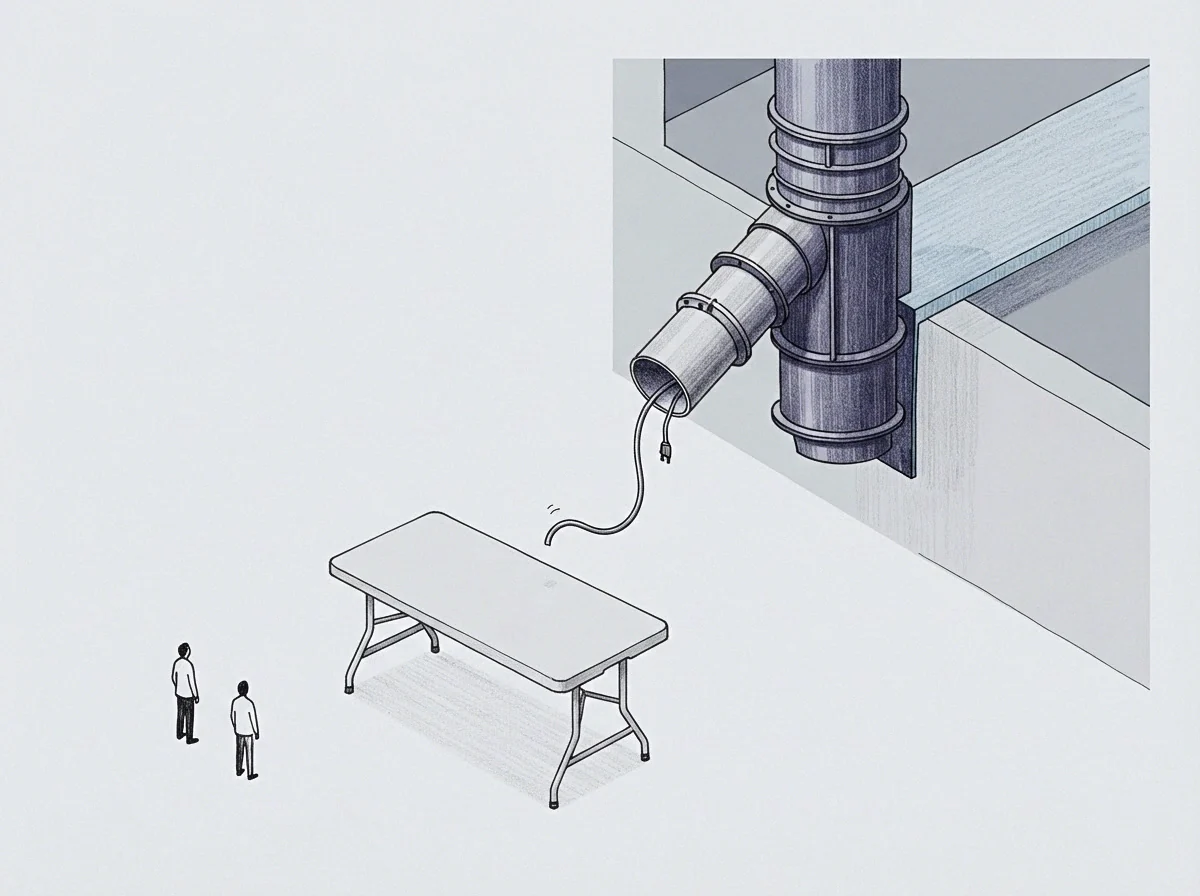
Physical communication conduits establish the pathways through which operational noise invades executive attention. The technical topology of modern corporate chat applications, incident paging software, and unified inbox feeds creates an uninterrupted sensory conduit from server racks to executive offices. When these communication pathways lack mechanical separation, the structural distinction between technician, manager, and founder disintegrates into continuous operational triage.

How Does Escalation Velocity Corrode Governance Schedules?
Rapid escalation channels compress the temporal buffer necessary for considered executive allocation. When frontline alarms ping leadership mobile devices concurrently with technician dashboards, the executive seat suffers immediate role contamination. The person in that seat reflexively engages technical diagnostic protocols, abandoning the broader resource allocation perspective.
Role theory identifies this state as acute role conflict, wherein competing demands from distinct functional seats paralyze deliberate decision-making.
Establishing operational insulation demands a rigorous sequence of structural disconnections:
- Revocation of direct executive subscription to automated infrastructure alerting platforms to eliminate ambient sensory noise.
- Establishment of strict operational escalation criteria requiring frontline managers to attempt two predefined mitigation protocols prior to leadership notification.
- Delegation of full remediation authority up to defined capital expenditure limits, preventing routine operational workarounds from demanding executive financial consent.
- Consolidation of non-critical operational reporting into daily scheduled briefings, preserving core morning hours exclusively for strategic governance.
Each tier in this sequence introduces structural resistance against interruption transfer. Eliminating unmediated alerts protects cognitive continuity. Clear remediation thresholds relieve frontline teams of recursive confirmation loops while safeguarding executive time.
Delegated expenditure authority converts tactical operational choices into localized managerial actions. When organizations neglect these barriers, executive calendars fragment completely, trading long-term strategic viability for temporary operational comfort.

Wake
Residual cognitive interference persists long after technical remediation concludes. Attentional residue, documented in organizational psychology, describes the lingering cognitive attachment to an interrupted task while attempting to execute subsequent unrelated obligations. An executive who resolves a severe midday database corruption carryover spends the afternoon allocation meeting ruminating over server reliability and technician competence, evaluating capital investments through an acute lens of immediate operational vulnerability.

Cognitive Settling Across Interrupted Schedules
The decay curve of operational anxiety follows an exponential trajectory rather than an immediate return to baseline. Observations across engineering environments indicate that full attentional recovery from an acute operational fault requires between two and four hours of uninterrupted focus, depending on the severity of financial exposure involved. In industrial manufacturing, safety protocols mandate mandatory resting periods for operators following high-stress mechanical emergencies before resuming heavy machine operations.
Corporate executives rarely apply equivalent physiological standards to cognitive labor, expecting immediate strategic coherence moments after emergency technical calls conclude.
Strategic clarity diminishes whenever operational panic dictates the agenda of resource allocation meetings.
This prolonged recovery curve distorts subsequent executive allocations. Risk aversion spikes sharply in the wake of an operational incident, biasing capital away from high-conviction growth initiatives toward redundant defensive infrastructure. The operator confuses transient operational frustration with durable structural insight.
Decisions formulated under active attentional residue prioritize short-term stabilization over systemic value creation. Is it possible to separate an executive evaluation of operational durability from the immediate cognitive exhaustion produced by the latest technical failure?

Post
Protecting the executive seat requires stating its boundaries in clear operational contracts. When an operator occupies the technician seat, the manager seat, and the founder seat concurrently, operational interruptions naturally dominate. The technician seat offers immediate dopamine feedback and measurable completion metrics, while the founder seat demands prolonged ambiguity and delayed consequences.
Without contractual partitioning of hours, the operator defaults to technician labor under the guise of emergency oversight.
Stating the seat involves specifying the maximum tolerable transfer rate in explicit terms. An executive contract that reserves thirty hours weekly for strategic capital allocation, organizational design, and market positioning must establish strict protocols governing operational intrusion. It defines explicit financial thresholds below which frontline teams retain absolute autonomy, forbidding escalation unless existential business continuity risks emerge.
A seat undefined in hours and scope is a seat surrendered to operational chaos.
When leadership formalizes these boundaries, the interruption transfer rate drops predictably. Operational incidents remain contained within the frontline technical tier, compelling managerial maturity and system self-healing. Strategic allocations retain the temporal and cognitive protection necessary to compound organizational capital over successive operational cycles.
The governance charter stating that operational escalations bypass executive attention unless direct customer revenue degradation exceeds twenty percent per hour protects long-range allocations from tactical erosion.