
Quantifying Tacit Knowledge Offboarding Friction During Technical Founder Exit
Tacit knowledge friction during technical founder exits generates measurable operational drag, solvable by structured codebase audits and explicit seat boundary terms.
Debt
An engineering team sits around a conference table while a departure timeline is announced. The outgoing engineer created the initial codebase, configured the deployment pipeline on an unmapped server, and holds security tokens for three legacy vendor APIs in a personal password store. Operations run smoothly on routine days.
Friction appears the first time an unscripted database lockup occurs at midnight, or when a major client requests an architectural alteration that relies on unwritten performance assumptions. What felt like high engineering velocity for four years reveals itself as a structural liability built from undocumented operational decisions.
Every early system relies on tacit knowledge to skip formal operational overhead. Fast execution requires rapid, unwritten choices about data structures, manual patch scripts, and informal workarounds for edge-case errors. These choices remain invisible while the original engineer occupies the workstation.
Once the seat changes, those unwritten choices transform into structural operational drag.
The Anatomy of Undocumented System Ownership
The technical seat in an early company blends three distinct operational functions that rarely separate during growth. The technician writes code, builds automated scripts, and troubleshoots runtime faults. The manager assigns maintenance priority, schedules refactoring, and oversees system access.
The owner determines architectural tradeoffs against commercial goals. When one individual fills all three seats, information transfers between these functions instantly inside a single mind. Formal documentation feels redundant because the decision maker, executor, and maintainer share one memory.
An unmapped system dependency generates operational drag directly proportional to the frequency of its runtime exceptions.
This efficiency creates a hidden operational obligation. Systems grow in complexity while remaining reliant on the founder’s immediate physical presence. The company mistakes individual working speed for organizational capability.
When offboarding begins, the organization attempts to extract four years of structural memory during a four-week notice period. The resulting extraction friction manifests as dropped deployment windows, prolonged outage resolution times, and team paralysis during routine infrastructure upgrades.

Structural Liabilities of the Technical Seat
Tacit operational friction concentrates in three specific areas of system design. Infrastructure configuration holds the highest immediate risk, specifically manual tweaks applied to production environments that were never committed to version control. Key vendor relationships hold a second form of tacit reliance, where custom pricing tiers or non-standard API integrations exist only through personal email threads.
Product logic holds the third form, where complex domain business rules were written directly into database stored procedures without functional spec documentation.
The engineering organization pays for this missing context through delayed shipping cadences and elevated onboarding costs for incoming technical leadership. The successor does not merely learn a codebase; the successor must conduct historical forensic analysis on every undocumented pipeline decision. The accumulated context gap converts what should be a routine leadership transition into a vulnerable structural event.
Leaving tacit operational context undocumented forces the enterprise to pay for the missing specs through prolonged system outages during the transition quarter.

Meter
Quantifying knowledge loss during an executive departure requires measuring specific operational slowdowns rather than estimating abstract context metrics. The measurement rests on tracking three concrete variables across the engineering calendar: dependency density, system recovery latency, and inquiry volume. Dependency density measures how many routine deployment tasks require manual intervention or explicit approval from the outgoing engineer.
System recovery latency records the time elapsed between an infrastructure alert and its resolution when the outgoing engineer does not participate in the fix. Inquiry volume counts the weekly number of context-clarification requests directed at the departing founder by junior and senior staff.
These metrics establish a direct financial baseline for the transfer process. Tracking these variables over twelve consecutive weeks produces an accurate curve of knowledge migration. A successful transfer shows inquiry volume dropping toward zero while system recovery latency stabilizes within acceptable operational limits.

Operational Decay and Execution Drag
When a technical founder departs without systematically offboarding tacit context, system velocity decays along a predictable half-life curve. During the first thirty days post-departure, routine feature delivery continues using existing code pathways. By day sixty, technical debt accumulation accelerates as the remaining team encounters undocumented design boundaries.
By day ninety, architectural refactoring halts entirely because no remaining staff member possesses the context required to alter core database schema safely.
Execution drag represents the measurable difference between standard feature delivery timelines and the extended timelines caused by missing context. If a sprint objective that historically required ten engineering days extends to twenty-five days following a founder exit, the fifteen-day delta represents pure offboarding friction. This drag multiplies across every engineering pod attempting to build on top of unmapped core services.

Classifying Offboarding Friction Modes
Understanding friction requires categorizing the specific forms tacit knowledge takes within an active technical organization.
- Architectural Latency refers to the operational delay introduced when engineering teams must reverse-engineer undocumented system frameworks before implementing essential product features.
- Exception Mapping represents the unwritten operational knowledge required to resolve recurring edge-case errors, memory leaks, or database deadlocks during production traffic spikes.
- Vendor Arbitrage defines the informal commercial agreements, emergency contact pathways, and custom rate limits negotiated with third-party infrastructure providers through personal relationships.
- Governance Blindness covers the missing audit trails, security key access protocols, and compliance configurations that exist purely within the departing founder’s local workstation environment.
Measuring these modes individually reveals where the organization faces acute operational exposure. Allocation of engineering hours can then pivot toward high-risk systems rather than broad, low-value documentation sweeps.
System recovery latency doubles every time an undocumented infrastructure layer encounters a production traffic anomaly.
An exit clause specifying a mandatory thirty-day transition window changes nothing if the operational metrics indicate that dependency density remains at eighty percent.

Desk
Knowledge extraction methods vary significantly in efficiency, engineering cost, and long-term utility. Selecting the appropriate structural move requires balancing the departing founder’s remaining hours against the team’s operational absorption capacity. Forcing a founder to write freeform documentation during their final weeks yields low-quality, static text that ignores critical operational edge cases.
Conversely, requiring indefinite retainer availability creates an expensive, lingering dependency that delays genuine organizational independence.
The comparison table below evaluates four distinct offboarding mechanisms across standard operational parameters.
| Offboarding Mechanism | Tacit Capture Efficiency | Weekly Hour Cost | Friction Half-Life | Primary Vulnerability |
|---|---|---|---|---|
| Continuous Shadowing | High | 35 Hours | 3 Weeks | Shadow engineer mirrors bad habits without learning root architecture. |
| Asynchronous Decision Logging | Medium | 10 Hours | 8 Weeks | Captures future choices while leaving legacy infrastructure unmapped. |
| Codebase Archeology Audits | High | 20 Hours | 4 Weeks | High cognitive fatigue for departing founder during deep reviews. |
| Retainer Architecture Seats | Low | 5 Hours | 24 Weeks | Extends operational dependence and delays team self-sufficiency. |

When Does Continuous Pairing Fail to Capture Structural Tacit Context?
Pair programming and operational shadowing are effective for routine workflow transfer, yet they break down when faced with historical system architecture decisions. A shadow engineer can observe how the founder deploys a patch, but simple observation cannot reveal why an unusual database index was selected three years prior to handle a specific client’s data format. The visual procedure gets recorded; the underlying architectural constraint remains invisible.
Pairing fails entirely when applied to emergency incident response. Under production pressure, an experienced technical founder relies on rapid intuitive pattern matching built over years of system execution. Explaining every diagnostic step out loud during a live outage slows incident resolution while transmitting fragmented, situational context that rarely translates to future, non-identical outages.

Mechanisms of Structural Knowledge Handover
Replacing unstructured pairing with structured codebase archeology audits offers higher capture efficiency for deep tacit context. In an archeology audit, an incoming senior engineer leads the session, presenting specific system components to the founder and walking through theoretical failure scenarios. The incoming engineer asks targeted questions regarding scaling limits, historical compromise choices, and deployment dependencies, recording the sessions directly into system architecture diagrams.
This inverted dynamic forces the successor seat to active comprehension rather than passive observation. The founder validates or corrects the successor’s mental model of the system, transforming tacit assumptions into explicit, verified documentation before the final departure date arrives.
Six months of pair programming produces less actionable system clarity than three structured architecture audit sessions.
Count
Calculating the total economic cost of technical founder offboarding friction requires a clear mathematical model that combines direct transition expenses, lost engineering capacity, and elevated system risk. Consider a mid-stage technology firm operating with eighteen software engineers, a departing technical founder who built the core infrastructure over four years, and a codebase comprising 140 distinct microservices. Assume that thirty-two percent of these microservices lack operational documentation or automated test coverage, representing pure tacit dependency.
The standard baseline engineering capacity of this team equals 720 hours per week (18 engineers multiplied by 40 hours). During a chaotic, unstructured transition, execution drag typical of unmapped codebases reduces net feature production by forty percent across the pods interacting with legacy infrastructure.
Worked Situation of a Technical Departure
To quantify the precise friction loss, trace the operational hours consumed over an eight-week offboarding period using two competing approaches: an unmapped departure versus a structured audit model.
- Calculate the baseline capacity loss under an unstructured departure: 18 engineers working 8 weeks yields 5,760 total available hours. A 40 percent execution drag across half the engineering staff (9 engineers) consumes 1,152 productive engineering hours over two months.
- Value those lost hours using an average internal engineering rate of 95 dollars per hour, resulting in a direct productivity loss of 109,440 dollars in wasted sprint cycles.
- Add the cost of delayed product delivery schedules, assuming two major client contract milestones slip by three weeks due to infrastructure deployment stalls, incurring 65,000 dollars in late-delivery penalties and delayed cash collections.
- Factor in executive recruiting fees and onboarding ramp-up expense for two senior replacement hires required to backfill the founder’s technical seat, totaling 80,000 dollars in direct placement and search costs.
- Sum the direct friction expenses: 109,440 dollars in lost velocity, 65,000 dollars in commercial penalties, and 80,000 dollars in backfill overhead, establishing a total offboarding friction cost of 254,440 dollars.
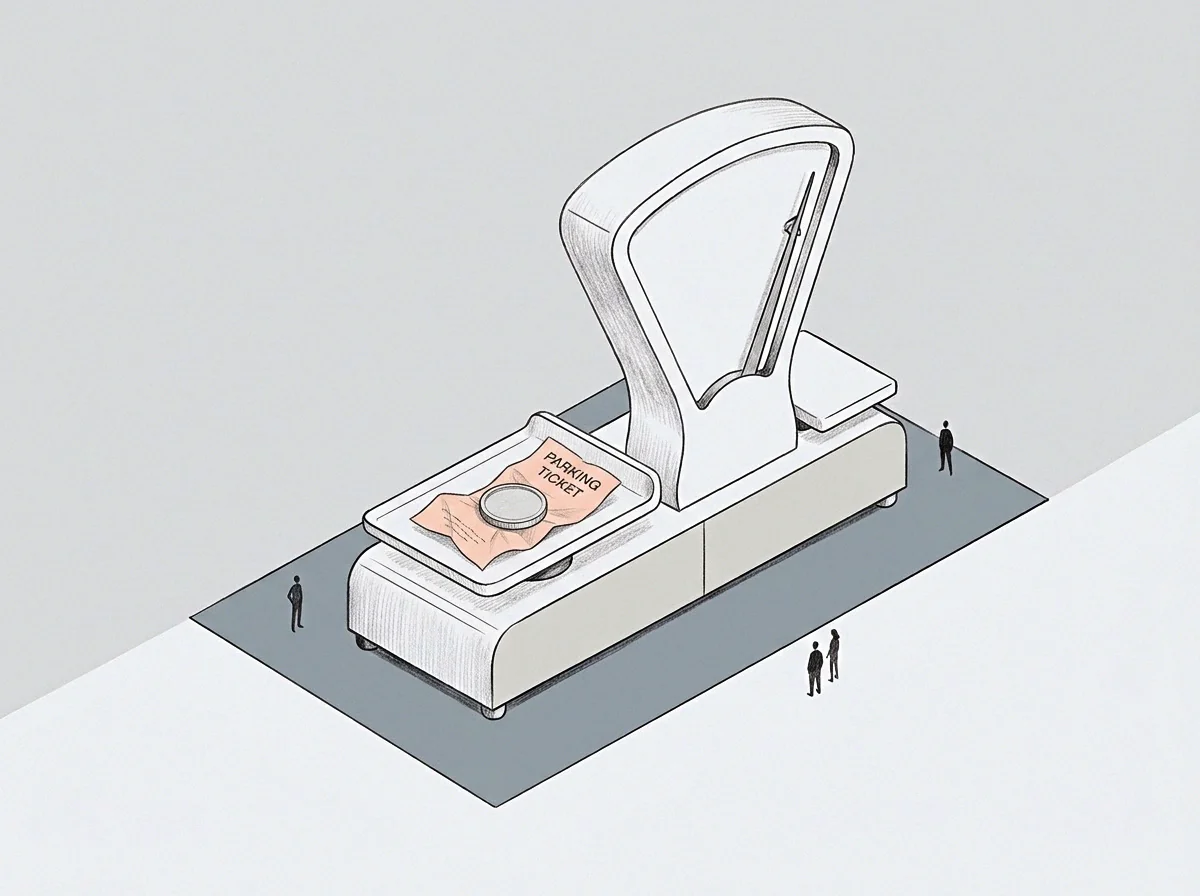
Quantifying offboarding friction requires translating missing system documentation into lost sprint capacity and delayed commercial revenue.
Calculated Recovery Timelines
Deploying a structured archeology audit strategy in the same company alters these metrics significantly. Assigning two senior engineers to conduct intensive, three-week system audits with the founder consumes 240 hours of engineering time (2 engineers at 40 hours for 3 weeks, plus the founder’s matching time), costing 22,800 dollars in dedicated capacity. However, execution drag drops from forty percent down to twelve percent during the remaining five weeks, reducing lost productivity hours to 345 hours (32,775 dollars).
Total financial drag under the structured model drops to 55,575 dollars in lost productivity plus the fixed backfill costs. The enterprise saves approximately 118,865 dollars while shortening system velocity recovery time from six months down to six weeks.
What portion of this calculated productivity loss stems from genuine system complexity rather than the team’s reluctance to own legacy infrastructure?

Clasp
Transitioning out of a technical seat successfully requires converting an informal personal commitment into a set of explicit structural agreements. The outgoing technical founder must formally put down the technician, manager, and owner seats, leaving clear operational boundaries that prevent covert re-entry. A founder who continues answering late-night emergency slack messages after an official exit date undermines the incoming engineering leadership while maintaining the enterprise’s tacit dependency.
Creating clean operational separation demands explicit exit terms, defined retainer limits, and clear equity vesting mechanics tied to verifiable offboarding milestones rather than arbitrary calendars.

Stating terms for the Exit Seat
Contractual agreements governing a founder exit must state exact operational boundaries. If an advisory or retainer seat is established post-exit, the contract must define scope strictly in terms of emergency escalation protocols rather than routine technical support. A well-constructed advisory clause limits access to a dedicated ticketing system, enforces a twenty-four-hour response SLA, and caps total monthly commitment at five hours.
Linking final equity vesting cliffs or severance payouts to documented offboarding deliverables ensures alignment. Deliverables must be defined as objective operational states: complete deployment script automation, verified pass rates on infrastructure recovery drills, and signed sign-offs from incoming senior engineers confirming full access to all system tokens and vendor console administrative seats.
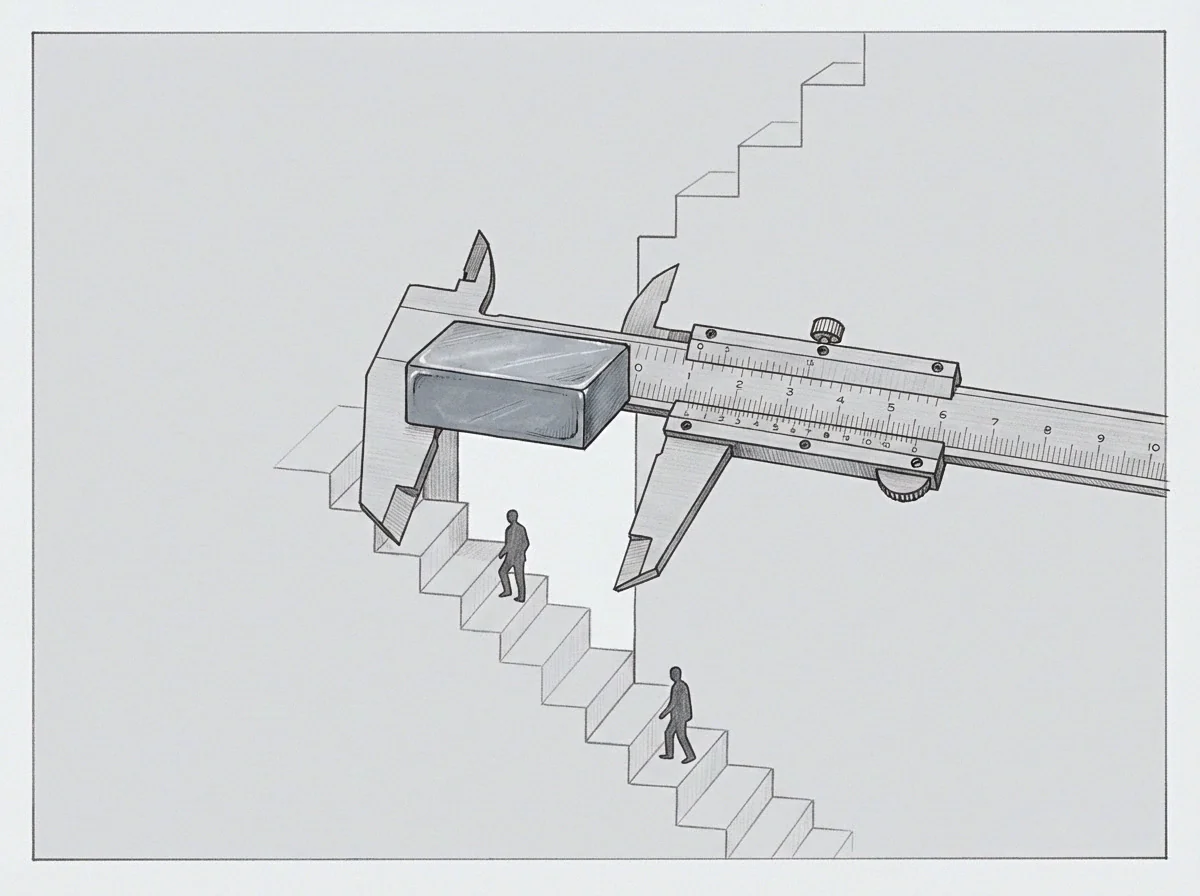
Transitioning Ownership without Retention Traps
Organizations frequently attempt to mitigate knowledge loss by offering long-term paid retention seats or consulting retainers to departing founders. This practice creates a false sense of security, encouraging the remaining team to defer learning complex systems because the founder remains accessible via email. Retainer arrangements lengthen the offboarding friction window rather than eliminating it.
A clean structural handover sets a firm termination date for all internal communications access. On the agreed exit date, corporate email accounts, developer environment permissions, and direct messaging credentials close completely. The remaining engineering team steps into full system accountability, establishing genuine operational self-sufficiency through direct ownership.
A technical seat put down cleanly on explicit terms stays down, leaving the enterprise with a fully mapped system and a team that owns its architecture.