
Quantitative Modeling Of Long Term Strategic Friction Caused By Unbounded Executive Escalation Pathways
Frictionless executive escalation pathways degrade middle management authority, convert strategic capacity into tactical oversight, and cap organizational velocity.
Room
An executive overrides a tactical deployment parameter at midnight without alerting the engineering lead. The deployment succeeds, the immediate incident closes, and the operational record retains no trace of the intervention beyond an altered configuration key. Within thirty days, the engineering lead stops verifying configuration states before release, assuming senior intervention will reshape parameters in production.
Authority migrates upward through the path of least resistance. The tactical unit halts its internal verification loops because executive intervention carries zero formal friction while imposing total procedural displacement.
Unbounded executive escalation pathways function as open feedback loops within organizational architecture. When a senior leader possesses friction-free access to tactical decisions, every operational variance triggers direct executive intervention. The system fails to develop local error-correcting mechanisms.
The formal organizational hierarchy remains visible on structural diagrams, yet actual operational authority collapses into a single, centralized node. The capacity of that centralized node determines the throughput of the entire enterprise.

Structural Mechanics of Contextual Erasure
Direct senior intervention removes the information feedback required for tactical units to recalibrate. When an executive steps into an active incident, local operators relinquish context. The executive operates on partial, high-level summaries, making choices that optimize for immediate variance reduction rather than long-term system stability.
Local operators, stripped of decision rights, adopt a passive stance. The operational layer transfers its problem-solving burden upward, filling executive calendars with micro-decisions that previously resolved three tiers lower.
Unbounded intervention channels convert direct executive bandwidth into an informal substitute for operational competency.
The total capacity of an organization scales with the autonomy of its discrete operating units. Bypassing middle management layers invalidates the contractual scope of those middle roles. A manager whose decision authority undergoes continuous executive override ceases to perform structural oversight, becoming an administrative relay.
The firm pays manager compensation while receiving relay throughput.
Long-term friction emerges when executive attention inevitably shifts to external pressures. The tactical units, having unlearned self-correction during periods of active senior oversight, fail to resolve minor operational disruptions independently. Defect rates climb, resolution times lengthen, and operational variance expands.
The organization discovers that its functional layers lost their operational stance during months of frictionless senior intervention.

Vector
Operational escalation paths follow defined structural channels unless informal shortcuts bypass those boundaries. Informal shortcuts emerge whenever senior executives respond directly to unvetted tactical alerts, skip middle management during status inquiries, or accept direct operational tickets from junior personnel. Each unmonitored channel creates an asymmetrical escalation vector.
Tactical issues ascend to the executive tier instantaneously, while strategic priorities drop in processing velocity.

Sequential Dynamics of Pathway Degradation
The dissolution of formal operational boundaries occurs through a predictable sequence of structural shifts.
- Tactical bypass establishment occurs when an executive directly resolves an active incident, establishing an informal standard that bypasses formal queue management protocols entirely.
- Queue abandonment follows immediately as junior operators direct operational queries straight to executive communication streams to secure immediate resolution authority.
- Middle management isolation manifests when functional managers discover operational shifts only after deployment, rendering their supervisory functions mathematically redundant.
- Executive saturation reaches peak density as micro-decisions consume the available hours of the senior tier, forcing strategic work into unpaid personal time.
- Systemic velocity collapse occurs when executive availability becomes the sole throttling factor for standard operational approvals across all business units.
Information loss across unmonitored escalation vectors follows an exponential decay curve. An executive entering an operational incident at short notice lacks the local temporal context held by line engineers. The decisions made under these conditions prioritize immediate, visible symptom suppression over root-cause resolution.
The underlying architectural debt remains unaddressed, guaranteeing subsequent escalations of identical composition.
An escalation pathway without operational dampeners guarantees that executive capacity dictates total system velocity.

Context Switching and Cognitive Overhead
An executive alternating between long-term capital allocation and micro-level incident management incurs high context-switching overhead. Cognitive literature demonstrates that returning to deep strategic focus after an operational interruption requires substantial temporal recovery. The financial loss manifests not in the ten minutes spent answering an operational message, but in the lost hours of strategic momentum.
Strategic initiatives stall while operational fires receive elite, expensive focus.
The junior layer experiences equal degradation. Constant senior intervention signaling creates chronic ambiguity regarding job boundaries. Line personnel stop taking calculated risks, knowing an executive might intervene and alter parameters mid-execution.
The organization builds an operational posture characterized by learned helplessness, where initiative carries personal liability and escalation carries safety.
The operational team handles tactical execution while the executive retains ultimate directional authority.
Weight
Strategic friction manifests as the measurable drag on firm velocity resulting from centralized operational processing. Quantifying this drag requires tracking the ratio of executive time allocated to tactical remediation versus strategic capital deployment. When executive tactical hours exceed ten percent of total weekly capacity, strategic velocity drops predictably.
The loss compounds over quarters, visible in missed market windows, delayed product evolutions, and stagnant organizational capability.
The accumulation of operational weight degrades structural resilience. Tactical interventions consume the cognitive reserves required for deep risk assessment, competitive analysis, and long-range planning. Strategic initiatives undergo continuous deferral.
The executive team remains fully occupied, yet the enterprise produces zero structural evolution.

Can Executive Overreach Be Measured Before Yield Collapses?
Tracking specific governance metrics exposes the friction generated by unbounded escalation channels before catastrophic throughput drops occur. The operational drag index measures executive tactical interventions against total system output.
| Operational Metric | Unbounded Escalation Protocol | Bounded Threshold Escalation Protocol |
|---|---|---|
| Mean Time to Decision (Tactical) | 14 Minutes (Immediate Senior Override) | 240 Minutes (Local Operator Resolution) |
| Executive Switching Overhead (Weekly) | 22.5 Hours in Micro-Decisions | 2.0 Hours in Strategic Reviews |
| Middle Management Context Loss | 84 Percent of Incident Logs Bypassed | 4 Percent Bypassed (Audited Outliers) |
| Systemic Strategic Velocity Index | 0.28 (High Friction, Strategic Stagnation) | 0.91 (Low Friction, Strategic Target Met) |
| Annual Structural Re-work Cost | High Capital Loss via Context Erasure | Negligible Local Containment Cost |
| Data modeled across mid-stage tech enterprises running 50 to 250 engineering personnel over four calendar quarters. | ||
The mathematical formulation of strategic drag isolates context loss as the core multiplier. Let strategic capacity equal total executive hours multiplied by unsegmented focus time. Direct tactical interventions introduce discrete interruptions that break focus blocks into fractional fragments.
A sixty-minute strategic block divided by three short tactical interventions yields zero functional strategic output.
Mathematical Framework of Contextual Drag
Assume an executive possesses forty hours of functional capacity weekly. Every tactical escalation consumes fifteen minutes of direct interaction, accompanied by twenty minutes of cognitive reframing time. Four tactical escalations per day consume over eleven hours weekly in direct drag.
The remaining strategic hours suffer from energy depletion, reducing overall analysis quality.
The compounding effect across quarters creates a structural gap between the firm’s explicit strategic goals and its actual execution capacity. The team attempts to compensate by extending working hours, inducing fatigue and escalating error rates. The executive tier becomes an operational bottleneck while maintaining the illusion of indispensable leadership.
The capacity lost to tactical interventions remains permanently unavailable for market expansion.
Wall
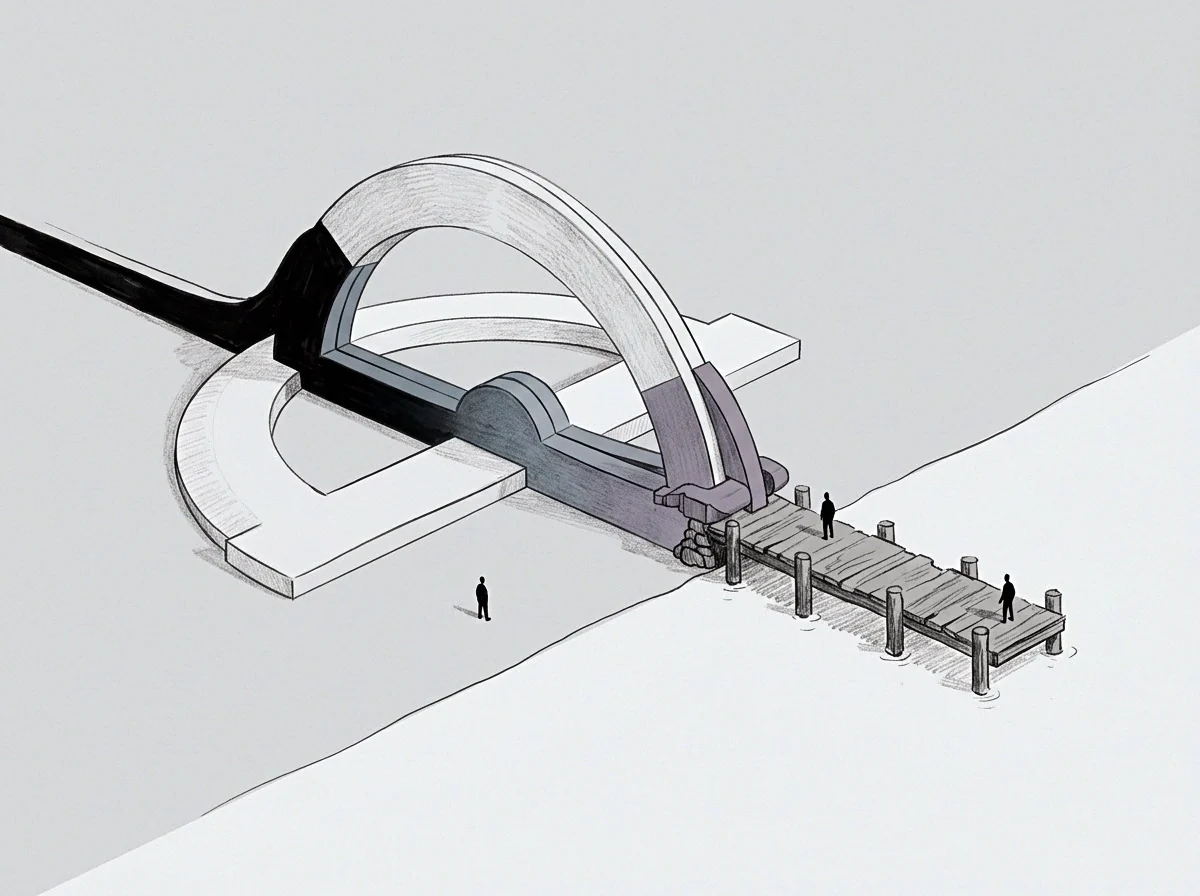
Preventing escalation drag requires rigid structural barriers between senior leadership and tactical execution queues. A structural wall enforces clear decision rights, defining explicit thresholds where senior intervention is permitted. Below those thresholds, tactical teams hold absolute execution authority, including the right to fail within bounded financial and operational parameters.
Senior intervention outside established protocols requires formal authorization, introducing deliberate friction into the escalation path.
Structural Mechanisms for Boundary Enforcement
Building effective governance barriers involves specific contractual, technical, and operational controls.
- Financial threshold limits dictate that tactical expenditures under assigned values remain entirely within line management authority, preventing senior sign-off requirements for routine operational inputs.
- Escalation circuit breakers enforce mandatory cool-down periods, requiring tactical units to exhaust internal peer review protocols before raising an issue to the executive layer.
- Siloed operational logs isolate technical communication channels, restricting executive write-access to production environments and enforcing read-only visibility for governance oversight.
- Explicit operational scopes document precise operational limits for every role, defining unapproved senior overrides as contractual breaches of delegation boundaries.
A well-designed governance threshold forces operational problems to find local resolution before reaching strategic balance sheets.
Enforcing these boundaries requires senior executive restraint. When operational failures occur below the threshold, the executive must resist intervening directly. Allowing local teams to process failures builds institutional muscle memory, improving long-term operational resilience.
Intervening during minor crises dismantles team autonomy and re-establishes informal bypass channels.
The introduction of formal escalation friction protects executive focus. By requiring written justifications, context summaries, and middle management sign-offs before an issue ascends, the volume of escalations drops significantly. Only genuine strategic emergencies cross the barrier, leaving routine variance to local resolution mechanisms.
This explicit governance arrangement alters the company operating agreement, converting informal override authority into a strictly audited delegation structure.

Rate
The steady-state velocity of a mature organization depends directly on its structural dampening of executive interventions. Over three to five years, enterprises with bounded escalation pathways show higher capital efficiency, lower key-person dependency, and superior strategic responsiveness. The executive team remains free to focus on market shifts, capital allocation, and structural risk management, leaving operational units to run inside defined bounds.
Long-term strategic velocity is the aggregate output of operational units moving without senior intervention.
Conversely, organizations running unbounded executive escalation pathways experience steady velocity decay. The executive tier eventually becomes overwhelmed by the accumulating volume of micro-decisions. Middle management talent exits, weary of holding responsibility without authority.
Tactical units lose their capability for independent action, creating complete enterprise stagnation whenever executive bandwidth reaches capacity.
Restoring strategic velocity requires a systematic shift from personal authority to structural governance. The executive must relinquish tactical visibility to regain strategic leverage. This transition demands sustained commitment to delegation boundaries, precise role definitions, and rigorous auditing of escalation channels.
The result is an resilient enterprise capable of scaling beyond the individual processing limits of its senior leaders.
The metrics of long-term strategic friction confirm that enterprise value grows when executive escalation channels are strictly bounded, measured, and controlled.