
Resolving Buyer Execution Paralysis Derived From Uncodified Founder Micro Judgment In Mid Market Transactions
Buyer execution paralysis resolves by converting uncodified founder trade-offs into an accessible precedent ledger through paired live exception logging.

Wedge
Thirty-four custom quote requests sat unattended across three dispatch screens on the first Tuesday after closing. The private equity firm had acquired the twenty-two million dollar precision machining enterprise four days prior, installing an interim managing director to govern plant operations. By noon, quoting activity stopped.
Field estimators refused to price orders carrying nonstandard metallurgy without written sign-off, while shop supervisors paused production on twelve customer runs that lacked formal tolerance sheets. Thirty quotes sat unanswered. The floor went quiet.
The seller had departed for a ten-day post-closing leave, leaving the buyer holding an asset stripped of the rapid, unwritten trade-offs that sustained historical throughput.
Execution paralysis in mid-market acquisitions emerges when formal authority encounters an informational void at the operating margin. Acquirers routinely assume that operating cash flows reflect documented processes. In businesses generating between two and ten million dollars of operating earnings, profitability often depends upon unwritten trade-offs managed by the seller.
These concessions, salvage tolerances, and credit waivers exist entirely inside an individual memory. When new ownership assumes control, these undocumented heuristics vanish from daily workflow. The enterprise enters an immediate operating wedge, caught between bureaucratic hesitation and unhedged operational risk.
When transaction closing severs informal escalation channels without explicit decision rules in place, operational throughput contracts across every client touchpoint.
The resulting vacuum exposes the structural division between codified procedure and discretionary micro judgment. Mid-market operators rarely record how they balance customer delivery demands against raw material yield penalties. They know instinctively which machining tolerances can run slack and which clients tolerate invoice discrepancies.
Institutional buyers, governed by board reporting obligations and lender covenants, cannot safely rely on unwritten instincts. Operating executives freeze asset utilization to avoid unhedged liability. Revenue dropped immediately.
Subordinate staff members recognize the absence of sovereign judgment instantly. Estimators, customer support representatives, and shop leads stop taking commercial risks once the historical owner vacates the floor. Uncodified allowances that previously resolved scheduling conflicts turn into formal escalations.
Each unresolved request accumulates on executive desks, creating administrative logjams that choke cash generation within the initial hundred days post-close. Prolonged indecision during this transition systematically destroys customer goodwill, contract renewal rates, and workforce morale.
Sieve
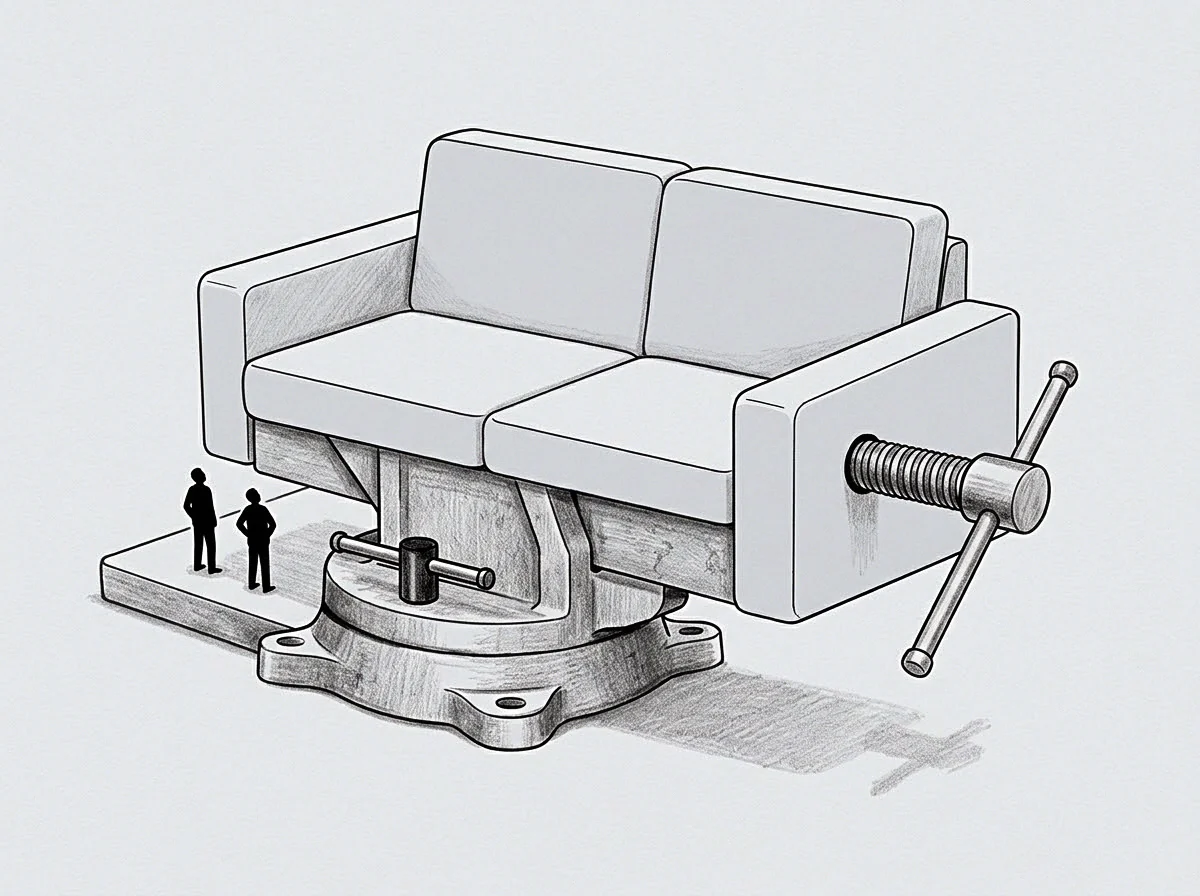
Discretionary heuristics within owner-managed firms sort into definable operational categories. An acquirer seeking to restore velocity isolates these informal practices before attempting structural changes. In an owner-led enterprise, micro judgments function as a filtering apparatus, sifting daily commercial friction into accepted operating exceptions.
Research in organizational role theory demonstrates that when single-seat operators leave an organization, uncodified routines degrade unless deliberately decomposed into distinct decision domains. The incumbent seller held three separate functional responsibilities simultaneously: senior technical director, administrative manager, and corporate owner.
Unbundling the technical decisions from ownership prerogatives reveals why institutional playbooks produce operational stall. Sellers resolve ambiguous operational inputs through rapid trade-offs that subordinates rarely witness. Heuristics resist simple extraction.
Tacit rules hold invisible borders. Examining quote records, dispatch logs, and credit files exposes three primary categories of informal micro judgment that require codification:
- Tenure Allowance Precedents guide commercial concessions where informal discounts balance customer longevity against current job profitability. These allowances occur without written rate sheets or formal gross margin floors.
- Scrap Tolerance Discretion governs shopfloor decisions regarding acceptable component deviations, balancing rework labor costs against immediate shipment schedules. Seasoned operators resolve these trade-offs by evaluating client inspection stringency rather than blueprint tolerances alone.
- Vendor Payment Float Adjustments balance supplier settlement timing against raw material lead-time stability. The seller maintains vendor accommodation by selectively accelerating invoice processing for sensitive regional machine shops during supply shortages.
Discretion created margin variance. When a buyer institutes uniform gross margin hurdles without accounting for these informal arrangements, long-standing accounts defect to regional competitors. Conversely, allowing unsupervised staff to apply discretionary discounts erodes the target cash flow underlying the acquisition valuation.
The acquirer must separate relationship concessions from economic trade-offs, establishing transparent governance standards for each transaction type.
A field technician seeking authorization for an unbilled Saturday delivery requires explicit commercial parameters rather than broad corporate values.
Interviews with remaining management personnel frequently highlight the absence of predictable decision thresholds following transaction completion. Line managers report that while the previous owner granted instant verbal approvals, the institutional sponsor requires formal memo documentation for routine supply purchases. We were told to grow sales, but every nonstandard price quotation gets stalled in committee review for nine business days.

Gauge
Measuring the difference between written standard operating procedures and actual decision velocity indicates the severity of integration deadlock. Mid-market acquisitions expose significant friction when centralized compliance protocols collide with informal operating discretion. Buyers frequently discover that traditional integration instruments fail to capture the operational rules that sustained historical earnings.
The manual proved useless. Operating velocity stalled completely. Evaluating integration tools across critical performance criteria demonstrates where procedural instruments break down.
| Instrument Type | Decision Domain Governed | Resolution Latency | Throughput Retention Rate |
|---|---|---|---|
| Standard Operating Manuals | Static administrative tasks and safety protocols | High latency exceeding forty-eight hours | Forty-two percent of daily exceptions |
| Executive Approval Matrix | Capital allocations and significant vendor contracts | Moderate latency averaging twenty-four hours | Fifty-six percent of daily exceptions |
| Paired Heuristic Calibrations | Dynamic commercial concessions and scheduling exceptions | Immediate resolution under sixty minutes | Eighty-nine percent of daily exceptions |
| Contingent Earnout Covenants | Macro revenue performance and aggregate profitability | Retrospective evaluation quarterly | Thirty-one percent of daily exceptions |

Are Operating Playbooks Sufficient For Implicit Heuristics?
Documented operational protocols capture mechanical workflows while entirely missing the relational criteria that govern transactional elasticity. A written procedure directs an order entry clerk to input client specifications into the enterprise software. The text fails to specify which clients receive unbilled emergency freight based on seasonal order volume.
Price concessions followed client tenure. An acquirer relying entirely on conventional process mapping leaves eighty percent of daily discretionary choices undefined. Subordinate teams, paralyzed by fear of reprimand, defer routine matters to executive leadership.
Where formal operational rules omit specific exception thresholds, throughput collapses to the speed of the most cautious supervisor.
Empirical studies on tacit technical knowledge show that experienced practitioners struggle to articulate their operational logic in abstract interviews. When asked how they evaluate nonstandard orders, sellers routinely describe standardized pricing formulas. Reviewing actual operational records uncovers substantial deviations from these stated rules.
Sellers protect historical relationships. Escalations flooded the executive desk. Closing this operational gap requires systematic calibration rather than retrospective documentation.
A sound operational policy grants local decision makers defined monetary limits for client concessions, while reserving systematic margin deviations for scheduled review.

Script
Extracting unwritten operating criteria requires an active protocol conducted across live transactions during the ownership handover. Assume an industrial components distributor generating thirty million dollars in annual revenue, where the founder retained sixty percent of customer quoting discretion. In this business, operating margins depend upon sourcing nonstandard parts through unlisted broker connections.
The acquiring private equity group introduced an operating partner to govern the commercial desk post-close, discovering that quote fulfillment slowed by sixty percent within thirty days. Rather than conducting retrospective interviews, the buyer initiated a structured shadow decision protocol.
The transition protocol structures daily operational interactions to externalize unwritten logic. Over a sixty-day post-closing window, the incoming commercial leader and the selling owner manage incoming transaction exceptions concurrently. Routine choices require definite criteria.
Silence carries an operational toll. The extraction sequence operates across four operational milestones:
- Paired Exception Interception routes every nonstandard pricing, vendor concession, and production schedule request through a shared intake desk prior to response generation.
- Independent Decision Logging requires both the seller and incoming executive to independently log an intended commercial resolution and specific supporting factors within fifteen minutes.
- Variance Reconciliation Review convenes daily at four in the afternoon to compare logged decisions, isolate discrepancies, and extract the underlying economic rules governing differences.
- Threshold Ledger Publication translates reconciled decisions into an evolving operational manual accessible to all customer-facing personnel.
A contractual transition period secures operational continuity when tied to recorded decision precedents rather than calendar duration alone.
Precedents govern daily throughput. During the reconciliation phase, the industrial distributor discovered that the seller consistently discounted shipping rates on shipments carrying gross margins above forty percent, while strictly enforcing shipping surcharges on low-margin baseline catalog items. The seller had never articulated this ratio to inside sales teams.
Once recorded in the threshold ledger, inside sales representatives processed ninety-four percent of incoming custom orders without executive intervention. Authority transfers through recorded precedents. This protocol lifted dispatch velocity to pre-transaction levels while protecting targeted acquisition margins.
How long must an operational exception log operate before a buyer can safely assume all significant customer trade-offs have been captured?

Hinge
Contractual architecture must align the seller’s economic incentives with decision codification rather than passive enterprise stewardship. Standard purchase agreements rely on employment contracts or non-compete agreements to maintain post-acquisition stability. These instruments mandate physical presence without compelling the transfer of implicit operational criteria.
A seller operating under a conventional time-based retention agreement can sit at their historical desk for twelve months, answering direct questions politely, while withholding the relational rules that govern operating throughput. Mid-market purchase contracts require explicit transition governance tied to knowledge codification milestones.
Post-closing consulting compensation functions effectively when linked directly to precedent ledger completion and operational velocity metrics. A defined escrow holdback tied to precedent transfer transforms informal micro judgment into documented company property. The transaction terms define specific extraction obligations, compelling the seller to participate in daily decision reconciliation reviews until exception escalation rates drop below five percent of daily transaction volume.
When drafting these provisions, transaction counsel separates general transition cooperation from specific decision logging duties.
Structuring the transaction around operational governance covenants protects the buyer against early execution collapse. The acquisition agreement incorporates an uncodified discretion schedule that itemizes known operational areas lacking written procedures, including customer settlement allowances, vendor prepayments, and inventory write-off thresholds. The agreement obligates the seller to spend twenty weekly hours alongside the replacement operator, resolving entries on this schedule under active transaction conditions.
Failure to complete these calibration sessions triggers an automatic extension of the consulting term and defers secondary consideration releases. The precedent delivery certificate, executed by both the buyer and the seller upon verification that line supervisors execute ninety percent of exception requests without owner involvement, releases the final operational holdback tranche.