
Resolving Unwritten Operational Dependencies in Leadership Succession
Resolving unwritten operational dependencies requires converting shadow approval chains and tacit exception logic into explicit role thresholds before executive exit.

Knot
An incoming executive sits at an unfamiliar terminal at seven in the evening, attempting to execute a banking transfer for a strategic vendor, only to discover that system permission relies on an authentication code sent to the departing founder’s private mobile device. Corporate governance charts present a clean division of authority, yet operational daily execution routinely routes through informal pathways established over years of early-stage growth. The person who built the enterprise retains single-threaded control over critical accounts, unrecorded commercial modifications, and key vendor communications.
When leadership succession occurs on paper, these invisible ties bind daily operations to the predecessor.
The worn seat of an outgoing leader accumulates hundreds of micro-dependencies that never appear in job descriptions or board charters. A technician turned founder solves immediate operational friction by taking on personal responsibility for exceptions, creating hidden operational loops. When a new executive enters the held seat, formal organizational power exists without the underlying administrative access needed to keep operations moving.

Tacit Pathways in Daily Operations
Informal communication channels bypass organizational structure when operational urgency outpaces documentation. Over years of enterprise development, team members learn that obtaining immediate resolution for client exceptions or supply delays involves contacting the founder directly via personal messaging apps rather than filing tickets through formal management systems.
This pattern creates shadow authority, where operational decisions depend on one individual’s historic memory and personal relationships. Workflows stall without notice. The incoming leader faces operational drag because the enterprise lacks written rules for handling routine anomalies without founder intervention.
Incoming leadership inherits the title while the operational routing stays with the departing founder.
When an enterprise attempts to transfer leadership without mapping these implicit connections, daily execution degrades. Staff members default to seeking informal approvals from the former leader, eroding the authority of the incoming executive while burdening the outgoing founder with ongoing operational requests. Silence carries real cost.
The incoming leader remains unable to direct work, while the outgoing leader remains unable to exit.
Leaving informal execution routes unmapped during executive transition forces the incoming leader to manage through constant operational interruptions while forcing the departing founder to maintain off-books operational governance indefinitely.
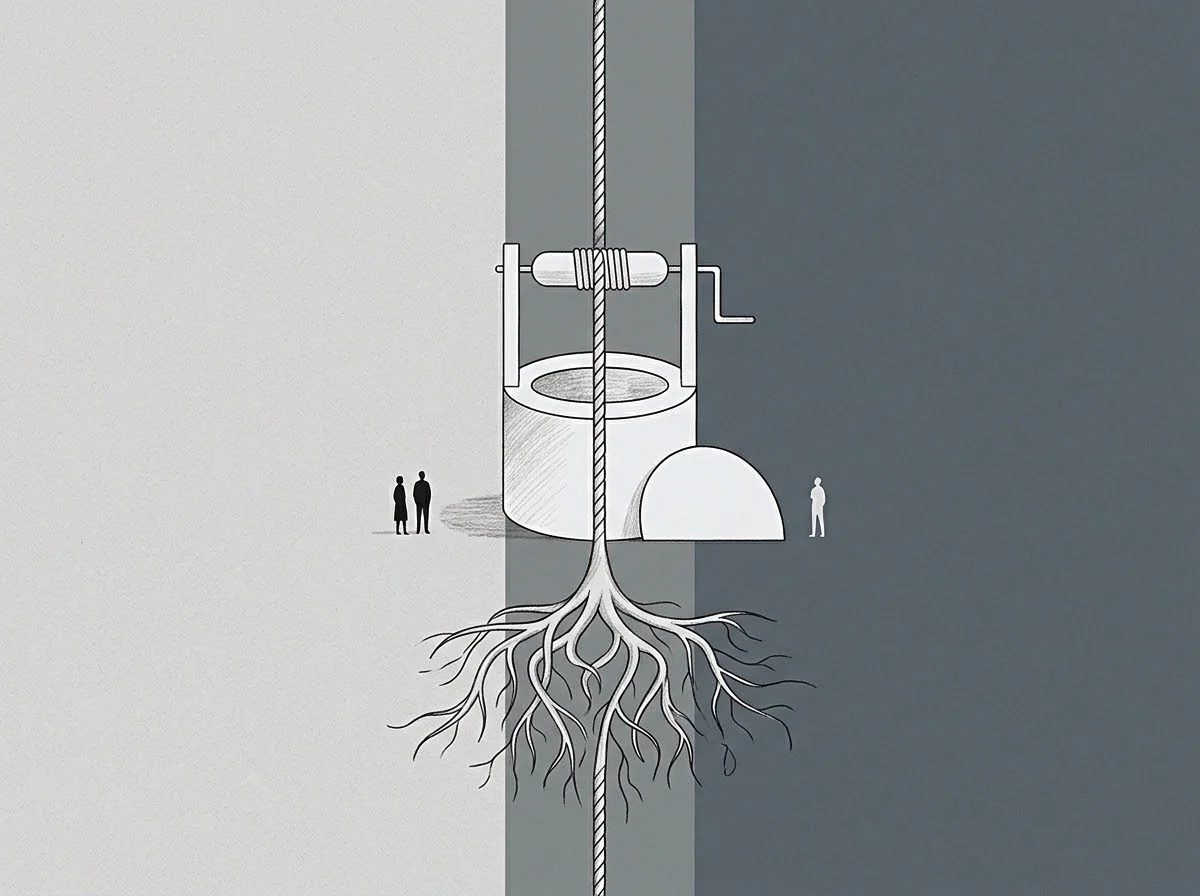
Grid
Deconstructing an executive role into its distinct functional components exposes the gap between documented governance and actual operational reliance. Role theory research demonstrates that role strain emerges when the operational demands of a position exceed the explicit authority granted to the seat. In founder-led enterprises, the position of chief executive blends three distinct functions: the technical domain expert, the operational manager, and the enterprise owner.
Succession initiatives typically transfer the owner and manager titles while leaving technical dependencies bound to the departing individual.

Structural Mapping of Shadow Authority
Categorizing informal dependencies reveals four distinct domains where operational execution anchors itself in personal habit rather than enterprise design. Access grants no control.
- Covert Escalation Routes shift routine operational issues to the departing founder through informal communication channels outside the organizational chart.
- Undocumented Vendor Terms rely on personal relationships to maintain service levels without written commercial contracts or enterprise billing arrangements.
- Bespoke Exception Logic asks the founder to evaluate non-standard client requests because no written operational thresholds exist for middle management.
- Single-Threaded System Access leaves administrative credentials, domain registrations, and banking tokens tied to individual personal accounts.
Structural contingency research on administrative intensity during leadership transitions indicates that operational latency increases exponentially when authorization chains contain undocumented nodes. This empirical finding rests on longitudinal observational data from mid-market industrial transfers; the pattern alters only in organizations operating under strict regulatory environments where compliance mandates external auditing of all access controls.

Operational Latency in Authority Transfer
Measuring the time required to complete routine administrative tasks before and after a leadership change quantifies residual dependencies. When an incoming leader must request permission or access codes for standard operational tasks, decision speed drops dramatically.
When operational authority relies on unwritten memory, handover velocity drops to the speed of manual inquiry.
| Operational Dimension | Explicit Authority Model | Tacit Operational Dependency |
|---|---|---|
| Decision Escalation | Threshold-based management sign-off documented in policy | Direct outreach to departing founder via personal messaging |
| Key Access & Credentials | Enterprise single sign-on with role-based access control | Personal password vaults and physical security hardware held individually |
| Client Exception Handling | Standardized matrix mapping risk tolerance to approval level | Ad hoc evaluation based on historical memory and unwritten precedent |
| Vendor Relationship Management | Formal enterprise contracts with clear service level agreements | Handshake arrangements and personal affinity with vendor executives |
Tacit execution consumes time. The transition stalls early. The accumulative effect of unmapped operational dependencies creates a persistent drag on organizational momentum, forcing the incoming executive to spend working hours securing administrative permissions rather than executing enterprise strategy.
A transitional operational agreement that specifies explicit system handovers within fourteen days transfers administrative control to the incoming seat before strategy execution begins.

Table
Converting implicit operational reliance into clear institutional procedures demands systematic identification of daily decisions made by outgoing leadership.

Which Dependencies Prevent Transfer?
Identifying the operational points that block leadership succession demands tracing every administrative transaction that stalls without founder involvement. Hours reveal the pattern.
Knowledge management literature identifies a consistent decay rate in operational performance when organizations rely on uncodified expertise. This research rests on empirical codification studies in technical service environments, though the rule breaks down in entirely automated algorithmic software environments where human intervention is absent.

Formalization of Shadow Workflows
Documenting tacit operational knowledge converts informal executive habit into repeatable organizational procedure. The desk cannot fully defend the claim that every informal exception can be reduced to a written rule; under this operational uncertainty, a prudent board establishes financial variance bounds that allow incoming leaders to act without absolute procedural coverage.
A written operational threshold converts tacit escalation into a delegated manager seat.
- Audit all active system access, security tokens, and administrative credentials held by departing leadership across enterprise platforms.
- Record every non-standard operational exception evaluated by the outgoing founder over a thirty-day observational window.
- Transfer commercial vendor relationships and pricing agreements to formal corporate accounts managed by designated staff.
- Establish clear financial authorization limits that permit management to execute operational decisions independently.
The audit stops here. Tacit operational reliance decays only when explicit protocols replace individual memory. The record breaks here.
When an organization records operational parameters in enterprise documentation, authority shifts from the person to the position.
The company cannot move forward until daily operational decisions stop coming to a personal inbox for review.

Wire
Managing role conflict during executive succession demands structural isolation between the outgoing leader’s advisory functions and daily operational execution.

Role Conflict in Transition Phasing
Simultaneous occupancy of executive responsibilities creates severe operational confusion for employees trying to determine which leader holds final decision authority. When the outgoing founder remains accessible for daily operational queries, staff members routinely bypass incoming leadership to obtain faster approvals from the historic decision-maker.
Marine navigation engines utilize dual-fuel switching protocols where system pressure normalizes across supply lines before primary valves transfer complete operating load to auxiliary feeds. Complex organizational systems similarly demand pressure equalization across management seats before final operational disconnect occurs.
Operational handover succeeds when the outgoing leader experiences complete friction upon trying to intervene.
The physical cost of holding two operational seats appears as administrative exhaustion and divided team loyalty. The outgoing leader carries the mental load of daily execution while attempting to transition into strategic oversight, while the incoming executive lacks the operational space to establish leadership legitimacy. Authority shifts with credentials.
Escalation stops at boundary.
Executive handover achieves stability when team members direct operational queries to the seat rather than the individual who previously filled it.
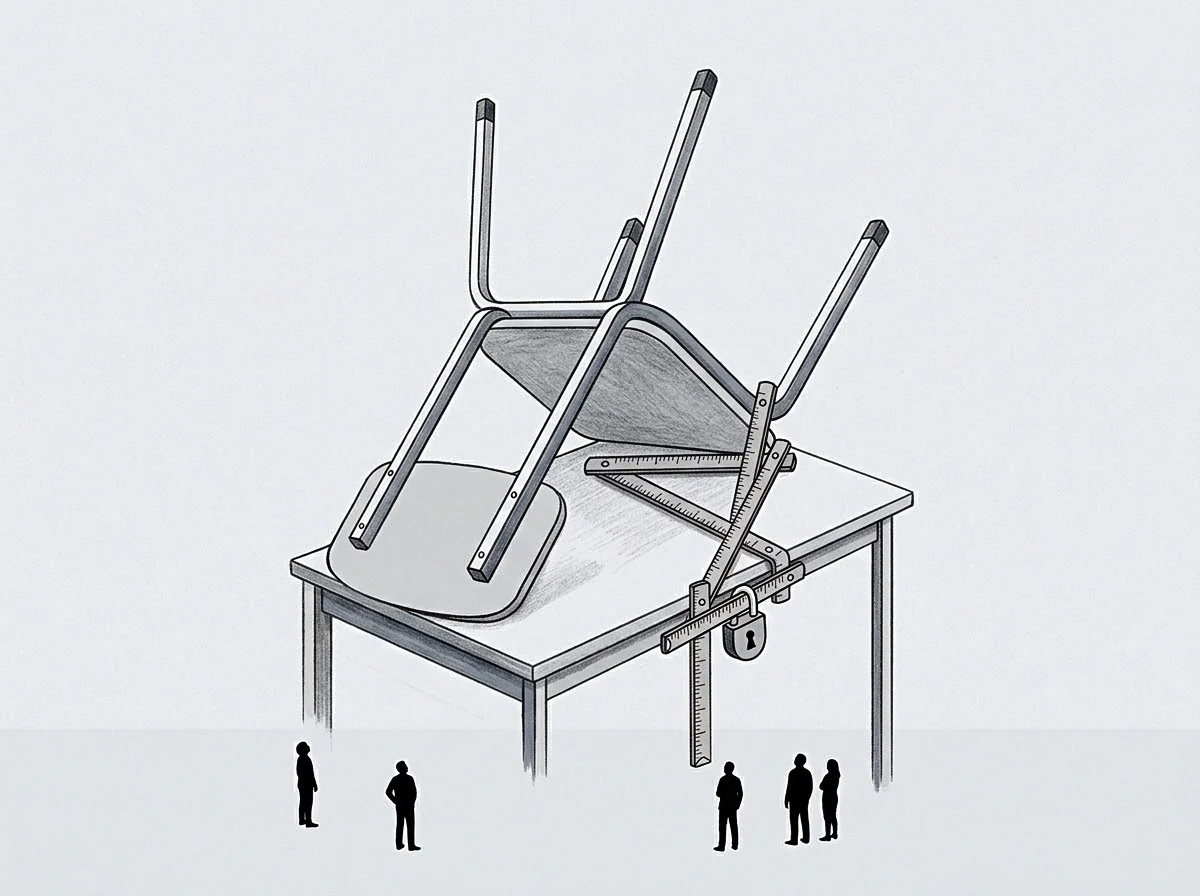
Joint
Establishing a definitive end point for operational transition protects both incoming leadership and the departing enterprise founder.

Decommissioning Outgoing Fallback Channels
Removing informal communication pathways demands administrative discipline and explicit structural boundaries across the organization. System credentials assigned to outgoing leaders transition to read-only access, while operational approval chains bypass personal contact channels entirely.
The seat sits empty. Shadow authority remains unstated. When fallback communication channels close, organizational problem-solving routes directly through the new management structure.
Capacity defines the limit. The contract holds firm. Operational autonomy consolidates within the incoming executive seat, enabling the enterprise to function as an independent institution rather than an extension of founder identity.
Severing residual administrative access forces internal teams to utilize explicit reporting lines, solidifying the new governance structure across daily operations.