
Structuring Post Acquisition Operating Governance When Codified Founder Decision Rules Conflict With Buyer Capital Allocations
Post-acquisition governance structures must contractually balance corporate portfolio hurdle rates with ring-fenced operational envelopes for founder rules.

Wedge
An operator sits before a corporate spreadsheet at nine in the evening, examining a redlined procurement request. Three years prior, the company operated on an explicit principle: customer delivery dates dictated component purchases regardless of unit volume pricing breaks. That operating premise protected delivery reliability and anchored enterprise contract renewals.
The acquirer has replaced that protocol with a centralized working capital mandate requiring seventy-five days of payable float and minimum procurement lot sizes. The enterprise software contract now stalls because the hardware assembly line lacks six specialized chips that fail the buyer inventory turnover threshold. The immediate collision is operational, yet the root cause sits inside governance architecture.
Acquisition agreements frequently celebrate operational continuity while simultaneously transferring aggregate capital distribution authority to a corporate investment committee. This division creates an immediate operational split. The original enterprise playbook relies on deterministic protocols: when customer churn reaches two percent in a quarter, customer success headcount expands automatically by two technicians.
The buyer operating regime functions on capital efficiency metrics: corporate hurdle rates, internal rates of return across a portfolio of twelve subsidiaries, and standardized cash sweeps. When the corporate treasury extracts cash balances each Friday, the local deterministic rule breaks down. The operator cannot execute the local playbook because the liquidity sits inside a corporate account three states away.
A deterministic operating rule breaks the moment corporate treasury centralizes cash sweeps.

The Capital Ceiling on Product Rules
Parent entities evaluate cash expenditure against opportunity costs across multiple divisions. A founder evaluates expenditure against operational stability and customer retention. These two calculation logics diverge during procurement cycles, product roadmaps, and maintenance hiring.
When a firm documents an operational guideline stating that engineering capacity maintains a twenty percent buffer for architectural refactoring, that guideline assumes localized cash control. Corporate buyers frequently categorize that twenty percent buffer as unallocated margin potential, eliminating it during post-close budget integration.
The friction manifests across five specific working domains:
- Engineering allocation rules face immediate pressure when quarterly parent roadmaps prioritize short-term client feature commitments over documented tech-debt repayment ratios.
- Vendor payment schedules shift from localized vendor health preservation to corporate treasury liquidity maximization. This change degrades mission-critical supply lines.
- Hiring trigger protocols tied to team overtime hours are replaced by enterprise-level hiring freezes decreed during unrelated portfolio downturns.
- Customer support ratios established to preserve brand reputation are recalculated against consolidated software industry benchmarks, resulting in reduced tier-three specialist staffing.
- Emergency operational reserves maintained in operating bank accounts are swept into parent cash pools, leaving local management without autonomous remediation funds.
Operating rules that once existed as unambiguous internal law become decorative text when unaccompanied by balance sheet sovereignty. The operator discovers that codified discretion without dedicated cash reserves is merely an advisory opinion. When capital deployment overrides operational protocols, delivery timelines lengthen, customer accounts degrade, and technical staff absorb the immediate friction through uncompensated night shifts.

Post
Operating authority after a sale requires separating the person from the operational station. In the initial enterprise, one person moved across three distinct responsibilities: building the technical artifact, managing team workflow, and allocating equity proceeds. Following transaction close, the corporate buyer purchases the ownership rights and leaves the operator sitting inside an operational management station.
The error occurs when the individual occupies the management post while attempting to enforce capital allocation authority that transferred to the holding entity during signature execution.
Role strain emerges from this structural ambiguity. The buyer expects the on-site leader to act as an execution manager, driving team compliance with corporate margin targets. The team expects that same leader to protect legacy engineering standards and compensation structures.
The person in the middle absorbs the structural dissonance. When team attrition accelerates, the operator attempts to invoke historical retention bonuses, only to find the parent human resources committee rejects any compensation packages exceeding portfolio medians.
Role strain accelerates when legacy operational expectations collide with acquired corporate reporting lines.

The Division of Operational Seats
Clear governance demands explicit boundaries around every management station. When an operator continues to direct product quality while losing control over technical compensation, the station becomes untenable. Management researchers document that when responsibility remains static while formal authority contracts, executive exhaustion rates rise precipitously.
The operator works seventy hours a week attempting to bridge corporate capital constraints through personal persuasion and tacit interventions.
Tacit authority dissolves quickly in formal corporate structures. What worked as informal consensus during private ownership fails inside quarterly board reviews. The buyer evaluates performance through documented return metrics, while the legacy management team relies on historical commitments made during private ownership.
The gap between those expectations generates continuous friction.

Tacit Standards Against Written Thresholds
Legacy operating rules frequently live in tacit understanding rather than formal legal covenants. A founder knows that a specific critical server requires manual weekly database tuning. The buyer views database maintenance through automated operational checklists handled by a shared-services vendor in another time zone.
When the database crashes due to delayed index rebalancing, the buyer faults the local operator for operational negligence. The local operator faults the corporate IT consolidation policy for removing dedicated database administrators.
The station can only be held if its operational perimeter is clearly articulated. Attempting to preserve informal decision rules without contractual backing drains personal capacity without altering corporate capital flow. We agreed to your operational rules, but our investment thesis requires consolidated cash management.

Notch
Resolving structural conflict between local operational rules and buyer financial hurdles requires contractual demarcations. These boundaries function as mechanical limits. Instead of relying on goodwill or vague representations of operational autonomy, structured governance specifies exact capital thresholds within which legacy rules govern execution.
A parent company that seeks the predictable performance of an acquired asset must protect the operational conditions that generated that performance.
The primary mechanism is a ring-fenced operational budget. The acquisition contract establishes a defined operational envelope, such as fifteen percent of top-line revenue, controlled by the local managing director without corporate review. Within this perimeter, legacy protocols regarding software refactoring, vendor selection, and customer compensation credits operate without parent interference.
Once expenditure crosses that notch, corporate capital governance asserts jurisdiction.
Decisions carry operational friction. Moving capital requires clear thresholds.

Carve-Out Budgets and Ring-Fenced Discretion
Structured discretion insulates critical operations from corporate treasury volatility. A well-designed governance agreement incorporates specific safe harbors. If the historical rule mandates replacing hardware servers every eighteen months to guarantee uptime for enterprise banks, the purchase agreement codifies that replacement cycle as a non-discretionary capital expenditure.
The corporate finance team cannot veto those procurement orders to hit quarterly parent earnings targets.
Establishing these carve-outs requires defining three technical levers:
- The designated operational envelope establishes a hard capital ceiling, managed locally by the operator without requiring corporate approval loops.
- Objective operational triggers dictate when local protocols override centralized procurement mandates, particularly during high-severity system outages or critical supply disruptions.
- The dispute resolution sequence moves contested expenditures to an independent operating committee rather than defaulting to the buyer corporate chief financial officer.
Unbudgeted labor represents a hidden corporate subsidy. When an operator spends thirty hours a week arguing with corporate procurement officers over standard workstation configurations, operational focus shifts away from customer acquisition. The operational cost of corporate governance overhead frequently exceeds the procurement savings extracted through consolidated purchasing.

Escalation Pathways for Contested Allocations
When an operating rule and a corporate allocation policy directly collide, a functional governance document avoids administrative deadlocks through structured escalation. The local leader submits an operational impact assessment documenting the cost of allocation denial. If the corporate allocation committee denies the expenditure, the contractual compact shifts direct accountability for missed performance targets from the local operator to the parent entity.
Documenting this accountability prevents earn-out disputes down the road.
Agreements that define boundaries early preserve operational rhythm.

Grid
Selecting an operating governance model requires balancing operational speed against parent financial oversight. No single governance design resolves every operational conflict. A buyer seeking rapid consolidation into a centralized platform requires a different decision structure than a buyer running an autonomous holding company model.
Evaluating these models on defined operational criteria clarifies the trade-offs confronting both parties during post-merger integration.
The governance structure determines where authority sits during critical operating events. When a major client demands custom architectural integration, the time required to approve engineering expenditure directly affects contract retention. The table below compares the four primary governance structures utilized in corporate acquisitions where codified founder decision rules intersect with consolidated capital allocations.
| Governance Model | Authority Over Capital Allocation | Legacy Decision Rule Retention | Decision Latency | Operator Personal Strain |
|---|---|---|---|---|
| Centralized Integration | Corporate treasury maintains sole approval on all expenditures above five thousand dollars. | Legacy operating rules are eliminated in favor of buyer standard operating procedures. | High; requests require multi-tiered corporate committee reviews spanning three to six weeks. | High; local leaders absorb customer and staff frustration without possessing operational remediation tools. |
| Ring-Fenced Discretion | Local operator controls fixed operational envelope based on historical revenue percentages. | Preserved completely within the defined budget envelope; corporate rules govern overages. | Low within the ring-fenced limit; high once expenditure exceeds defined threshold boundaries. | Moderate; tension is restricted to boundary events where operational needs exceed the defined envelope. |
| Earn-Out Safe Harbor | Joint approval where buyer veto power is legally restricted on metrics tied to earn-out milestones. | Codified operational rules remain legally enforceable until the conclusion of the earn-out period. | Moderate; requires contractual documentation linking specific expenditures to milestone achievements. | High; constant friction over whether capital requests constitute necessary growth or margin decay. |
| Holding Company Model | Subsidiary retains local banking relationships and cash flow management subject to annual dividend targets. | Complete operational autonomy preserved; buyer evaluates performance solely on net dividend distributions. | Very low; subsidiary executive leadership exercises immediate operational deployment. | Low; operational leadership maintains historical authority and operational clarity. |
The comparative analysis demonstrates that attempting to maintain legacy operating rules inside a centralized integration model produces continuous structural breakdown. The operator lacks the formal power to maintain historical standards, while the buyer perceives local decision protocols as insubordination. Conversely, the ring-fenced discretion model establishes a workable compromise, providing financial predictability to the buyer while insulating core operational loops from corporate administrative delays.

Operating Compacts in Acquisition Agreements
The contractual execution of operating governance requires specific language in the purchase agreement. General statements expressing mutual intent to preserve operational culture carry zero legal weight when a liquidity squeeze hits the parent company. Effective operating covenants detail specific resource floors, defined headcounts, and autonomous purchasing tiers.
When these provisions are omitted from the definitive agreement, corporate legal precedent grants the parent board absolute authority over subsidiary resource allocation.
The formal agreement must define the precise mechanism for capital calls and working capital retention. A contractual clause stipulating that the subsidiary retains operational cash flow up to twelve percent of trailing twelve-month revenues establishes an enforceable operational boundary that survives corporate leadership changes.

Toll
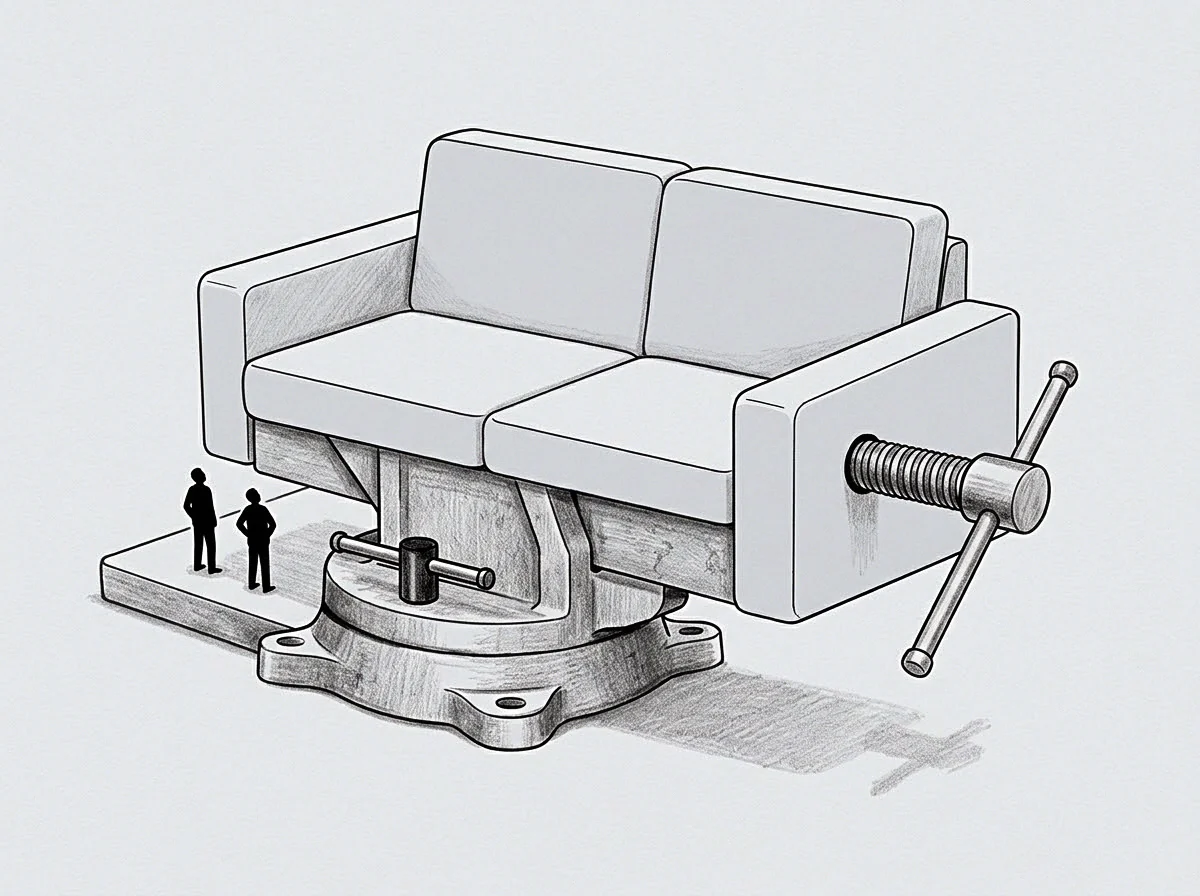
The unstated price of structural governance failure is paid in executive attention. When operational rules are overridden by corporate balance sheet priorities, the leader remaining in the post faces an unresolvable contradiction. Corporate performance management systems hold the operator accountable for revenue, retention, and customer satisfaction, while corporate capital committees systematically deny the funding required to sustain those outcomes.
The leader cannot bridge this gap indefinitely.
Physical exhaustion and cognitive depletion occur when an individual attempts to substitute personal effort for missing organizational capital. The operator steps in to write code, manage critical accounts, and resolve supply chain breakdowns directly because corporate policies prevent hiring necessary specialists or issuing spot purchase orders. This operational pattern is unsustainable.
Within twelve to eighteen months, the acquired asset experiences leadership departure, cultural fragmentation, and operational degradation.
Personal effort cannot compensate for structural balance sheet starvation.
The Attrition of Unstated Authority
Unspoken operational authority deteriorates under corporate reporting regimes. In private operations, founders command deference based on historical equity and technical mastery. In corporate environments, middle managers execute standardized directives issued by divisional vice presidents who have never visited the subsidiary facility.
When the former owner discovers that a corporate junior procurement clerk has canceled a critical tool subscription to meet a monthly divisional software budget, the reality of the acquired status becomes stark.
The erosion of operational authority follows a predictable sequence. First arrives the centralization of financial accounts, followed by the integration of human resources, and concluded by the standardization of product roadmaps. Each step strips away local deterministic decision rules, replacing them with centralized corporate approvals.
The operator who remains in the seat without clear contractual protections inevitably becomes an administrative functionary executing another organization’s priorities.

Putting Down the Unfunded Mandate
Surviving post-acquisition integration requires recognizing when an operational station has ceased to function. When the buyer eliminates the capital allocations necessary to uphold legacy operating rules, the operator must decline responsibility for the downstream performance consequences. Continuing to defend historical standards without the capital to enforce them creates severe psychological strain.
The appropriate professional move involves stepping out of the operational management post, surrendering tactical oversight, and letting corporate management experience the direct operational results of their capital allocation policies.
The transition is rarely simple. It demands abandoning the assumption that personal dedication can maintain product excellence when organizational ownership has transferred to a buyer with an entirely different investment calculus. Once an operator accepts that capital sovereignty dictates operating reality, the decision to exit the post becomes clear.
Whether an acquired enterprise can ever maintain deterministic engineering standards inside a diversified private equity portfolio remains an open question for corporate researchers.