
Valuing Deferred Operational Compensation Against Historic Capital Shares In Severed Founder Partnerships
Uncompensated operational labor converts into senior corporate debt to offset static equity claims held by non-operating partners during corporate separation.

Till
The checking account held four hundred dollars at midnight on a Tuesday when the partnership broke down. One operator had logged eighty billable client hours every seven days for two years without drawing regular payroll. The other partner had put in thirty thousand dollars of initial seed capital and stopped participating, while retaining the fifty percent equity share recorded in the formation filings.
When the operational partner moved to dissolve the joint enterprise, the capitalization table still treated both as equal owners of the goodwill and active client contracts.
Historic capital contributions reflect what went in during an earlier operating cycle, whereas uncompensated labour creates an unrecorded economic claim against the business. At formation, equity splits mirror initial cash, perceived risk, and expectations of future contribution. Once operations begin, one partner often absorbs the daily workload without a market salary to protect company cash reserves.
Forgoing that compensation amounts to an ongoing personal subsidy of the non-operating shareholder, preserving operating liquidity at the expense of the working partner’s personal income and capacity.
A passive equity position increases in value whenever active labour goes uncompensated at market rates.
Every skipped paycheck functions as an uncredited capital contribution that issues no additional equity. At dissolution, the fixed ownership percentages in the operating agreement continue to treat initial cash contributions as permanent parity, leaving the active partner with years of unrecovered earnings that directly inflated the valuation of the dormant holding.
Earlier cash investments funded venture formation before operational labor generated market value, creating the argument that uncollected wages serve as voluntary contributions rather than reimbursable debt.

Seat
A single operator in a small company inevitably covers multiple positions with competing priorities. Performance degrades when day-to-day technical execution overtakes corporate governance, an imbalance typical in owner-operated firms until management draws formal salaries. When routine production demands sixty hours each week, strategic oversight falls away entirely.
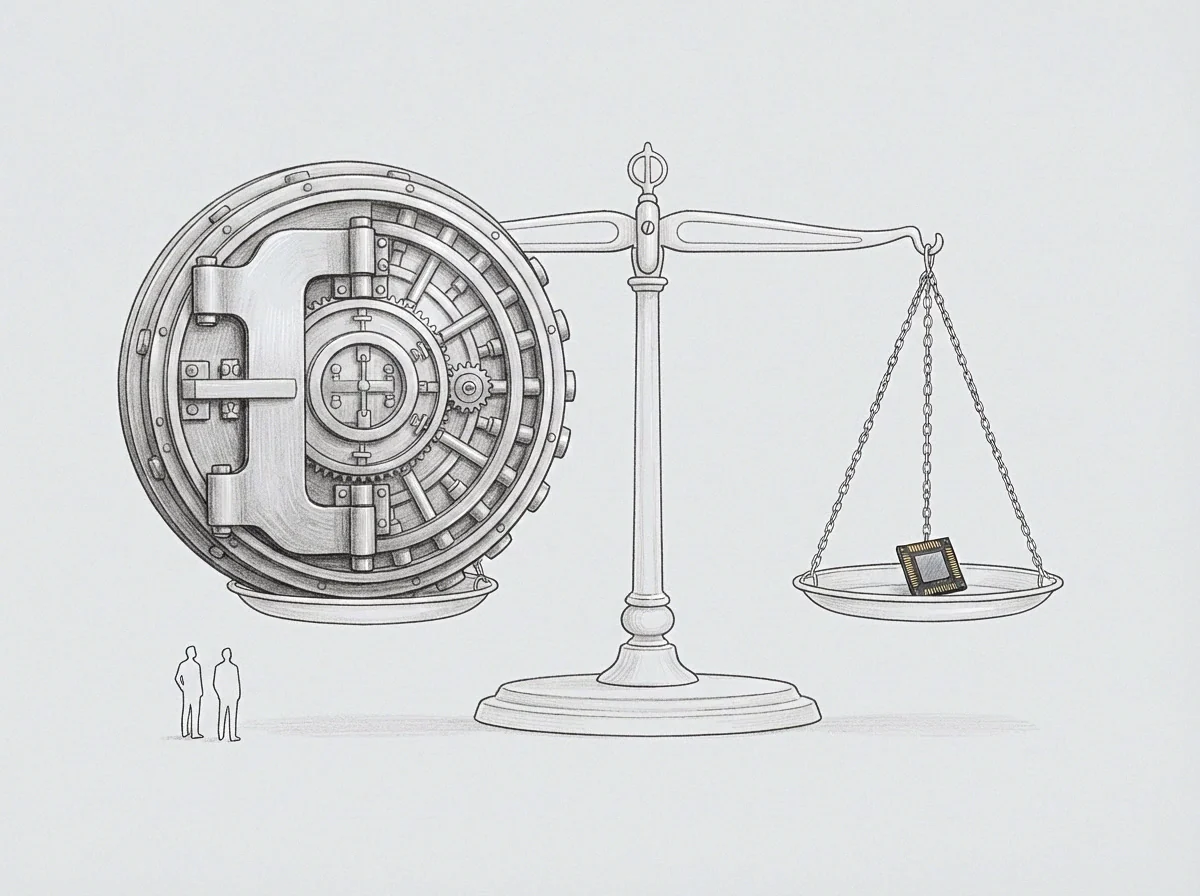
Decomposing the Three Posts
In an early closely held business, one person typically occupies three operational roles, each commanding a different market rate:
- The technician post produces direct billable deliverables, writes production code, and handles day-to-day client communications.
- The managerial post coordinates production schedules, tracks monthly accounts, and assigns internal responsibilities.
- The entrepreneurial post commits upfront capital, signs long-term commitments, and absorbs downside equity exposure.
Covering technical work and managerial oversight without a salary subsidizes daily operations rather than fulfilling an ownership duty. The non-operating investor holds only entrepreneurial risk. Confusing technical labour with ownership masks the company’s real operating costs; an operator working sixteen hours a day delivers services that an outside hire would bill at commercial rates.
Role confusion occurs whenever routine operational execution is compensated exclusively through speculative future equity appreciation.
Each post consumes time and personal capacity. If the operating partner halts uncompensated work, the business often discovers it was never viable on operating cash flows alone. Pulling the active technician halts primary delivery; removing the non-operating shareholder changes only the equity roster.
Net equity distributions only reflect true surplus once routine operational labour has been accounted for at replacement rates.

Drift
A static capitalization table drifts away from actual contributions as months of uncompensated work pile up. Partnership agreements usually lock in ownership percentages at formation. Over thirty-six months, an active manager can deliver thousands of unbilled hours while the inactive partner risks no additional resources past the initial check.
The Accumulation of Sweat Debt
The gap between upfront capital and ongoing operational labour develops across three stages:
- Inception alignment occurs when initial capital contributions match projected operational inputs, creating an initial sense of parity between founders.
- Operational divergency begins when cash tightens, leading the active partner to forgo market wages while the inactive partner’s equity stake remains untouched.
- Severance confrontation occurs when uncompensated work stops and unrecorded wage arrears clash with the fixed ownership percentages on file.
Maritime salvage and commercial building trades have long recognized that preservation labour creates a priority lien over passive ownership claims. Corporate law offers no equivalent default rule. Uncompensated operational time generates no statutory interest unless written agreements formally classify it as deferred compensation.
Without employment contracts or board authorizations, corporate law assumes officers work voluntarily to support the value of their shares.
Deferred executive compensation constitutes an enforceable enterprise liability only when structured as documented corporate obligations before severance occurs.
Without documentation establishing uncompensated hours as formal deferred debt, severance negotiations leave the working partner with little legal basis to recover the economic value given to the company, while the inactive shareholder retains full ownership rights.

Parity
Recalibrating ownership stakes at separation requires reconciling unpaid operational salaries with original cash contributions. Pricing foregone compensation means benchmarking unbilled hours against market replacement rates, then determining whether that amount converts into company debt or adjusts equity ownership.

Does Operational Debt Convert Prior to Dissolution?
Treating uncollected operational wages as company obligations depends directly on corporate solvency and written contracts. Early business survival frequently turns on the market value of the manager’s labor. Because applying an appropriate discount rate to deferred compensation in early-stage firms lacks a single standard, agreements often peg deferred amounts to published Bureau of Labor Statistics figures for equivalent managerial positions.
When partners separate, the business must select a method to account for uncompensated work alongside static initial capital:
| Reconciliation Mechanism | Valuation Metric | Impact on Cap Table | Cash Flow Consequence |
|---|---|---|---|
| Subordinated Promissory Note | Replacement wage arrears | Historic shares remain unchanged | Fixed debt payments encumber future revenue |
| Dynamic Equity Recalibration | Foregone market salary value | Active partner dilutes inactive partner | Zero near-term cash depletion for the venture |
| Phantom Unit Cashout | Appraised current asset multiple | Cancels non-operating shares entirely | Demands structured lump-sum exit capital |
Consider two founders who launch an operating company with equal fifty percent stakes. The passive partner provides fifty thousand dollars in cash. The active partner takes zero salary while providing one hundred thousand dollars in audited replacement-market labor each year for three years, creating three hundred thousand dollars in uncompensated service.
At dissolution, the business holds one hundred thousand dollars in net liquidated assets.
Dividing proceeds according to the original share register pays fifty thousand dollars to each partner, completely bypassing the active operator’s three hundred thousand dollars of unbilled labour. A structured adjustment instead classifies the uncollected wages as an operating liability. Under this approach, the active partner receives the full one hundred thousand dollars in liquidation proceeds as partial deferred salary repayment, leaving nothing for equity distribution.
Amending formation documents so that unpaid market wages accrue as senior subordinated obligations fundamentally reshapes the final distribution order between separating owners.
Gate
Leaving an operating post requires cleanly untangling ownership rights from daily operational responsibilities. A manager cannot walk away without an organized transfer of intellectual property, credentials, and day-to-day administrative authority. An abrupt departure from an undercapitalized business invites allegations of abandonment and attempts to trigger bad-leaver repurchase clauses against vested equity.

The Architecture of Operational Handover
A proper operational handover requires an orderly transfer. The operating partner compiles documentation covering primary client relationships, supplier agreements, banking authorities, and code repositories. Any unwritten processes known only to the operator must be set down in writing, preventing later disputes over operational neglect or breach of fiduciary duty.
A founder who vacates an active management post without documenting unbilled wage liabilities forfeits all practical leverage over historic equity recovery.
Once active labour departs, the remaining shareholder confronts the venture’s real operating economics. The business can no longer rely on unpaid time, and external contractors require cash compensation on weekly schedules. Without that operational subsidy, the company must inject new cash or cease operations altogether, revealing how uncompensated work had been masking structural unprofitability.
Whether future revenues can cover past uncompensated operational labour while the business pays market rates for a replacement manager remains a persistent friction in broken partnerships.