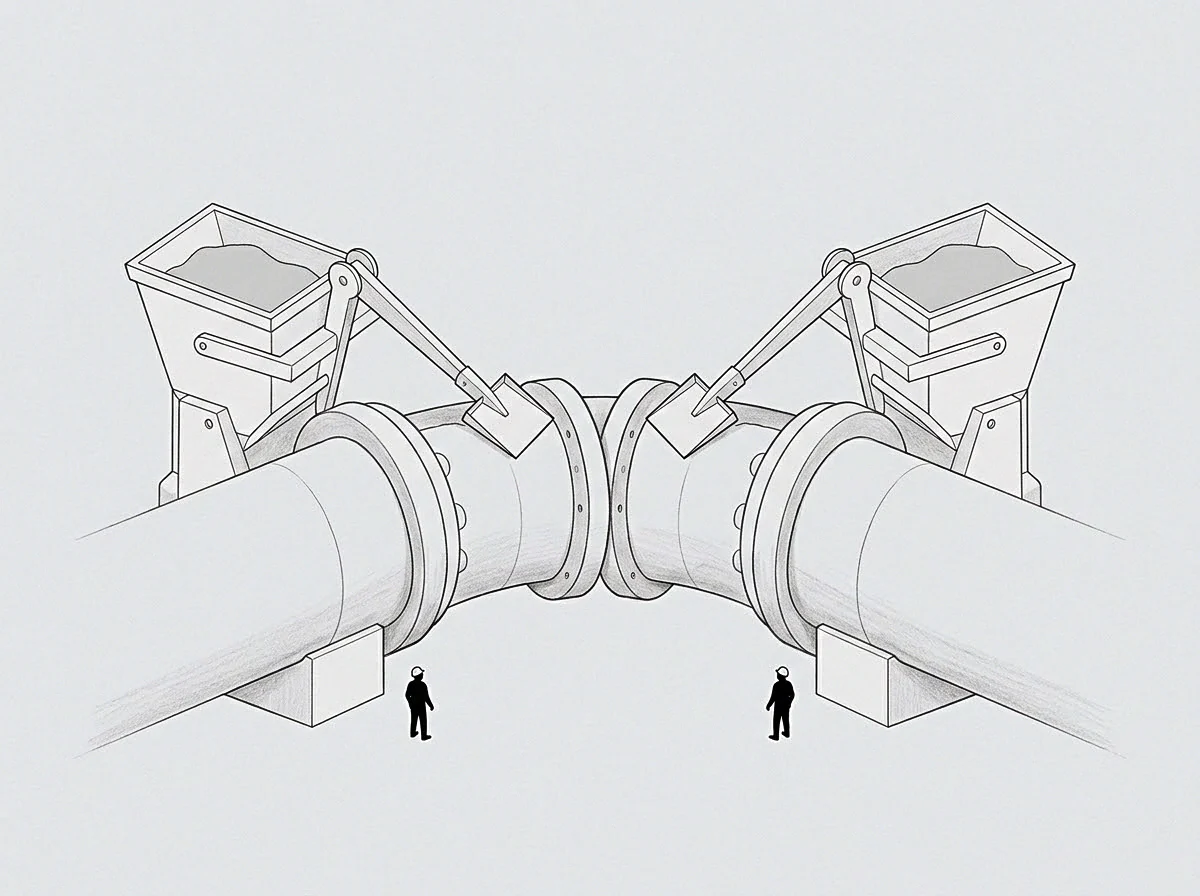
Meaning
Organizational realignment involving the redefining of responsibilities and permissions associated with different executive seats as a company scales or changes leadership. This adjustment ensures that no two people are performing the same work and that every task has a clear owner. In a role boundary transfer, the founder and the executive team map out the limits of their authority to prevent friction and redundancy.
This is particularly important when a founder moves from an early stage mode to a more specialized seat. The cost is the loss of the founder’s ability to intervene in any part of the business at will.
Authority Mapping
Visualizing where one person’s job ends and another’s begins is the core activity of this transition. For a role boundary transfer to work, the executive team must agree on who makes the final call on budget, hiring, and product features. This prevents the founder from accidentally undermining a new manager by giving contradictory orders to the staff.
When these lines are clear, the organization can move faster because there is less second-guessing of decisions.
Friction Reduction
Overlapping roles are a common source of conflict in companies that are growing out of the startup phase. By implementing a role boundary transfer, the leadership team removes the ambiguity that leads to power struggles. The founder learns to stay within their new sandbox, which might be limited to investor relations or long-term research.
This discipline is hard to maintain but necessary for the health of the organization.
Success Evaluation
Measuring the success of the new boundaries happens through the observation of decision loops. If problems are solved at the appropriate level without being escalated to the founder, the role boundary transfer is functioning correctly. This outcome signifies a mature and professional management structure.