
Measuring Residual Operational Capacity Losses When Founder Systems Transfer To Professional Operating Successors
Founder transitions yield measurable operational capacity losses when tacit decision heuristics fail to codify during executive handover sequences.
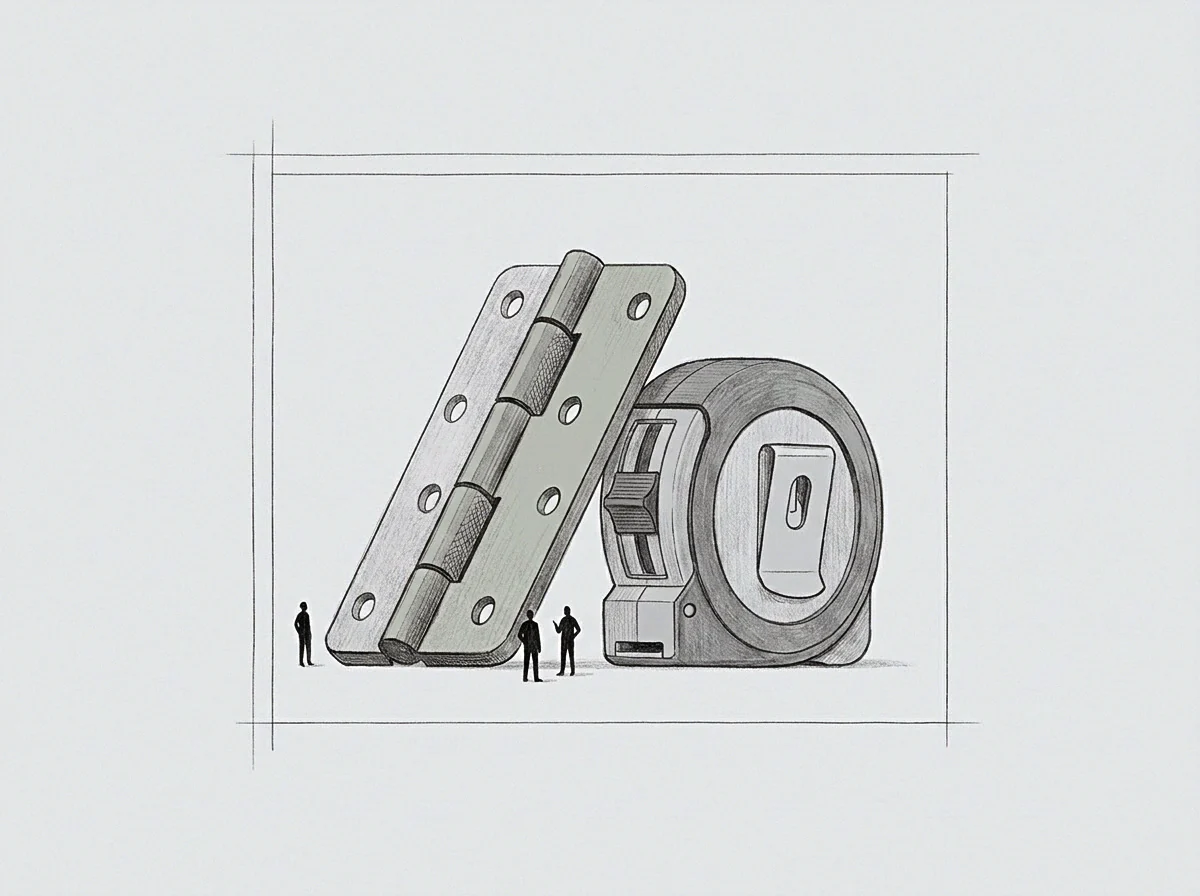
Breach
At seven in the morning on a Tuesday, an executive opens an enterprise operating database to deal with a vendor failure. The written process instructs the operator to log an automated incident ticket, route the escalation to a vendor management team, and wait forty-eight hours for a contractual solution. Five years earlier, the company’s founder resolved identical failures with a three-minute personal call to a supplier director, waiving a transport penalty and rerouting freight within thirty minutes.
No record was entered in the database. The system documentation presents a complete, compliant process map that conceals the informal interventions needed to maintain throughput. When the incoming successor follows that documented process to the letter, freight sits stranded for two days and manufacturing lines stall.
The documented procedure captures the administrative skeleton while omitting the implicit judgment that sustained baseline velocity.

Operational Continuity Under Transition Strain
Transferring an operational system from an owner-operator to a professional successor creates immediate structural friction. Standard operating procedures log explicit actions, input parameters, and output criteria, but they rarely record the triage rules needed when competing priorities collide. When supply chain delays hold up raw materials, the incoming executive relies on published guidelines, treating every purchase order the same.
The departing predecessor relied on an unwritten hierarchy, prioritizing vendor relationships based on historical flexibility during demand spikes to protect margins. Without explicit rules for these unwritten priorities, the successor processes transactions strictly by timestamp, expanding operational cycle times and dropping system throughput even when employees follow formal instructions to the letter.
A documented procedure captures the primary administrative path while concealing the informal phone calls that keep the delivery schedule intact.

The Shadow Mechanics of Founder Workarounds
Unrecorded operational pathways compensate for administrative gaps in enterprise software platforms. Over years of running the business, an owner-builder constructs informal bridges across organizational silos made of personal agreements, unwritten allowances, and direct managerial overrides that bypass institutional hierarchy. When authority shifts to an operating executive, those informal bridges disappear.
The incoming operator works within formal reporting structures, discovering that basic departmental handovers require three authorization signatures where the predecessor relied on verbal confirmation, causing executive intervention to spike. The successor encounters unexpected resistance, not from employee insubordination, but from the sudden absence of unwritten overrides. The organizational machinery defaults to its baseline administrative inertia, increasing total operational cycle time by thirty percent during the first two quarters after succession.
When an organization fails to audit these unrecorded pathways before a leadership handover, financial damage shows up as capacity degradation rather than sudden operational failure. Output drops while administrative labor hours rise, producing a hidden capacity loss that escapes traditional accounting controls for months after succession concludes.

Post
Positions within an enterprise carry formal titles and informal structural obligations. When a successor assumes a leadership seat, formal responsibilities convert immediately through contract and corporate resolution, but informal obligations built on context resist direct transfer. Tacit operational knowledge consists of unwritten decision rules, pattern recognition built through years of market feedback, and deep familiarity with operational exceptions.
An incoming chief operating officer receives system credentials, org charts, and financial models, yet the personal instinct that dictates when to ignore an inventory warning remains in the departing executive’s mind, and unrecorded workarounds vanish. What stayed with the individual was the exact threshold where rule-following converts to exception-handling.

Uncodified Priority Rules and Cognitive Load
Executive decision systems rely heavily on unwritten thresholds that determine which tasks demand immediate resolution. An experienced founder processes hundreds of operational signals daily, automatically filtering routine noise from systemic threats. The successor lacks that historical baseline and treats minor operational variances with equal urgency, bringing on rapid cognitive overload.
As senior management spends capacity sorting operational noise, strategic execution slows, and the capacity of the leadership layer decays under the weight of unranked priorities.
- Implicit Priority Inversion occurs when an operating successor applies equal administrative weight to high-impact and low-impact operational exceptions, causing resource misallocation and schedule inflation across secondary departments.
- Exception Routing Collapse happens when cross-departmental escalations bypass informal operational shortcuts, overwhelming formal dispute resolution channels and multiplying turnaround times.
- Relational Capital Evaporation develops as external suppliers, key accounts, and regulatory contacts revert to strict contractual enforcement upon losing direct, informal access to the departing founder.
- Contextual Boundary Blindness manifests when an incoming executive enforces rigid procedural boundaries in operational zones where success historically relied on fluid, cross-functional intervention.

The Scaffolding Boundary in Operating Handovers
Support structures created during executive onboarding require systematic removal to test operational independence. In many succession arrangements, the departing owner remains active as a senior advisor or board member, creating governance ambiguity during the transition. The incoming successor holds nominal authority over operational decisions, yet staff continue escalating complex anomalies to the predecessor, leaving tacit priorities invisible.
The operating successor functions as an administrative manager while operational control remains anchored to the departing individual and informal networks sever. Removing this transitional scaffolding too early exposes the organization to operational failure, whereas removing it too late prevents the successor from building organizational authority.
When implicit heuristics remain unmapped during succession, operational cycle times expand in direct proportion to exception volume.
The predecessor observes the successor struggling with an unmapped supply exception, steps in to execute the legacy informal call, and remarks privately that the enterprise cannot maintain historical delivery schedules without constant executive oversight.

Tally
Measuring capacity degradation requires capturing the total hours consumed by operational disruptions. Standard corporate accounting tracks direct expenditures, payroll, and gross margin percentage, but fails to isolate the capacity losses generated when an operating system loses its implicit execution speed. Operational capacity loss manifests as an increase in executive labor required to yield an identical unit of production volume.
When an enterprise transitions from an owner-run model to professional management, total capacity often experiences an initial drop ranging between fifteen and thirty-five percent. This drop persists until implicit operational heuristics convert into explicit operating rules.

Why Does Heuristic Decay Escape Standard Accounting?
Financial statements track direct payroll and capital expenditures while ignoring velocity losses. A company operating under a new executive maintains its headcount and equipment assets intact, so the financial ledger shows no change in fixed assets or technical capacity. The loss occurs in transaction velocity, error correction rates, and internal communication overhead.
When an exception occurs, the successor convenes a three-person alignment meeting to establish consensus, whereas the predecessor decided the same exception individually in four minutes, avoiding the schedule delays that otherwise accumulate. Payroll costs remain constant, but operational throughput per executive hour decreases dramatically, hiding the capacity loss inside normal overhead accounts.

Quantifying Capacity Variance Across Transition Phases
Baseline operational performance provides the standard against which post-succession losses are measured. Consider a mid-market distribution firm generating fifty million dollars in annual revenue that transfers operational leadership from its founder to an external chief operating officer. Assume the founder worked sixty hours weekly, allocating twenty hours to strategic management and forty hours to absorbing operational exceptions across logistics, sales, and vendor relations.
Documented processes cover eighty percent of daily operations, leaving twenty percent reliant on implicit founder intervention.
During the first ninety days post-handover, the incoming executive works sixty hours weekly, but devotes fifty hours to resolving operational exceptions. Strategic expansion initiatives halt as cycle times double. Despite maximum executive labor input, order processing delays increase by twenty-two percent, and customer exception resolution times expand from four hours to twenty-six hours.
Executive intervention frequency spikes from two escalations per week to nineteen escalations per week, pulling down the baseline.
To quantify this operational capacity loss accurately, executive teams execute a systematic measurement sequence across transition phases:
- Establish pre-transfer baseline operational metrics over ninety consecutive days prior to physical handover, tracking exception resolution velocity and executive intervention hours.
- Isolate exception-handling durations during active co-operating phases, comparing the resolution times of documented workflows against unwritten workarounds.
- Track escalation volume from middle management to executive leadership, recording every decision that requires higher-level authorization due to ambiguous policy guidelines.
- Measure cycle time inflation on non-standard customer requests, identifying operational bottlenecks caused by rigid adherence to formal process limits.
- Calculate residual capacity floor losses post-exit by subtracting original operational throughput from post-handover production volumes under equivalent labor inputs.
Measuring executive intervention frequency exposes hidden capacity leaks far faster than reviewing quarterly profit statements.
How long can an enterprise sustain elevated executive intervention rates before internal administrative friction permanently degrades customer delivery baselines?
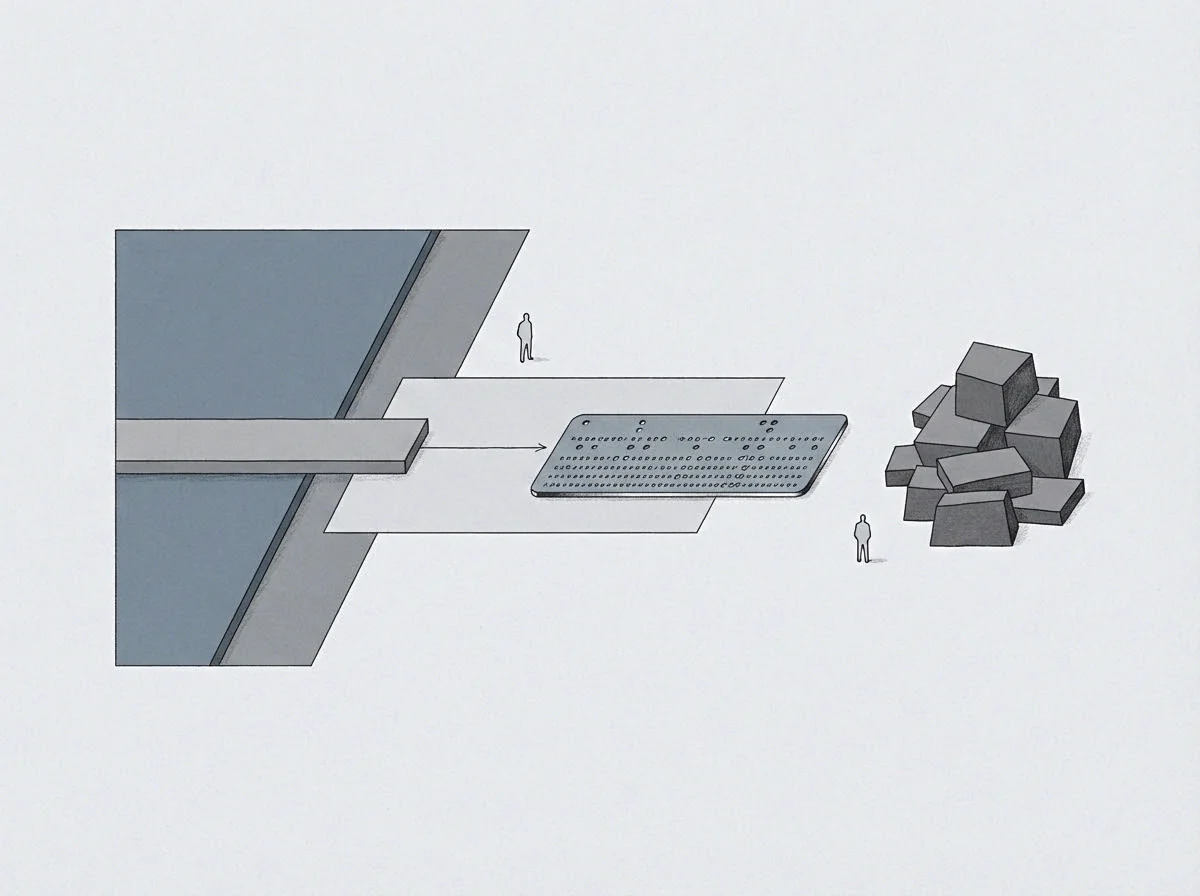
Board
Governance oversight structures determine how operational authority moves from a founder to an incoming chief operating officer. The structural choice made by the board or equity owners governs the rate at which operational capacity degrades during transition. Direct cutovers create immediate capacity loss but accelerate explicit process codification, whereas extended parallel management structures preserve short-term velocity but obscure leadership authority and prolong governance friction.

Structural Comparison of Operating Successor Governance Modes
Transition arrangements establish distinct levels of operational stability during executive transfer sequences. The table below compares four distinct successor operating models across primary operational loss vectors, evaluated under standard middle-market transition conditions.
| Transition Archetype | Tacit Knowledge Retention | First-Year Capacity Loss | Executive Escalation Index | Primary Failure Point |
|---|---|---|---|---|
| Direct Hard Cutover | Low (10-20%) | High (25-35%) | Extreme (20+ calls/week) | Vendor network shock and immediate exception queue backlog |
| Parallel Shadow Operating | Moderate (40-50%) | Moderate (15-20%) | High (12-15 calls/week) | Authority confusion among staff and delayed executive decisions |
| Phased Scaffolding Handover | High (70-85%) | Low (5-10%) | Controlled (3-5 calls/week) | Premature withdrawal of scaffolding prior to heuristic documentation |
| Retained Founder Governance | Variable (30-60%) | Moderate (15-25%) | Persistent (10-18 calls/week) | Governance shadow preventing successor operational autonomy |

Contractual Stabilization Clauses and Operating Limits
Formal agreement terms establish explicit operational boundaries for departing executive personnel. An equity purchase agreement or employment contract that requires an owner to provide transition services without bounding operational scope generates systemic friction. The departing executive intervenes selectively, overruling successor decisions and preserving legacy workarounds.
The operating floor holds only when contractual clauses specify exact operational domains where the predecessor retains advisory authority while granting complete operational autonomy to the successor across executed workflows, as operational throughput drops when contractual roles remain vague.
When an operating contract stipulates that the departing founder retains exclusive oversight over strategic key-account exceptions while transferring all supply chain logistics to the successor, the enterprise isolates relational risk without stalling routine procurement cycles.

Sequence
Systematization efforts capture implicitly held operational knowledge through direct observation rather than self-reported documentation. Founders rarely document their own decision frameworks accurately during quiet periods because they operate on accumulated instinct, underestimating the number of informal variables evaluated during operational crises. Effective codification requires an independent operational analyst to shadow the departing executive during active exception handling, recording real-time decision thresholds, communication targets, and approval bypasses.

Codification Protocols for Tacit Operating Systems
Capturing tacit operating heuristics requires structured observation protocols. The analyst logs every non-standard decision, mapping the trigger condition, the informal data sources consulted, the personal contacts engaged, and the final override justification. These observations form the basis for supplementary operating guides that explicitly address exception pathways, defining specific authorization levels and emergency workaround approvals for the incoming executive layer.
What stayed with the individual was the instinct for risk tolerance; what transfers is the explicit boundary condition under which that risk becomes acceptable to the firm.

Preserving the Residual Operating Floor
Stabilizing baseline throughput requires protecting existing operational capacity from unnecessary administrative friction. As the successor assumes full seat authority, operational performance inevitably experiences minor variance, making a defined capacity floor essential. The board defines acceptable performance parameters, specifying that operational velocity metrics may drop no more than ten percent during the initial ninety-day independent operation period.
When operational metrics drop past this established threshold, predefined contingency protocols activate. Rather than re-engaging the departing predecessor in daily operations, the enterprise deploys temporary targeted scaffolding in the form of specialized interim operating resources dedicated strictly to clearing the exception backlog. By preventing the predecessor from re-entering daily operating channels, the organization preserves the successor’s structural authority while restoring systemic throughput, transforming what was once held in personal memory into a permanent organizational asset.
A handover sequence completes only when the enterprise maintains its baseline operational throughput without executive intervention from its creator.
Preserving operational capacity through leadership transitions demands measuring tacit heuristics with the same analytical precision applied to capital allocations.