
Operational Knowledge Scaffolding Strategies To Retain Client Goodwill During Founder Exit Transition
Operational knowledge scaffolding transfers implicit client context to successors through staged shadowing, dual-run reviews, and codified relationship protocols.
Mesh
A senior partner sits in a quarterly account review six weeks before an announced departure, watching a long-standing enterprise client reference agreements that exist in no contract repository. The account yields four million dollars in annual recurring fees, yet its core operational rhythm rests on informal verbal promises made three years earlier during a system outage. The incoming account lead, sitting quietly on the side of the table, lacks both the context to validate those historical commitments and the organizational backing to adjust service delivery parameters on the fly.
When client goodwill attaches to a departing executive rather than the enterprise, the account enters severe risk the moment leadership transition public statements circulate.
Mapping Implicit Relationship Context
Client relationships built during early venture growth rely on direct access, irregular concession channels, and uncodified communication habits. These elements constitute tacit client knowledge, an unwritten repository of client preferences, unbilled accommodations, key stakeholder personalities, and informal SLA overrides. While explicit knowledge sits cleanly within CRM logs and executed legal agreements, tacit context lives inside the memory of the departing owner.
Organizations attempting an executive succession often assume account documentation consists entirely of contract terms, account health metrics, and past billing ledgers. This miscalculation creates immediate friction when clients request legacy concessions from successors who have no record of their origin.
Client goodwill breaks silently. The departure of a firm leader exposes structural vulnerabilities where client retention was previously mistaken for brand loyalty. Field studies in organizational behavior demonstrate that key clients form psychological contracts directly with individual leaders.
When those leaders depart without a systematic transfer protocol, clients experience perceived contract breach, even if formal contract terms remain identical. Scaffolding this goodwill requires a deliberate operational strategy that converts subjective interpersonal trust into systemic institutional reliability before final departure dates arrive.
Account retention stabilizes when operational knowledge transfer precedes the formal announcement of a leadership exit.
The Architecture of Tacit Memory Transfer
Transferring implicit relationship dynamics requires a systematic audit of unwritten operational agreements. Prior to initiating client-facing announcements, the departing executive documents historical concessions, non-standard delivery requirements, and personal stakeholder preferences across every primary account. Because unwritten memory resists documentation, structured interview sessions led by incoming account operators extract context through event-driven debriefs rather than static surveys.
Reviewing twelve months of client communications reveals informal decision pathways that formal project management tools fail to capture.
The resulting operational grid categorizes account history across three specific layers: legal covenants, operational adaptations, and interpersonal preferences. Operational adaptations represent the highest churn risk during transitions. These adaptations include unbilled advisory calls, priority queue jumps, and modified billing schedules granted during past operational friction.
When a successor unknowingly revokes an informal adaptation, client goodwill evaporates rapidly, triggering account reviews and competitive re-bids.
Failing to construct an explicit map of operational adaptations before leadership handover forces incoming teams into reactive renegotiations that destroy account margin and client confidence.
Sequence
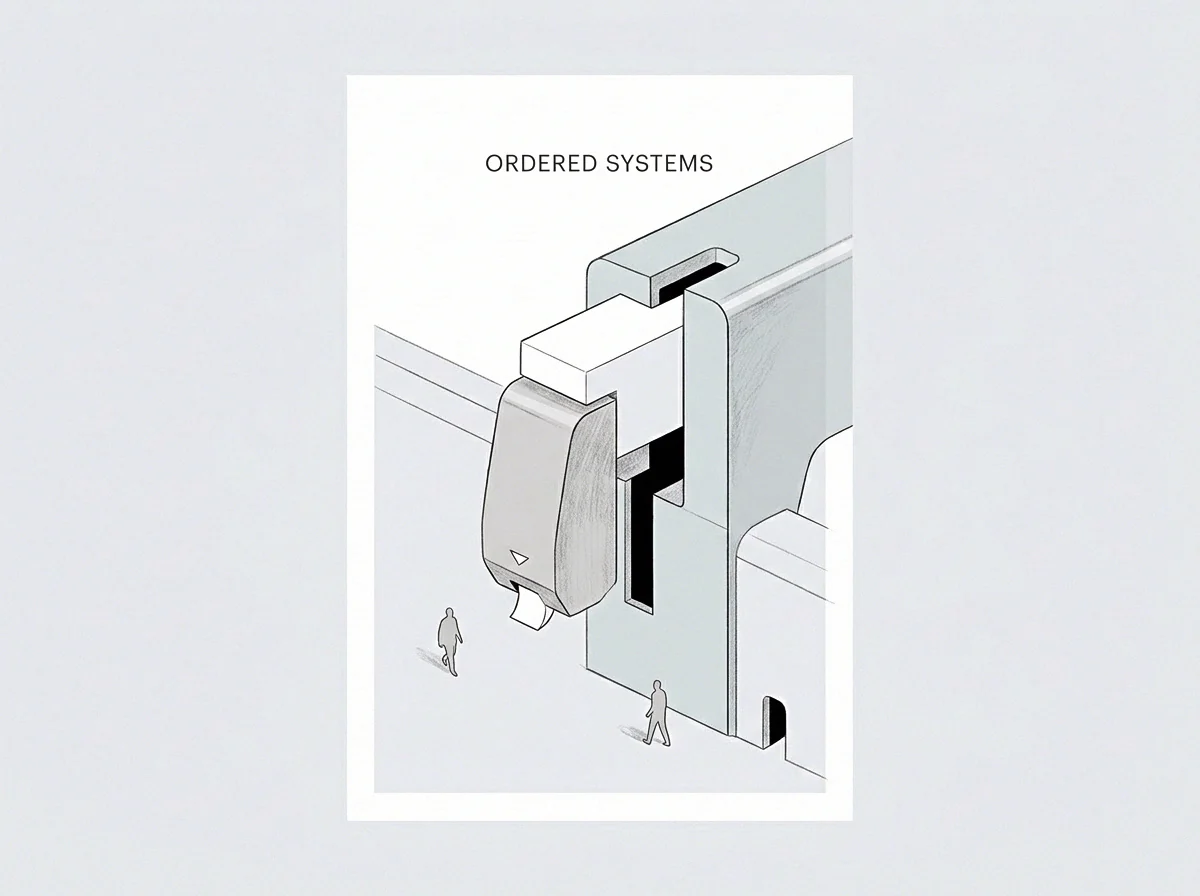
Operational knowledge transfer operates as a temporal bridge rather than a single event. Scaffolding client goodwill demands a phased transition structure where executive authority decreases systematically as operational competency within the successor team increases. This staged removal of structural support prevents client disorientation and validates the successor firm’s capability in real time.
Staged Scaffolding Phases
The transition sequence spans four distinct operational windows: shadowing, co-operating, secondary support, and full independence. In the initial shadowing phase, the departing leader leads all strategic client interactions while the successor observes and documents underlying conversation patterns. The account lead remains silent during client meetings but leads internal debriefs immediately following each call.
This structure ensures that unwritten context transfers through immediate observation rather than delayed summary notes.
During co-operating, the balance of communication shifts. The successor leads routine operational agendas while the departing leader intervenes only on strategic adjustments or historic account disputes. This dual-presence arrangement demonstrates team depth to the client without signaling immediate operational abandonment.
Goodwill migrates from the individual founder to the broader institutional team as the client experiences uninterrupted service quality and immediate problem resolution led by the incoming operator.
A sixty-day dual-run period transfers technical client context while preventing account churn during executive handover.
The sequence follows a strict timeline designed to enforce operational handoff without prolonging administrative reliance on the departing leader:
- The departing leader completes an internal account diagnostic identifying unwritten SLA overrides, personal stakeholder preferences, and legacy service agreements across all active enterprise accounts.
- The incoming operator assumes lead responsibility for written client communications, weekly progress reports, and status updates while the departing leader reviews copy before transmission.
- Joint client sessions transition from executive-led strategic updates to operator-led delivery reviews over a designated thirty-day period.
- The departing leader steps into a passive advisory role during active client calls, speaking only when directly addressed by the client stakeholder.
- Final operational sign-off establishes the operator as sole escalation authority, removing the departing executive from active communication channels entirely.

Empirical Modeling of Account Transfer
Choosing an appropriate scaffolding configuration depends on account complexity, client tenure, and annual contract value. Organizations must evaluate trade-offs between transition speed, operational overhead, and goodwill preservation when selecting a scaffolding framework.
| Scaffolding Model | Knowledge Codification Rate | Client Anxiety Index | Operational Residue | Transition Duration |
|---|---|---|---|---|
| Parallel Shadowing | High | Low | Minimal | 90 Days |
| Incremental Authority Transfer | Moderate | Low | Low | 60 Days |
| Passive Advisory Mirror | Low | Moderate | Moderate | 30 Days |
| Direct Handoff Protocol | Very Low | High | High | 14 Days |
A transition clause specifying a minimum sixty-day dual-run window alters client retention probability by preserving institutional memory through live operational stress.
Desk
The primary work surface where tacit relationship context converts to operational system capacity is the shared client desk. This operational interface includes shared communication channels, live project management boards, joint calendar invites, and live document repositories. When a departing leader leaves an empty chair at this interface without structural integration, client interactions falter immediately.

When Does Knowledge Scaffolding Risk Client Retention?
Knowledge scaffolding introduces account risk when support structures remain visible to the client past the point of operational necessity. Prolonged reliance on departing executives signals institutional instability and weakness in successor capability. If a client observes that an incoming lead repeatedly defers decisions back to the departing leader during live meetings, the client bypasses the successor entirely, as scaffolds hold temporary weight and permanent over-engineering prevents incoming leadership from establishing authentic credibility.
Over-scaffolding also occurs when organizations flood key client accounts with excessive administrative staff during transitions. Clients perceive this sudden expansion of account management as corporate bureaucracy, contrasting it negatively with the lean, direct access previously provided by the firm founder. The objective of relationship scaffolding is structural continuity, not managerial inflation.
Shadowing live client interactions reveals tacit account expectations faster than reviewing static documentation.

Co-Sensing and Dual-Operator Mechanics
Effective operational handovers rely on co-sensing protocols, where the departing executive and the incoming account lead experience live client interactions simultaneously. Co-sensing goes beyond passive meeting participation. The incoming operator takes charge of real-time account problem solving while the departing leader provides back-channel coaching in post-meeting debriefs.
This setup allows the successor to build operational muscle memory while preserving a safety net for complex account negotiations.
Implementing joint communication channels ensures no private client back-channels persist. Direct email threads between clients and departing executives must migrate to shared account dispatch addresses or joint distribution lists. When clients send direct messages to the departing leader’s personal inbox, the executive forwards the inquiry to the shared account channel immediately, copying the client with an explicit statement delegating resolution authority to the incoming operator.
- Direct Inbox Routing prevents shadow communication channels from persisting between departing executives and legacy client contacts after handoffs occur.
- Unilateral SLA Enforcement occurs when incoming leads apply rigid contract rules prematurely, ignoring historic verbal flexibility established by former leadership.
- Executive Back-Channeling undermines successor credibility when departing founders continue answering client phone calls without informing account managers.
- Contextual Vacuum Failure leaves incoming account teams unaware of strategic multi-year objectives discussed exclusively during informal social dinners.
The client expects the new team to demonstrate the same effortless familiarity with past decisions that the former executive maintained over years of partnership.
Buffer
Maintaining client goodwill during executive transitions requires establishing an operational buffer that absorbs administrative friction, service delays, and context gaps. This goodwill buffer consists of proactive client communications, stabilized account SLAs, dedicated technical resources, and explicit value additions delivered during the transition window. Organizations that invest in account buffering offset the inevitable cognitive load that succession places on client stakeholders.

Institutional Memory Preservation
Preserving institutional memory requires systematic recording of historical account decisions, technical preferences, and organizational politics. Field research in corporate memory loss indicates that organizations lose up to forty percent of actionable context within ninety days of an executive departure if documentation remains uncodified. To prevent this atrophy, firms deploy dedicated knowledge managers or senior project leads to construct comprehensive account playbooks during the exit transition window.
Consider a specialized enterprise software services firm navigating the exit of its founding managing partner. The firm manages twenty core enterprise clients, each generating seven hundred thousand dollars annually. During the initial six years of growth, the founding partner retained all strategic relationship context in personal notes and unshared memory.
To protect account goodwill during a planned twelve-month exit, the firm introduces a formal knowledge codification phase. Every client interaction is recorded, transcribed, and tagged by account theme within a centralized CRM architecture. The total capacity cost equals fifteen hours per week of founder time over four months.
The return is a zero-percent account churn rate during the subsequent transition year, saving an estimated one point four million dollars in potential replacement acquisition expenses.
Clients evaluate corporate stability through the speed and precision of front-line issue resolution during leadership changes.
Formalizing Unwritten Account Covenants
Every long-standing enterprise client relationship contains unwritten covenants, informal promises regarding future feature releases, discounted advisory hours, or priority engineering support. During a founder exit transition, these informal agreements represent volatile liabilities. If left unaddressed, they emerge as bitter disputes when clients demand performance on promises that incoming leadership cannot verify.
The exit transition team must audit and formalize these soft covenants before final leadership departure. This process involves conducting formal strategic account reviews where the departing executive and successor sit with client leadership to review past achievements and confirm future commitments. Any unwritten promise validated during these sessions enters a formalized account memorandum.
Unsubstantiated claims are addressed transparently, allowing the firm to establish clear operational boundaries before the founder leaves the building.
In high-reliability engineering domains, flight instructors transition command authority to student pilots through explicit verbal callouts and physical touchpoints on control rigs. Operational handover in corporate client accounts follows the identical psychological mechanism. Structural stability requires explicit, physical verification of command transfer before safety nets disappear entirely.
A rule of thumb dictates that for every year of founder involvement in an account, two weeks of structured operational transition are required to stabilize client goodwill.
Residue
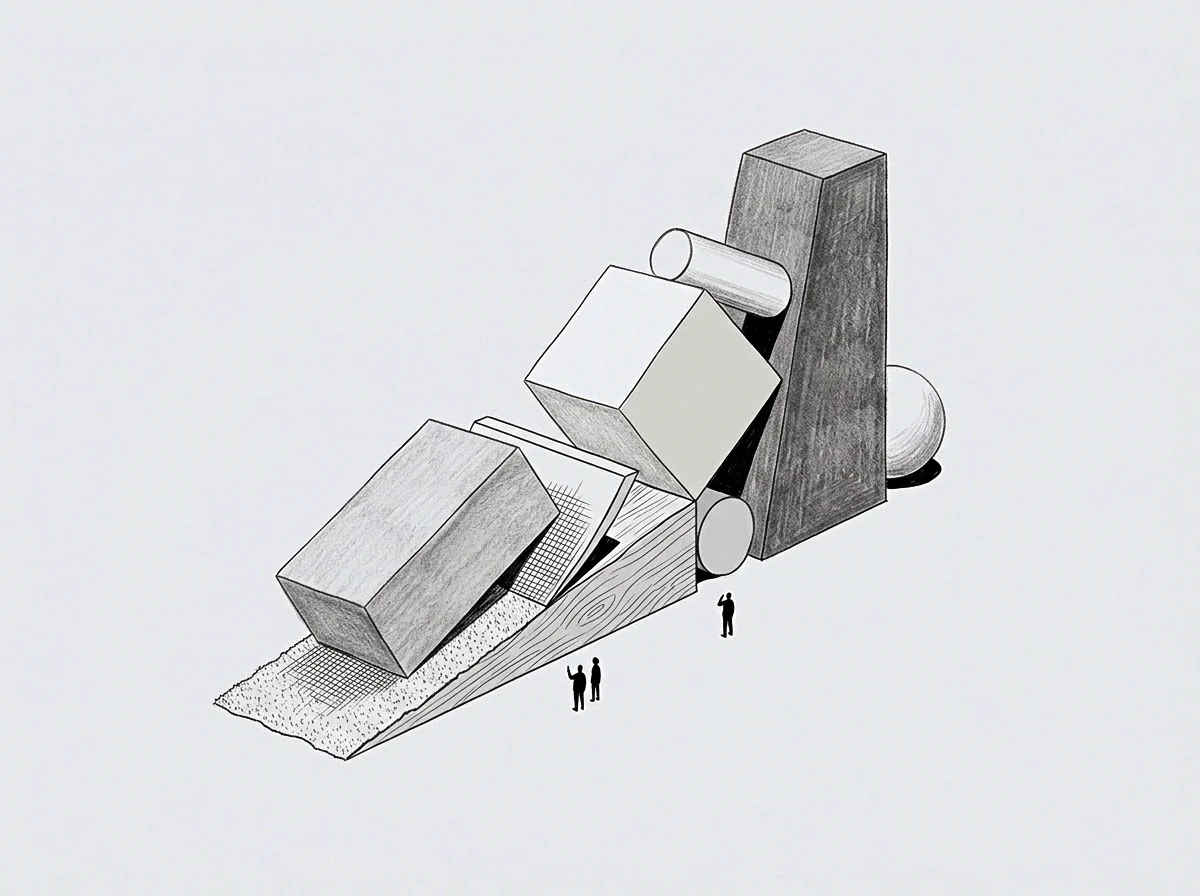
Regardless of how comprehensively an organization designs its knowledge scaffolding, an uncodifiable layer of personal goodwill always remains. This residual element includes personal chemistry, shared history, instinctual market taste, and executive charisma. Attempting to codify this emotional residue through documentation is ineffective.
The firm accepts that some portion of founder-bound goodwill will dissipate, focusing its operational capacity on retaining institutional relationship equity instead.
Uncodifiable Authority Boundaries
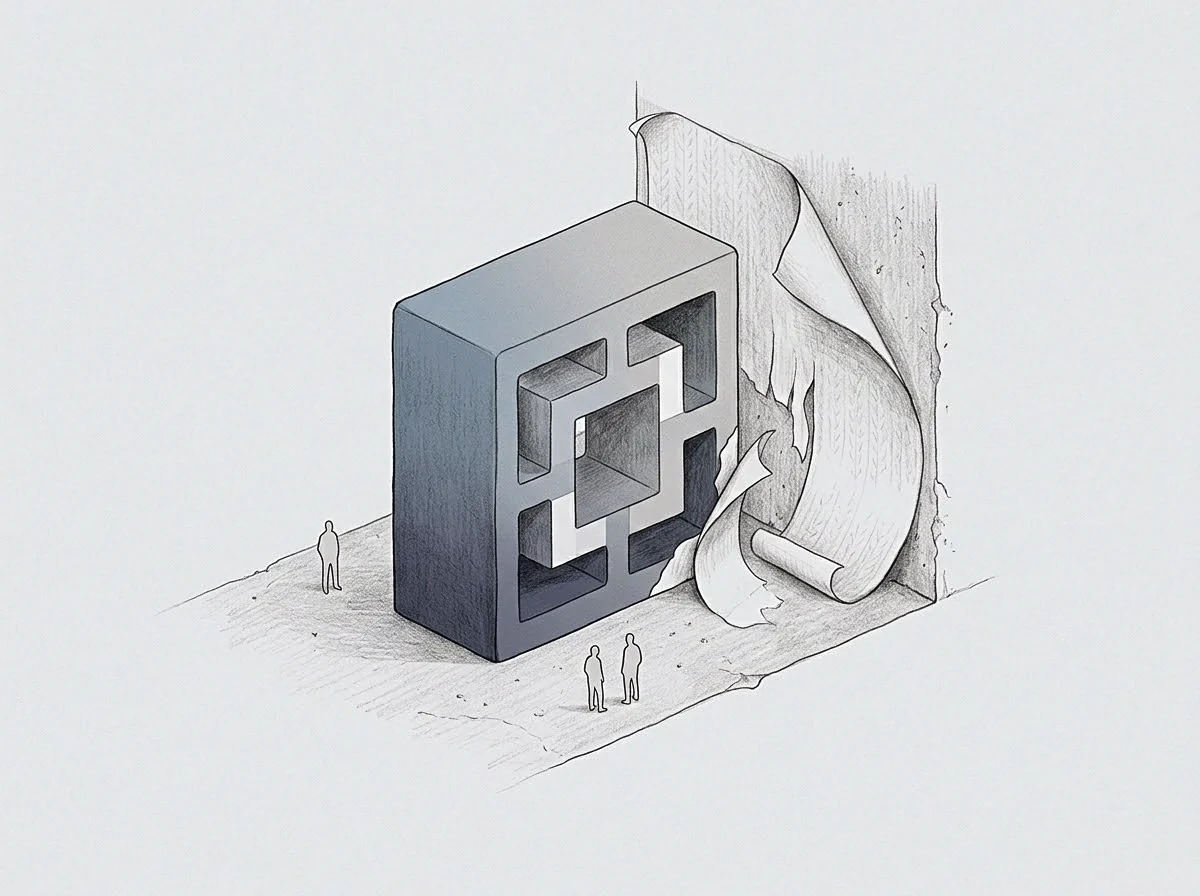
The final stage of scaffolding strategy involves scaffold removal, stepping away entirely so the successor team operates without safety lines. Successors establish authentic authority only when clients realize that escalation back to the departed founder is no longer possible. Firm governance policies must strictly limit post-exit founder consulting calls on client matters, enforcing clean lines of operational separation.
When the departing leader relinquishes final equity board seats and advisory roles, the account team operates with complete structural ownership. Clients adapt rapidly once operational clarity replaces transition ambiguity, anchoring their ongoing goodwill in the consistent value delivered by the continuing firm.