
Tacit Knowledge Retention and Relational Capital Dynamics Governing Crisis Executive Transitions
Uncodified knowledge and relational capital survive crisis executive transitions through structured shadow pairing and rapid key counterparty trust stabilization.

Floor
At three in the morning during an unannounced operational audit, an interim chief operating officer searches a shared drive for approval thresholds while key vendors halt credit extensions after the founder’s sudden exit. The calendar shows sixteen recurring commitments with no meeting notes, listed agendas, or designated deputies. Formal authority transfers instantly through a board resolution, but operational momentum stalls because the institutional memory governing daily trade terms, supplier dispensations, and informal regulatory understandings lived entirely within the former executive’s personal workflow.
Crisis executive transitions expose how vulnerable organizations are when critical knowledge stays uncodified. Planned successions rely on structured overlap, shadow periods, and gradual delegation over months. Emergency departures, triggered by sudden resignations, governance disputes, or personal incapacitation, compress that handover to zero.
In these moments, an organization runs solely on the residual momentum of written policies, which rarely reflect the informal adjustments that kept daily operations moving.

Uncodified Routines and Sudden Vacancies
Every complex entity maintains two distinct layers of governance. The formal layer consists of organizational charts, explicit delegations, written standard operating procedures, and contractual terms. The informal layer consists of unwritten compromises, preferential vendor terms built on personal relationships, direct escalation paths to regulatory officers, and practical troubleshooting developed over years of daily friction.
Under normal conditions, these informal habits transfer gradually through joint client calls and co-managed projects. In a crisis, that informal layer vanishes overnight.
The immediate result is a sharp drop in operational throughput, known as the transitional drag coefficient. An incoming executive holds full legal authority to sign contracts, approve expenditures, and issue directives, yet without the uncodified context, every routine approval requires primary research. A decision that took thirty seconds for the departing executive now demands three hours of historical reconstruction, staff interviews, and risk analysis.
Relational context decay accelerates when counterparty trust is tied to an outgoing individual rather than the legal entity.
Knowledge management frameworks classify this unwritten capacity as deep tacit knowledge, which encompasses cognitive maps, localized heuristics, and personal trust networks. Cognitive maps allow an experienced operator to spot system problems from subtle signals, such as an unusual variance in weekly scrap rates or a shift in client payment timing. Localized heuristics provide shortcuts around bureaucracy during supply bottlenecks, while personal trust networks allow executives to secure verbal commitments, credit extensions, or regulatory delays based on personal credibility alone.
During a sudden transition, the enterprise loses access to these heuristics all at once. Subordinate employees who relied on direct verbal instructions face role ambiguity and decision paralysis. Governance oversight shifts from tracking outputs to verifying procedures, adding administrative friction at the very moment rapid execution is required.
An emergency retention agreement serves as a specific governance instrument that alters exit dynamics by tying financial disbursements to defined knowledge codification deliverables rather than simple tenure extensions.

Scaffold
Extracting implicit operational routines under extreme temporal compression demands structured intervention rather than open-ended debriefs. Standard exit interviews produce high-level narratives about strategic intent while missing the granular decision mechanics required to maintain business continuity. When an executive departs within forty-eight hours, knowledge recovery protocols must focus exclusively on high-velocity operational routines and key relational ties.
Capturing implicit knowledge under pressure depends on behavioral mapping rather than written documentation. Instead of expecting the departing executive to author comprehensive procedures, structured debriefers observe them performing live tasks, reviewing active inbox threads, and walking through the operational calendar item by item. This process surfaces hidden dependencies, personal contact lists, and unwritten authorization limits that govern actual operations.
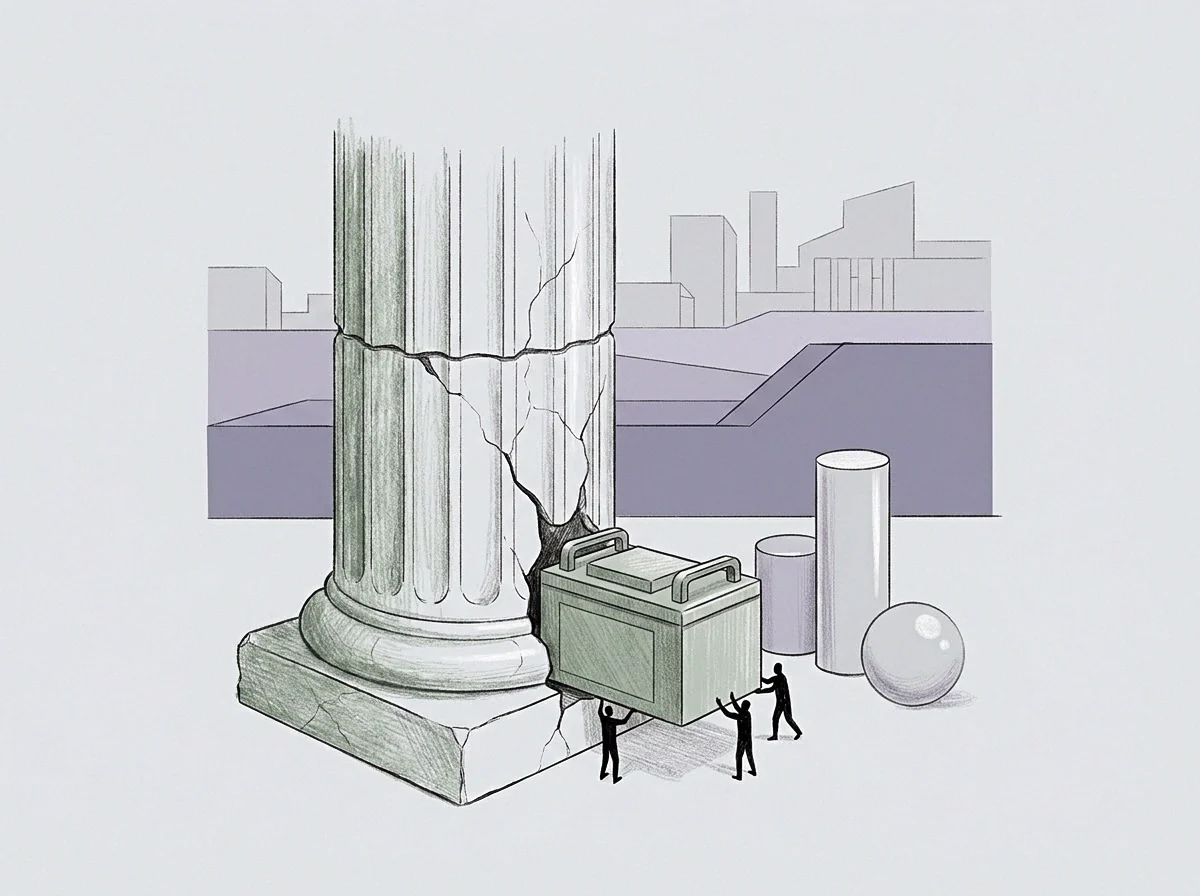
Temporal Compression and Knowledge Extraction Mechanics
Consider an enterprise generating fifty million dollars in annual revenue where the chief technology officer departs immediately amidst a major infrastructure migration. If the departing officer held sole administrative access to third-party API keys, negotiated customized service level agreements directly with vendor executives without logging them in the procurement portal, and managed core engineering personnel through unwritten incentive promises, replacing that context under standard procedures takes six months, resulting in vendor billing disputes and key developer resignations.
To evaluate this loss, knowledge management research distinguishes between three distinct categories of intellectual and social assets lost during abrupt executive exits.
| Asset Category | Extraction Feasibility | Decay Half-Life | Primary Failure Mode |
|---|---|---|---|
| Explicit Operational Data | High (1 to 3 days) | 30 to 60 days | Incomplete access permissions or missing file keys |
| Tacit Decision Heuristics | Moderate (1 to 2 weeks) | 7 to 14 days | Reversion to slow, bureaucratized decision paths |
| Relational Counterparty Trust | Low (requires active introduction) | 24 to 48 hours | Counterparty re-negotiation of terms or credit freeze |
The data demonstrates that relational capital experiences the fastest rate of decay following an abrupt departure. External counterparties, including primary lenders, institutional investors, key suppliers, and major accounts, assess risk based on personal trust in the outgoing leader. When that leader leaves, the counterparty’s risk profile defaults to baseline contractual protections.
Explicit data transfers through administrative access grants, while relational trust requires direct personal validation across key external counterparties.
To mitigate this rapid asset erosion, the transition team deploys an accelerated codification sequence focused on four operational domains:
- Administrative access recovery grants immediate control over digital infrastructure, communication logs, financial software accounts, and external regulatory filings to prevent operational lockout.
- Relational map synthesis identifies the top twenty external counterparties holding informal agreements, detailing the specific terms, personal points of contact, and pending commitments for each relationship.
- Shadow workflow documentation captures the active approval queues, unwritten authorization thresholds, and daily exception handling routines used by the outgoing executive.
- Implicit commitment registry logs all verbal promises made to staff, vendors, or board members regarding compensation adjustments, promotion timelines, or resource allocations.
Skipping these diagnostic steps forces the incoming executive to manage through reactive discovery. Critical dependencies then surface only when a vendor halts shipments over an unpaid, unrecorded invoice or a key engineering lead resigns over a broken verbal promise made by the departed officer.
Failing to execute an explicit knowledge recovery protocol during a crisis exit transfers the burden of operational discovery onto daily trading workflows, causing immediate margin compression and counterparty attrition.

Echo
Relational capital resides inside individuals rather than corporate structures. When an executive steps down abruptly, key suppliers, financial partners, and major customers interpret the vacancy as an increase in transactional risk. The enterprise value tied to these relationships risks immediate dissipation unless specific trust-stabilization protocols deploy within hours of the transition announcement.
External trust structures function through personal reliance built over repeated interactions. A primary supplier extends thirty additional days of credit not because of an abstract corporate credit rating, but because the supplier’s chief executive trusts the departing operational leader’s verbal promise of revenue targets. When that leader leaves, the supplier’s risk management protocol asserts itself, resulting in reduced credit limits, demands for personal guarantees, or outright holding of critical shipments.

When Does Informal Authority Outlast Formal Transition?
Informal authority persists beyond formal severance when the departing executive retains exclusive personal relationships with key decision-makers at external counterparties. In these situations, the incoming executive holds the formal title, but key external stakeholders continue seeking informal guidance or approval from the former leader before confirming critical decisions.
This dynamic creates a disconnect between operational accountability and actual influence. The business remains legally responsible for outcomes while actual deal terms are negotiated through private channels outside board visibility. Transition governance requires immediate identification and neutralization of these shadow authority channels.
Organizations facing sudden executive vacancies routinely encounter several distinct failures in relational capital management:
- Counterparty credit retrenchment occurs when primary financial institutions freeze revolving credit facilities due to the loss of key executive guarantees or key-person clause triggers.
- Client relationship decay happens when enterprise customers utilize the executive exit as an opportunistic opening to re-open locked contractual pricing or exit long-term service agreements.
- Regulatory relationship disruption surfaces when unwritten compliance understandings or informal reporting dispensations collapse, resulting in formal audit notices or administrative penalties.
- Vendor prioritization loss emerges when key suppliers re-allocate scarce inventory or dedicated support resources away from the enterprise toward competing accounts with stable leadership teams.
Informal authority channels drain executive capacity from the successor until formal counterparty re-engagement establishes clear boundaries.
Stabilizing relational capital requires a structured re-engagement protocol executed jointly by the board and the incoming leader. Rather than sending generic public relations broadcasts, the business schedules direct, executive-to-executive conversations with the top tier of relational counterparties to establish continuity of operations, validate existing informal agreements, and explain the new decision-making architecture.
Current credit limits remain conditional on direct proof of operational continuity from the new leadership team before the next billing cycle.

Vault
Emergency governance mandates the rapid implementation of interim operational structures that protect assets while enabling rapid decision-making. When a crisis transition occurs, standard board oversight mechanisms prove too slow, while individual manager discretion carries excessive operational risk. The solution lies in establishing a structured shadow governance protocol designed specifically for transient operational vacancies.
Shadow governance creates a temporary, high-frequency decision matrix that pairs the incoming or interim executive with a designated board member or senior operating partner. This structure provides immediate authorization cover for non-standard decisions, validates historical context, and shields the business from liability while uncodified operational realities are documented.

Structural Interventions during Executive Vacancies
Implementing shadow governance requires immediate realignment of delegation limits, authorization chains, and operational reporting protocols. The primary goal is maintaining operational speed without exposing the business to unauthorized commitments or internal fraud during periods of administrative confusion.
The structured emergency transition follows a sequential operational plan designed to protect enterprise value during high-velocity leadership changes:
- Re-convene the board of directors within six hours of notification to declare an emergency transition state and activate the interim operational mandate.
- Revoke all digital, physical, and financial authorization rights of the departing executive across all banking portals, corporate accounts, and internal software systems.
- Appoint an interim executive officer with explicit, time-bounded decision authorities and defined expenditure thresholds.
- Form a two-person emergency operating committee comprising the interim officer and one non-executive director to oversee daily exceptions exceeding standard thresholds.
- Notify key institutional lenders, primary vendors, and major enterprise clients through direct executive calls within twenty-four hours of the formal announcement.
- Deploy a specialized knowledge codification specialist to conduct intensive debriefings and mapping sessions with remaining department heads.
- Establish a daily operational review rhythm at eight in the morning to evaluate liquidity, supply chain stability, and staff retention metrics.
- Initiate the formal search or permanent succession evaluation process only after the operational baseline achieves structural stability.
Interim leadership faces quiet resistance during the initial weeks of a crisis transition. Subordinate personnel, uncertain of the new leader’s longevity or ultimate authority, often delay critical escalations, hide emerging operational problems, or quietly maintain contact with the departed leader for informal validation.
Emergency delegation boundaries protect organizational stability by replacing personal trust networks with explicit decision thresholds.
To break internal inertia, the interim governance framework must establish clear, unambiguous reporting channels and offer public validation of the new executive’s authority through explicit communication regarding authorized spending limits, strategic boundaries, and performance metrics.
Clear operational boundaries established on day one prevent administrative paralysis more effectively than extensive strategy documents produced weeks later.

Ledge
The true cost of an unmanaged crisis executive transition is measured in lost operational capacity, delayed strategic initiatives, and permanent relational erosion. When an enterprise manages an executive departure through reactive improvisation rather than systematic knowledge retention and structural governance, it pays a steep cost in managerial attention. Every hour spent reconstructing historical context, negotiating defaulted vendor trust, or unravelling undocumented commitments is an hour stolen from commercial execution and competitive positioning.
Capacity decay radiates outward from the vacant seat. When a chief executive or senior operational leader vanishes without an explicit knowledge transfer sequence, subordinate department heads divert their focus from output delivery to boundary defense. Turf disputes emerge, informal authority structures assert themselves, and risk aversion spreads across the operational line.
The organizational capacity lost during three weeks of governance uncertainty often takes two quarters to rebuild once a permanent successor takes the seat.
Designing for transition resilience requires accepting that executive departures are inevitable structural events rather than unforeseen operational disasters. High-performing organizations maintain continuous readiness by embedding knowledge codification into standard operational rhythms. They require key personnel to document critical vendor dispensations, maintain updated relational maps, and cross-train deputies on essential decision heuristics as a standard condition of employment.
Continuous documentation of informal operational dependencies reduces transitional capacity loss during sudden leadership vacancies.
In the final assessment, an organization’s structural strength is revealed not by how smoothly it operates during periods of leadership stability, but by how effectively it maintains momentum when a critical seat is suddenly vacated. Uncodified processes, personal trust monopolies, and shadow governance channels remain silent liabilities until a crisis strikes. Transforming those informal routines into resilient, documented organizational capabilities ensures that enterprise value remains anchored to the business itself rather than leaving with an exiting executive.
How much operational throughput can the enterprise afford to lose before the unwritten dependencies embedded inside executive workflows are translated into permanent organizational structures?