
Economic Thresholds Balancing Excess Operational Headcount Against Executive Displacement
Excess operational headcount displaces executive capacity when marginal coordination hours exceed the market wage equivalent of replacement executive labor.
Floor
An operator answers customer tickets at eleven at night because hiring a third coordinator costs four thousand dollars a month that the company accounts do not comfortably show. The desk holds two monitors, a spreadsheet of unpaid vendor invoices, and a payroll schedule due before dawn. By dawn, the technical work of the coordinator sits finished, while the quarterly capital plan remains unwritten.
This trade repeats until the technical tasks become the working week.
Role strain enters an enterprise through the addition of routine operational payroll before executive labor is distinguished from line production. A founder who runs the warehouse floor while holding the executive seat experiences a measurable decay in strategic intervention. The choice to hire two warehouse specialists or one professional operations director forces a mathematical comparison between direct wage expense and the structural displacement of leadership hours.
When production volume rises, the immediate impulse favors hiring direct line labor to protect cash flow. Every line laborer added introduces coordination friction that the unhedged executive absorbs directly.
A founder absorbing production coordination trades high-value capital allocation hours for the marginal wage of line labor.
Direct line wages appear cheaper on an initial invoice. Two junior operators might cost eighty thousand dollars combined in annual salary, whereas an experienced operating executive commands one hundred and sixty thousand dollars. The apparent eighty-thousand-dollar cash conservation assumes coordination costs equal zero.
In practice, managing two distinct production workers requires roughly eight hours weekly of direction, quality control, and schedule alignment from the existing executive. The founder pays those eight hours out of the capacity reserved for enterprise design. Direct line hires accumulate until the executive seat functions entirely as an operational clearinghouse.
The Direct Labor Substitution Point
Direct labor substitution occurs at the precise operational scale where incremental production wages plus associated supervision hours exceed the total cost of installing dedicated managerial governance. Consider a business with four line technicians. Adding a fifth technician increases unit throughput by twenty percent, yet demands four additional hours of founder supervision weekly.
If the founder’s replacement cost in the market sits at one hundred dollars per hour, those four hours consume four hundred dollars of firm capacity weekly, totaling twenty thousand eight hundred dollars annually. The fifth technician costs forty-five thousand dollars in base wage, bringing the true economic footprint of that hire to sixty-five thousand eight hundred dollars.
At eight line technicians, the supervisory burden claims sixteen hours weekly from the founder. That volume represents forty percent of a standard executive work week. Strategic planning stops, vendor negotiations slip into passive renewal cycles, and enterprise development stalls.
The enterprise has not saved cash. The firm has financed line operational payroll through the systemic liquidation of its executive capacity.
Left unchecked, this dynamic forces an outright displacement where the founder ceases to operate as an executive long before recognizing the abdication.
Friction
Coordination scales non-linearly with headcount. Sociological investigations into group structures indicate that adding individual nodes to a network increases internal communication channels according to the formula of n multiplied by n minus one, divided by two. A group of five workers contains ten communication pathways.
Expanding that group to nine workers produces thirty-six pathways. The manager’s seat bears the structural load of maintaining order across those channels. When that seat remains unfilled by a professional hire, the founder wears it tacitly while continuing to wear the technician and executive seats simultaneously.
Tacit work accumulates inside these unmonitored communication pathways. The founder reviews daily output, arbitrates schedule disputes between line workers, corrects routine procedural deviations, and reorders consumable supplies. None of these tasks appears on an official job description.
Each task takes twenty minutes. By three in the afternoon, six separate twenty-minute operational interruptions have systematically dismantled any continuous block of attention required for long-term contract pricing or banking relationships.
Unstated coordination tasks consume the uninterrupted focus required for enterprise capitalization.
The field evaluates span of control by assessing task complexity against environmental predictability. In high-variability operations, an individual manager effectively coordinates between four and seven direct subordinates. Beyond seven, control degrades unless standardized procedures insulate the manager from routine decisions.
In early-stage and growing mid-market enterprises, procedures remain largely unwritten, residing entirely in the founder’s personal habits. Consequently, an operational headcount exceeding six workers creates an acute operational choke point. The founder absorbs the variance, spending personal vitality to offset the absence of formal operational architecture.
Measuring Latent Supervisory Drag
Supervisory drag represents the aggregate hours lost to operational maintenance multiplied by the variance in output quality when executive oversight is diluted. This drag manifests in several distinct institutional failure modes:
- Operational variance drift expands as the founder divides attention across too many line workers, resulting in uneven quality output and elevated customer churn.
- Executive deferral debt accumulates as critical structural decisions concerning software integration, tax strategy, and executive hiring are postponed indefinitely.
- Switching cost attrition degrades cognitive reserves through continuous oscillation between low-level tactical troubleshooting and broad commercial evaluation.
Switching costs carry quantifiable cognitive liabilities. Transitioning between deeply contextual tasks demands significant mental recovery time. A founder who steps away from an acquisition model to reassign packing duties on the loading dock cannot return to the valuation spreadsheets with immediate analytical clarity.
Laboratory research on task interruption shows that resuming complex cognitive work after an operational interruption takes an average of twenty-three minutes. Three interruptions a day effectively eliminate two hours of executive analytical output, entirely separate from the clock time spent resolving the interruptions themselves.
A rule of thumb indicates that whenever daily operational triage routinely splits an executive calendar into fragments smaller than ninety uninterrupted minutes, operational headcount has outrun management infrastructure.
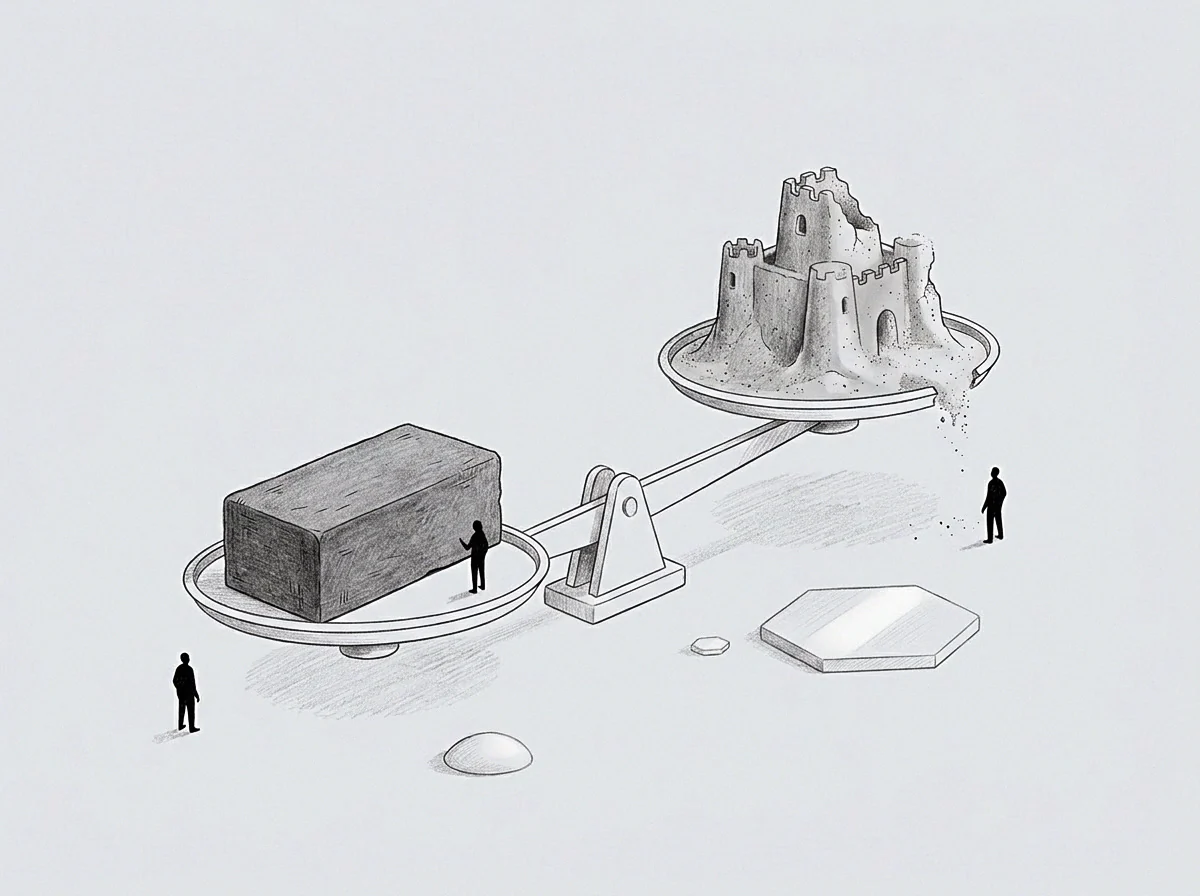
Trade
Determining whether to hire additional operational staff or fund an executive displacement hire demands rigorous comparative accounting. An executive displacement hire is an operations director or general manager brought in to hold the manager’s seat, fully relieving the founder of line coordination responsibilities. This move requires transferring the authority over production, scheduling, and direct supervision to a salaried professional.
The financial trade-off pits the compounding salary overhead of specialized line workers against the singular, higher compensation package of an executive.
The following analysis models an enterprise operating at five million dollars in annual revenue, evaluating the true economic footprint of continuing to add direct operational staff versus recruiting an operational executive.
| Evaluation Metric | Status Quo with Line Hires | Executive Displacement Hire |
|---|---|---|
| Incremental Direct Compensation | $135,000 for three specialists | $165,000 for one operations director |
| Associated Benefits and Taxes | $27,000 baseline overhead | $33,000 executive overhead |
| Weekly Founder Supervisory Burden | 18 hours absorbed | 2 hours structured check-in |
| Annual Founder Coordination Drag | $93,600 equivalent economic value | $10,400 equivalent economic value |
| Training and Retraining Velocity | High turnover across three line roles | Low turnover isolated to management layer |
| Capacity Reclaimed for Executive Seat | Zero hours returned | 16 hours weekly returned |
| Total Real Cost to Enterprise | $255,600 comprehensive burden | $208,400 comprehensive burden |
The numbers demonstrate the optical trap of direct headcount. Adding three line workers appears eighty-three thousand dollars cheaper when reviewing payroll lines alone, calculating one hundred and thirty-five thousand against one hundred and sixty-five thousand plus the baseline overhead differential. When factoring the founder’s reclaimed capacity, priced at a conservative market equivalent of one hundred dollars per hour, the financial reality reverses.
The three line workers cost the enterprise forty-seven thousand two hundred dollars more annually than the executive hire. The founder paying that difference remains exhausted, functioning as a low-margin dispatcher while carrying the equity risk of an owner.
The Point of Executive Displacement
The point of executive displacement arrives when the combined fully loaded cost of additional line payroll and founder coordination hours matches or exceeds the compensation demanded by a seasoned operational manager. At this intersection, continuing to add production staff produces negative marginal returns on enterprise value. The enterprise increases its top-line headcount while simultaneously degrading its structural resilience.
Headcount growth without managerial insulation reduces structural enterprise resilience.
Calculating this transition threshold requires cold assessment of the worn seat. A founder rarely admits that handling the warehouse scheduling brings psychological comfort. Line operations offer immediate feedback: a box is shipped, an invoice is approved, a bug is fixed.
Strategic work offers ambiguous, deferred feedback: a distribution contract negotiation requires eight months to bear fruit, and an institutional capital raise may yield nothing. The founder frequently retreats into the technician’s seat or manager’s seat to experience the sensation of tangible progress, using excess line headcount as the operational excuse.
The market eventually prices this evasion through stagnant EBITDA multiples, because a company whose operations depend entirely on founder triage cannot be sold or capitalized without steep valuation discounts.
Room
Creating room for executive displacement requires a deliberate restructuring of the physical and contractual architecture of the firm. Handing over operational control cannot succeed through gradual informal delegation. Gradual delegation fails because line workers instinctively seek confirmation from the historical authority figure in the room.
When an operational problem surfaces, staff bypass the new intermediate manager and approach the founder directly if the founder remains accessible in the daily communication channels.
Establishing the new arrangement requires defining the held seat with clear boundaries, operational jurisdictions, and explicit hour allocations. The newly installed operations director needs exclusive command over production meetings, workflow design, and line personnel evaluations. The founder steps out of daily Slack channels, surrenders administrative permissions for daily workflow software, and moves their physical workspace away from the line operation floor.
These physical constraints protect the newly created management layer from executive interference.
Role theory demonstrates that boundary ambiguity generates substantial interpersonal friction. When two people share overlapping authority over the same organizational domain, decisions stall and conflicting signals paralyze line staff. The operations director cannot run the production floor if the founder walks the aisles issuing contradictory directions on packaging standards.
Complete institutional separation between the governance seat and the operational execution seat must be maintained.

Why Does Delegating Production Often Accelerate Cash Depletion?
Delegating production accelerates cash depletion when the founder vacates the operational seat without reallocating the reclaimed hours toward measurable enterprise value creation. The salary of the new operations executive is a hard, inescapable cash outflow. If the founder uses the reclaimed sixteen hours a week to play golf, browse peripheral industry news, or attend unstructured networking events, the enterprise experiences the executive compensation as pure overhead.
The investment only yields an economic return if the founder applies those sixteen hours directly to high-margin client acquisition, major vendor term improvements, structural tax reorganization, or balance sheet recapitalization.
The following sequence demonstrates how an organization structures this managerial transition without disrupting current cash flow:
- Audit current operational hours by logging all tasks performed across two consecutive weeks, categorizing every action under technical execution, line management, or executive governance.
- Calculate the financial coordination penalty by multiplying the total weekly line-management hours by the founder’s market-rate executive compensation.
- Formalize the operating boundary through written jurisdictional terms, stating explicitly which hiring, firing, and operational expenditure decisions reside entirely with the incoming manager.
- Reallocate reclaimed founder hours to distinct, measurable commercial initiatives that generate clear gross profit expansion capable of covering the new management salary within two fiscal quarters.
Consider two people who built an industrial repair firm to three million dollars in revenue without formal management tiers. They employed twelve field technicians and handled scheduling from their mobile phones during service calls. Over three years, operational disputes between the partners mounted because neither held exclusive responsibility for operational standards.
Once they recruited an operational manager at one hundred and forty thousand dollars, they bound their own authority through an explicit governance covenant. They prohibited themselves from altering the master dispatch schedule. Within six months, field technician utilization rose twelve percent due to professional routing, fully covering the manager’s compensation without requiring additional sales.
The outgoing partner states plainly that having no operational authority over daily dispatch feels uncomfortable, but watching enterprise cash flows grow without daily intervention provides adequate compensation.
Cost
The personal price paid by a founder who delays executive displacement manifests as chronic exhaustion and structural vulnerability. When an individual operates as the sole connective tissue holding twelve disparate workers together, personal illness or mental fatigue immediately halts corporate throughput. The enterprise possesses no intrinsic systems; it merely possesses the nervous system of one individual amplified by payroll.
This condition generates significant role conflict, where the demands of immediate operational triage directly war against the requirements of long-term commercial preservation.
Enterprise valuation literature consistently penalizes owner-dependent businesses. Private equity purchasers and industrial acquirers apply steep discount rates to companies where production knowledge remains tacit and uncodified. An organization capable of generating one million dollars in clean cash flow under a professional executive team might command an enterprise value multiple of six to eight times EBITDA.
The identical firm generating that same million dollars through the sheer personal intervention of an exhausted founder frequently struggles to trade at three times earnings, if it trades at all. Acquirers recognize that purchasing the business without the founder’s tacit triage guarantees operational failure.
A company reliant on founder triage trades at a severe discount because its operations depart with the person.
The economic threshold governing this transition is ultimately an equation of enterprise risk. Accumulating excess operational headcount to avoid paying for an executive creates an increasingly fragile corporate pyramid. Each additional production worker amplifies communication noise, raises managerial drag, and forces the founder deeper into tactical survival.
Conversely, placing a qualified professional in the managerial seat stabilizes the operational floor, insulates line communications, and allows the founder to hold the executive seat on rigorous, commercial terms.
A corporate structure that systematically substitutes low-wage operational payroll for dedicated executive management guarantees the eventual exhaustion of its leadership and the economic stagnation of the underlying business.