
Governance Friction From Residual Equity Valuation Formulas In Closed Owner Succession Transitions
Formulaic equity valuation clauses link deferred buyout prices to current profits, causing governance gridlock when outgoing owners exercise veto powers to protect immediate payouts.

Seat
Internal succession transitions in closely held firms collapse when financial payout mechanisms overwrite governance boundaries. In many closed enterprises, founding owners structure their exit through multi-year equity redemptions. The outgoing owner retains unredeemed equity shares while transferring operational seats to an internal successor, such as a junior partner or senior manager.
The contract governing this transition usually contains a residual equity valuation formula, designed to determine the purchase price of remaining equity tranches over time. Friction arises because this financial calculation remains actively coupled to current enterprise governance.

Valuation Residuals in Closed Transitions
Promissory notes, staged buybacks, and net asset calculations determine the financial debt owed to an outgoing owner. When an owner steps out of daily execution, the economic claim on future revenue remains active. Shareholder agreements frequently link the buyout price of remaining shares to trailing twelve-month net profit, earnings before interest and taxes, or net book value.
Equity valuation formulas anchor past performance. They calculate value based on historical operating metrics while the successor attempts to transform operational routines to secure future margin.
Assume an owner-operator who founded a specialized precision manufacturing firm thirty years ago enters a five-year internal buyout with an incoming general manager. The agreement dictates that the founder sells ten percent of total equity back to the treasury annually, priced at five times trailing EBITDA. The founder vacates the chief executive seat but retains forty percent equity and two board seats during the first four years.
In year two, the incoming manager identifies a necessary technological upgrade requiring two million dollars in capital expenditure. Expensing or financing this upgrade lowers net EBITDA for the trailing twelve months, directly reducing the founder’s equity payout for the upcoming tranche.
Unredeemed equity balances coupled to trailing earnings formulas transform ordinary capital investment decisions into direct financial disputes between outgoing and incoming owners.

Separation of Capital Returns From Operational Control
Equity ownership confers two distinct rights: economic benefit through dividends or liquidation proceeds, and voting power over corporate direction. In closed owner transitions, failure to uncouple these two rights generates systemic operational gridlock. The technician and manager seats transfer to the successor, but the founder seat stays split between capital entitlement and administrative authority.
The outgoing owner evaluates every executive choice through the lens of equity tranche pricing. Reinvestment reduces short-term net profit. Consequently, the former owner exercises minority veto power, supermajority provisions, or board votes to block long-term capital deployments that depress immediate payout metrics.
The successor sits in an operational seat stripped of financial autonomy. Decisions regarding executive compensation, research budgets, facility leases, and hiring plans become contested negotiations. The outgoing owner views capital expansion as an uncompensated risk that threatens the valuation formula floor.
The debt remains outstanding. The successor views frozen reinvestment as institutional decay that undermines the enterprise capacity required to service the buyout itself. A non-voting equity conversion clause triggered on the first day of administrative handover changes the former owner’s equity interest into an explicit debt instrument, isolating ongoing operational decisions from capital redemption claims.
Ledger
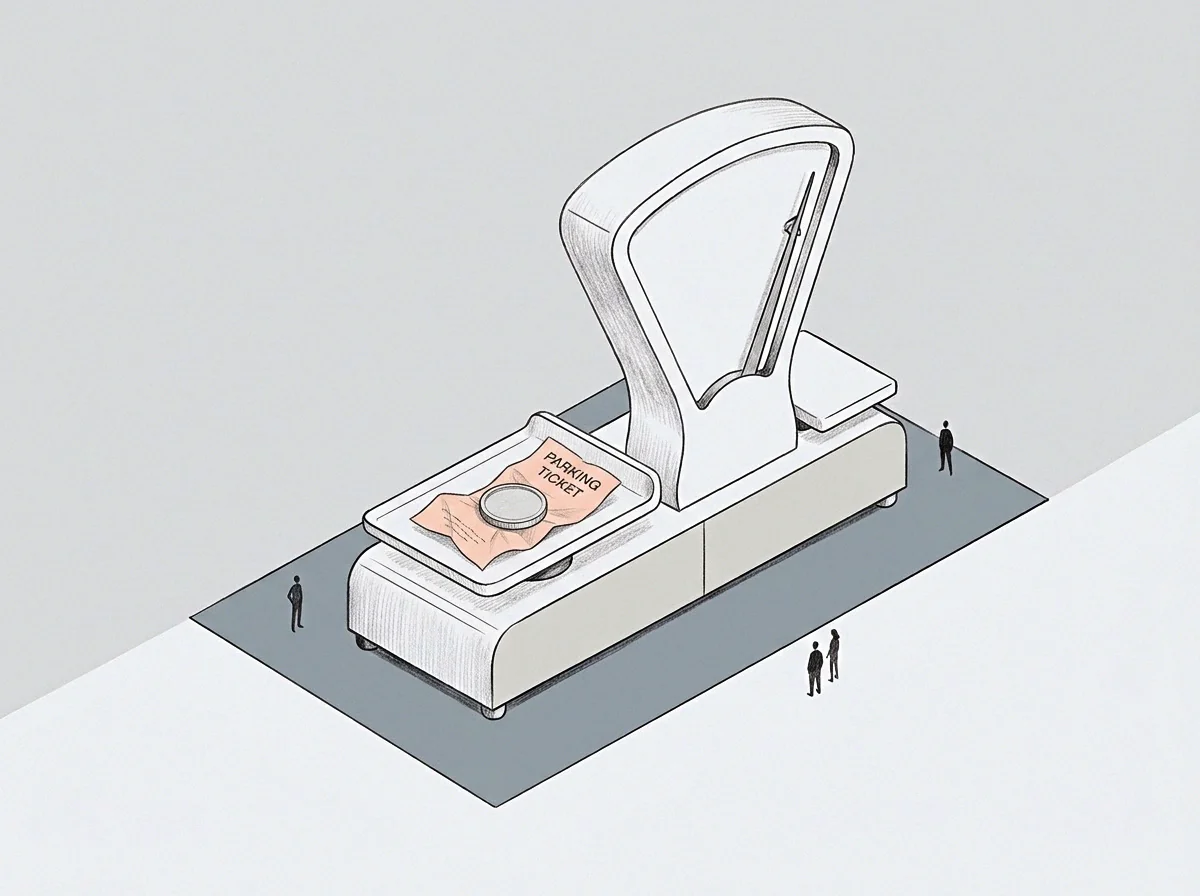
Financial accounting formulas defined in shareholder agreements govern the final purchase price of equity held by departing founders. These mathematical expressions determine how enterprise wealth is divided across time. When valuation calculations rely on fluctuating operational performance during an active managerial handover, they introduce structural perversity into corporate accounting.
The mechanics of book value adjustments, capitalized earnings, and trailing cash flow multiples dictate whether an enterprise retains sufficient working capital to survive its own ownership transfer.

Formula Structure and Equity Recoupling
Trailing earnings multiples link the buyout price directly to net operational income recorded during the transition period. Net book value formulas lock asset valuations to historical cost minus depreciation. Fixed formula floors protect the departing owner against downside operational losses but strip the successor of upside margins generated through new operational efficiencies.
Capital distributions reduce working cash. When the equity redemption calculation updates continuously against annual financial statements, the outgoing owner possesses an economic incentive to audit operational ledger entries, challenge expense classifications, and demand maximum immediate dividend extraction.
Consider the structural differences across common residual equity valuation formulas deployed in closed succession arrangements. The choice of mathematical formula directly governs the operational friction experienced by the firm during the buyout window.
| Valuation Formula Type | Governance Drag Level | Impact on Operational Cash Flow | Successor Reinvestment Incentive |
|---|---|---|---|
| Trailing EBITDA Multiple | High | Variable based on annual margin fluctuations | Severely suppressed due to payout penalties |
| Adjusted Net Book Value | Moderate | Predictable asset amortization burden | Neutral regarding operating expenditure |
| Fixed Baseline Valuation | Low | Fixed debt service schedule | Fully aligned with long-term margin growth |
| Capitalized Historic Average | Moderate to High | Lagged cash flow drain over multi-year terms | Partially suppressed during early transition years |
When shareholder contracts force trailing earnings formulas onto active handovers, accounting practices become political battlegrounds. The incoming executive seeks to accelerate depreciation, write off legacy inventory, and expense deferred maintenance to clean the balance sheet for future growth. The departing owner opposes every write-down because book value reductions and expense spikes lower the calculated equity redemption price.
Operational velocity slows under board dispute.
Fixed baseline equity valuations established at contract signing protect enterprise working capital by decoupling historical ownership debt from ongoing operational earnings.
The mathematical coupling of residual equity value to ongoing income reports forces the internal management team to maintain two distinct perspectives on every invoice. One perspective asks whether an expenditure expands customer value; the other asks whether it compromises the equity tranche calculation due at fiscal year-end. Uncapped residual valuation formulas tied to current profits force successors to delay capital reinvestment, starving the enterprise of growth assets during the highest-risk phase of ownership transition.

Ratio
Voting thresholds written into corporate bylaws give partial equity holders veto power over major expenditures and executive salaries. In a closed succession, equity percentage ratios rarely reflect operational contribution. A departing founder holding thirty percent of unredeemed equity may retain supermajority approval rights over debt issuance, property acquisition, or executive hiring written into original governance documents.
The successor carries one hundred percent of operational responsibility while holding fifty-one percent of voting equity, leaving high-impact strategic choices hostage to minority share ownership ratios.

Which Residual Equity Formula Triggers Governance Deadlock?
Historic net asset formulas combined with majority supermajority voting provisions generate immediate administrative halts during revenue contractions. When market downturns reduce operating cash flows, the enterprise struggles simultaneously to maintain buyout debt payments and meet formulaic equity tranche obligations. The outgoing owner uses retained voting rights to block operational restructuring, fearing that debt reorganization or dilution will erase residual equity claims.
Strategic agility drops to zero.
- Unredeemed Equity Floor blocks strategic mergers or equity financing rounds because the outgoing owner refuses dilution of residual tranche percentages.
- Supermajority Expenditure Vetoes empower non-operating equity holders to reject capital investments that exceed baseline annual operating thresholds.
- Board Composition Requirements maintain equal seat distribution between operating managers and departing owners regardless of equity redemption progression.
- Mandatory Dividend Ratios enforce fixed cash distributions to residual equity holders before any profit can be retained for enterprise reserve funds.
Governance friction escalates when the incoming team seeks debt financing from external lenders. Commercial banks routinely examine shareholder agreements during credit underwriting. Lenders classify unredeemed residual equity subject to mandatory formulaic buybacks as short-term demand liabilities rather than stable equity capital.
Unredeemed shares block external financing. The lender demands that the departing owner subordinate equity buyout claims to bank debt, or sign formal standstill agreements. The former owner frequently refuses, viewing subordination as an unacceptable compromise of exit security.
Succession stalls without governance clarity.
A governance voting right tied to an unredeemed balance guarantees administrative gridlock whenever operational choices lower immediate accounting earnings.
Managing this equity percentage overhang requires explicit contractual firewalling. Without contractual firewalls, minority equity ratios convert routine executive decisions into board-level deadlocks. The enterprise operates under dual command: the visible executive suite directing daily production, and the invisible capital interest controlling strategic expenditure.
The seat of ultimate authority remains split, preventing the incoming leadership team from executing decisive strategic shifts.

Strain
Managing an enterprise under the financial scrutiny of a former majority owner creates operational tension inside the management team. The successor occupies the manager seat and the technician seat, driving client delivery, staff management, and supply chain execution. The founder seat remains occupied by a non-operating equity holder who inspects monthly balance sheets through the lens of contractually guaranteed equity formulas.
Role strain emerges when the operating leader must act as a fiduciary to an enterprise whose financial policies are held hostage by a former owner’s personal exit timeline.

Misalignment Between Capital Payouts and Decision Authority
Executing strategy without full command over cash distribution limits a new manager’s capacity to build long-term enterprise value. Tacit organizational knowledge leaves with the departing owner, yet that same owner retains formal legal mechanisms to evaluate managerial performance. The new operator carries the cognitive load of enterprise performance while lacking the authority to allocate surplus cash.
Every expenditure on employee retention, systems upgrades, or market expansion faces formal or informal challenge from the former owner, who treats operational capital reserves as uncollected buyout funds.
Examine the multi-year progression of an internal buyout structured under two contrasting equity mechanics. Assume an enterprise generating ten million dollars in annual revenue with one million dollars in operating profit enters a five-year succession transition.
- The firm implements a trailing profit formula buyout where the departing owner holds thirty percent voting equity until the final payment clears. In year two, an economic slowdown reduces operating profit to six hundred thousand dollars. The formula drops the buyout tranche value, prompting the former owner to exercise minority board rights to freeze staff salaries and cancel technical software upgrades. The operating manager spends forty percent of working hours defending necessary budget lines, key technical staff resign due to wage freezes, and customer churn increases.
- The firm implements a fixed promissory note buyout where equity converts to non-voting deferred debt at handover, frozen at a pre-agreed valuation baseline. When operating profit drops to six hundred thousand dollars in year two, the manager adjusts operating expenses autonomously, maintains key technical infrastructure, and negotiates a deferred payment schedule on the debt principal without surrendering executive decision rights. Operational velocity remains intact, customer retention stabilizes, and profit recovers in year four.
The contrasting outcomes illustrate that operational strain is an explicit artifact of governance architecture rather than personal management style. In the first scenario, the managerial seat is worn down through continuous conflict with capital interests. In the second, the seat is held securely because financial claims are contractually separated from operational control.
Role strain peaks when an operating manager must seek spending approval from a non-operating equity holder whose exit formula penalizes long-term capital investments.
The human cost of unaligned succession architecture manifests as decision paralysis and managerial exhaustion. The incoming leader spends excessive hours producing specialized financial reports to justify routine expenditures to a former colleague. Trust deteriorates as accounting metrics replace shared operational purpose.
Every capital allocation choice made by new executive management is viewed as a direct attempt to reduce the remaining valuation payout.

Shift
Resolving succession gridlock demands converting equity claims into structured deferred debt instruments before management power transfers. Closed transitions succeed when the firm establishes a complete separation between enterprise valuation mechanics and ongoing governance rights. The outgoing owner’s financial claim must be transformed from an active residual equity share into a clear, fixed contractual obligation with specified payment terms, interest rates, and security provisions that carry zero voting rights or veto powers over enterprise operations.

Structural Provisions for Formula Uncoupling
Establishing a fixed valuation baseline prior to operational handover eliminates ongoing accounting disputes over reinvestment cash flows. The enterprise valuation formula is applied exactly once, on the date of formal handover, locking the total buyout dollar amount. Remaining unredeemed equity is surrendered to the company treasury or converted into subordinated, non-voting debt notes.
Deferred promissory notes eliminate dividend friction. The former owner becomes a senior secured creditor rather than a voting shareholder, securing exit payments against firm assets without retaining operational or strategic board controls.
- Freeze enterprise valuation on a specific baseline date using an agreed financial formula, terminating trailing profit recalculations.
- Convert all residual equity shares held by the departing owner into non-voting preferred equity or structured promissory notes.
- Strip all administrative veto rights, board seats, and operational approval clauses from shareholder agreements upon managerial handover.
- Establish clear debt service coverage covenants that replace subjective operational oversight with objective financial performance checks.
- Grant full voting authority and board control to the incoming operating equity holders from day one of the operational transition.
Converting residual equity into non-voting debt structures protects enterprise governance while securing clear exit liquidity for departing founders.
When the governance firewall is established, the incoming management team recovers full operational authority over the firm’s cash allocations and strategic choices. Capital reinvestments, executive hiring, and technological upgrades proceed based on market demands rather than exit formula mechanics. The former owner receives predictable debt service payments supported by formal credit agreements and asset liens, removing the operational friction that destabilizes closed transitions.
The seats inside the enterprise become clear, held with explicit boundaries, defined scope, and operational autonomy.