
Measuring Cognitive Context Switching Costs In Dual Position Founder Structures
Context switching between tactical execution and strategic governance forces working memory reloads, creating attention residue that degrades executive capacity.

Draft
Total hours spent in a working week often hide a decline in executive capacity. Someone occupying two distinct positions, such as technical architect and chief executive, cannot simply add the hourly demands of one role to the other. Tactical execution and strategic oversight require different ways of working.
Shifting between high-frequency technical tasks and long-horizon strategic allocation within the same hour impairs performance in both areas. The focus needed for deep, linear problem-solving breaks down under the frequent interruptions typical of organizational governance.
Building functional output demands continuous working memory to track deep state variables, class dependencies, or operational execution steps. Governance, by contrast, requires broad synthesis, macro pattern recognition, and interpersonal negotiation. Moving between these roles forces the brain to flush and reload working memory repeatedly throughout the day, creating an operational overhead that organizational researchers call attention residue.
Attention residue occurs when thoughts from a prior task carry over into the next one. When a founder steps directly from an emergency infrastructure incident response into a venture fund partner meeting, full working memory is unavailable. A significant portion of executive processing stays tied to the state of the server stack.
That cognitive lag skews risk perception, weakens active listening, and slows strategic synthesis, leaving the founder present in the governance seat while remaining mentally tied to the operational work.
Attention residue persists long after a task transition, impairing downstream executive analysis until working memory clears completely.
Dual position arrangements are frequently set up on the false assumption that working hours are fluid, interchangeable units. An afternoon divided into four alternating blocks of software coding and investor relations yields far less strategic clarity than an uninterrupted block dedicated to governance. The mistake lies in ignoring the refractory period, which is the necessary recovery time brain networks require to disengage from operational mechanics and re-engage with long-horizon evaluation.
Unmanaged dual positioning pushes executive tasks into the margins of the week. Because operational tasks carry immediate feedback loops and hard deadlines, they consistently displace strategic work. Strategic thinking lacks immediate external enforcement, letting technical fires consume morning hours while capital allocation and market positioning are deferred to late evenings.
This pattern reduces governance to reactive troubleshooting under cognitive exhaustion, leading to poorer long-range decisions.

Toll
Quantifying the cognitive friction of multi-role execution begins with tracking task recovery latency. Interruption metrics show that resuming a complex cognitive state after an abrupt context switch takes an average of twenty-three minutes. When a founder experiences five high-priority context switches in a single day, nearly two hours of direct executive processing vanish into cognitive reloading.
Over a quarter, this loss compounds into hundreds of hours of lost analytical capacity.

Which Executive Signals Indicate Irreversible Attentional Fragmentation?
Sustained context switching creates specific structural friction within an organization. Tracking these metrics allows boards and co-founders to measure cognitive depletion before operational breakdown occurs:
- Refractory Latency Score The time required for an executive to return to deep synthesis after an operational interruption. High refractory latency shows up as delayed decision speeds during board reviews.
- Context Fragmentation Rate The number of distinct functional domains accessed within a four-hour window. A rate exceeding three switches per window correlates directly with higher error rates in financial modeling.
- Strategic Slip Ratio The proportion of planned strategic hours converted into emergency tactical interventions during a single operating cycle.
- Role Strain Index The variance between self-reported primary seat responsibilities and actual calendar time distribution across secondary seat demands.
Interrupted focus requires complete reconstruction. The human prefrontal cortex relies on neural assemblies that stabilize during continuous, uninterrupted work. Shifting rapidly between micro-level troubleshooting and macro-level corporate positioning disrupts these assemblies, accelerating cognitive fatigue.
As fatigue sets in, executive decision-making defaults to loss-aversion heuristics and shallow consensus-seeking rather than rigorous structural evaluation.
When operational task density forces strategic planning into periods of physical and mental exhaustion, decision quality drops predictably across all governance seats.
In dual position structures where the founder acts as primary product architect while serving as chief executive, team members learn to exploit role ambiguity. A software engineer needing technical sign-off interrupts a capital allocation meeting, treating the founder as an available engineer rather than an executive presiding over governance. The organization itself becomes optimized for constant disruption, mirroring the fragmented focus of the leader.
A fourteen-hour workday divided across twelve operational context switches produces less strategic enterprise value than three focused hours of uncorrupted governance work. Measuring the real cost of this structure requires assessing the downstream effects of delayed decisions, missed market shifts, and poorly communicated strategic priorities caused by an executive operating in continuous cognitive depletion.
Grid
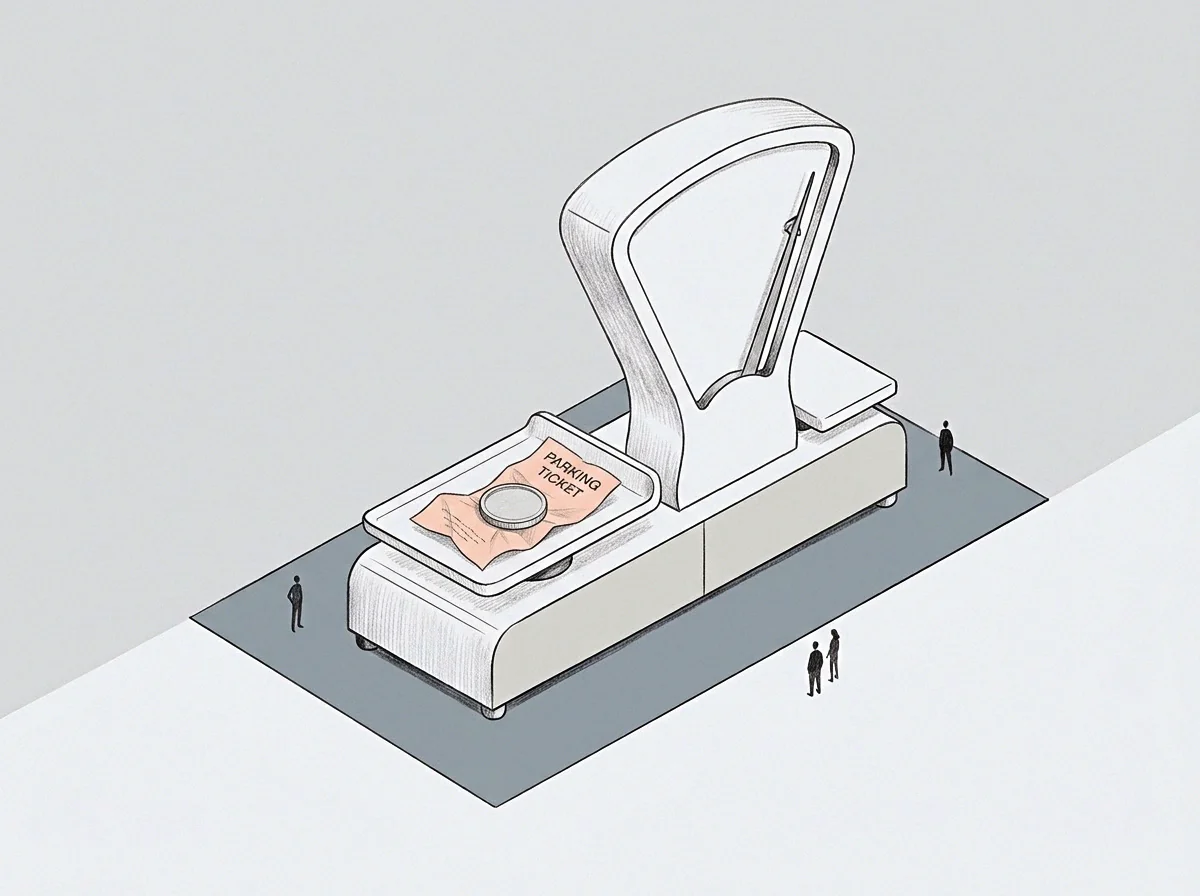
Evaluating the operational incompatibility between technical execution seats and executive governance seats requires looking at their structural characteristics. Tactical positions demand high immediate responsiveness, rigid logic, and precise short-horizon problem solving. Executive positions demand patience, tolerance for ambiguity, macro pattern evaluation, and low-frequency, high-consequence decision making.
Combining these seats in one person without explicit calendar isolation creates constant internal friction.
| Seat Dimension | Tactical Technician Seat | Executive Manager Seat | Strategic Governance Seat |
|---|---|---|---|
| Dominant Attention Horizon | Hours to days; focused on immediate code, design, or ticket resolution. | Weeks to months; focused on process, team throughput, and resource allocation. | Years to decades; focused on positioning, capital allocation, and enterprise survival. |
| Interruption Vulnerability | Extreme; a single interruption destroys deep mental models and active working state. | High; constantly triaging communication loops, team blockers, and tactical adjustments. | Low tolerance; requires low-noise environments for complex multi-variable analysis. |
| Feedback Speed | Immediate; tests pass or fail, customers report bugs, output is tangible. | Moderate; team output metrics surface over weekly or bi-weekly operating Sprints. | Delayed; capital allocation decisions yield results months or years later. |
| Cognitive Switching Overhead | High re-entry cost; re-establishing logic structures requires 20+ minutes. | Moderate re-entry cost; context stored in documentation and project management software. | Extreme re-entry cost; macro synthesis demands complete disengagement from daily operations. |
| Data compiled from role strain analysis in early-stage technical firms operating under dual-position founder structures. | |||
When the tactical seat’s immediate feedback loop competes with the delayed feedback loop of strategic governance, the brain systematically prioritizes the tactical seat. Resolving an immediate technical bug yields a rapid release of neurochemical reward, whereas writing a long-term hiring roadmap or analyzing enterprise pricing strategy offers no immediate closure. As a result, the tactical seat consumes executive attention by default.
The immediate dopamine feedback of tactical problem-solving reliably displaces the delayed, high-friction work of strategic governance.
This dynamic alters how organizational partners interact with the founder. Co-founders, department heads, and investors struggle to identify which seat the founder is occupying at any given moment. A technical critique offered by the chief executive carries institutional authority, even if intended merely as a peer-level architectural suggestion.
Role ambiguity damages clarity across the executive team, leading to passive alignment failures and silent compliance.
The team cannot tell whether they are receiving an order from the owner or an opinion from a fellow builder.
Drain
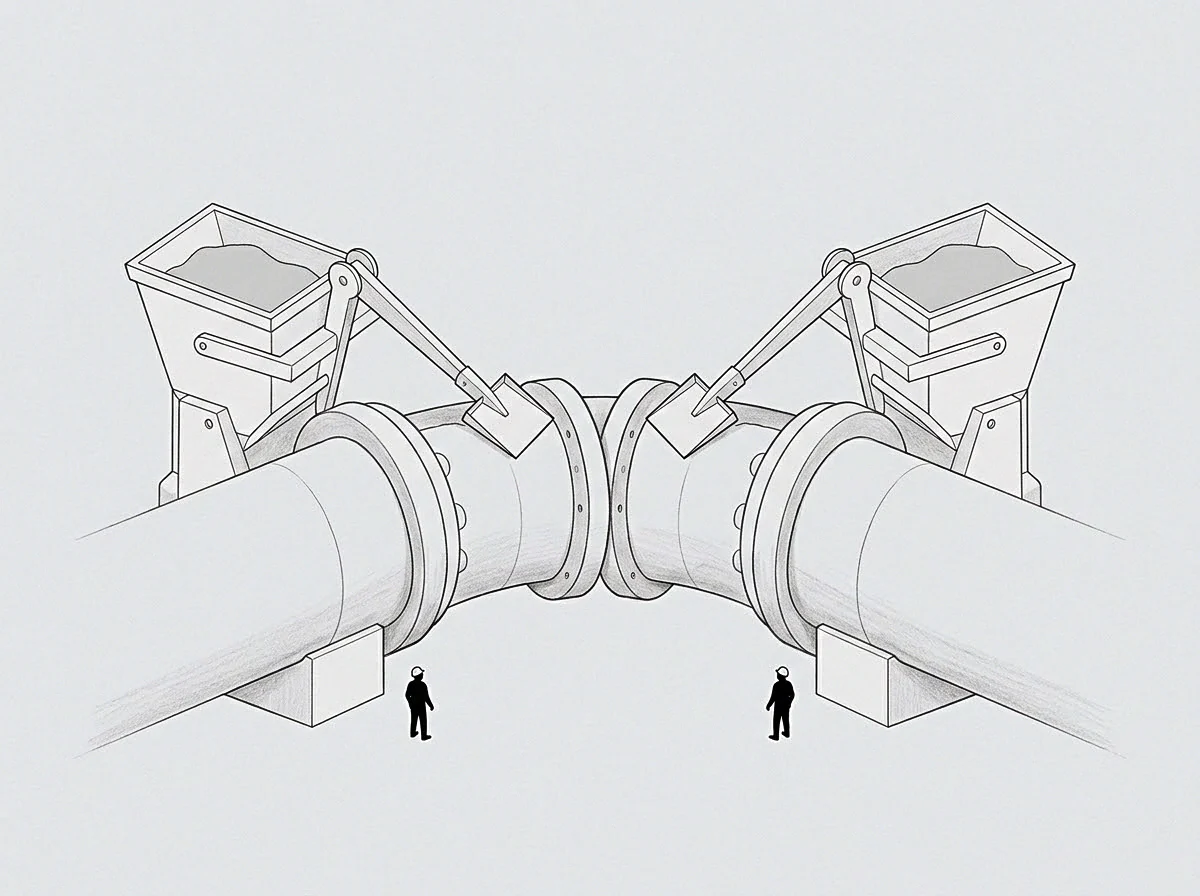
Consider a software enterprise operating at five million dollars in annual recurring revenue where the founder holds forty percent of equity while serving simultaneously as Chief Executive Officer and Principal Software Architect. Assuming the operating week spans sixty total hours, the founder might try to split time equally: thirty hours devoted to technical engineering and thirty hours to corporate strategy, key hire recruiting, and capital market engagement.
In practice, the thirty technical hours are distributed across five days in two-hour fragments between sales calls and operational check-ins. Each switch between architecture work and corporate management incurs a twenty-minute refractory penalty. With six context switches occurring daily, two hours per day vanish into cognitive switching overhead.
Over a five-day week, ten hours of capacity are lost to attention residue, reducing total productive time from sixty hours to fifty.
The thirty management hours are perpetually fragmented by emergency engineering requests. When an architecture flaw surfaces on Wednesday afternoon, the founder abandons corporate strategy to debug the codebase, shifting strategic tasks to Saturday morning. By Saturday morning, however, the accumulated load of sixty hours of fragmented focus leaves the brain in cognitive depletion.
Strategic planning performed during these hours becomes reactive, defensive, and shallow.
Over eighteen months, this dynamic generates measurable enterprise decay. The product succeeds technically, but key executive hires leave due to micromanagement and unclear authority. Capital runway shrinks because fundraising preparation was deferred during technical release cycles.
The founder experiences severe physical exhaustion and role strain, blaming the outcome on market conditions rather than structural role overload.
What structural mechanism prevents an executive from confusing extreme personal exhaustion with meaningful enterprise value creation?

Deed
Eliminating cognitive context switching costs requires structural separation of roles rather than personal effort or time-management discipline. Attempting to discipline focus while remaining embedded in incompatible operational pathways inevitably fails. The founder must formally decouple the tactical seat from the governance seat through binding organizational rules, calendar isolation, and explicit authority delegation.
Transitioning from a worn seat to a held seat requires defining exact operational terms for each position occupied. The organization must establish clear protocols for role isolation:
- Complete calendar separation, grouping all technical execution into contiguous multi-day blocks while isolating executive governance into dedicated, uninterrupted windows.
- Delegation of explicit decision rights, transferring primary operational sign-off to non-founder leads to eliminate daily technical escalations.
- Establishment of a strict communication buffer, routing all non-emergency operational requests through asynchronous channels during governance blocks.
- Formal board reporting of time allocation, tracking the actual hours spent in each seat against pre-approved quarter targets.
When a founder goes silent on strategic priorities for two consecutive weeks, it signals that the operational seat has completely consumed executive capacity. Reallocating authority requires appointing operational leads who possess full ownership over technical outcomes, backed by the founder’s public commitment not to intervene in daily technical execution decisions.
Structural role isolation protects enterprise value by converting chaotic role-switching into bounded, explicit seats with defined hours.
A founder who successfully transitions out of dual-position overload does not necessarily work fewer total hours initially, but reclaims the cognitive depth required for long-horizon leadership. Decoupling operational execution from governance transforms the founder’s contribution from a source of organizational friction into an instrument of scalable enterprise growth.
The founder agrees to vacate the primary architect seat entirely by the end of the second quarter, transferring all technical approval authority to the engineering director as an explicit condition of the growth round funding agreement.