
Measuring Unwritten Executive Rules In Business Purchase Agreements
Unwritten executive rules transfer through structured operational audits and explicit contract covenants that price informal managerial habits before closing.

Desk
A folder sits on the mahogany grain at two in the morning, filled with three hundred pages of warranties, disclosures, and schedules. The buyer signed every page, believing the purchase agreement binds the whole enterprise. The operations of the firm actually respond to an entirely separate layer of unrecorded permissions, private concessions, and executive understandings.
The technician who built the company made adjustments for years without entering them into board minutes or operational manuals. Key suppliers ship materials based on a nod in a hallway rather than standard purchase orders. Key engineers work flexible schedules negotiated over lunch without HR documentation.
The formal contract purchases the asset, yet the real operating model remains held inside personal habits.

Informal Levers Inside Formal Transfers
Every commercial enterprise runs on two distinct operating codes. The visible tier contains the articles of incorporation, employment agreements, vendor contracts, and the definitive purchase agreement. The second tier consists of unwritten executive rules, which represent the customary practices and discretionary judgments an owner-operator uses to settle disputes, allocate resources, and keep staff in their positions.
When an acquisition closes, the buyer assumes control of the legal entity. The actual machinery often grinds to a halt because the unwritten rules did not travel with the legal title.
The written agreement transfers legal ownership while leaving customary managerial authority stranded with the departing seller.
The signature arrives late. The buyer discovers that the executive team expects informal annual bonuses granted without performance metrics. Longtime customers expect personal price overrides whenever an invoice exceeds standard margins.
These expectations do not appear in the disclosure schedules because nobody treated them as legal liabilities. They were treated as normal life. The seller occupied the technician seat, the manager seat, and the founder seat simultaneously for fifteen years, blurring the line between personal discretion and corporate governance.
The operator absorbs the strain. Post-acquisition friction develops rapidly as the buyer attempts to institute formal reporting lines where casual conversations previously sufficed. The staff interprets standard institutional oversight as an assault on autonomy.
Resignations follow within ninety days. The enterprise loses operational capacity, not from market competition, but from the sudden evaporation of unwritten executive understandings that stabilized daily work. The buyer would assert that the seller concealed critical operational terms during diligence.

Habit
Daily routines inside an owner-managed firm solidify into stubborn cultural architecture over decades. When a founder sits at the apex of an organization, customary practices harden into informal law. Staff members learn how to read an owner’s mood, when to submit an expense report, and which vendor problems require immediate intervention.
These behavioral patterns exist nowhere on paper. Research on organizational role theory demonstrates that when executive roles lack formal specification, incumbents construct informal boundary-spanning behaviors to absorb ambiguity. This finding rests on field studies of mid-market manufacturing enterprises, though it would shift if applied to heavily regulated banking environments where statutory oversight limits executive improvisation.

Tacit Routines And Shadow Authority
Tacit operational rules govern four specific domains inside an acquired company:
- Discretionary vendor concessions involve informal credit terms, unbilled expediting requests, and handshake volume rebates that never entered the enterprise resource planning software.
- Off-book labor arrangements encompass unwritten remote-work allowances, discretionary bonus distributions, and unspoken exemptions from corporate conduct policies. These concessions keep valuable technicians seated at their stations.
- Custom customer allowances grant specific accounts extended payment terms, customized production runs, or direct cell-phone access to the chief executive during weekend emergencies.
- Informal capital allocation relies on unrecorded spending thresholds where senior personnel make capital expenditures by seeking verbal assent rather than raising formal requisitions.
Informal permissions stop at the wire. The technician yields the chair. When the buyer takes control, these tacit channels collapse.
The new owner implements standard operating procedures, requiring formal purchase requisitions and written sign-offs. Suppliers push back by demanding letter-of-credit guarantees, while veteran employees begin searching for alternative employment. The psychological contract breaks down.
Unwritten executive customs regulate daily output long before formal governance mechanisms take effect.
The operational baseline drifts silently. When an executive rule remains unspoken, measuring its financial impact requires retrospective forensic accounting. The buyer must tally how many hours of unpaid overtime the previous owner contributed to maintain delivery dates.
The buyer must also calculate the cost of informal inventory reserves kept off the books to prevent line stoppages. Role strain shifts immediately to the incoming managers, who lack both the informal authority and the historical context required to operate these levers. An unstated executive custom functions as an invisible loan against the company’s operating capacity.

Wedge
A structural gap widens between purchase price assumptions and physical reality when informal rules remain unquantified. The buyer prices the transaction on reported historical earnings. Those earnings depended heavily on uncompensated founder intervention, private supplier discounts, and labor accommodations that cannot survive formal corporate ownership.
The purchase agreement contains standard representations regarding compliance with laws, financial statements, and material contracts. It remains silent on the unwritten executive practices that generated those financial outcomes.
Does Tacit Authority Survive The Contract?
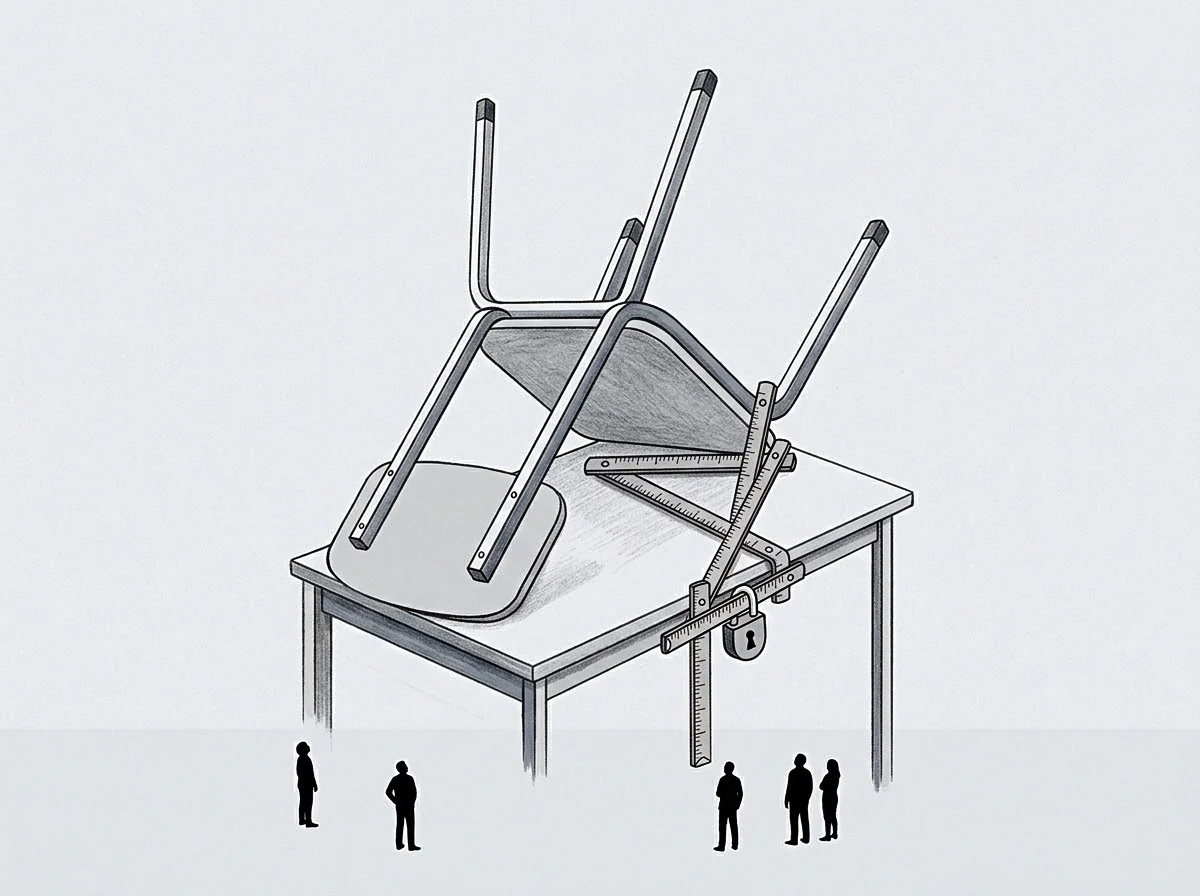
Legal agreements capture tangible commitments while missing behavioral realities. A purchase agreement defines what the company owns, yet fails to define how the enterprise actually moves. The table below illustrates the divergence between standard contract terms and the unwritten executive realities operating beneath them.
| Contractual Mechanism | Assumed Legal Function | Unwritten Executive Reality | Post-Closing Consequence |
|---|---|---|---|
| Ordinary Course of Business Covenant | Guarantees operations continue in consistent historic fashion prior to closing. | Relies on daily ad-hoc executive interventions, verbal overrides, and unrecorded exceptions. | Compliance breaks down when formal protocols replace informal founder discretion. |
| Material Adverse Effect Clause | Protects buyer against catastrophic reductions in business value before closing. | Fails to register the silent loss of staff goodwill and vendor loyalty when founder departs. | Operational capacity drops without triggering contractual legal relief. |
| Employment and Consulting Agreements | Secures transitional leadership and knowledge transfer for a stated duration. | Traps the founder in an advisory seat devoid of authentic executive authority. | Personal friction increases switching costs and paralyzes middle management. |
| Transition Services Agreement | Specifies distinct corporate services provided by seller post-acquisition. | Ignores informal problem-solving networks and backchannel negotiation habits. | Transferred systems fail to produce historic margins under rigid management. |
The seller leaves the room. The buyer inherits the friction. When the buyer discovers that the business cannot sustain its historical earnings without the founder working eighty hours a week across three distinct operational seats, legal disputes emerge.
The buyer claims a breach of the ordinary course covenant. The seller retorts that the business operated exactly as it always had, through personal relationships and direct executive intervention.
A transactional contract defines legal ownership without capturing the personal interventions required to maintain operating margins.
The purchase price stands fixed. The seller believed selling the company meant handing over stock certificates and walking away. The buyer believed purchasing the shares transferred an autonomous, self-sustaining machine.
Both parties discover that the asset was intimately fused with the founder’s person. The firm suffers rapid margin erosion and team turnover when institutional rules overwrite informal understandings without a measured transitional architecture.

Count
Quantifying unwritten executive rules requires systematic pre-acquisition discovery that extends beyond standard legal due diligence. Traditional diligence examines historical tax returns, written leases, and intellectual property registrations. A rigorous operational baseline requires auditing the time allocations, private communication channels, and informal approvals executed by the leadership tier.
The field of organizational analysis relies on structured diary studies and network analysis to uncover tacit workflows. This evidence rests on extensive observation in mid-sized commercial organizations, though measuring tacit authority remains imprecise when founders deliberately obscure their day-to-day methods to preserve personal leverage.

Baseline Audits Of Unwritten Prerogatives
Consider a machine tool manufacturing plant generating fifteen million dollars in annual revenue. The owner claims an executive management seat taking twenty hours per week. A detailed operational audit reveals the owner actually works sixty hours weekly, spending twenty hours negotiating verbal discounts with steel distributors, fifteen hours settling disputes between shift supervisors, and ten hours expediting late shipments.
In mechanical engineering, an uncalibrated tool transfers destructive vibrations across an entire assembly line until the bearings fail. The unwritten hours worked by this owner represent a hidden operational subsidy. If the buyer replaces this owner with a salaried general manager working forty hours within strictly defined boundaries, the business immediately requires two additional mid-level managers to absorb the surplus load.
The weekly schedule breaks down. To prevent post-closing operational collapse, the transaction team converts unwritten habits into measurable contract schedules. An audit of executive discretion must evaluate three specific dimensions:
- Informal decision rights identify every operational expenditure, credit extension, and personnel decision executed without secondary sign-off over the preceding twenty-four months.
- Tacit operational dependencies document the specific personal relationships between executive leadership and critical vendors, noting private terms granted to the business.
- Shadow labor burdens record all uncompensated operational, technical, and custodial duties performed by the ownership group to maintain delivery timelines.
Discretion shrinks under audit light. Transforming these unwritten rules into explicit operational benchmarks enables the deal team to draft precise transition covenants. The definitive purchase agreement incorporates an operational service baseline schedule specifying that historical vendor terms depend on bi-weekly executive communication, thereby preventing post-closing indemnification claims regarding customer churn.
Pact
Translating informal customs into binding contractual instruments demands precise language within the purchase agreement. Rather than relying on boilerplate definitions of the ordinary course of business, the agreement must establish an objective index of executive practices. This mechanism outlines the exact scope of discretionary spending, employee accommodations, and customer concession standards that the buyer agrees to maintain during the earn-out or transition period.
The technician’s seat and the manager’s seat must be formally uncoupled from the founder’s seat.

Stated Limits On Transitional Governance
When a founder stays on under a consulting agreement, unwritten authority creates immediate organizational paralysis. Subordinate staff continue bypassing the new managing director, seeking verbal guidance from the founder in the parking lot. The business purchase agreement must include governance transition covenants that expressly delineate what the former owner may and may not direct.
The agreement defines the precise boundary where informal advice ends and formal operational interference begins.
The person pays in sleepless nights. The former owner carries the emotional cost of watching informal rules get systematically dismantled by corporate auditors. The buyer carries the financial cost of replacing informal goodwill with formal employee incentives and contractual vendor guarantees.
This desk cannot fully defend whether unwritten executive authority can ever be completely transferred through contractual drafting, or if tacit authority inevitably perishes with the founder’s departure. Faced with that uncertainty, careful buyers discount historical earnings by the estimated replacement cost of the founder’s unwritten operational labor.
An earnout provision fails whenever contract terms attempt to enforce historical financial targets while forbidding the informal practices that produced them.
The legal documentation closes the deal, but it cannot force staff to trust an unfamiliar executive structure. The new leadership team must build institutional authority from the ground up, replacing unrecorded privileges with explicit incentives. Will an acquired enterprise ever attain its historical profitability once all unwritten executive rules are permanently written down?