
Operational Strain Generated By Dual Technical And Executive Seats
Dual technical and executive authority forces continuous task switching between deep execution and governance, draining executive capacity and delaying delivery.

Bind
Terminal output fills the monitor at two in the morning. A production database node failed under query load, demanding manual index rebuilds and raw configuration changes. Five hours later, the same individual sits across from external equity partners to explain quarterly burn figures and defend customer acquisition targets.
The investor presentation proceeds on schedule because the person holding both seats absorbs the disruption through physical endurance alone.
Operating as chief technician and chief executive simultaneously creates an immediate structural bind. The technical seat requires continuous, uninterrupted blocks of focused time to hold architecture in active memory. Executive responsibilities, by contrast, demand constant environmental scanning, immediate response to external stakeholders, and split-second operational triage.
When both functions sit inside one skin, that boundary collapses. The individual attempts to manage two entirely distinct institutional tempos within a single twenty-four-hour period.
A technician who also carries the executive title absorbs all operational variance through personal fatigue.
Founding teams frequently praise this arrangement during early development. Decisions appear instantaneous when the person determining capital allocation also writes the technical pull requests. Interpersonal coordination expenses drop to zero, and the business moves quickly because architectural debates happen inside a single skull.
That early speed masks an acute structural vulnerability.
Over time, the technical seat becomes a bottleneck for company execution. When an engineering defect emerges, executive duties pause; conversely, when financing rounds or customer contract disputes demand multi-day attention, software releases stall. Cognitive research into attentional switching shows that moving between disparate domains leaves attentional residue, reducing cognitive performance on subsequent tasks.
A founder cannot think deeply about database scalability while mentally tracking cash runway projections.
Unchecked role consolidation leads to systematic operational paralysis, where technical architecture stagnates from neglect while corporate governance decays from perpetual distraction.
Cadence
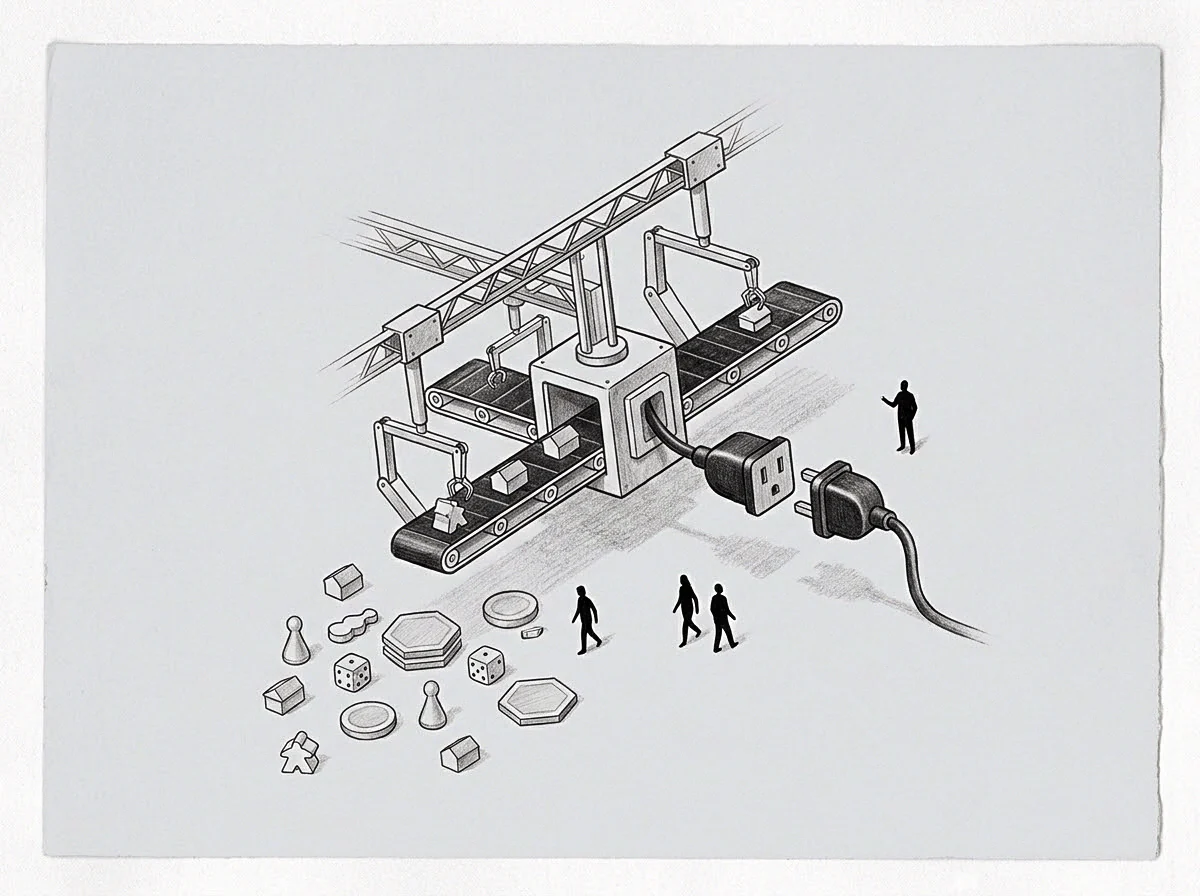
Every structural role operates on a distinctive internal clock. The engineering seat lives inside a maker schedule, organized around four-hour blocks where interruption destroys cumulative problem-solving state. Writing distributed consensus algorithms or debugging memory leaks demands sustained immersion, and a single incoming telephone call from a banking representative resets thirty minutes of cognitive construction.
Executive governance, by contrast, operates naturally inside a manager schedule divided into thirty-minute increments of evaluation, delegation, and tactical alignment.
Running both seats forces an unnatural oscillation between these incompatible tempos. An individual spending three hours resolving an infrastructure security patch cannot easily enter an executive meeting with board members and immediately evaluate multi-year hiring plans. Attentional residue creates friction during every transition: the mind remains anchored to line forty-two of an uncommitted software file while the voice recites revenue forecasts.
Task transitions across divergent operational domains degrade cognitive capacity long before the calendar runs out of hours.
This temporal collision produces specific failure modes throughout the working week:
- Interrupted Technical Immersion degrades system stability as complex code updates receive rushed testing during brief gaps between administrative commitments.
- Delayed Executive Response stalls commercial negotiations when external counterparties wait days for contractual responses while the officer debugs infrastructure.
- Chronic Cognitive Exhaustion depletes personal capacity as the operator forces rapid state changes between contemplative construction and defensive institutional posturing.
- Distorted Priority Assignment elevates immediate, visible technical errors above subtle long-range commercial hazards that require detached strategic reflection.
Studies examining organizational role strain indicate that intra-role conflict intensifies whenever performance metrics for one domain penalize time spent inside another. This finding rests on field observations of small technology operations where founders retained root access while acting as managing directors; the conclusion would falter in mature enterprises with redundant engineering staff. Under dual occupancy, the hours spent reviewing software pull requests represent hours diverted from partner relations, just as days spent negotiating insurance policies stall product delivery.
A schedule divided into micro-intervals favors the loud problem over the important one.
Wedge
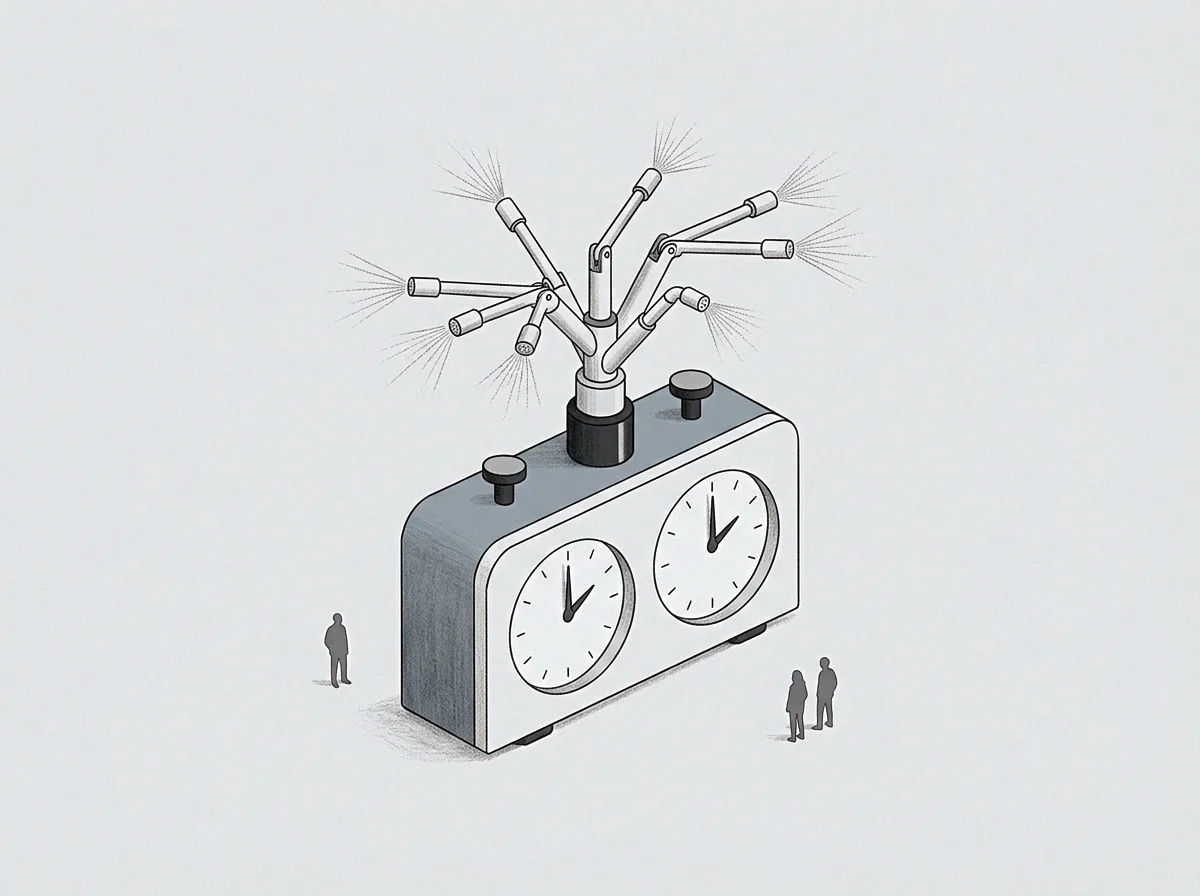
Physical separation between disparate organizational functions prevents systemic contamination. In naval architecture, an engine room requires physical isolation from the navigation bridge to prevent engine vibrations from misaligning gyrocompass readings. Physical bulkheads decouple mechanical heat from navigational calculations.
An organization requires similar structural bulkheads between technical production and administrative governance. When one individual fills both spaces, that bulkhead vanishes.
Structural Asymmetry Between Dual Operating Domains
The technical seat and the executive seat differ across every functional axis. Treating them as complementary aspects of a single job title obscures the deep antagonism between their daily requirements.
| Operational Dimension | Technical Operator Seat | Executive Officer Seat |
|---|---|---|
| Primary Objective | Functional system integrity and code delivery | Capital allocation and commercial viability |
| Attentional Horizon | Immediate sprint cycles and architectural cohesion | Multi-year organizational survival and market position |
| Evaluation Standard | Deterministic execution and test pass rates | Probabilistic commercial results under uncertainty |
| Communication Mode | Precise, asynchronous technical documentation | Persuasive, synchronous interpersonal negotiation |
| Error Consequence | System outage or software regression | Insolvency or institutional dissolution |
The operational tension shown above reveals why dual seating strains internal leadership teams. Subordinate software engineers hesitate to challenge architectural flaws when the architect also signs the payroll checks. Executive authority suppresses technical dissent without conscious malice; subordinates treat a technical disagreement as insubordination, leading to flawed implementations that nobody feels safe correcting.
Could Parallel Operational Authority Mitigate Structural Inertia?
Splitting authority across two distinct individuals introduces immediate coordination costs, yet it preserves institutional stability. When the technical head reports to an independent corporate officer, architectural debates occur on explicit merit. The executive evaluates business risk while the technician defends system resilience.
In dual seating, this productive tension collapses into internal ambivalence. The single actor negotiates in private, cutting architectural corners to satisfy commercial deadlines, then absorbing the cost when technical debt triggers an operational failure.
The arrangement works only as long as the organization produces nothing complicated and risks nothing substantial.
Transfer
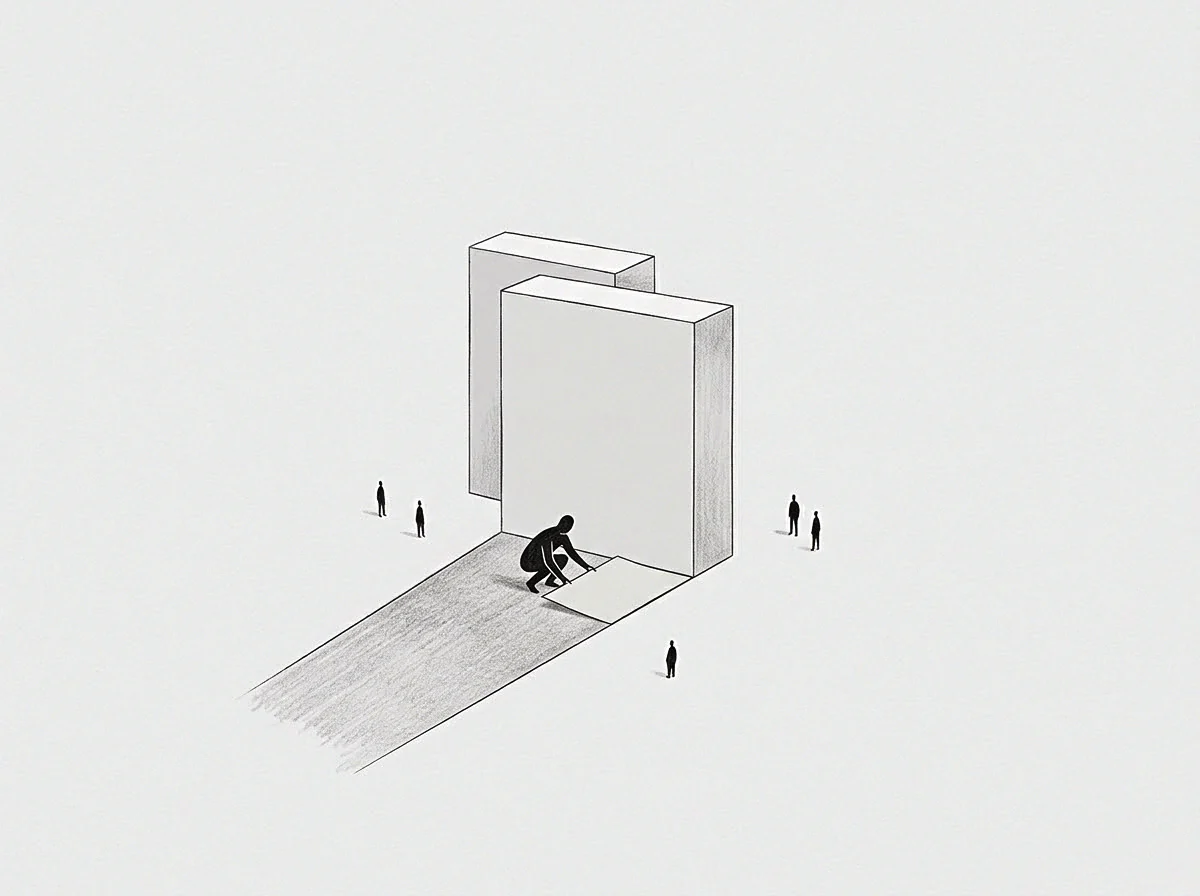
Separating the two seats requires transferring technical execution to a successor. This step routinely falters because the original builder carries extensive tacit operational knowledge. Tacit knowledge resides in unwritten memory, intuitive system navigation, and informal recovery routines developed during early emergencies.
The builder knows that restarting a particular background worker requires executing a specific shell script in a specific sequence, yet no formal document records the instruction.
The handover often stalls without notice. New engineering personnel enter the organization, review sparse documentation, and encounter continuous roadblocks. The dual-seat operator interprets this slowdown as employee incompetence rather than systemic knowledge hoarding.
When production issues arise, the operator steps into the server environment directly to resolve the fault in minutes; every direct intervention masks operational failure and strips the team of an opportunity to build systemic resilience.
A handover process fails whenever the original builder retains root credentials to rescue production systems.
The extraction of technical responsibility demands a deliberate progression:
- Tacit Knowledge Articulation documents hidden infrastructure dependencies, operational recovery sequences, and undocumented architectural concessions before any hiring action begins.
- Credential Revocation severs direct production access for the executive, preventing impulsive midnight interventions that bypass team incident protocols.
- Shadow Escalation Protocol routes all production anomalies exclusively to the successor engineering team, with the former technician restricted to observational commentary.
- Authority Delegation grants the incoming technical leader unilateral veto power over architectural changes and deployment approvals without executive interference.
Empirical evidence concerning knowledge transfer across technical hierarchies indicates that procedural documentation alone yields poor competency replication unless paired with active shadowing; this finding relies on corporate engineering departments and may require adjustment inside high-velocity technology startups with volatile architectures. Genuine uncertainty remains regarding the exact tempo at which executive production access must terminate during severe financial contractions, where survival demands immediate technical triage. Under that specific uncertainty, leadership teams maintain transparent escalation thresholds agreed upon in advance.
How can an organization verify that tacit knowledge has transferred successfully before a production crisis tests the successor team?
Accord
Formalizing the boundary between the technical seat and the executive seat transforms a chaotic personal burden into a stable operational structure. The enterprise cannot rely on subjective self-discipline to prevent an executive from meddling in technical implementation. An explicit agreement must define the boundary, establishing where technical discretion ends and executive oversight begins.
This separation protects the operational remit of both offices and permits sustainable institutional scaling.
A written agreement governs weekly temporal allocations. The individual commits thirty hours strictly to executive duties, including commercial development, investor management, and administrative governance. The remaining hours belong explicitly to defined technical oversight, excluding emergency incident response.
By defining the allocation, the organization forces itself to confront technical resource shortfalls instead of hiding them behind executive overtime; unstated duties create invisible friction, whereas stated terms bring operational constraints into plain view.
Clarity of operational scope protects personal capacity better than sheer endurance.
The operational contract establishes that capital allocation authority does not grant the right to dictate technical architecture, nor does technical seniority permit unilateral commercial commitments outside formal executive review.