
Separating Daily Production Duties From Long Range Company Planning
Separating production duties from strategic planning requires contractually bounded hours, explicit role definitions, and market pricing of technical labor.

Bench
Daily operational work delivers an immediate feedback loop that routinely crowds out long-term strategic thought. Completing a physical part, closing a ticket, or shipping an order produces instant confirmation that a task is finished. That rapid feedback triggers a release of dopamine and a sense of tangible progress that long-range planning rarely provides.
A three-year capital deployment plan or an organizational succession structure yields no signal at the end of an hour’s work. Put daily technical execution and strategic planning on the same calendar, and the immediate operational loop wins every time.

Immediate Tactical Loops Overpower Strategic Attention
Technical work provides immediate confirmation when finished. A worker naturally leans toward tasks with short feedback cycles, especially when business conditions feel uncertain. Solving routine operational problems offers a comfortable refuge from the high-stakes ambiguity of building a business over multi-year horizons.
A daily deliverable offers a clear definition of done, whereas strategic planning deals with probabilistic outcomes across multi-year horizons.
Operational tasks with short feedback cycles consistently consume cognitive capacity allocated to ambiguous long-term decisions.
Unchecked production work expands until it consumes the calendar. Customer emergencies, inventory gaps, and product failures carry immediate commercial consequences if ignored, while long-term planning relies on soft internal targets with no external enforcement. When an operational fire breaks out at two o’clock on a Tuesday afternoon, the founder cancels the scheduled strategy session to put it out.
Repeated over months, this habit turns strategic planning into a residual task left for off-hours and exhaustion.
Constantly shifting between daily output and strategic planning degrades planning into short-term fire-fighting while capping total labor output.
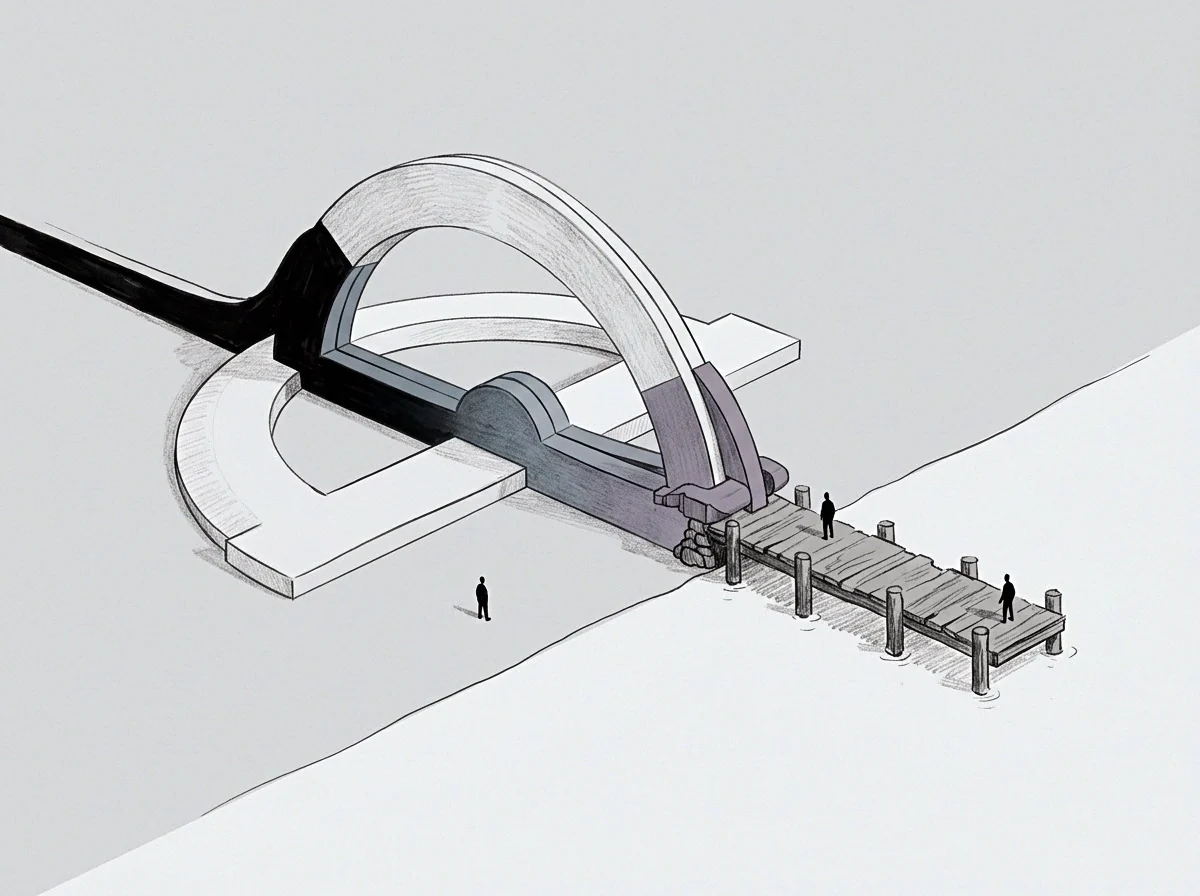
Shear
Structural conflict is built into situations where a single person acts as both primary technical operator and chief executive. Each organizational role operates across a different time horizon, relies on distinct performance metrics, and demands a different mindset. The technician works in hours or days, focused on unit quality and output speed.
The manager operates across weeks or quarters, balancing workflows, resources, and team capacity. The founder thinks across years or decades, prioritizing capital allocation, market position, and long-term risk.

Structural Distinction Across Three Organizational Positions
Operational output, managerial coordination, and strategic ownership demand different ways of working. Moving between them within the same workday introduces heavy context-switching costs that undermine performance in all three areas. Optimizing a daily production workflow requires a mindset fundamentally opposed to evaluating an acquisition offer or a capital restructuring plan.
These three positions require explicit boundaries to prevent daily duties from creeping across roles.
| Position | Time Horizon | Primary Metric | Cognitive Demand | Primary Deliverable |
|---|---|---|---|---|
| Technician | Hours to days | Unit output and quality | Procedural execution | Completed products or service hours |
| Manager | Weeks to quarters | Workflow yield and utilization | Systemic coordination | Documented processes and team schedules |
| Founder | Years to decades | Return on invested capital | Abstract strategic synthesis | Capital allocation and governance design |
Without clear role boundaries, every duty defaults back into the technician’s workload. The owner keeps producing output while carrying the unmanaged weight of enterprise governance, driving executive burnout and operational standstill.
A position left undescribed forces the occupant to absorb structural conflict as personal exhaustion.
Failing to separate these roles distorts the company’s financial results. Technical work done by an owner is frequently underpriced or omitted from payroll, hiding true operating overhead. If a business needs forty hours of unpaid technical labor from an equity holder each week to stay cash-flow positive, the business model relies on an unstated internal labor subsidy.
The exact financial threshold at which an owner should step away from technical execution remains unquantified in early-stage operating environments.

Cadence
Effective strategic decisions require uninterrupted, contiguous blocks of time rather than scraps pulled from a busy day. Evaluating market shifts, financial structures, and competitive moves requires sustained focus. Trying to do long-range planning in thirty-minute windows between production meetings or emergency calls leaves operational distraction that weakens strategic judgment.

Does Tactical Output Distort Strategic Capacity?
Sustained involvement in daily delivery conditions an executive to prioritize immediate problems over long-term positioning. Spending thirty hours a week on technical output locks focus onto immediate operational bottlenecks, forcing leaders to evaluate challenges through the narrow lens of short-term capacity rather than asking whether the underlying production model itself needs replacement.
When daily production duties remain uncontained within a working week, operational friction emerges in specific structural forms across the enterprise.
- Tacit output dependency occurs when internal production processes reside exclusively inside individual operator memory, preventing effective task transfer.
- Switching cost compounding drains executive focus through frequent transitions between raw physical execution and long-term financial modeling.
- Covert labor subsidies distort financial statements by failing to assign market wages to uncompensated founder technical hours.
Eliminating operational distortion requires structural time boundaries rather than good intentions. Strategic work demands physical and temporal isolation from daily production operations. Reserving dedicated, uninterrupted days set aside for governance and long-range positioning prevents short-term demands from intruding upon strategic synthesis.
Strategic planning requires contiguous calendar blocks defended against operational interruption.
When corporate planning is left to leftover hours at the end of a grueling execution day, the quality of strategic analysis drops precipitously. An exhausted mind defaults to short-term, risk-averse decision rules aimed at securing immediate relief rather than building long-term enterprise value.
Strategic governance succeeds when planning hours are managed as fixed commitments rather than discretionary residual time.

Guard
Formal operational boundaries isolate strategic planning from the urgent gravitational pull of daily manufacturing, service delivery, or client requests. Maintaining this separation requires contractual boundaries specifying when, where, and under what conditions an equity holder may sit in the technician seat. Without explicit governance guards, urgent operational tasks will continuously breach strategic calendar allocations.

Contractual Allocation of Working Hours
Explicit employment agreements for equity holders define specific hourly commitments for technical execution versus governance responsibilities. Establishing an internal schedule that treats production shifts as distinct, bounded assignments keeps technical tasks from spilling into governance time.
Take an operating company generating two million dollars in annual revenue with two equal co-founders. Assume Founder A conducts thirty-five hours of technical product engineering alongside five hours of strategic planning per week, while Founder B handles sales and finance. Founder A’s engineering output is critical to current contract delivery, but prevents the development of next-generation product architecture.
If Founder A’s technical contribution is valued at a market rate of seventy-five dollars per hour, the enterprise consumes one hundred thirty-five thousand dollars of technical labor annually from an equity holder. If Founder A simply attempts to perform strategy on weekends, strategic output stagnates while burnout escalates. Moving forward requires Founder A to systematically transfer technical operations through a four-stage process.
- Audit daily execution tasks performed over two operating cycles to calculate baseline technical hours.
- Document tacit production methods into standard operational protocols capable of external assignment.
- Confine technical execution responsibilities to preassigned morning or afternoon calendar windows.
- Assign operational decision authority to secondary management personnel for client disputes.
Implementing this operational shift changes the cost structure of the business by converting unpriced equity labor into explicit payroll expense. When Founder A steps off the production floor, hiring a qualified replacement technician costs one hundred thousand dollars annually in direct cash outlay. This cash reduction forces the firm to evaluate whether its operating margins are genuine or merely an artifact of unpriced founder labor.
The failure to price tacit technical labor creates a false margin that vanishes upon delegation.
Establishing clear terms for technical handover forces the enterprise to build real organizational capability. This transition shifts the company away from reliance on individual heroic effort toward documented, repeatable operational systems governed by executive oversight.
Strategic decisions made during evening hours without input from daily operations create targets that ignore actual shop floor capacity.
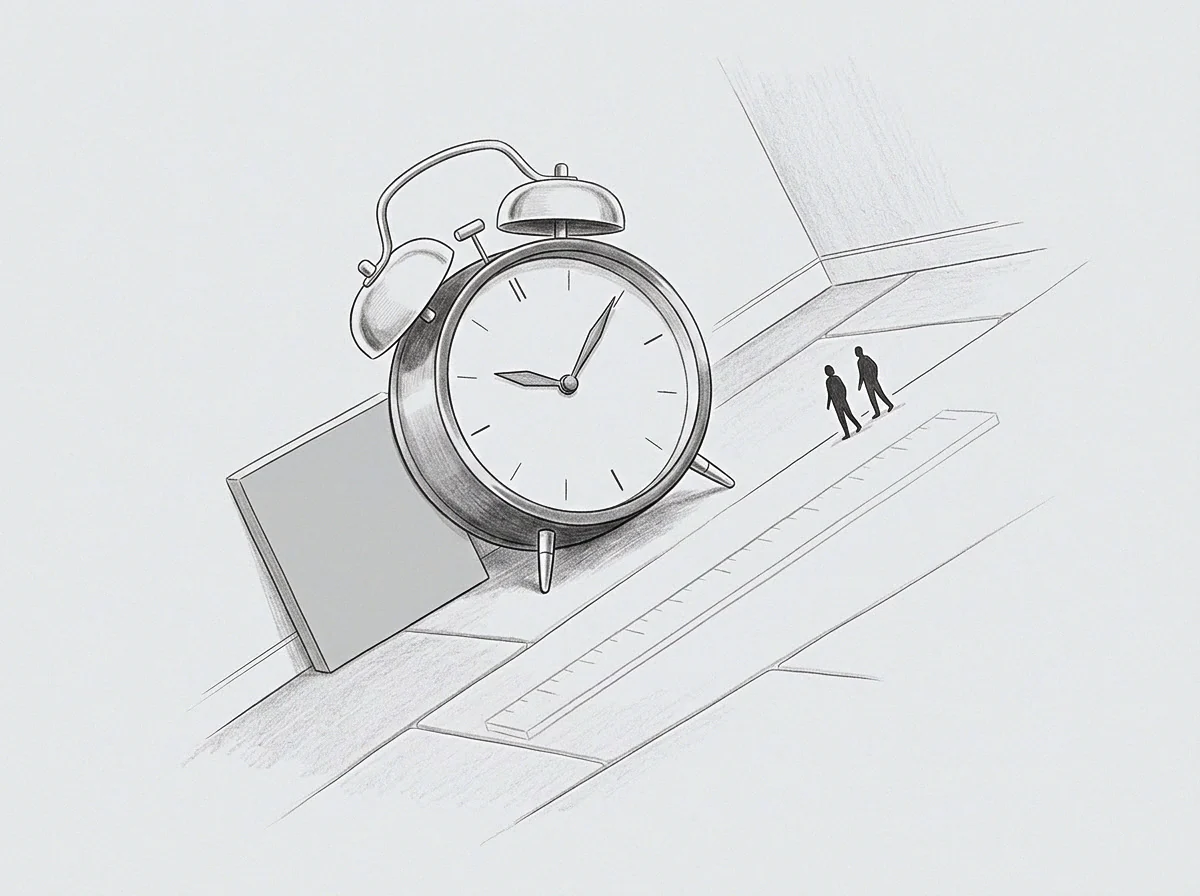
Anchor
Sound organizational design separates equity ownership compensation from market-rate labor costs for operational execution. Equity value represents the net present value of future cash flows generated by the enterprise asset, whereas labor compensation represents the immediate market cost of operational throughput. Conflating these two revenue streams obscures whether company value grows through operational efficiency or equity appreciation.

Equating Execution Output with Governance Value
Capital allocation and strategic positioning build enterprise value in ways daily operational throughput cannot generate independently. An hour spent optimizing corporate capital structure, negotiating strategic partnerships, or acquiring distribution channels can yield order-of-magnitude higher returns than an hour spent producing standard billable output. Enterprise growth halts when the primary owner remains permanently constrained by daily execution capacity.
When governance duties are fully separated from daily production work, the corporate asset gains independent transferability. A business whose daily operations require the ongoing technical execution of its owner cannot be sold or transitioned smoothly because the core operating asset is bound to an individual worker. Disentangling the owner from daily execution builds enterprise value by creating a self-sustaining operational architecture.
An explicit delegation threshold clause in operating agreements transfers daily operational authority automatically when weekly production hours exceed twenty hours per founder.