
The Limits of Procedural Codification When Transference Demands Unstated Intuitive Judgment Across Volatile Markets
Procedural codification fails in volatile markets because static rules introduce execution latency and destroy the tacit pattern recognition required to absorb risk.

Sheet
A binder of sixty laminated pages sits beside four trading monitors at two in the morning. Every protocol for liquidating prompt physical commodity contracts rests inside clear plastic sleeves, arranged into decision trees with green and red tabs. The replacement hire reads page fourteen while the spread between prompt cash and thirty-day futures widens by forty ticks in nine seconds.
The script directs the reader to calculate a rolling basis average over twelve historical sessions. The market moves first. By the third minute, the pricing window closes, leaving sixty thousand barrels unhedged on a broken transit pipe.
Procedural codification assumes operational environments remain stationary while the operator reads the instructions. In high-velocity trading environments, distressed debt workouts, and sudden liquidity contractions, information presents itself as fragmentary, overlapping anomalies. The primary operator recognizes these shifts through thousands of hours of accumulated exposure, perceiving inventory gluts, counterparty hesitation, and order book thinning long before those variables register as clean data points on a screen.
Translating that perceptual apparatus into an operational checklist removes the speed that preserves capital.
A rule of thumb holds that codification captures historical regularity while volatility rewards immediate structural improvisation.
The technician who attempts to vacate the operating seat routinely confuses explicit documentation with operational competence. Writing down the criteria for an entry or exit creates the illusion of a transferable asset. The documentation records the historical markers of past hazards, omitting the sensory timing that governed when the primary operator ignored those exact markers during a systemic panic.
When market velocity accelerates, reliance on the written rubric produces operational paralysis, converting a manageable spread divergence into capital destruction.

Codified Rules Under Non-Stationary Distributions
Statistical distribution shifts undermine static operating guidelines during structural dislocations. When underlying volatility regimes alternate between calm and crisis states, fixed parameters generate severe miscalculations. An operating manual instructing an analyst to seek three confirming quotes prior to position unwinds functions smoothly during balanced sessions.
During an exchange halt or cross-currency clearing freeze, those three quotes take forty minutes to assemble, by which time the collateral haircut increases threefold. The capital erosion compounds with every second spent waiting for orderly protocol compliance.
The person occupying the technician seat often treats market judgment as an orderly formula awaiting clear articulation. In volatile commercial transactions, pattern recognition operates through high-dimensional sensory intake: the speed of counterparty chat replies, subtle bid-ask cancellations, and cross-market lead-lag shifts. These cues sit below the threshold of verbal codification.
Attempting to force these perceptual patterns into linear checklists leaves the successor equipped with rules that only function when the markets cease moving.

Torque
Mechanical stress accumulates across an enterprise whenever procedural requirements clash directly with rapid price movement. The technician who founded the trading desk or inventory operation attempts to step into the manager seat by assigning daily execution to a junior operator. The junior operator carries the strict handbook.
The original founder carries fifteen years of tacit memory, stepping onto the floor only when a sudden margin call threatens the capital base. The resulting structural friction strains both participants.
The manager seat demands clear delegation, yet the volatile market punishes literal compliance with the delegated protocol. When market dislocations strike, the replacement operator experiences extreme role strain, torn between the formal demand to follow documented policy and the practical necessity of cutting losses on an uncodified instinct. If the operator breaks procedure to save the position, management reprimands the insubordination; if the operator follows procedure into a massive loss, management condemns the lack of commercial sense.
The operator freezes.
A formal procedure transfers authority across stable systems but concentrates operational failure whenever the volatility regime changes without warning.
This organizational friction surfaces across distinct operational failure states during severe market dislocations:
- Protocol paralysis occurs when an operator encounters market conditions outside the documented parameter bounds and pauses execution while awaiting supervisory intervention.
- Premature liquidation develops when an inexperienced replacement dumps protective hedges strictly because a secondary technical indicator crosses an arbitrary boundary set during low-volatility conditions.
- Counterparty misread arises when contractual counterparties exhibit subtle credit stress that procedural credit scoring metrics fail to capture in real time.
- Latency mismatch happens because the physical time taken to read, log, and execute a multi-step checklist exceeds the microsecond duration of pricing anomalies.
The switching cost between the technician seat and the founder seat compounds this operational strain. A founder attempting to govern corporate strategy while simultaneously listening for the tone of the execution floor expends double the cognitive energy. The hours spent writing operational guidelines yield zero downside protection if the founder retains the ultimate obligation to salvage broken positions during sudden drawdowns.
The operator follows the rulebook to the letter while the position fails against market volatility.

Rig
The machinery of an execution desk consists of the screens, the clearing bridges, and the human bodies stationed across the shifts. Evaluating whether an operation can run on explicit procedural instruction or whether it requires uncodified human pattern recognition depends on the frequency of state changes within the operating environment. A distribution logistics hub handling predictable bulk freight functions smoothly on written checklists; an emergency crude oil rerouting desk operating during a pipeline shutdown fails within four hours under the identical governance method.
Examining this capacity boundary requires decomposing the exact operational differences between explicit documentation and internalized pattern recognition across varying volatility conditions.
| Market Regime | Codified Execution Capacity | Tacit Intuitive Execution Capacity | Structural Failure Risk |
|---|---|---|---|
| Stationary / Low Volatility | Optimal throughput; strict compliance prevents drift and reduces variance. | Excessive discretionary variance; high labor expense for routine tasks. | Negligible; rules match incoming environmental data streams accurately. |
| Dynamic / Moderate Shifts | Degraded responsiveness; latency accumulates during rule-checking steps. | Rapid adaptation; operator adjusts positioning ahead of statistical validation. | Moderate; divergence emerges between procedural guidance and market realities. |
| Turbulent / Dislocated Panics | Catastrophic breakdown; static instructions mandate actions that exhaust liquidity. | Sustained survival; intuitive risk absorption overrides formal policy to preserve capital. | Extreme; replacement staff adhere to explicit steps that trigger cascading liquidations. |
Written procedures function as variance reducers rather than intelligence multipliers. In stable markets, variance reduction preserves capital by preventing erratic discretionary moves. When volatility explodes, variance reduction transforms into fatal inflexibility.
The technician seat cannot be vacated through documentation alone because documentation fundamentally lacks the capacity to adjust its own rules in response to anomalous environmental inputs.
An arrangement specifying explicit procedural compliance as a defense against operational loss guarantees that the firm absorbs maximum damage during non-linear market dislocations.
When the operating apparatus operates under procedural mandates, the founder often discovers that the manual has merely codified the obvious elements of the work while leaving defensive instincts unstated, allowing inventory to expand unchecked.
The specific risk covenant stating that traders may never violate written parameter bands alters immediately into an operational liability the instant market depth evaporates.

Blind
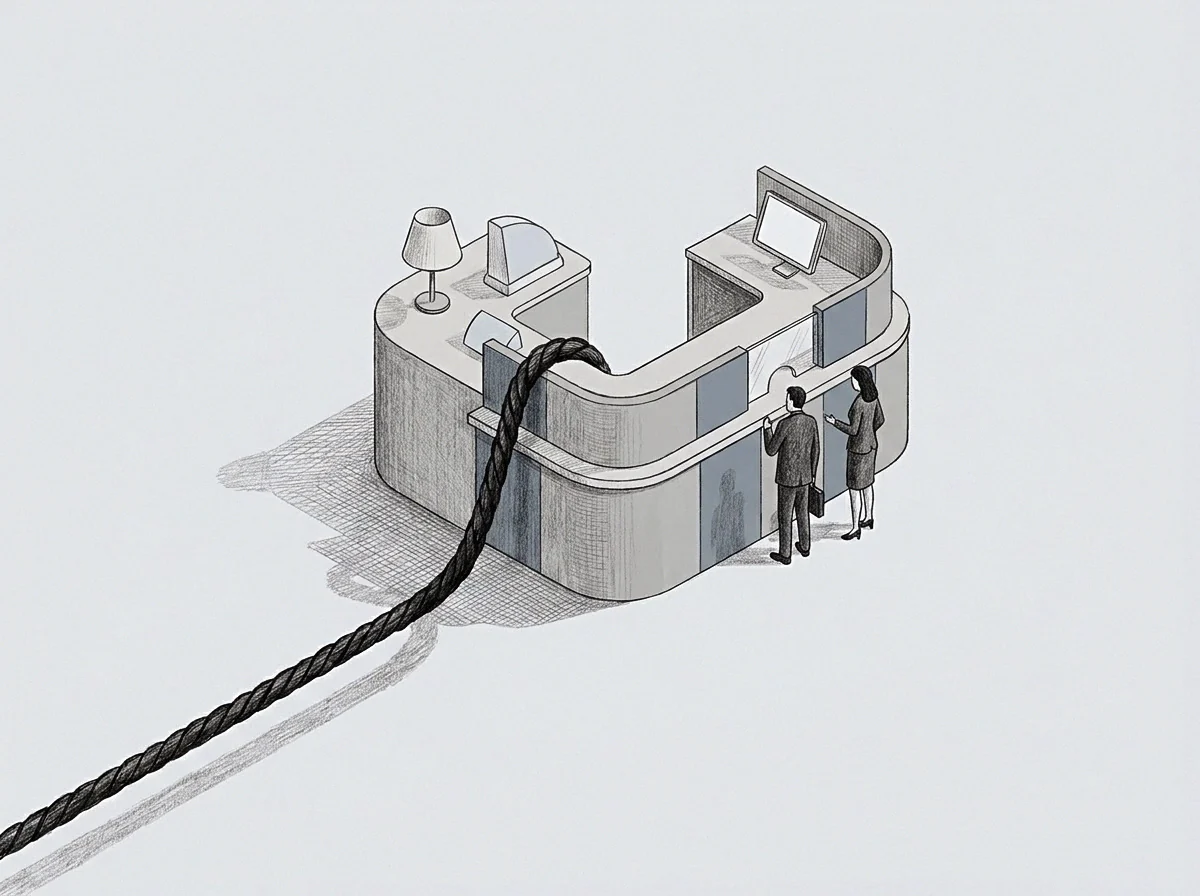
A persistent operational void opens whenever a senior practitioner departs a volatile desk, leaving behind successors who possess the vocabulary of the craft without its physical calibration. The predecessor knew the precise moment to pull an order because a broker’s breathing changed over an open line. The successor, armed with a written manual detailing order types and rebate calculations, watches the same screen without recognizing the impending squeeze.
Capital vanishes during the pause.
Can Sensory Latency Survive Explicit Operating Checklists?
The physical nervous system processes environmental stressors before the conscious intellect formulates an analytical deduction. In market sectors characterized by violent swings, the senior operator reacts to subtle cues, including a slight delay in fill confirmations, an unusual cluster of small trades, or a momentary divergence between related assets, long before a statistical indicator flags the move. Translating this response into a procedural requirement creates sensory latency.
The time required to verify the written checklist destroys the execution advantage.
Consider a sequence of institutional degradation when an enterprise attempts procedural substitution in volatile commodity trading:
- Documentation phase involves the senior operator cataloging hundreds of routine execution rules while omitting sensory exceptions that occur only during crises.
- Delegation handover transfers operational authority to an incoming manager who assumes the documentation represents the totality of the position requirements.
- Dislocation trigger hits the market, presenting atypical structural anomalies that render eighty percent of the written procedures counterproductive.
- Capital contraction occurs as the replacement follows explicit instructions, draining the firm treasury through systematic adherence to obsolete guidelines.
- Emergency repossession forces the exhausted founder back into the technician seat at midnight to liquidate broken exposures manually.
The price adjusts downward while the technician seat empties. Every repetition of this sequence deepens the physical fatigue of the person who built the desk. The founder discovers that writing three hundred pages of operating procedures did not create an autonomous business; it merely produced a script that mandates failure during severe conditions.
The question of whether genuine physical intuition can ever be systematically transferred through deliberate apprentice pairing without forcing the firm to absorb ruinous education losses remains entirely unresolved across the field.
Pact
Governing volatile operations demands a structural arrangement based on mutual risk allocation rather than procedural codification. If unstated intuitive judgment forms the true barrier against catastrophic operational collapse, the enterprise must formally recognize that the technician seat cannot be eliminated through writing. The seat must be staffed by an operator granted explicit discretionary latitude, bounded by absolute capital ceilings rather than procedural micro-rules.
The founder seat, the manager seat, and the technician seat must be separated cleanly in contracts, hours, and expectations. A founder who continues to wear the technician seat informally under the guise of an advisory handover pays for the ambiguity in sustained sleep deprivation and divided focus. The arrangement requires an explicit statement: either the incoming operator holds full authority to manage exposure using personal intuitive discretion within strict monetary boundaries, or the founder remains in the technician chair with stated operational hours and appropriate equity compensation.
A founder who leaves the trading chair while retaining the covert obligation to salvage broken books remains trapped in the technician seat indefinitely.
When an organization accepts that volatile markets demand uncodified pattern recognition, the structural design shifts from generating detailed procedure manuals to structuring capital stop-losses. The manager establishes the maximum loss limit that the desk may consume within a single week. Inside that perimeter, the operator exercises complete discretionary freedom, unburdened by prescriptive step-by-step documentation.
If market dislocations overwhelm the operator, the capital brake trips mechanically, closing the books without requiring supervisory debate.
This separation restores reality to the founder layer. The founder ceases the futile labor of codifying the uncodifiable, recognizing that intuition is an biological calibration honed through direct market friction. The firm stops pretending that a manual can replace an eye, choosing instead to pay the actual market price for demonstrated judgment or systematically scaling down operations to match the limited capabilities of written procedures.