
Measuring The Decay Rate Of Organizational Performance After Founder Cognitive Engine Exit
Organizational performance decays post-founder exit when uncodified cognitive routines and implicit sensemaking models exhaust their operational momentum.

Vault
Organizations often mistake explicit operational manuals for the complete operating system of an outgoing founder. An owner-managed firm rests on two layers: documented workflows and unwritten cognitive architecture. Documented workflows cover task sequences, system logins, and reporting lines.
Unwritten cognitive architecture dictates how ambiguity gets resolved, how patterns are read under incomplete information, and how capital is allocated when priorities collide. The founder operates mostly within this unwritten layer, drawing on patterns built over years of direct risk.
When a founder leaves the primary seat, documented workflows remain behind while the cognitive engine leaves entirely. The firm keeps the execution instructions but loses the criteria used to evaluate them. This engine resists standard manuals because its core operations rely on tacit knowledge held in implicit mental models, real-time assessments, and domain heuristics.
Its departure exposes the structural gap between executing a process and judging its strategic validity.

Tacit Processing Models
Unwritten heuristics guide how incoming information is categorized and prioritized during daily operations. A founder processes hundreds of signals a day, separating noise from systemic threats through rapid pattern matching against past failures and successes. Successors without access to these implicit templates treat every incoming signal with equal weight, creating operational bottlenecks.
Cognitive transfer fails when organizations try to turn fluid mental models into static checklists. A checklist records what action was taken under specific past conditions, but it cannot predict which variable a founder adjusted when conditions shifted. The underlying model includes the ability to alter the rules themselves when the operating environment moves beyond past experience.

Implicit Authority Structures
Informal channels dictate which decisions move forward without formal review. In founder-led structures, authority maps to personal relationships and proven alignment rather than job titles. Departments learn through experience which projects receive immediate capital and which face detailed scrutiny, creating a fast execution route parallel to the official org chart.
Removing the founder breaks this informal network. Staff accustomed to implicit approvals hesitate when forced onto formal governance frameworks alone. Decision latency expands across functional units as managers seek explicit authorization for choices that once moved forward on tacit alignment.
Uncodified decision rules decay into operational ambiguity whenever an unwritten threshold meets an unprecedented exception.
When an outgoing founder retains explicit veto authority, the legal status of all delegated operational choices changes.
Decay
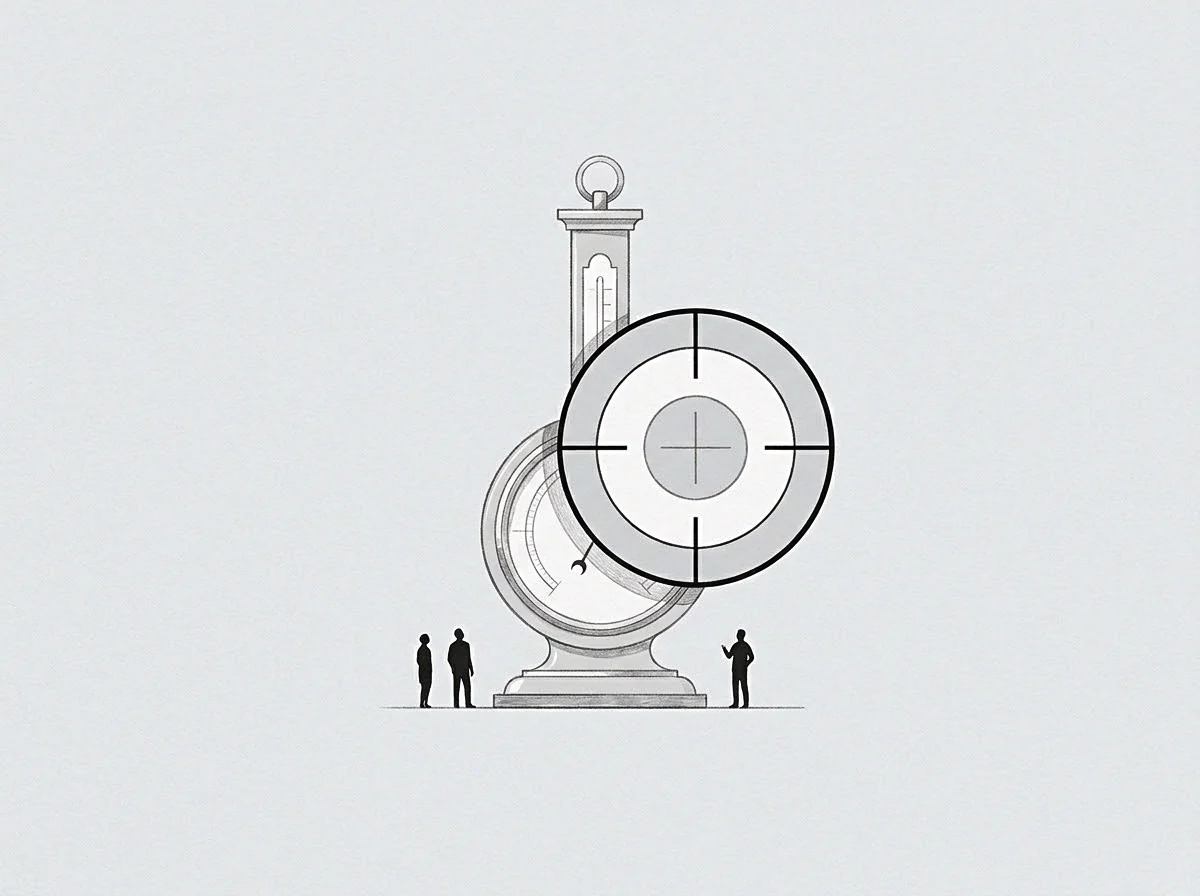
Performance degradation after a founder departure follows non-linear paths as inherited momentum runs out. An organization does not collapse immediately upon the exit of its primary cognitive engine; existing routines, signed contracts, and trained staff sustain output for a time. This buffer reflects institutional inertia rather than autonomous capability.
Once accumulated momentum wears off, performance indicators begin a downward trajectory that measures the decay rate of the organization.
Consider an organization of seventy employees where capital allocation and product direction relied on a single founder for four years. Assuming an initial baseline project execution velocity of twelve weeks from scope to release, execution speed appears stable at twelve weeks during the first six months after exit because ongoing projects run on previously approved specifications. By month nine, as unscripted market exceptions emerge, execution velocity slows to eighteen weeks.
By month fourteen, velocity reaches twenty-seven weeks while re-work rates increase by forty percent. The cognitive engine left at month zero, but measurable performance decay only surfaced after the initial execution queue cleared.

Half Life Calculations
Measuring temporal performance degradation relies on tracking the time required for decision error rates to double. Cognitive half-life represents the duration an organization operates before half of its implicit strategic assumptions become obsolete or misaligned with market reality. High-velocity sectors exhibit short half-lives, often between three and six months, while stable industrial markets stretch this decay horizon to two years.
Calculating this rate requires separating external market shocks from internal governance friction. When internal escalation times expand while market conditions remain flat, decay stems directly from cognitive withdrawal. Organizational half-life serves as a timeframe for establishing replacement governance structures before performance drops below baseline viability thresholds.
- Velocity Drift The gradual slowdown in execution caused by repeated pauses for consensus in seats that previously operated under single-point authority.
- Quality Erosion The steady decline in output standards when frontline teams lose the founder’s unwritten operational filter.
- Escalation Saturation The accumulation of unresolved operational exceptions at the executive level when middle management lacks tacit models to resolve novel conflicts.
- Strategic Misalignment The divergence of departmental goals when individual business units interpret company vision through competing frameworks.

Step Function Collapses
Sudden drops in operational capability occur when latent systemic dependencies lose their underlying governance engine. Unlike linear velocity drift, a step-function collapse strikes without warning indicators. A critical vendor contract expires, a key distribution channel shifts terms, or a core engineering lead resigns.
Under founder management, such crises trigger immediate re-configuration and capital reallocation.
Without that cognitive engine, the organization processes sudden shocks through standard committee structures. The committee lacks the authority to resolve cross-functional trade-offs quickly. The resulting delay converts a manageable operational shock into a permanent loss of capability, dropping baseline performance to a lower step.
Removing the primary decision engine without establishing structural proxies increases resolution latency across all cross-functional escalations.
Failing to measure decision latency during a leadership handover leads to structural capital depletion across every operating unit.

Metric
Quantitative indicators of cognitive withdrawal require isolating systemic output from individual operational competence. Standard financial reporting captures lagging results such as revenue, gross margin, and operating cash flow. These metrics can remain inflated long after the cognitive engine exits, sustained by legacy market positioning.
Effective measurement demands tracking lead metrics that isolate the speed, precision, and alignment of organizational choices.
Primary focus centers on decision latency, exception processing capacity, and alignment friction across departmental borders. Measuring the exact time elapsed between the emergence of an operational anomaly and its definitive structural resolution isolates the functional health of the post-founder governance model.
Does Operational Velocity Measure True Cognitive Transfer?
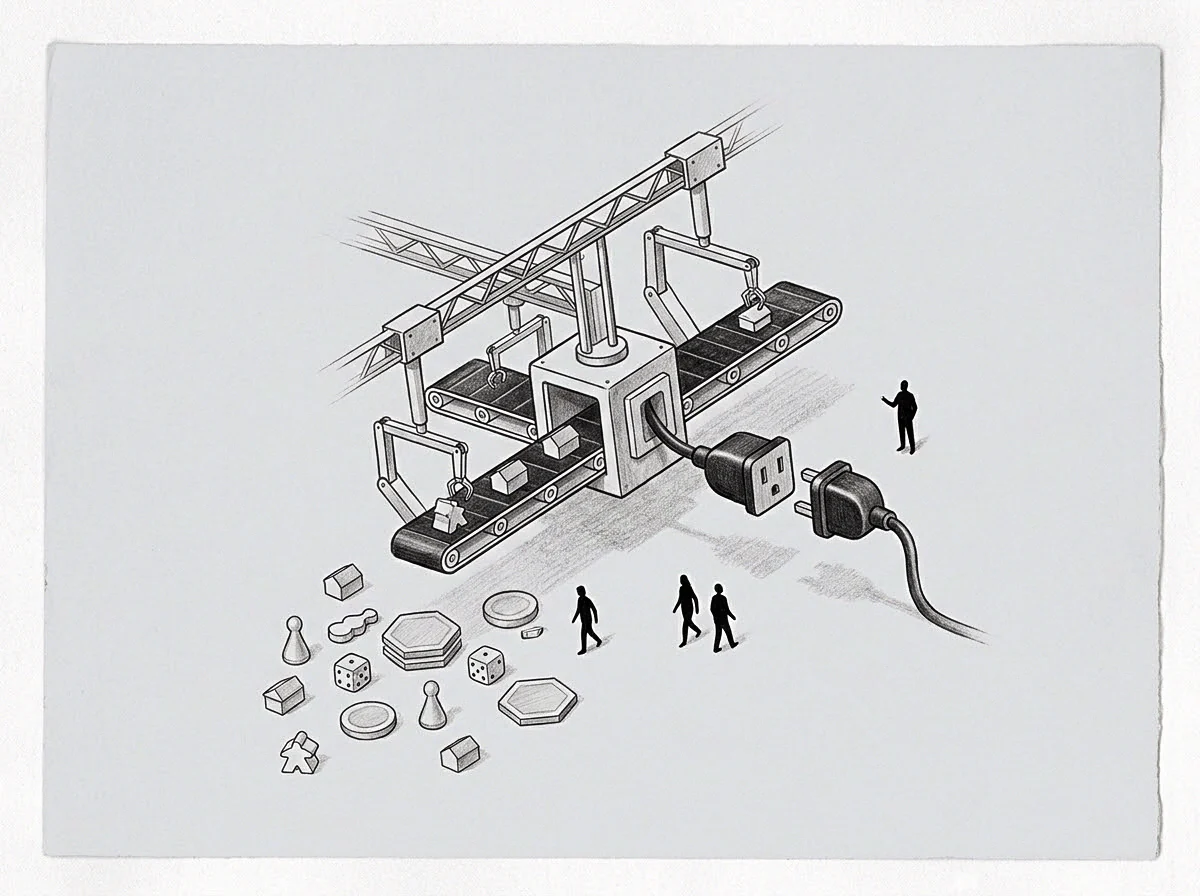
High output speed immediately following a leadership transition routinely masks the progressive depletion of strategic reserves. Execution units can maintain high task completion numbers simply by running legacy playbooks faster. This activity conceals the absence of new strategic synthesis when market variables shift.
True cognitive transfer is measured not by task completion speed, but by an organization’s accuracy when updating playbooks in response to novel competitive threats.
Tracking activity volume produces a false signal of organizational health. When task throughput remains constant while strategic adjustment speed drops to zero, cognitive decay is occurring behind high operational noise. Organizations must evaluate the quality of strategic adaptation rather than the sheer volume of daily ticket resolutions.
| Domain | Lead Indicator | Lag Indicator | Decay Trigger | Stabilization Time |
|---|---|---|---|---|
| Product Direction | Feature rework rate post-release | Customer churn percentage | Unscripted market shift | Eighteen months |
| Escalation Resolution | Days open for cross-unit tickets | Key talent turnover rate | Loss of founder veto | Twelve months |
| Capital Allocation | Time to reallocate budget lines | Return on invested capital | Macroeconomic volatility | Twenty-four months |

Quantifying Decision Latency
Tracking the duration between issue emergence and resolution reveals the state of autonomous governance. Every unresolved operational exception consumes executive attention and delays downstream execution. In a founder-led environment, decision latency approaches zero for high-priority exceptions due to localized cognitive authority.
Following exit, latency expands as issues move through multi-layered review cycles.
To quantify this metric, organizations log exception escalations across three severity tiers over a rolling ninety-day window. A steadily rising mean time to resolution indicates that successor management lacks the mental models or structural authority required to close decisions. When resolution times triple baseline figures, performance decay reaches critical systemic levels.
An organization that measures output volume while ignoring decision latency confuses momentum with operational health.
Tracking the ratio of routine tasks to unexpected exception resolutions provides an immediate baseline for organizational self-sufficiency.

Scaffold
Interim structural supports protect organizational stability while new governance systems gain traction. Scaffolding consists of temporary codification mechanisms, structured decision matrices, and explicit delegation frameworks installed prior to founder departure. These mechanisms buffer the organization against cognitive collapse by providing decision trees for scenarios that previously relied on founder instinct.
Installing structural scaffolding requires accepting lower initial operating efficiency. Writing down decision logic, defining escalation thresholds, and building explicit cross-functional review boards takes hours away from execution. This investment converts implicit cognitive patterns into explicit organizational software that survives founder exit.

Systemic Residual Scaffolding
Temporary decision matrices absorb exception traffic during the initial phase of a leadership transition. These frameworks categorize decisions by capital risk and strategic reversibility. Reversible low-cost decisions are pushed downward immediately, while irreversible high-cost decisions move to a newly formed executive committee.
This explicit boundary replaces implicit founder instinct and prevents operational paralysis.
Residual scaffolding must not become permanent institutional bureaucracy. The goal of temporary structures is to keep the organization stable while successor managers develop their own tacit processing models. If scaffolding remains static indefinitely, the organization substitutes slow rule-following for lost agility, capping its responsiveness.

Sequential Removal Protocols
Phased detachment of support mechanisms prevents structural shocks to frontline execution units. Scaffolding removal proceeds in mapped stages, testing independent cognitive capacity at each step. Removing supports too quickly exposes fragile decision pathways to stress, while removing them too slowly cements bureaucratic inertia.
- Document primary exception paths and establish baseline metric tracking across all operating departments.
- Delegate low-risk operational approvals to successor roles while maintaining founder shadow review on high-risk capital choices.
- Transfer full operational decision authority while shifting the founder seat exclusively to strategic audit and governance roles.
- Remove founder shadow review entirely, forcing the organization to process novel market exceptions through newly codified frameworks.
- Audit decision latency and error rates post-exit, adjusting explicit governance rules based on measured operational friction.
The final handover document sits unread on a server while frontline staff recreate informal escalation paths through direct messaging.
The successor managed daily operations effectively until an unscripted supplier dispute required authority that was never transferred.

Anchor
Establishing long-term equilibrium demands accepting permanent shifts in institutional capability. Post-founder organizations rarely match the exact speed and intuitive risk-taking profile of their original builder. The goal of transition management is not the identical duplication of founder cognition, but the establishment of a stable, scalable, and repeatable governance baseline.
Institutional stability requires replacing single-point reliance with distributed organizational competence. The organization loses the high-end performance peaks of an exceptional cognitive engine, but gains structural resilience against single-point leadership failure. This trade-off stabilizes long-term performance at a predictable level, trading intuitive brilliance for operational consistency.

Recalibrating Institutional Capacity
Performance targets settle at lower baseline levels when uncodified cognitive speed yields to formalized process validation. Executive boards must recalibrate capacity expectations to reflect the reality of committee-based governance. Expecting successor leadership to execute strategic pivots with the identical speed of an equity-holding founder creates structural strain that accelerates key talent burnout.
Recalibration involves adjusting delivery timelines, expanding budget buffers for capital allocation decisions, and building explicit consensus intervals into strategic planning cycles. The seat sits empty until filled by a system rather than a person. The modern organization operates as a collection of interlocking processes designed to run reliably without requiring continuous intuitive intervention.

The Enduring Transfer Residue
Certain intuitive synthesis abilities remain permanently attached to the departing founder regardless of documentation thoroughness. This un-transferable residue encompasses founder vision, original product taste, and deep relational trust networks built over decades. Accepting this permanent residue saves organizations from wasting capital on impossible codification projects.
Focus shifts instead to optimizing the transferable operational core. The organization learns to operate within its new cognitive parameters, building competitive advantage through structured execution, explicit governance, and deliberate talent development. Organizations that accept the lower structural speed of codified governance maintain operational integrity, while those chasing uncodified founder performance exhaust their remaining institutional capacity.