
Rebuilding Governance Scaffolds During Rapid Revenue Compression Cycles
Centralizing operational authority through explicit cash gating and contracted supervisory spans stabilizes corporate solvency during sudden revenue decline.
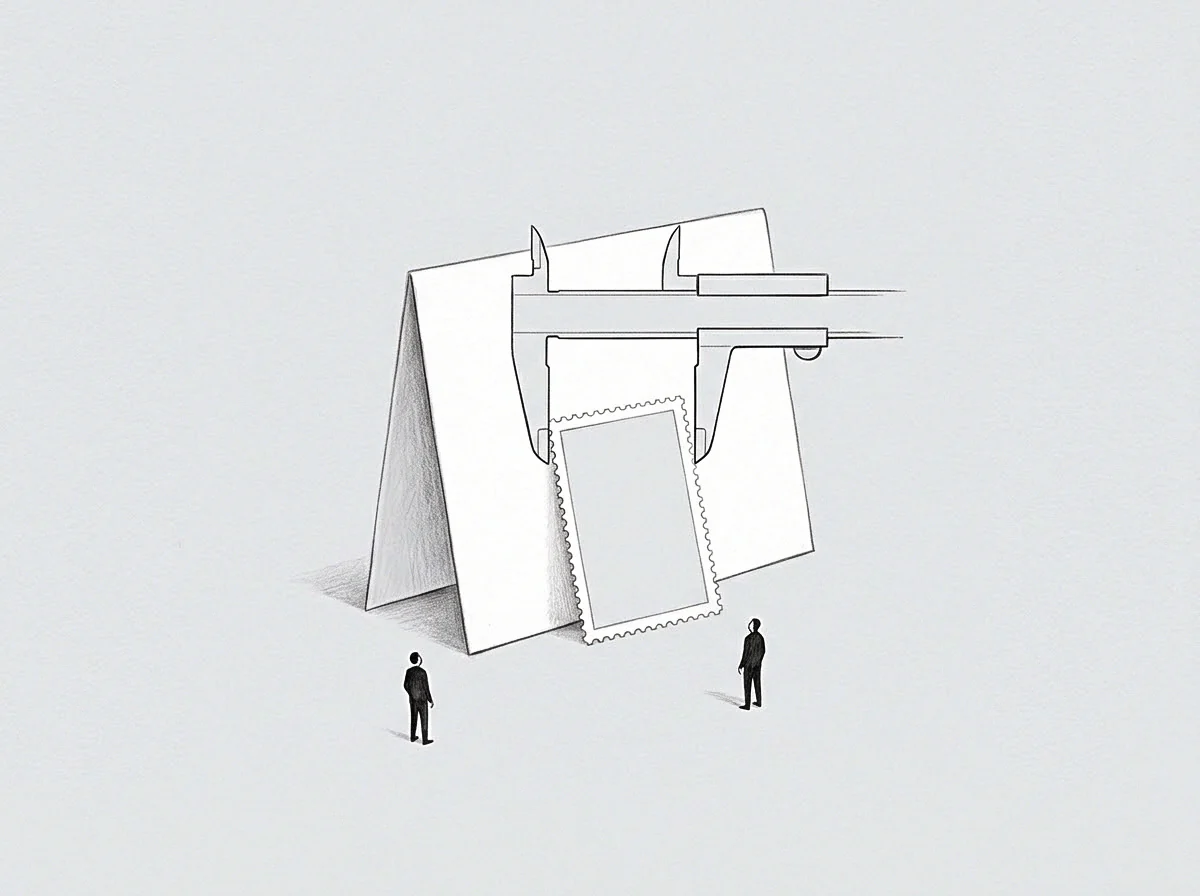
Floor
An operator sits before three active banking windows at two in the morning while cancellation notices outpace weekly collections. Contract cancellations accumulate in forty-eight hours, turning a positive cash forecast into an acute liquidity deficit. The advisory committee organized during rapid expansion remains scheduled for its regular quarterly assembly six weeks away.
Expense policies drafted when capital arrived freely permit line managers to sign vendor commitments without executive review. The structural buffer once provided by surplus receivables has vanished, leaving the daily operations exposed directly to contractual commitments made under entirely different commercial assumptions. Cash reserves dictate survival.

Collapse of Expansion Architecture
Rapid top-line deterioration strips away the surplus capital that previously covered administrative inefficiencies. Expansion governance relies on distributed decision authority, loose departmental limits, and prolonged consensus cycles. These mechanisms depend upon consistent revenue intake to absorb the cost of delayed operational corrections.
When receipts decline by thirty to fifty percent across two quarters, those same delegation structures preserve expense burn while market conditions change underneath them. Authority distributed across six division leaders produces six distinct interpretations of austerity, none of which align with total company cash obligations. Burn rates outrun delayed receivables.
Operational committees formed to evaluate software implementations or workplace policies continue to consume executive attention. Their agendas reflect a company operating under steady growth rather than one facing immediate balance sheet contraction. The founder discovers that formal charters insulate middle managers from liquidity realities, creating organizational inertia at the exact moment operational solvency requires total realignment of spending.
A governance structure designed to allocate capital surplus paralyzes an enterprise confronting acute cash contraction.

Immediate Role Recollapse
The founder who stepped away from daily vendor negotiations faces an immediate structural dilemma. Re-entering the transactional layer destabilizes the operational managers hired to run those functions, yet leaving those managers autonomous results in continued cash bleed. Role strain intensifies as the founder operates simultaneously as long-term equity steward and emergency purchasing clerk.
Department heads await formal committee approvals while bank account balances reach contractual loan covenants. Authority returns to the center.
Previous structural handovers reveal their limits during this stage. The operating manuals and delegated spending matrices transferred to functional executives assumed stable enterprise parameters. The intuition required to triage vendor obligations, delay payables without triggering statutory defaults, and terminate unprofitable accounts stayed with the founding operator.
Failure to reset authorization thresholds leaves the balance sheet drained by legacy contractual obligations before leadership can initiate corrective reallocations.

Valve
Controlling cash outflows demands an immediate reduction in organizational discretionary permissions. Executive leadership introduces strict fiscal checkpoints that supersede existing departmental charters. Every commercial commitment above a nominal baseline moves to a centralized review desk managed by the principal operator and finance controller.
This emergency intervention bypasses formal approval ladders that were established to distribute managerial autonomy. Speed supersedes collective deliberation.

Cash Gating and Authorization Limits
Instituting emergency financial controls alters the relational balance between corporate leadership and operational teams. Managers who held sovereign discretion over procurement contracts find their authority stripped to zero without formal performance reprimands. The intervention targets enterprise solvency rather than individual competence, yet it inevitably produces administrative resistance.
Departmental leads continue submitting purchase requests through automated systems that lack emergency screening mechanisms, creating bureaucratic logjams at executive desks.
- Unilateral spending freezes halt all non-essential vendor renewals, exposing the business to immediate contractual friction with suppliers whose terms lack flexible exit provisions.
- Secondary authorization protocols transfer payment releases from department managers to a dual-signature desk operated exclusively by the founder and head of finance.
- Emergency vendor renegotiations convert fixed monthly service agreements into variable consumption arrangements, matching platform costs directly to shrunken customer volumes.
- Redundant seat cancellations eliminate idle software licenses and administrative retainers that accumulated during rapid headcount growth.

Speed Penalties in Approval Chains
Centralized authorization stops financial hemorrhaging while imposing severe speed penalties across daily operational tasks. Project teams cannot procure server capacity, operational supplies, or specialized contractor hours without multiple executive signatures. Work progress slows across every revenue-producing department, frustrating staff members who feel micromanaged by a leadership team suddenly preoccupied with minor line items.
Redundant approvals stall decisive moves.
The administrative burden shifts upward to the founder and operational partners. These leaders spend entire working days reviewing basic operating invoices, leaving little cognitive capacity for enterprise repositioning or commercial client retention. The enterprise trades functional velocity for absolute cash visibility, a transaction that becomes lethal if maintained past the immediate compression emergency.
Expenditure approval flows to the person carrying direct personal liability for corporate obligations.

Span
Compressing organizational depth becomes an operational reality when revenue contraction forces workforce reductions. Mid-level management tiers created during headier quarters disappear, flattening reporting lines overnight. The executive team absorbs direct oversight of ten to fifteen functional contributors, expanding their managerial perimeter far beyond established administrative guidelines.
Cash flow determines organizational structure.

Contraction of the Operational Perimeter
A classic inquiry in administrative science, documented across mid-market manufacturing cohorts during fiscal shocks, demonstrates that widening an executive’s supervisory perimeter beyond seven direct reports during operational distress increases managerial error rates by forty percent. That finding rests on stable industrial communication workflows; zero-latency digital messaging platforms compress this error threshold even further by bombarding leaders with continuous tactical interruptions. The founder attempts to balance high-level restructuring conversations with minute operational queries from newly orphaned individual contributors.
Cognitive overload degrades decision quality across both domains.
When middle management tiers are excised to reduce payroll, executive spans of control expand to points of structural failure.
Staff members unaccustomed to direct executive supervision struggle to interpret ambiguous directives. The scaffolding of weekly standups, formal scorecards, and intermediate managers that guided their daily output has vanished. Without explicit restructuring of communication protocols, individual contributors default to tactical immobility, waiting for direct instructions before completing routine tasks.
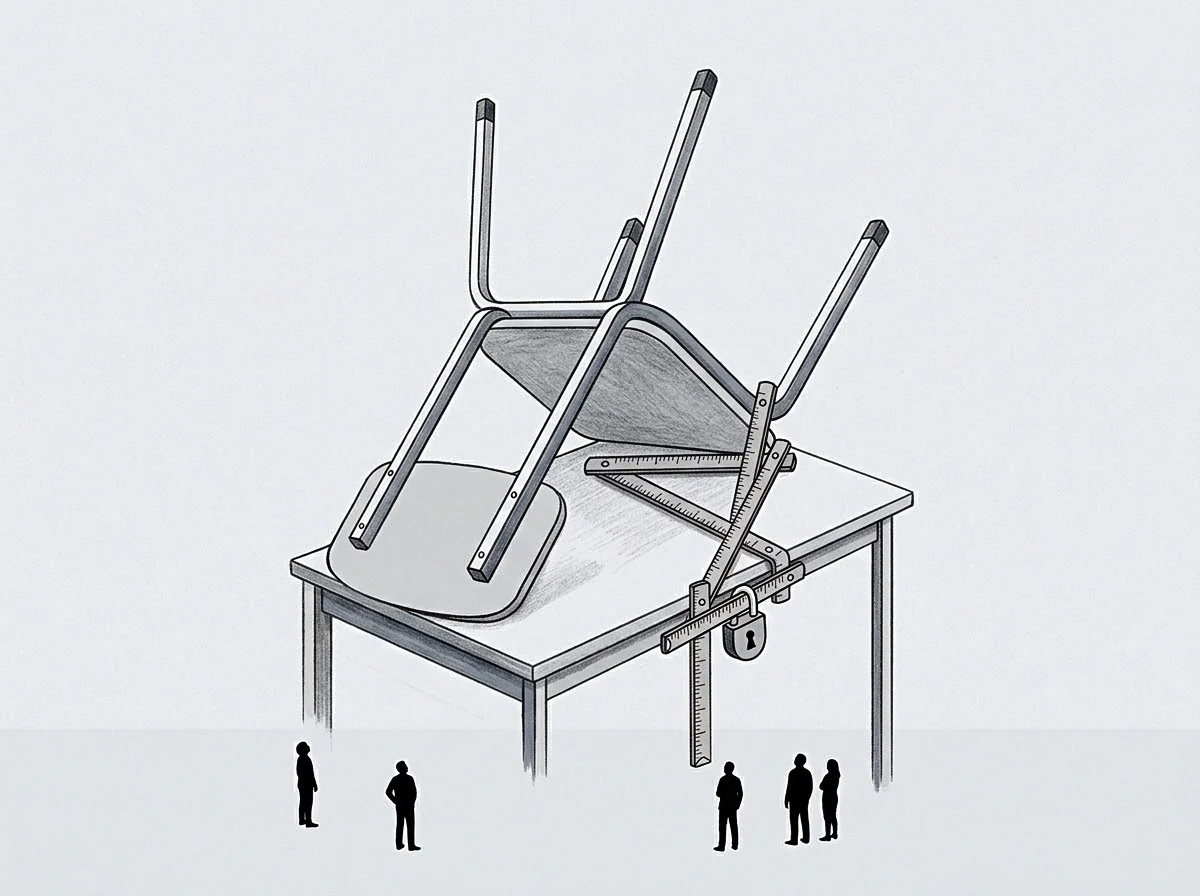
Scaffolding Across Compressed Ranks
Re-establishing operational rhythm requires temporary, low-friction governance scaffolding tailored to a depleted workforce. Complex performance reviews and multi-layered strategic goals yield to straightforward daily operating priorities. Executive leadership installs brief, structured daily checkpoints to align output with immediate revenue-preserving activities.
Formal charters break under fiscal panic.
- Freezing discretionary spending channels stops unmonitored cash departures across peripheral operational projects.
- Revoking department hiring privileges prevents line managers from replacing departing staff without board-level signoff.
- Collapsing tactical committees eliminates multi-member working groups that produce administrative delay without direct income contribution.
- Reassigning revenue accounts places high-value commercial relationships under direct founder stewardship to stem client churn.
The operational partner documented the customer onboarding sequence in extensive manuals during the growth era. The intuition to identify an account teetering toward cancellation stayed with the partner. Department heads argue that stripping divisional spending autonomy prevents them from hitting modified retention targets.

Mandate
Corporate board relationships undergo fundamental reconfiguration as capital compression threatens underlying enterprise solvency. Advisory groups built to counsel on geographical expansion and strategic acquisitions become obsolete overnight. Fiduciary boards reassert strict statutory control, transitioning from cordial sounding boards into demanding operational interrogators.
The board demands weekly cash reports.

Reconstituting Board and Founder Authority
Equity investors and outside directors possess legal levers that activate when performance covenants or debt thresholds fail. Operating discretion granted to founders during high-growth periods faces immediate contraction. Outside directors demand thirteen-week rolling cash flow forecasts, daily liquidity reconciliations, and detailed contingency liquidation plans.
The founder who operated with total tactical freedom finds their operational territory strictly circumscribed by formal governance mandates.
In industrial machining, operators downshift spindle speeds the instant coolant pressure drops, trading output volume for tool survival. Corporate governance under revenue distress demands an identical tactical contraction. Structural boards must intervene directly to preserve asset values before technical insolvency forces liquidation.
Tensions flare when directors insist on aggressive cost reductions that the founder fears will destroy the firm’s long-term operating capability.
| Governance Dimension | Expansion Architecture | Compression Architecture | Structural Stress Point |
|---|---|---|---|
| Authorization Cadence | Quarterly or monthly strategic review | Weekly rolling cash reconciliation | Executive calendar saturation |
| Delegation Depth | Autonomous spending down to line managers | Centralized signoff at founder desk | Operational bottlenecks and delays |
| Reporting Latency | Thirty-day lag on financial reporting | Real-time daily liquidity tracking | Administrative load on finance teams |
| Capital Expenditure Veto | Reserved for major corporate transactions | Applied to basic operational procurement | Suppressed front-line initiative |
| Performance Scrutiny | Top-line volume and market penetration | Gross margin contribution and cash burn | Staff morale erosion from cuts |
Studies evaluating board governance during economic stress demonstrate that firms replacing growth-oriented advisory councils with debt-focused oversight bodies preserve cash reserves thirty percent longer during prolonged industry recessions. This evidence derives primarily from private corporate debt reorganizations within asset-heavy industries. It assumes formal creditor agreements are already active, an assumption that weakens in software enterprises where intangible assets dominate the balance sheet and creditor enforcement rights remain ambiguous.
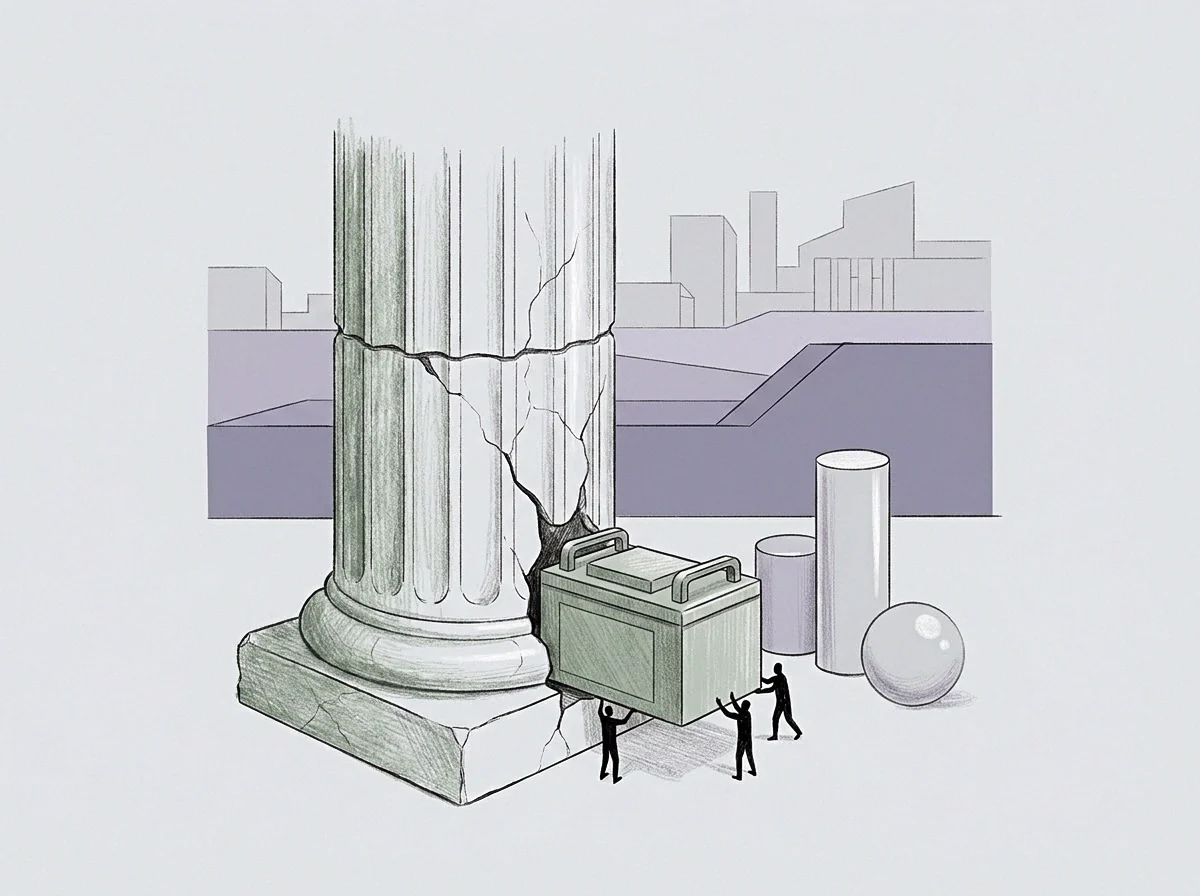
Contractual Adjustments During Contraction
Existing investor agreements, executive compensation treaties, and equity vesting schedules demand rigorous examination when capital evaporates. Stock options issued at high valuations lose their retention power, leaving key contributors unmotivated by equity incentives that sit underwater. The governance board must decide whether to reprice equity instruments or replace them with cash-based retention agreements tied to baseline EBITDA survival metrics.
Emergency governance scaffolds survive solely on explicit contractual authority rather than informal executive consensus.
The optimal duration of centralized executive authority before structural agency costs erode organizational trust cannot be determined with empirical certainty across small enterprises. Practitioners faced with this ambiguity must document emergency powers through explicit board resolutions containing clear termination milestones tied to cash reserves. Operating agreements rarely anticipate sudden contraction.
A contractual insolvency clause triggers immediate transference of fiduciary loyalty from equity preservation to senior debt defense.

Residue
Surviving a revenue compression cycle leaves an altered enterprise structure that cannot simply revert to growth habits. The temporary scaffolds constructed to control cash, consolidate authority, and contract operational perimeters leave permanent institutional marks. The bank account remains unforgiving.
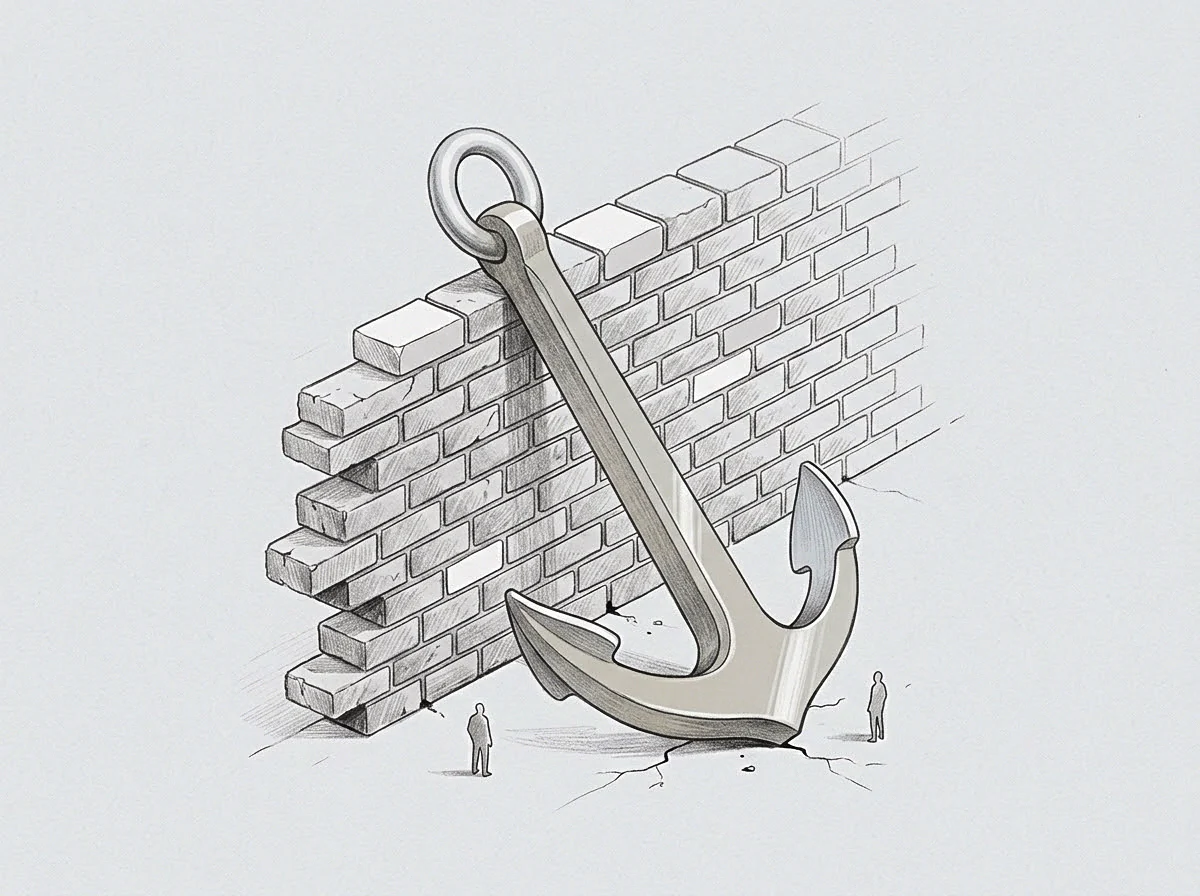
Tacit Authority After Crisis
Executive leaders who centralized purchasing approvals discover that returning autonomy to middle managers proves extraordinarily difficult. Managers who had their decision rights stripped during the panic become hesitant to make independent commercial calls, developing a defensive habit of escalating routine questions to executive desks. The organization develops learned helplessness, waiting for central direction on matters that were handled independently before the contraction occurred.
The formal delegation matrices can be re-authorized on paper in an afternoon. The psychological safety required to exercise operational discretion without fear of fiscal reprimand takes months to restore. The founder kept the client relationships.
The operating partner kept the instinct.
Dismantling Emergency Controls
Emergency governance systems outliving their immediate utility stifle subsequent recovery efforts. Daily cash approval meetings, weekly board interrogations, and multi-signature authorization desks introduce structural friction that prevents the firm from seizing nascent market opportunities. Dismantling these scaffolds requires the same deliberate architectural design that accompanied their construction.
Leadership must phase out centralized controls systematically as rolling cash balances stabilize above predefined safety thresholds.
Whether an operating team conditioned on crisis centralization can redevelop distributed execution capacity remains unresolved across mid-market enterprise transitions.