
Backlog Volume Growth Acceleration Forces Executive Role Friction
Accelerating delivery backlogs pull executives back into technician triage, draining strategic governance and generating structural friction across partners.

Stack
Intake records register three hundred unassigned customer tickets by dawn on a Tuesday, while four enterprise contracts wait for technical validation before signing. The person carrying the chief executive title opens the engineering queue at six in the morning, resolves nine configuration errors, and delays the quarterly capital allocation review until dusk. Delivery velocity forces role compression.
The backlog ceased being a passive register of upcoming tasks six weeks ago; incoming customer commitments now arrive faster than the production line clears them. That differential changes how time distributes across the executive suite. Strategic governance requires uninterrupted attention, yet urgent production triage demands immediate technical competence.
When order volumes accelerate past systemic capacity, the executive steps into production bottlenecks directly, trading governance hours for throughput preservation.
The transition happens silently across several billing cycles. An executive who originally wrote the software or assembled the core service delivery protocols retains the muscle memory of execution. Facing delayed deliveries, unhappy enterprise clients, and mounting customer support queues, that individual defaults to manual intervention.
The technician seat reasserts itself, crowding out managerial supervision and long-term planning. Operational backlogs exert a gravitational pull on technical executives because code commits and system repairs offer unambiguous completion signals, whereas organisational restructuring produces delayed, ambiguous feedback. Every hour spent debugging a legacy interface is an hour removed from executive capital planning.
The technician seat expands rapidly.
Accelerating queue accumulation converts executive time from capital design into direct production triage whenever intake volume exceeds operational processing limits.

The Intake Distortion
Volume spikes expose the absence of intermediate management layers. In organisations operating below fifty employees, executive titles frequently mask direct operational dependencies. The individual named as president or chief technology officer often remains the single point of failure for high-complexity incident resolution.
When sales acceleration doubles ticket generation, the lack of operational documentation leaves junior staff incapable of closing exceptions. Unchecked queues devour strategic hours. Executive calendars fragment into fifteen-minute triage intervals, destroying the cognitive continuity needed to assess financing terms, market shifts, or senior hiring plans.
This dynamic alters the relationship between founding partners. One executive remains trapped in production queues to prevent client departures, while another partner attempts to project financial performance based on strategic assumptions that production realities invalidate. The friction emerges along functional fault lines.
The partner focused on outward commercial expansion sees unfulfilled contracts as an internal failure of will, while the executive managing technical throughput views commercial expansion as an irresponsible accelerant of operational collapse. Unpriced delivery destroys operating margins. Neither executive evaluates the problem through an organisational lens; both frame the breakdown as a personal deficiency in their counterpart.
The operational calendar collapses immediately. Weekly planning surrenders to triage. The executive layer abandons formal governance cadences because responding to midday production alerts leaves no remaining energy for board updates, commercial forecasting, or cross-departmental coordination.

Strain
Workplace researchers who evaluate structural role theory define role strain through the competing obligations placed upon a single actor within an institution. When backlog volume expands exponentially, the executive experiences intense intrarole conflict: the investor base demands strategic positioning and market capture, while internal line operators require architectural decisions and direct problem remediation. The executive seat cannot simultaneously supply deep tactical labor and detached executive oversight.
Role research establishes that holding contradictory expectations over sixty consecutive days degrades cognitive decision quality across financial allocations. Executive attention evaporates under volume.

When Does Intake Velocity Break Executive Governance?
The break occurs when lead time for standard delivery items expands beyond the operational cycle, converting standard work into emergency escalations. At that threshold, junior personnel stop consulting manuals and start routing exceptions directly to the executive desk. The executive becomes the sole routing engine for unstandardised work.
Delivery velocity forces role compression. The structural consequence is an immediate reduction in managerial maintenance: one-on-one reviews vanish, process documentation ceases, and training programs stop. The managerial layer absorbs pressure.
Unwritten operational exceptions convert senior leaders into production dispatchers whenever delivery backlogs exceed documentation coverage.
Consider two executives holding equal equity in an industrial software firm handling four million dollars in annual contract volume. Assume incoming customer feature requests triple across two quarters following a distribution partnership. The technical partner, possessing tacit architecture knowledge, spends twelve hours daily manually patching code bases, answering Tier 3 support inquiries, and verifying client deployments.
The commercial partner sells additional enterprise implementations based on standard lead times. The technical partner experiences the commercial promises as reckless endangerment; the commercial partner views technical bottlenecks as deliberate obstructionism. Unwritten pacts generate compounding friction.
Role strain becomes interpersonal combat because neither party articulates the structural ceiling of the delivery architecture.
The dispute centers on unpriced operational debt. Every custom delivery obligation accepted to accelerate revenue deepens the backlog, demanding technical intervention that only the executive can supply. Tacit obligations resist simple delegation.
The firm enters a state where commercial growth reduces operational stability, leaving both partners convinced that the other possesses inadequate stamina for enterprise expansion.
What remains undetermined is the precise volume threshold where executive triage ceases to protect enterprise valuation and begins actively eroding enterprise capital.

Audit
Resolving operational friction requires an analytical accounting of executive hours mapped directly to functional seats. A single person occupying an executive office invariably divides working time among three distinct operational disciplines: the technician executing direct client deliverables, the manager organising workflows and personnel, and the founder designing capital structure and strategic boundaries. When order books surge, the technician seat consumes the other two.
Switching hours accumulate without warning. Measuring that migration uncovers why executive teams experience acute friction during revenue expansions.
| Allocation Profile | Dominant Functional Focus | Operational Drift Rate | Strategic Governance Retention | Inter-Executive Friction Source |
|---|---|---|---|---|
| Production Emergency | Direct ticket remediation and custom engineering triage | Seventy percent technician, twenty manager, ten founder | Severe governance deficit with deferred legal reviews | Operational leader resents commercial partner closing sales |
| Unstructured Expansion | Ad hoc operational reviews and immediate customer dispute handling | Forty percent technician, forty manager, twenty founder | Partial governance with erratic quarterly forecasting | Disputes over deferred hiring and unclear functional ownership |
| Governed Buffer | Standardised workflow control and policy enforcement | Ten percent technician, fifty manager, forty founder | High governance retention with maintained strategic cadences | Friction confined to resource allocation and quota negotiations |
| Decoupled Office | Capital allocation, senior appointments, strategic direction | Zero percent technician, twenty manager, eighty founder | Total governance integrity with insulated executive seats | Friction centered on macroeconomic risk and equity dilution |
The data in the comparison establishes that firms failing to govern intake backlogs drift toward the Production Emergency profile. Capacity drops below maintenance thresholds. In that state, strategic governance retention drops to negligible levels, producing hidden administrative compliance deficits, untracked cash burn, and unvetted contracts.
The operational leader becomes an expensive, exhausted line worker while retaining executive equity, generating severe resentment from non-technical partners who view the technician work as an abdication of executive duty.
When leadership teams fail to identify this seat migration early, the enterprise pays for the omission through delayed operational restructurings, executive departures, and forfeited enterprise valuation.
Partition
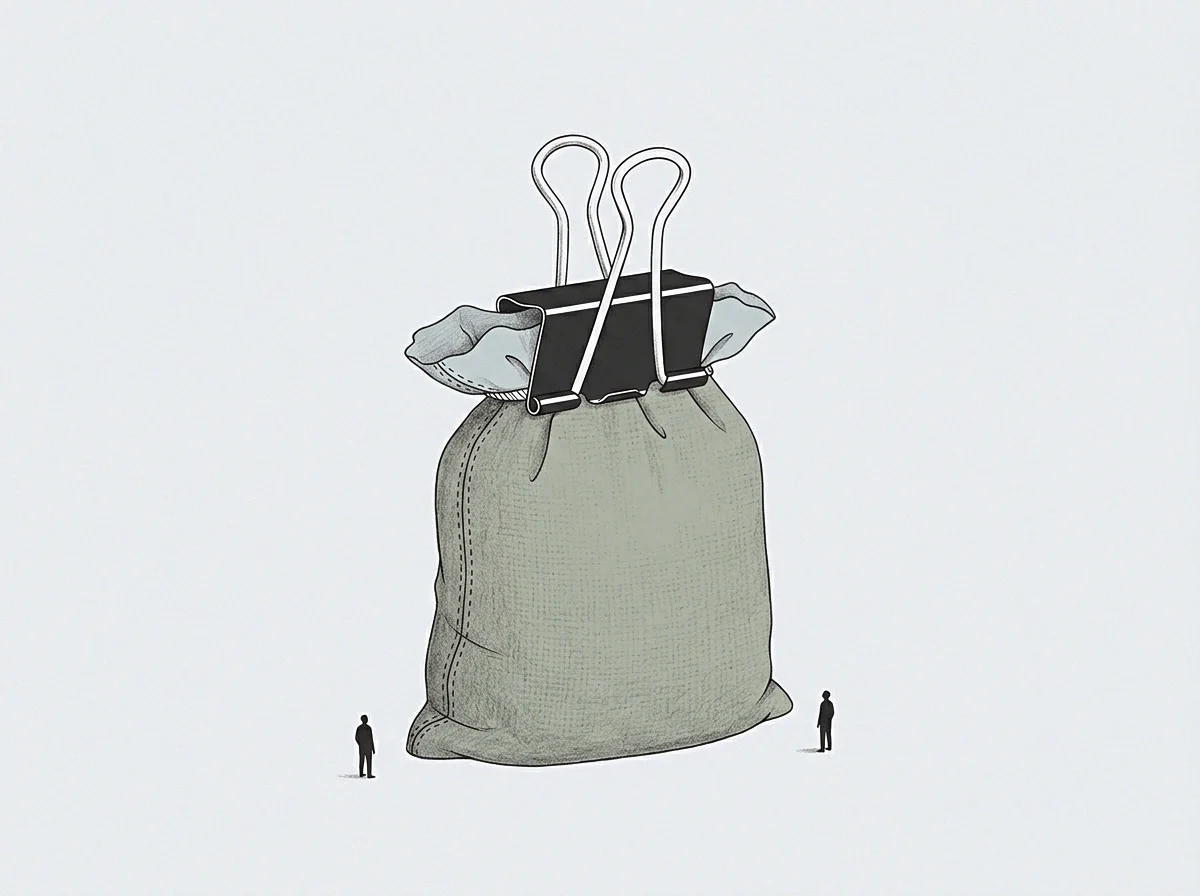
Separating the executive seat from production queues requires structural isolation mechanisms rather than personal discipline. Executive friction persists because leaders believe individual effort can outwork mathematical backlogs. Queueing theory demonstrates that an intake rate continuously exceeding completion capacity creates an infinite queue regardless of individual worker speed.
Intake speed overrides capital allocation. The solution involves establishing an administrative firewall between customer intake volume and executive calendars, transferring operational authority to intermediate actors under strict contractual boundaries.
Three mechanisms achieve this separation without destabilising existing delivery commitments:
- Intake throttles define contractual intake caps tied directly to available production capacity, halting incoming obligations before backlogs overrun engineering reserves.
- Triage delegation assigns full authority over customer exception handling to line managers, removing executive escalation paths for standard operational anomalies.
- Explicit seat accounting tracks executive weekly hours against technician, manager, and governance tasks, reviewing functional drift every fourteen days.
Implementing these mechanisms alters operational accountability. When an intake throttle halts sales onboarding, the commercial partner cannot demand technical heroics from an executive peer; the commercial conversation immediately shifts to capital expenditure for expanded production capacity. Unpriced delivery destroys operating margins.
The friction moves from personal character evaluations to objective unit economics, where revenue generation must explicitly fund operational throughput before deals execute.
Executives who successfully install these partitions reclaim governance hours, permitting proper attention toward institutional financing, leadership recruitment, and process automation. The transition demands accepting short-term revenue slowdowns to construct scalable operating systems. Without this partition, executive teams remain perpetually exposed to operational backlogs, experiencing recurring bouts of role confusion that ultimately paralyze strategic progress.
We cannot scale delivery because our technical leadership refuses to work the hours required to clear customer commitments.

Wall
Constructing an unbreachable operational barrier around the executive suite requires codified terms that bind all equity holders. Informal agreements regarding role boundaries disintegrate under commercial pressure. An executive who promises verbally to cease doing technical work will return to the engineering floor the moment a top-tier client threatens cancellation over a late delivery ticket.
The operational boundary must exist inside executive employment agreements and board resolutions, establishing clear definitions of what duties belong inside executive scope and which activities represent operational violations.
Executive scope definitions remain purely aspirational until board-level protocols formally prohibit senior officers from intervening in daily ticket queues.
A functional operating charter outlines the explicit boundaries of executive authority. The charter mandates that any customer issue requiring executive technical intervention triggers an immediate operational post-mortem within forty-eight hours, evaluating why line management systems failed to resolve the ticket. The protocol converts a private technical intervention into a visible organisational cost.
Queues dictate daily priorities. When intervention carries public accountability, executives hesitate before abandoning governance desks to fix isolated production problems.
The psychological contract between founding partners shifts fundamentally when structural barriers take effect. Commercial partners stop treating technical peers as infinite labor reserves for unvetted sales contracts. Technical executives surrender the comfort of immediate production feedback, confronting the ambiguity and long feedback loops inherent to strategic capital allocation.
The operational calendar stabilizes. Executive friction decreases not because operational backlogs disappear, but because the responsibility for clearing those backlogs rests entirely upon dedicated operational systems rather than executive compromise.
The stated condition of the operational charter mandates that whenever backlog intake velocity exceeds processing bandwidth by fifteen percent across two consecutive cycles, the executive board automatically restricts sales intake until delivery throughput reaches parity.