
Measuring Tacit System Architecture Decay When Engineering Leaders Exit
Engineering leader exits expose tacit system architecture decay through elevated pull request cycle times, unmapped service dependencies, and refactoring regressions.
Trace
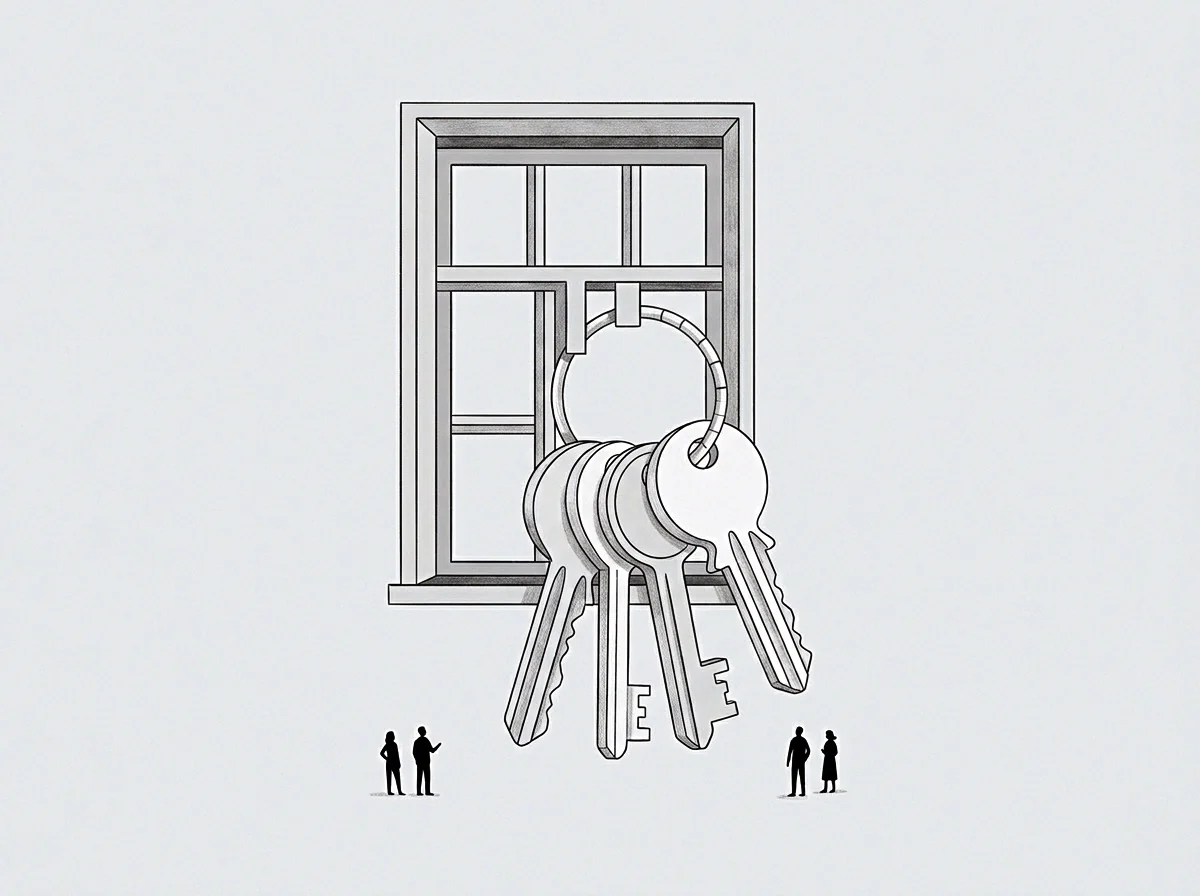
A secondary database replica drops synchronization on a Sunday morning, and the failover script halts midway through execution. The automated deployment pipeline reports a clean pass, yet traffic shifts into an unrouted cluster segment. The duty engineer inspects the configuration files and finds no errors.
What fails in that hour is an unwritten dependency between the data routing layer and an undocumented cache invalidation routine. That routine lived inside the mental model of an engineering director who resigned six weeks prior. The repository contains the code, but the operational order and the structural assumptions survived only in the daily interventions of the person who built the service.
System architecture decays along two distinct axes during a leadership transition. Explicit architecture consists of repository topologies, infrastructure manifests, and written design documents. Tacit architecture exists as the set of unrecorded constraints, historical concessions, and operational workarounds that guide real-time system maintenance.
When a senior technical leader exits, explicit assets remain intact while tacit structures begin an immediate, unmonitored degradation.
The Silent Evacuation of System Context
Tacit knowledge accumulates through months of operational friction. An engineering leader learns which microservice collapses under unexpected load spikes, which third-party API silently drops payloads, and which database tables cannot endure concurrent schema migrations. This implicit mapping dictates how teams route traffic, structure feature flags, and schedule background jobs.
Upon the leader’s departure, team members execute tasks using incomplete mental models. Code reviews focus on local syntax accuracy rather than systemic interaction risks. Subtle anti-patterns re-emerge in pull requests because the historical rationale for avoiding specific abstractions left with the seat’s former occupant.
The system configuration slowly drifts away from its intended resilience envelope.
A repository clean of syntax errors can still conceal an unmapped reliance on one person’s memory.
Mental Models Left Unrecorded in Repository Files
The distance between documented intent and operational reality grows wider with each sprint following an executive exit. Engineering leaders frequently act as informal routing nodes, manually correcting architectural misalignments before code enters production. Their exit removes this human verification step.
Without an explicit mechanism to record architectural decisions, successor engineers treat existing code patterns as normative truth. They replicate temporary workarounds designed for legacy infrastructure, mistaking short-term concessions for enduring design principles. The technical debt expands silently, obscured by clean continuous integration builds and passing unit tests.
The cost of this context loss surfaces months later during major incident responses or platform refactoring initiatives.
Gauge
Measuring tacit architectural decay requires tracking operational indicators that deviate before hard outage metrics manifest. Conventional engineering metrics such as deployment frequency and line coverage fail to catch the loss of system context. A team can maintain high velocity while inadvertently degrading the underlying system topology.
Decay manifests first in human coordination overhead. Engineers spend increasing hours determining component ownership, clarifying API boundaries, and debugging cross-service interactions. Pull request review cycles lengthen as reviewers struggle to evaluate the systemic blast radius of isolated code modifications.

Is Architectural Drift Measurable Before System Failure?
Architectural drift leaves clear quantitative footprints across development telemetry. Tracking the ratio of cross-team coordination meetings against closed pull requests reveals structural friction. An upward trend signals that developers lack the implicit context required to work independently within their subsystem boundaries.
Another reliable signal is the escalation of pull request comment density on architectural boundaries. When senior engineers exit, remaining staff engage in lengthy debates regarding basic integration patterns. The codebase becomes a contested space where competing, partial mental models collide.
| Metric Category | Signal Source | Decay Indication | Systemic Consequence |
|---|---|---|---|
| Review Velocity | Version Control Telemetry | Pull request lead time increases over 40 percent on shared core services. | Development stalls due to uncertainty over side effects across boundaries. |
| Incident Escalation | Monitoring Logs | Mean time to resolution triples for cross-boundary service failures. | Engineers isolate local bugs while missing root causes in shared infrastructure. |
| Schema Churn | Database Migration Audits | Reversion rates on database migrations double within two quarters. | Data models lose structural integrity from uncoordinated local patches. |
| Refactoring Defect Rate | Issue Tracker Metadata | Post-release regressions surge following minor system refactoring. | Teams avoid structural cleanup, allowing legacy architectural flaws to compound. |
Structural Metrics for Tacit Context Depletion
Mapping the historical distribution of code modifications highlights isolated components. When an engineering leader exits, specific repositories experience an abrupt drop in modification frequency alongside a spike in bug ticket severity. Engineers avoid touching complex modules previously maintained by that single authority.
This avoidance pattern creates structural rigidity. The system becomes a mosaic of untouched legacy modules surrounded by rapidly accumulating wrapper code. The structural debt grows exponentially as teams build workaround abstractions to avoid refactoring core infrastructure they no longer fully comprehend.
When structural churn accelerates without architectural records, code ownership reverts to single-engineer dependencies.
What remains unmeasured is the exact point at which cumulative workaround abstractions render a distributed system unmaintainable by its remaining staff.

Draft
Reversing architectural decay begins by mapping the precise sequence through which tacit knowledge vanishes after a leader steps down. The decay process follows a predictable trajectory across organizational and technical boundaries. Identifying these phases allows engineering organizations to intervene before system stability deteriorates completely.
The initial phase involves context isolation, where remaining engineers operate within localized domains. Over time, cross-domain architectural cohesion erodes. Systems built to run as unified platforms disintegrate into loosely coupled, poorly documented micro-environments.

Sequence of Post-Exit Structural Erosion
The transition from complete context to structural opacity occurs in four distinct stages across a six-month horizon following a technical leader’s departure.
- Context Retention Phase: Existing operational routines sustain performance for thirty days, masking the immediate loss of tacit oversight while teams execute pre-planned features.
- Subtle Workaround Emergence: Developers encounter unmapped edge cases and implement local workarounds, bypassing original design constraints to meet short-term deadlines.
- Component Isolation Strategy: Teams refactor around legacy modules they cannot safely modify, creating redundant services and escalating infrastructure operational expenses.
- Architectural Sclerosis: System modification risk reaches critical thresholds, halting major feature development as incident resolution consumes total engineering capacity.

Quantifying the Handover Void
Formal handover documents rarely capture tacit architecture. Standard exit documentation lists server addresses, repository links, and credential locations, yet omits the systemic rationale behind structural choices. The written record records what exists, neglecting why alternatives were rejected.
Bridging this gap requires structured architectural decision records compiled during active operations, rather than hastily assembled exit notes. When an organization relies on exit handovers to capture tacit knowledge, the information transfer arrives too late to preserve operational continuity. The incoming engineering leadership receives static manifests that fail to explain dynamic system behaviors under stress.
An unwritten architecture forces every subsequent maintainer to guess the boundary conditions.
The code base reflects every decision made in the past three years except the single reason those choices were necessary.
Cost
The financial and operational expenditure required to recover lost architectural context exceeds the cost of proactive documentation by orders of magnitude. To understand this disparity, evaluate a technical organization of forty engineers recovering from the exit of a founding principal architect who held the system topology in memory for five years.
Assume the departed architect spent twenty hours per week fielding informal context questions, reviewing complex pull requests, and manually tweaking production routing parameters. Upon their departure, this context load shifts to the remaining engineering staff without formal structure or allocated capacity.

Time Allocation and Operational Friction
In this scenario, forty engineers spend an additional three hours per week attempting to decipher unmapped system interactions. This friction consumes one hundred twenty engineering hours weekly across the organization. The lost productive capacity equals three full-time senior engineers dedicated entirely to navigating context gaps.
Emergency incident hours escalate concurrently. Cross-service outages that previously took thirty minutes to diagnose now require four hours of multi-team triage. Over a six-month period, the organization absorbs hundreds of lost engineering hours spent strictly on context discovery during high-stress operational failures.
Financial Reckoning of Re-Engineering Lost Knowledge
The monetary cost manifests in delayed feature delivery, elevated cloud infrastructure spending due to redundant workarounds, and external consultant engagements brought in to audit the unmapped platform. Direct engineering expenses compound alongside opportunity costs as competitors release features while the organization performs architectural archaeology.
- Direct labor allocation shifts from revenue-generating features to incident diagnosis and context discovery.
- Infrastructure costs inflate as engineers deploy redundant microservices to avoid modifying legacy code components.
- Turnover risk spikes among remaining senior staff overburdened by persistent, unmapped system incidents.
Stating the architectural boundary in explicit records caps the emergency recovery hours when leadership transitions occur.
The explicit incorporation of architectural decision records into every pull request modifies the cost trajectory of leadership transitions permanently.

Mark
Preventing tacit system architecture decay requires transforming implicit mental models into explicit organizational structures before an executive exit occurs. Engineering leadership must decouple system context from individual memory, embedding constraints directly into codebase configuration scripts and structural documentation records.

Formalizing Tacit Knowledge into System Boundaries
System topology must defend itself through automated contract testing and explicit architectural decision records. When an engineer proposes a structural change, the rationale must enter the version control history alongside the implementation code. This practice ensures that historical context survives organizational restructuring and personnel transitions.
Architectural oversight belongs to the system’s operational framework rather than an individual’s intuition. Enforcing boundary constraints through automated linting tools and topology enforcement checks prevents incoming developers from inadvertently violating fundamental design rules. The explicit system rejects invalid patterns automatically, reducing reliance on manual senior review.
Operational Re-Baseline After Executive Departure
Following an exit, the immediate priority of new technical leadership is conducting a systematic context audit. Teams must map unowned repositories, identify undocumented data pipelines, and declare explicit ownership boundaries for every operational component. Leaving unmapped services running in production guarantees future operational failure.
Assigning explicit seats for component ownership stabilizes the engineering organization. Every microservice, database schema, and deployment pipeline requires a named team responsible for maintaining its structural documentation. When a seat becomes vacant, the explicit documentation allows a successor to step into the role without triggering architectural decay.
The stability of a software architecture rests on the clarity of its recorded boundaries. Systems that rely on human memory for structural integrity decay the moment that memory walks out the door. Establishing explicit, version-controlled architectural contracts converts vulnerable tacit understanding into an enduring operational asset.