
How Backlog Pressure Accelerates Executive Role Strain In Software Leadership
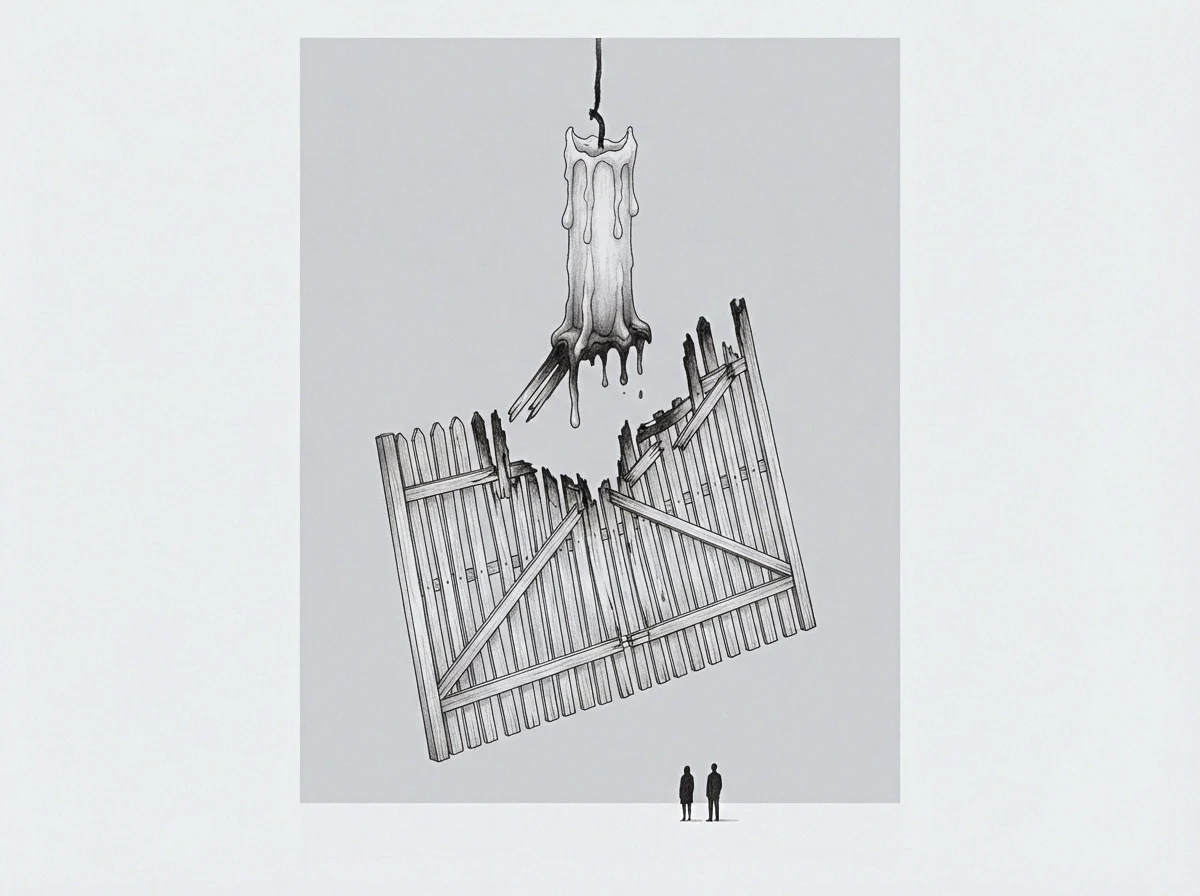
Backlog volume exerts downward gravity on software executives, compressing technician, manager, and corporate seats into a short-horizon triage loop.
Stack
Ninety unassigned tickets sit on the software board at midnight while presentation slides for the next financial quarter remain unwritten. An engineering backlog functions as an unyielding queue of debt, patch requests, feature revisions, and infrastructure tickets. When the queue outpaces team velocity, the volume pulls technical leaders directly into the work.
Executives who came up through software engineering tend to treat that pull as an operational mandate, falling back on code-level troubleshooting whenever overall delivery stalls.
Role strain develops from this structural ambiguity. An executive in a growing technology company often occupies three operational positions at the same time: the technician who writes code, reviews pull requests, and profiles database queries; the manager who allocates engineering hours, clears workflow blockers, and tracks delivery cadence; and the executive who manages capital allocation, designs the organization, and directs product strategy toward the market. Backlog pressure compresses these distinct roles into a single overloaded schedule.
Unchecked work continues to outpace team capacity.
When software defects accumulate, the executive relies on individual technical proficiency to sustain immediate output. That choice forces a direct trade in working hours: time spent refactoring services cannot be spent on governance, market evaluation, or equity strategy. The leadership role distorts because tactical work yields immediate visibility while strategic work operates on long feedback cycles.
Patching an active application error provides clear, instantaneous feedback; resolving an organizational bottleneck takes months to show results.
Operational Escalation in Unbounded Queues
Engineering backlogs bundle routine software defects and high-level feature requests into a single continuous queue. Without firm boundaries, this list expands under customer commitments, technical debt, and sales requests. The volume soon exceeds what mid-level engineering leads can triage without executive spending authority, routing escalated items straight to the executive calendar.
The leadership seat then becomes the default point of manual queue triage.
Friction between tactical firefighting and strategic direction becomes structural.
This escalation alters the executive’s working week. Scheduled blocks for long-range planning break apart into brief intervals spent on emergency code reviews and architecture meetings. Organizational role research indicates that high task variability coupled with short deadlines forces individuals into narrow execution windows.
Executive attention contracts from multi-year planning horizons to two-week sprint cycles as backlog volume pulls attention back down into technical remediation.
Unresolved queue items exert downward gravity on executive attention whenever operational roles remain unassigned.
The structural expense compounds across the organization.
The executive role erodes under this operational gravity. When engineering leadership commits thirty hours per week to ticket queues, strategic capacity drops to zero. The organization forfeits its long-term direction to preserve short-term delivery velocity.
The executive remains caught between daily technical output and broad corporate governance, prioritizing software shipping deadlines over long-term capital efficiency.

Drift
When feature requests outpace engineering velocity, executive schedules turn into real-time triage sessions. Role strain deepens through three specific conditions: role overload, role conflict, and role ambiguity. Role overload occurs when the time demanded across all three seats exceeds available weekly hours.
Role conflict emerges when technical tasks actively compete with executive responsibilities. Role ambiguity develops when the organization fails to define where executive oversight ends and middle-management authority begins.
Executive capacity is consumed in the triage cycle.
Backlog pressure compounds all three conditions at once. As customer requests mount, product managers push for faster cycle times. The executive in the technician seat feels accountable for engineering output, while the same individual in the corporate seat must enforce headcount efficiency and cost controls.
This split creates significant cognitive strain as the executive cycles between writing code, running sprint retrospectives, and presenting revenue forecasts to equity partners, with the context switching depleting working energy.
Tactical Displacement of Governance
Triage requires direct intervention in software architecture, pushing executive hours into tactical code review. This displacement follows a clear pattern in software organizations facing delivery delays.
- Queue saturation forces direct technical intervention during active operational sprints to meet public deadlines.
- Managerial fragmentation divides calendar blocks into short intervals dedicated to resolving inter-team ticket dependencies.
- Strategic postponement shifts quarterly planning and capital allocation decisions into late-night personal hours.
- Role strain consolidation permanently ties executive identity to daily technical output rather than organizational governance.
The operational calendar dissolves under ad hoc demands.
Tacit knowledge deepens this trap. In early-stage software companies, the original technical founder or lead holds unwritten context covering system architecture, database schemas, and deployment pipelines. When queues fill up, adding engineers does not offer immediate relief because onboarding requires substantial knowledge transfer.
The executive calculates that resolving an issue personally takes two hours, whereas explaining the architecture to a junior engineer requires six hours. The immediate technical task takes precedence, leaving governance deferred.
A unstated operating term converts strategic capacity into tactical code remediation when engineering debt doubles.
Long-term strategic attention diminishes entirely.
Relying on immediate personal execution forms a self-reinforcing loop. By absorbing tactical technical work, the executive prevents the engineering team from developing independent problem-solving skills. The team learns to rely on executive intervention for complex architectural hurdles.
The backlog stays high, intervention becomes permanent, and the transition from technical operator to company leader stalls. Tactical ticket resolution expands to fill whatever unscheduled executive hours remain.
Table
Separating engineering leadership into distinct operational seats highlights where role conflicts occur. Each seat manages a different scope of authority, runs on its own time horizon, and responds to backlog growth through distinct actions. Mapping these distinctions shows why unmanaged queue pressure pulls an executive out of strategic governance.
Attention splits across competing operational requirements.
The technician seat responds to backlog pressure by accelerating personal output and focusing on technical detail. The manager seat attempts to reprioritize sprint goals, reallocate engineering hours, and manage stakeholder expectations. The executive seat evaluates whether overall engineering throughput aligns with corporate strategy and runway constraints.
When one individual holds all three roles, backlog growth causes the technician response to override managerial and executive priorities.
Why Does Backlog Expansion Fracture Executive Horizon?
Accumulating backlog volume shortens the planning horizon from years to sprint cycles, trading long-term positioning for short-term operational execution. Executives measured on quarterly metrics routinely step in to resolve technical blockers to keep releases on schedule.
| Seat Position | Operational Horizon | Backlog Interaction | Primary Conflict State |
|---|---|---|---|
| Technician Seat | Hours to Days | Direct code creation, bug remediation, technical review | Role overload from technical ticket volume |
| Manager Seat | Days to Weeks | Sprint capacity allocation, ticket triage, workflow unblocking | Role ambiguity regarding delivery authority |
| Executive Seat | Quarters to Years | Capital allocation, architecture strategy, org design | Role conflict with tactical delivery demands |
Strategic clarity is lost in tactical execution.
The comparison illustrates that backlog growth introduces conflicting operating rhythms across seats. The technician seat requires uninterrupted blocks of time for focused technical execution. The manager seat requires fragmented intervals for coordination and communication.
The executive seat demands open mental space for strategic synthesis and market planning. Attempting to balance all three modes within a single sixty-hour workweek leads to operational breakdown.
Executives who write production code during backlog spikes guarantee that organizational design remains unhandled.
The operational exchange occurs in real time.
Organizations frequently misinterpret executive strain as an individual time-management problem, encouraging leaders to adopt new personal productivity systems. Role research shows that strain is a structural consequence of overlapping positions rather than an individual shortcoming. No productivity method resolves the structural impossibility of maintaining three conflicting operational horizons at once.
Setting a firm limit of four hours per week for technical intervention preserves executive governance capacity.

Bound
Setting explicit caps on technical tasks protects strategic capacity from being absorbed by operational queues. Technical leadership requires clear structural boundaries between all three seats. Without those limits, backlog volume routinely displaces the executive role.
The first step involves logging the exact hours spent in each seat during a standard operational week.
Boundaries protect executive attention from tactical drift.
Consider a growing software firm where an engineering VP works sixty hours per week while the backlog expands by twenty percent per sprint cycle. Time tracking shows thirty-five hours spent in the technician seat debugging production code and reviewing pull requests, fifteen hours in the manager seat handling sprint planning and triage, and ten hours left for executive strategy. The backlog continues to expand regardless of the VP’s sixty hours.
Resolving the bottleneck requires an absolute limit on technician hours.

Quantitative Capacity Allocation
Allocating calendar hours into defined operational blocks creates an enforceable barrier between daily execution and strategic direction. The executive must set a clear agreement with the organization governing maximum tactical time.
- Unbounded triage allows incoming software bugs to override scheduled organizational design work without executive consent.
- Implicit delegation assigns ticket ownership to middle engineers without transferring real authority to modify system architecture.
- Surrogate management uses technical problem solving to bypass necessary structural performance conversations with struggling staff.
Unfiltered operational inputs disrupt executive focus.
Maintaining operational boundaries requires delegating technical authority directly. The executive must step back from final architectural sign-off on routine features and hand that responsibility to senior engineers. This handoff introduces short-term operational risk when engineers choose suboptimal implementations, but absorbing that risk is necessary to recover long-term executive capacity.
Engineers must be given space to clear backlog items independently, even if their pace is slower than the executive’s.
Software tickets left unmanaged invariably claim the evening hours intended for corporate strategy.
The operational trade-off carries measurable costs.
Organizational boundaries must also regulate backlog intake directly. Product leadership needs to enforce strict intake limits rather than permitting uncapped feature requests to enter the engineering pipeline. Capping the backlog against actual delivery velocity reduces the downward pull on executive attention.
The executive can then direct calendar hours toward corporate governance, senior hiring, and enterprise architecture. Failing to limit tactical ticket involvement eventually leads the board to recruit external executive leadership.

Claim
Restoring executive focus requires restructuring seat ownership and operational accountability. Software leadership cannot sustain enterprise growth while acting as an escalated tier of technical support. Restructuring demands formally separating the technician, manager, and executive roles into distinct positions held by different staff or governed by explicit weekly hour caps.
Governance duties go unattended when execution takes precedence.
Industrial manufacturing encountered a similar operational bottleneck during the rise of continuous assembly lines in the early twentieth century. Plant managers frequently left general oversight to fix malfunctioning line machinery directly, causing throughput delays across connected operational units. Manufacturing output stabilized only after maintenance work was formally separated from plant oversight and operational management.
Software organizations face the same structural requirement when managing digital product pipelines.

Restructuring the Engineering Leadership Seat
Formalizing seat responsibilities converts ad hoc personal intervention into visible operational design. The executive must step down from the technician seat, document unwritten architectural knowledge, and hand ownership of the systems to engineering leads.
Unresolved tickets continue to accumulate in the interim.
This transition frequently meets internal resistance. Technical leaders often ground their professional identity and confidence in technical execution. Leaving the codebase means trading tangible technical output for slower, more abstract organizational outcomes.
The executive must recognize that enterprise value no longer comes from personal code contributions, but from building an organization that ships software reliably without executive intervention.
Findings on executive role transitions in technology firms show that successful separation requires active board alignment. Directors must assess engineering leadership using strategic measures like talent retention, capital efficiency, and organizational scalability, rather than ticket velocity or individual code contributions. If board incentives reward immediate tactical speed, executives remain tied to the technician role regardless of their strategic intentions.
The core evolution of the software leadership role happens when backlog pressure stops dictating the executive schedule. With queue triage contained inside middle engineering management, the executive operates with a long-term strategic horizon, free to focus on capital deployment, market positioning, and corporate governance. Scaling organizations continue to face the challenge of whether an executive can fully step out of the technician seat while legacy technical debt remains active.