
Separating Technical Labor From Executive Firm Management
Separating technical labor from firm governance requires pricing operational labor at market rates, isolating weekly hours, and formalizing independent decision rights.

Weight
At two in the morning, an engineer who started a company sitting in front of a build pipeline handles a failing database migration while open spreadsheets wait on another screen for financial forecasting. The code requires immediate remediation, yet the morning brings a conversation with commercial lenders who demand three-year forward capital projections. Both obligations belong to the same person, executed in the same physical room, funded by the same residual cash flow.
This conflation of immediate production with firm-level strategic direction defines early-stage corporate creation.
In structural terms, an early-stage firm places three distinct positions onto one individual. The technician seat performs the primary production, converting direct skill into deliverables. The manager seat coordinates tools, schedules, and individual contributors to ensure predictable delivery.
The founder seat holds residual equity claims, sets governance, and allocates capital across competing options. When these three positions reside in a single body without explicit separation, technical execution routinely consumes the cognitive room reserved for firm administration.

Cognitive Friction and Switching Penalties
Task shifting between hands-on engineering and executive governance imposes a measured cognitive load. Psychological research on task switching shows that switching between context-heavy operational tasks and high-level abstract decision-making creates a persistent attenuation of attention. An hour spent debugging complex code leaves residual cognitive state that degrades subsequent executive evaluation of contract terms or hiring strategies.
The physical reality of the working day reveals this tension through erratic time allocation.
Operational work carries immediate feedback. A passing unit test or closed customer support ticket delivers clear, instantaneous proof of progress. Executive firm management offers delayed, ambiguous feedback loops where strategic choices take quarters or years to yield observable output.
Consequently, individuals operating across multiple seats default to direct technical execution because it satisfies the biological preference for immediate completion signals. The executive function receives whatever residual time and energy remain after production demands abate.
A person carrying both direct technical execution and firm governance defaults to concrete production when cognitive reserves drop.
The unstated accumulation of technical commitments within executive schedules creates structural fragility. When an operational emergency occurs, strategic planning, investor relations, and capital allocation stop immediately. The firm functions not as an organization, but as an inflated individual consultancy wrapped in corporate infrastructure.
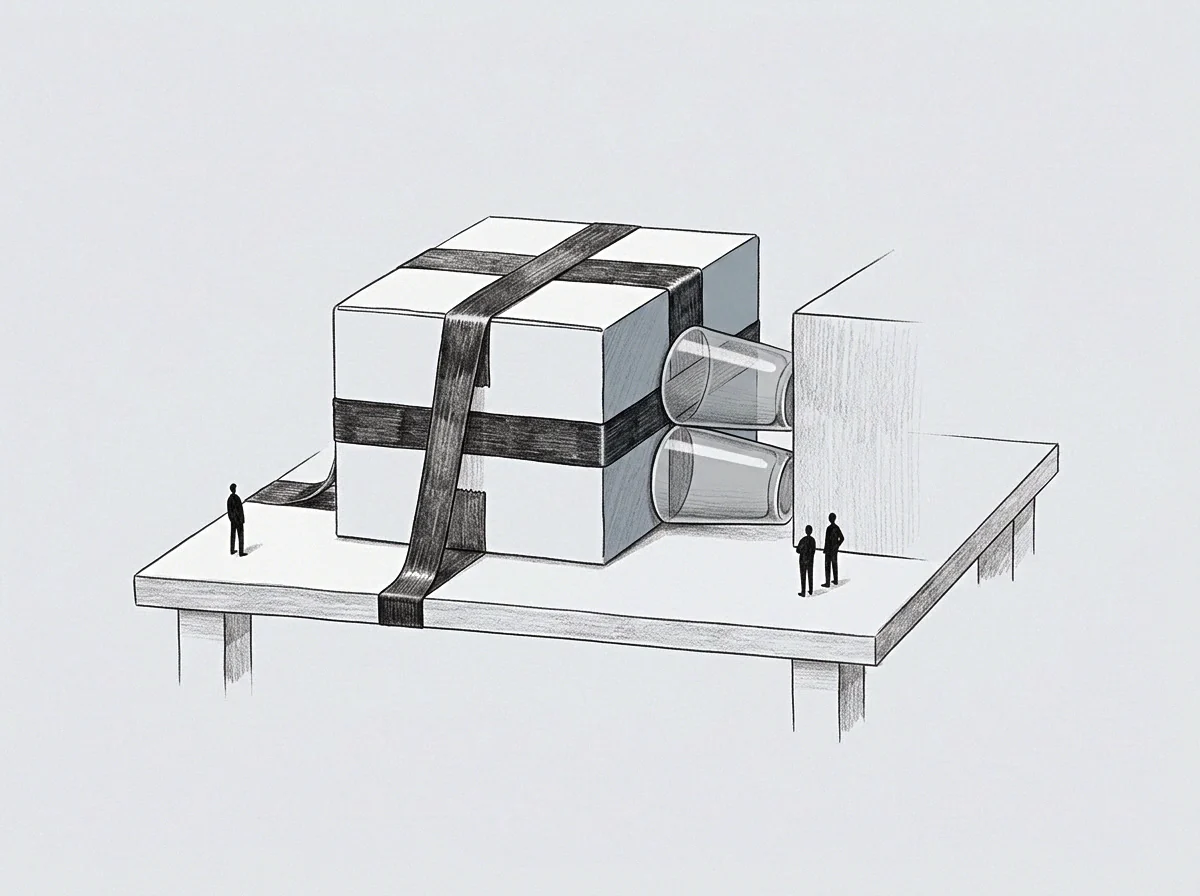
Split
Decomposing a singular founding role into isolated functional positions demands explicit boundaries around time, decision rights, and compensation. A position represents a structural container defined by specific operational outputs and resource authority. When functional lines remain blurred, internal operational tension emerges as individual role conflict.
Structural role strain occurs when the operational expectations of one position directly contradict the demands of another held by the same individual. The technician seat prioritizes technical precision, code elegance, and immediate defect resolution. The executive governance seat prioritizes speed to market, capital conservation, and risk mitigation across the entity.
When an individual attempts to make architectural decisions while simultaneously bearing accountability for enterprise runway, decision quality degrades in both directions.
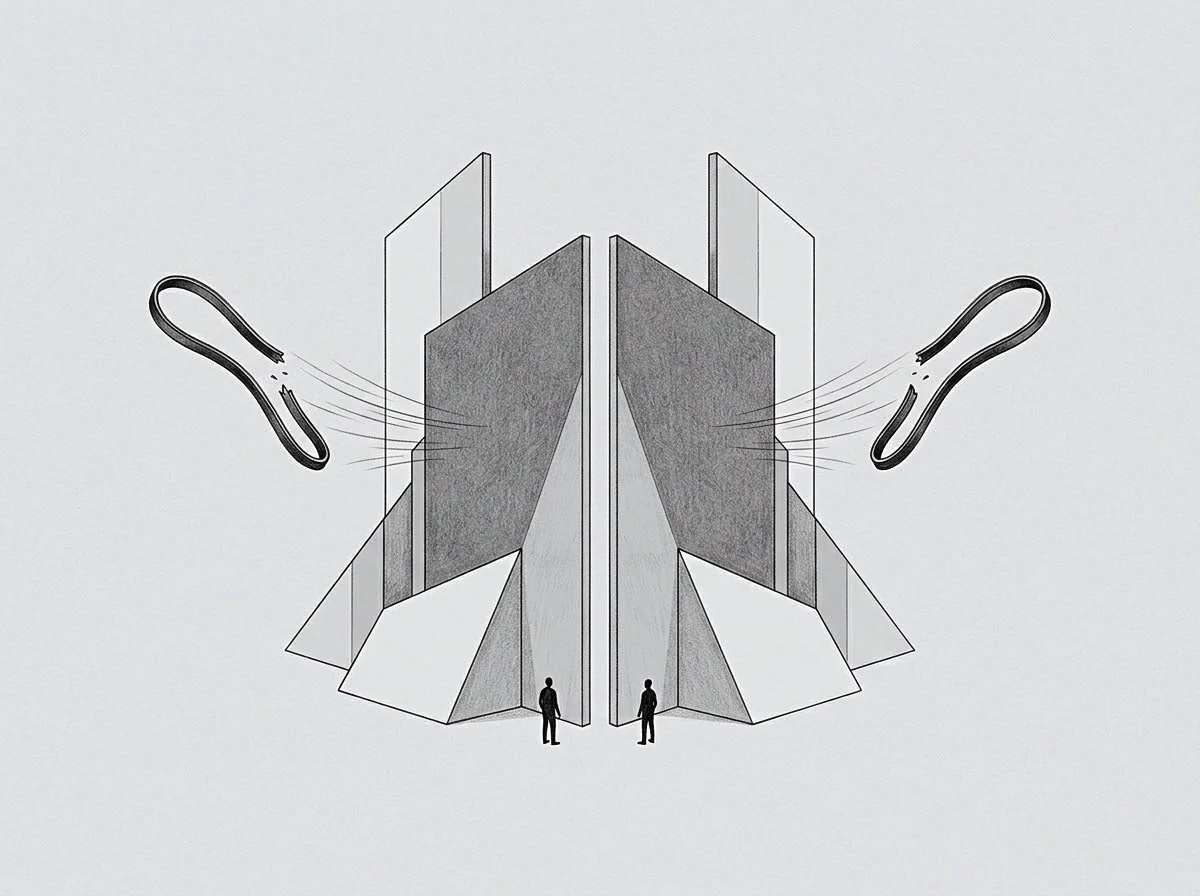
Structural Dynamics of Role Collision
The collision between technical execution and executive management produces distinct failure modes within early organizations. These patterns recur across technology firms, professional services practices, and industrial design firms alike.
- Tacit Work Monopoly occurs when the operational founder holds critical system knowledge in memory, preventing external delegation and locking executive capacity into daily production support.
- Unpriced Execution Labor emerges when technical production performed by equity owners is omitted from cost of goods sold, artificially inflating gross margins and obscuring true operational costs.
- Governance Impasse develops when operational disputes over technical specifications bleed into board-level strategic disagreements among equity holders, paralyzing firm direction.
- Executive Atrophy happens when continuous operational firefighting starves strategic governance, leaving the firm without long-term capital allocation or enterprise risk planning.
To eliminate these friction points, the firm must separate operational labor from ownership rights. Technical labor represents a marketable expense that receives hourly or salaried compensation reflecting competitive industry benchmarks. Executive governance represents an administrative duty tied to enterprise health, compensated through salary and strategic incentives.
Ownership represents equity risk, compensated solely through distributions, capital appreciation, and liquidation preferences.
Conflating market-rate operational labor with equity ownership obscures true unit economics and distorts operational margins.
When operational labor is uncoupled from ownership, the organization gains the capability to evaluate technical performance objectively. An equity owner performing engineering tasks becomes subject to the same performance expectations, code reviews, and delivery schedules as an external hire. If an equity owner lacks competitive technical output, the firm can replace that specific operational capacity without altering equity rights or governance seats.
The co-founders will note that the engineering budget expanded significantly once operational labor was priced at true replacement value.

Chair
Assigning explicit titles without defining operational scope fails to separate technical labor from enterprise management. A formal governance structure requires written documentation specifying decision rights, budget authority, and weekly time commitments for every seat in the organization. The transition from an informal working partnership to a structured enterprise depends on this operational clarity.

What Triggers the Separation of Technical Execution from Executive Governance?
The separation becomes necessary when operational delivery demands exceed twenty-five hours per week for an individual who simultaneously holds enterprise governance responsibility. At this operational threshold, the switching cost between direct technical output and strategic oversight damages both functions. The individual becomes an operational bottleneck, delaying technical pull requests while missing financial planning deadlines.
A structured transition introduces formal seat descriptions that define operational limits. The technician seat receives specific production metrics, direct report boundaries, and allocated weekly hours. The executive seat receives enterprise governance metrics, capital allocation authority, and distinct strategic milestones.
Stating these boundaries in writing transforms a worn, unspoken obligation into a clear structural agreement.
- Define the precise technical output required from the internal seat, establishing explicit delivery specifications and quantitative performance metrics.
- Calculate the exact market replacement cost for the technical labor currently performed by equity holders, entering that expense directly into operational accounting.
- Establish a formal schedule dividing weekly capacity into fixed, non-overlapping blocks dedicated exclusively to production execution or enterprise governance.
- Institute formal delegation protocols that transfer operational approval rights to senior engineering staff, removing executive management from daily technical workflows.
- Establish separate compensation streams for technical labor and executive oversight, ensuring each function reflects market rates independent of equity distributions.
Formalizing this division requires explicit documentation within the operating agreement or board resolutions. The organization states the terms under which technical execution is purchased from an equity owner, including termination clauses for the operational seat that leave equity ownership intact.
A stated operational term converts an invisible personal strain into a manageable contractual boundary.
The agreement specifies that failure to deliver technical output results in removal from the technical seat and the cessation of operational salary, while equity ownership and board seats remain governed exclusively by corporate charters and shareholder agreements.

Cost
Operating with unseparated functional roles introduces quantifiable financial and operational distortion. When equity holders contribute technical execution without charging market-rate operational salaries, financial statements present an inaccurate representation of firm profitability. Operating margins appear elevated because direct labor expenses are suppressed, creating dangerous distortions during valuation or capital raising efforts.
Consider a comparative evaluation of two firms generating identical top-line revenues of two million dollars annually, each operating with two founding partners performing both software architecture and enterprise management.
| Evaluation Dimension | Worn Dual-Seat Model | Stated Separated Model |
|---|---|---|
| Accounting Labor Cost | Zero accounted direct engineering labor expense | Market-rate compensation allocated to direct labor |
| Reported Operating Margin | Artificially inflated gross and net margins | Normalized margins reflecting true replacement expense |
| Cognitive Allocation | Unstructured context switching driven by daily fire-fighting | Structured time blocks protected for strategic governance |
| Delegation Capability | Low capability due to unmapped tacit production routines | High capability supported by explicit role documentation |
| Succession Readiness | High risk; departure halts operational execution entirely | Low risk; operational seat ready for external replacement |
The accounting in the worn dual-seat arrangement obscures the true cost of production. If both partners contribute technical execution worth three hundred thousand dollars on the open market without taking a corresponding salary, the firm’s reported profit is overcalculated by six hundred thousand dollars. A prospective investor reviewing these statements sees attractive margins that evaporate the moment the firm must hire external engineers to replace founding labor.
Beyond financial distortions, the human capacity cost accumulates quietly over extended operational periods. Role strain creates chronic executive fatigue, leading to compromised decision-making during critical firm negotiations.
When sixty hours per week are split haphazardly between writing production code and managing client acquisition, neither seat receives adequate focus. Strategic initiatives lag, technical debt accumulates, and the individual experiences severe role overload.
How long can an early-stage firm sustain artificial margins before the operational debt forces an involuntary, unstructured collapse of enterprise execution?
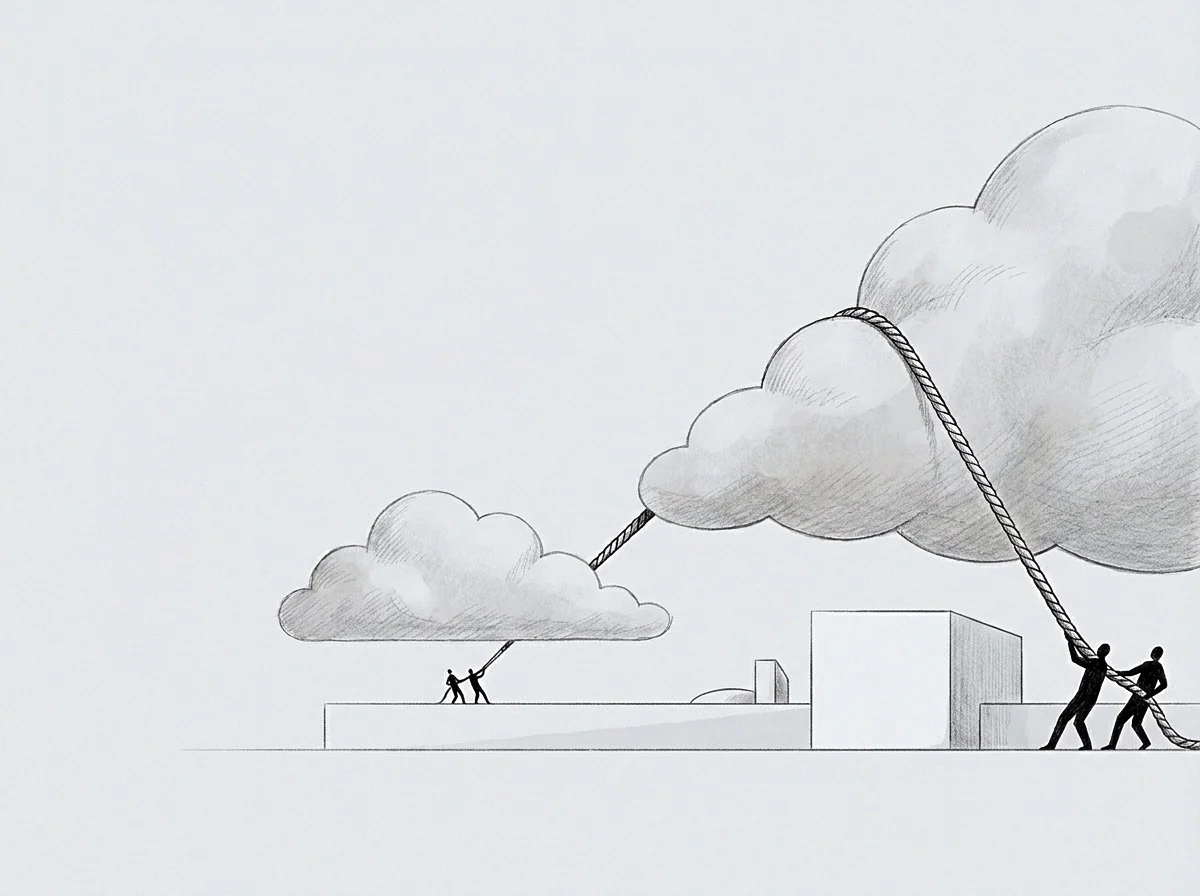
Rule
Executing a sustainable division between technical labor and executive management demands continuous enforcement of structural boundaries. The firm must establish operational protocols that protect executive time while holding technical production accountable to objective standards.
The separation begins with physical and temporal boundary isolation. Technical labor should occur during designated, continuous blocks of time where executive communication channels remain closed. Conversely, enterprise management tasks, such as board reporting, financial planning, and business development, belong in dedicated time windows where technical tools and development environments are completely inactive.
A second operational boundary involves decision rights. Technical execution decisions belong to designated engineering leads or technical managers, even when a founding partner sits in a subordinate technical seat. An executive founder who enters a technical discussion must clarify whether they are operating as the chief executive establishing strategic direction or as a developer proposing an architectural option.
Without this explicit distinction, executive authority overrides technical expertise, leading to suboptimal engineering outcomes and team friction.
The final operational principle addresses capacity replacement. The primary objective of an executive team should be systematically documenting and delegating technical production until external specialists can execute every operational routine. Every routine technical task retained by an executive represents a failure of operational systemization.
An enterprise achieves operational durability when technical execution proceeds efficiently in the complete absence of executive equity holders, allowing executive leadership to focus entirely on capital allocation, organizational design, and long-term enterprise growth.