
Structural Contract Mechanisms For Protecting Strategic Time In Small Enterprises
Structural contract mechanisms protect strategic capacity in small firms by binding operating partners to explicit executive time covenants and delegation triggers.

Clock
When an owner sits clearing routine customer support queues at midnight, the structural breakdown common to early-stage enterprises is already underway. Tactical emergencies routinely cut into hours set aside for capital allocation, organizational design, and market positioning. Once routine operational tasks spill past their informal limits, executive capacity drops off sharply, and the friction between short-term client demands and long-term asset building degrades financial performance.
Enterprise growth stalls whenever leadership hours are not anchored by explicit agreement.
Strategic capacity cannot be recovered once spent. Without formal contractual protections, good intentions to reserve time for corporate governance routinely yield to immediate operational needs. Staff, clients, and co-founders route unresolved friction to the most capable troubleshooter, leaving the founder to absorb operational ambiguity by default.
In the absence of explicit structural boundaries, every unassigned hour functions as reserve capacity for routine execution.
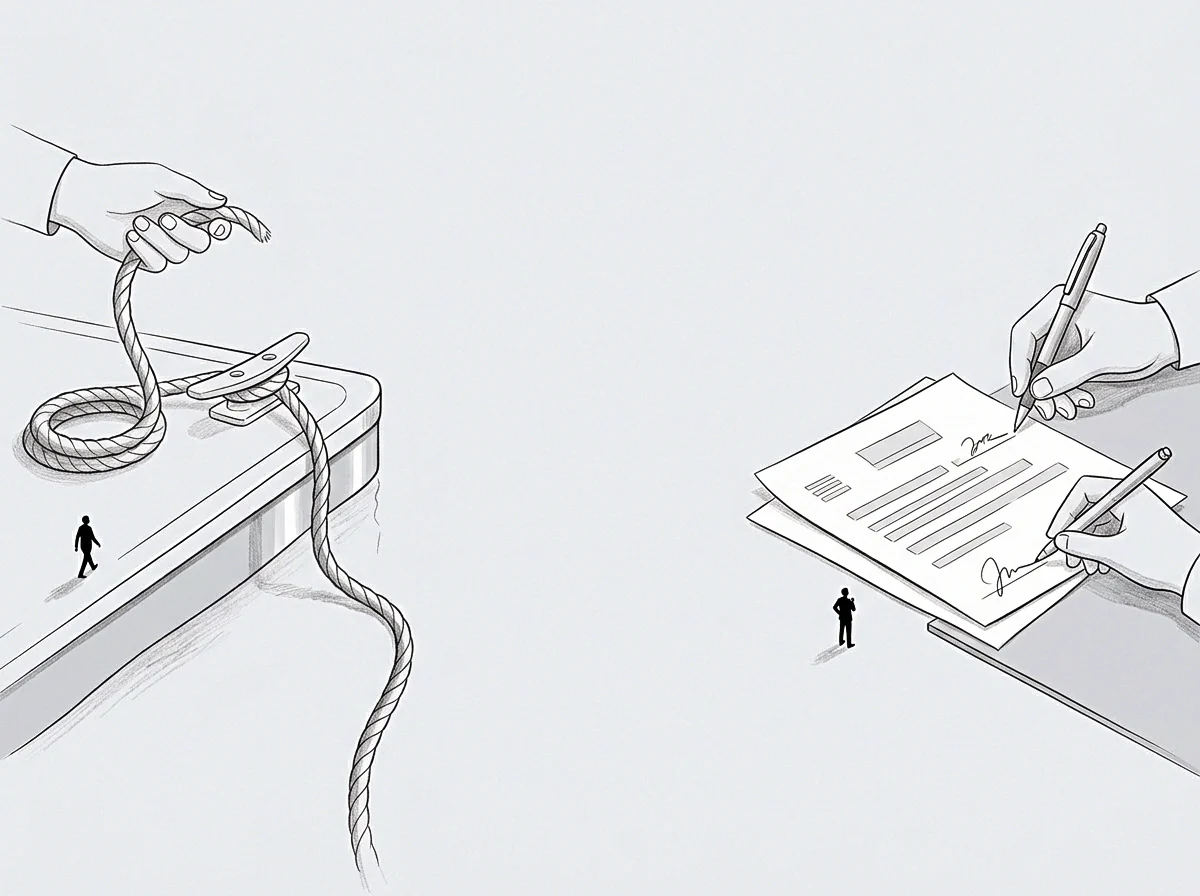
Tactical Intrusion Upon Allocated Strategic Capacity
Operational emergencies reliably cut into time set aside for market expansion, financial modeling, and basic governance. A single client requesting an immediate technical patch interrupts planned executive work, producing an immediate ripple of delayed strategic initiatives. Because tactical tasks are visible and immediate, organizations naturally tilt toward execution.
Strategic efforts produce deferred returns, leaving them permanently vulnerable to rescheduling.
Routinely pulling executive hours into delivery builds compounding operational debt. When leadership steps in to handle technical work, underlying deficits in staffing, training, and workflow design go unnoticed because executive effort absorbs the friction. That intervention distorts the operating cost baseline across the enterprise, producing an appearance of profitability that depends entirely on unpaid executive subsidy.

The Conversion of Residual Time Into Default Execution
Without contractual limits on executive duties, immediate fires expand to fill every available hour. Simple calendar blocking rarely holds up because it leans on individual discipline instead of institutional authority. Co-founders and employees treat open calendar blocks as available room for pending tactical projects, leaving strategic time exposed to routine internal escalation.
Unshielded strategic time tends to collapse into line execution. Technical firefighting displaces governance, leaving the enterprise without deliberate direction while critical decisions get pushed to the end of the day and handled on depleted attention. Over time, the ceiling of the business becomes whatever physical hours the founder can survive.
An unmapped role forces the individual to absorb all organizational ambiguity through personal labor.
Without enforceable boundaries on strategic allocations, the company functions as little more than a high-friction service firm, carrying a persistent discount on its equity valuation.

Chart
Breaking down a founder’s weekly schedule reveals three separate functions operating at once. The technician builds and delivers client solutions. The manager organizes personnel and internal workflows.
The founder directs capital allocation, legal structure, and commercial trajectory. Small firms regularly collapse these responsibilities into one desk without marking where any single role starts or stops.
Blurring those boundaries distorts both focus and resource allocation. Moving from managing inventory to negotiating enterprise debt imposes immediate context-switching penalties. Research in organizational design shows that rapid cycling between governance and tactical execution damages cognitive throughput, which makes defining formal boundaries essential to long-term operational health.

Decomposition of Owner Operator Role Overlap
The technician focuses on direct delivery, the manager coordinates staff and workflows, and the founder oversees equity and trajectory. Each role requires a different operating cadence and metric: hourly output for the technician, weekly targets for the manager, and multi-year valuation cycles for the founder.
Cramming these responsibilities into one schedule creates constant internal competition for focus. The technical seat almost always takes precedence because client requests carry immediate pressure and obvious endpoints. Strategic work lacks that immediate external urgency, leaving it vulnerable to perpetual deferral unless formal contracts fence off executive hours from tactical tasks.
- Tacit Duty Accumulation occurs when undocumented operating tasks are left out of governance agreements, pulling executive attention into routine troubleshooting.
- Cross Role Capacity Bleed develops when service agreements set no clear boundaries, letting day-to-day client demands override dedicated executive blocks.
- Unbounded Managerial Oversight emerges when direct reports lack explicit authority thresholds, driving routine operational approvals back to executive desks.

Quantifying Tacit Operational Overhead Across Seats
Tracking unassigned administrative tasks reveals that informal operating duties can consume up to twenty hours per week of founder capacity. These tasks, including answering escalated support emails, fixing software misconfigurations, and covering staff absences, bypass internal accounting simply because they sit outside any formal role definition.
Cataloging these informal tasks reveals what executive intervention actually costs. The firm relies on unpriced leadership hours to uphold service commitments, masking structural operating deficits. Resolving this requires shifting those tasks to salaried operational roles governed by explicit performance standards.
Withdrawing the senior partner from direct system implementation risks stalling client delivery and compressing margins unless delivery responsibilities are formally reassigned.

Pact
Formal governance converts discretionary calendar habits into binding corporate obligations. Shareholder agreements, operating covenants, and employment contracts establish the legal architecture needed to protect strategic capacity. By defining enforceable boundaries around operating duties, owners prevent executive hours from being eroded by partner requests and routine escalations.
Contractual terms substitute institutional rules for personal boundaries. When capacity allocation is written directly into corporate governance, declining tactical assignments is a contractual duty rather than an individual preference, fundamentally changing how partners, investors, and team members treat executive focus.

Should Strategic Allocations Survive Cash Flow Volatility?
When revenue drops, operating partners often push founders to shelf long-term projects in favor of immediately billable client work. That impulse trades long-term enterprise valuation for transient cash stability. Shareholder contracts must anticipate downturns by establishing minimum allocations of strategic time that cannot be waived during operating crunches.
Protecting executive capacity during downturns prevents permanent strategic drift. Operating covenants can specify the exact conditions required for temporary tactical reassignments, including formal consent requirements and scheduled remediation timelines, ensuring short-term cash pressures do not derail core initiatives.
| Mechanism Class | Primary Legal Instrument | Operational Trigger | Enforcement Strength |
|---|---|---|---|
| Strategic Time Covenants | Operating Agreement Amendment | Operational hours exceed contractual limit | Supermajority veto on role reallocation |
| Operating SLA Constraints | Executive Employment Agreement | Client response times drop below target | Mandatory hiring trigger for delegation |
| Scope Restricted Vetoes | Shareholder Voting Agreement | Tactical expenditure approval requests | Unilateral executive standstill authority |
| Capacity Gated Vesting | Equity Issuance Restrictive Covenant | Strategic hours drop below contractual minimum | Temporary freeze on equity vesting acceleration |
Clear contractual clauses set measurable standards for executive allocation. When partners define scope and commitments early, the operating agreement governs daily demands instead of individual patience or continuous informal negotiations.
A supermajority approval covenant on strategic time reallocation holds force only when paired with explicit financial thresholds for operational intervention.
Adding a mandatory capacity reservation clause to the operating agreement prevents co-founders from reallocating tactical client management to an equity holder whose agreement designates strategic market expansion.

Gate
Explicit contractual limits create hard ceilings on day-to-day interruptions. Tiered escalation paths keep routine problems away from leadership, while clear decision-making thresholds ensure that operational staff resolve recurring issues within their own scope.
Clear procedural gates push organizations toward operational autonomy. Knowing that executive intervention breaches governing covenants prompts direct reports to formalize their own troubleshooting procedures. Clear authority ceilings ensure that decisions beneath set dollar or risk limits remain handled by the operational tier.

Threshold Covenants for Operational Interruption
Defined financial and operational triggers prevent day-to-day friction from cutting into leadership schedules. Operating covenants set distinct dollar thresholds below which contract approvals, vendor selections, and client accommodations must be settled by staff according to pre-approved guidelines.
Threshold covenants shelter executive schedules from routine friction. If a client or internal partner attempts an improper escalation, the agreement functions as an objective check, enforcing organizational boundaries without requiring personal confrontation.
- The strategic partner logs a formal notice of capacity infringement when operational demands violate reserved weekly allocations.
- The corporate governance board reviews logged operational metrics within five business days to verify contract compliance.
- Executive authority temporarily shifts tactical delegation rights to designated management staff during active dispute resolution.
- Mandatory operational hiring triggers engage automatically when tactical volume exceeds agreed contractual caps for two consecutive quarters.

Remediation Protocols for Covenant Breach
When co-founders or clients regularly bypass established boundaries, formal cure periods compel operational realignment. Rather than prompting personal arguments, an initial breach initiates a governance review, triggering remedies outlined in the agreement such as reallocating key accounts or onboarding interim contract managers.
Repeated violations of allocation covenants trigger structural remedies, including adjustments to equity vesting, financial clawbacks, or shifts in voting control. Formal remediation protocols maintain the practical enforceability of capacity terms.
When tactical escalation thresholds are exceeded, the operating agreement forces an immediate redistribution of client accounts to non-executive staff.
Contractual protections lose effect the moment an owner steps in to handle an operational problem without invoking the formal remedy mechanism.

Lever
Aligning equity mechanics with daily duties bridges the gap between routine execution and long-term valuation. Standard vesting schedules rely exclusively on tenure, disregarding which operational role an executive actually performs. Capacity-gated vesting links equity progression directly to the fulfillment of strategic obligations set out in the operating agreement.
This contractual link discourages founders from retreating into familiar technical tasks. By tying equity acceleration to strategic allocation, the partnership creates a direct financial incentive to establish workable delegation systems, turning capacity management from a productivity issue into a core condition of ownership.

Equity Realignment Linked to Strategic Execution
Vesting schedules tied to defined strategic milestones protect the firm when a co-founder lapses into routine technical duties. If an executive routinely takes on client emergencies instead of advancing corporate development, capacity covenants slow or pause equity progression, ensuring equity rewards enterprise value rather than manual hours.
Capacity-based equity covenants protect non-operating shareholders against operational drift. Passive partners and investors gain structural assurance that active founders stay committed to long-term corporate growth, reinforcing overall strategic continuity.

Orderly Handover of Operator Authority
Moving an owner out of daily operations requires a structured legal transfer of authority supported by clear contractual indemnities. The transition protocol establishes concrete operating milestones that trigger the transfer of day-to-day control to non-equity managers, preventing founders from reclaiming operational reins during routine crises.
Staged handovers create legal certainty for incoming leadership. Formal delegation covenants ensure that professional managers retain decisive authority over daily workflows without the risk of founder override, establishing the structural clarity needed for sustained growth.
An owner who retains operational vetoes while attempting to step back into a governance seat forces the enterprise into structural paralysis.
It remains uncertain at what valuation threshold the legal overhead of administering time protection covenants begins to exceed the value forfeited to operational drift.