
Preserving Executive Command in Growth Stage Owner Managed Companies
Executive command endures when an owner exchanges continuous direct operational supervision for legal reserved matters and non-negotiable negative control thresholds.

Executive command endures when an owner exchanges continuous direct operational supervision for legal reserved matters and non-negotiable negative control thresholds.

Multi-tier recapitalizations clear conflicted insider interests and fiduciary claims through special independent committees, market checks, and rights offerings.
Partitioning owner operator capacity requires isolating technician triage within prepaid hour reserves while applying economic friction to unscheduled demands.

Extended operational crises destroy capacity through role convergence and fatigue; survival requires strict triage, external cordons, and mandatory rest.

Financing a family equity buyout terminates operational meddling by eliminating the ownership title that enables informal authority to override management.

Delaware protective covenants enforce class vetoes against charter alterations, requiring explicit transactional language to block parallel statutory mergers.

Independent board structures constrain shareholder interference by legally separating beneficial equity ownership from executive appointment and daily operational authority.

Delaware preferred stock requires explicit certificate authorization defining liquidation rank, conversion ratios, and separate class voting protections.

Founder managed service firms hit structural limits when technical labor consumes governance capacity, requiring role unbundling to reallocate equity accurately.

Shareholder agreements establish binding rules for equity transfers, voting rights, and buyout valuations to prevent kinship disputes from halting corporate operations.

Aligning statutory charter voting thresholds with contractual consents during recapitalizations prevents invalid charter amendments and shareholder breach claims.

Contractual capacity throttles regulate incoming work volume during demand surges through clear usage ceilings, dynamic delivery windows, and fee adjustments.

Uncodified founder heuristics collide with legal board veto rights during market shocks, creating operational paralysis as balance sheet runway contracts.

Preferred drag covenants enforce exit sales across classes by combining advance appraisal waivers with irrevocable proxies coupled with an interest.

Uncodified decision logic loss occurs when sudden scaffold removal forces successors to govern edge cases by static rules rather than tacit trade-off heuristics.

Corporate stockholder agreements mitigate voting friction by decoupling economic equity from governance rights through contractual voting trusts and buyouts.

Converting shadow equity to common stock triggers immediate supplemental wage withholding obligations that require cash reserves despite the illiquid share form.

Grounding tacit operating rules requires extracting implicit executive heuristics into explicit decision guardrails before final owner exit.

Divergent common hurdles allocate exit proceeds through valuation-tiered tranches, activating junior equity participation only after net cash clears specific benchmarks.
Preferred class distribution friction resolves when statutory profit reserves limit preferences and articles bind cash allocations to board approval.

Engineering hours limits prevent catastrophic system defects during surges by forcing operational triage when technical intake volume exceeds physical capacity.

Cognitive residual decay measures the attrition of unwritten operational heuristics when an incoming executive operates without predecessor advisory contact.

Commercial arbitration tribunals remedy bad faith bad leaver clawbacks by ordering specific equity reinstatement or awarding fair market value damages.

Predetermined contractual triggers govern structural labor reserves across multi-quarter volatility, separating managerial allocation from capital preservation.
Excess operational headcount displaces executive capacity when marginal coordination hours exceed the market wage equivalent of replacement executive labor.
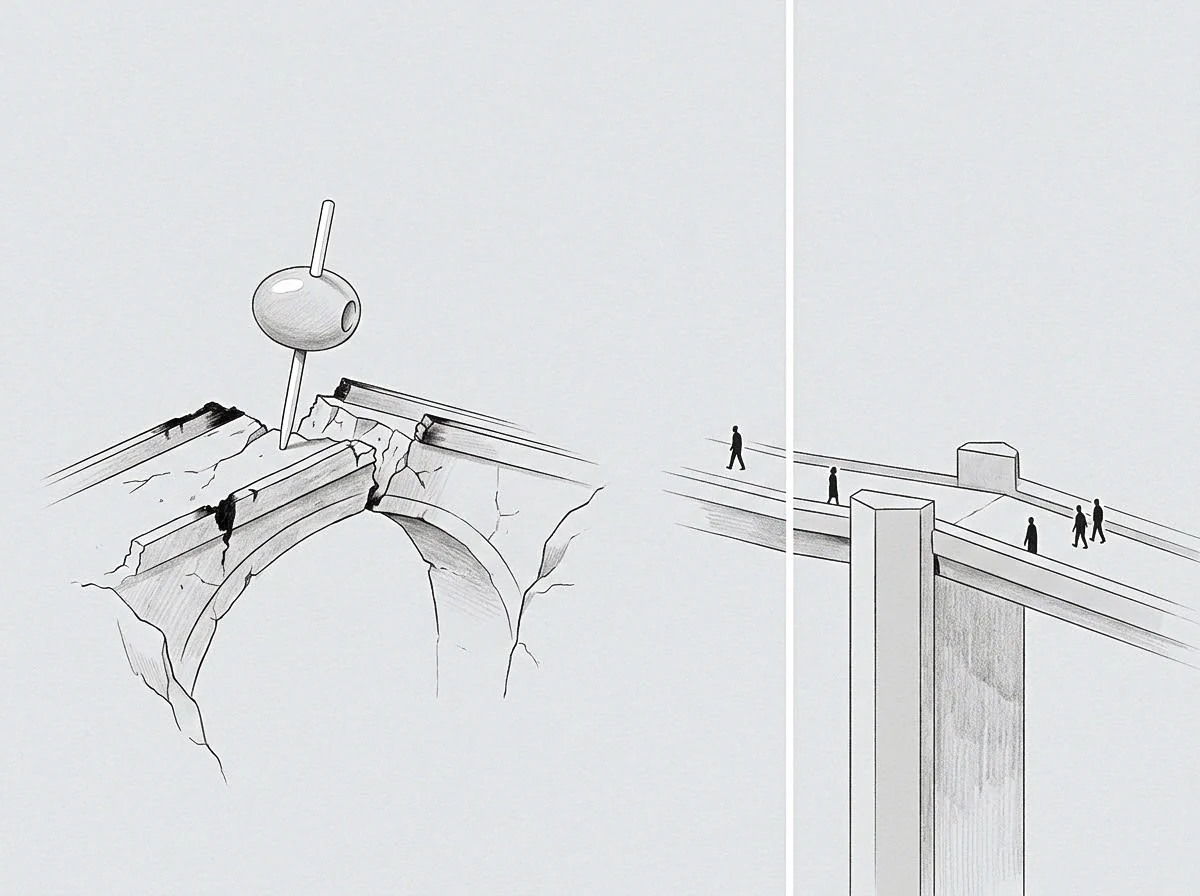
Executive capacity protection decouples operational dispatch from strategic sovereignty by pairing principals with secondary operators holding terminal decision rights.

Fiduciary breach repurchase options require clear documentary evidence of disloyalty and disinterested board authorization to enforce equity buybacks.

Quantifying operational switching costs reveals hidden capacity losses when one executive simultaneously juggles production, management, and governance duties.

Bad leaver provisions enforce mandatory equity repurchases at reduced valuations when an LLC member exits through material breach, fraud, or unapproved resignation.

Tacit knowledge loss occurs when owner-operators depart without transferring unwritten perceptual heuristics and informal social credit networks to successors.
The terms are written where they belong. Each field holds three desks, and every entry a desk writes raises the terms it uses, each term given a meaning, a mechanism and the places it appears. The record on these pages stays first person and hand made; the fields grow the nomenclature.