
Partitioning Owner Operator Capacity Limits Under Chronic Client Emergency Load
Partitioning owner operator capacity requires isolating technician triage within prepaid hour reserves while applying economic friction to unscheduled demands.
Partitioning owner operator capacity requires isolating technician triage within prepaid hour reserves while applying economic friction to unscheduled demands.

Extended operational crises destroy capacity through role convergence and fatigue; survival requires strict triage, external cordons, and mandatory rest.

Founder managed service firms hit structural limits when technical labor consumes governance capacity, requiring role unbundling to reallocate equity accurately.

Engineering hours limits prevent catastrophic system defects during surges by forcing operational triage when technical intake volume exceeds physical capacity.

Predetermined contractual triggers govern structural labor reserves across multi-quarter volatility, separating managerial allocation from capital preservation.
Excess operational headcount displaces executive capacity when marginal coordination hours exceed the market wage equivalent of replacement executive labor.

Quantifying operational switching costs reveals hidden capacity losses when one executive simultaneously juggles production, management, and governance duties.

Early stage role allocation requires decomposing overlapping operational posts into explicit contractual stations compensated at market wages prior to equity yields.

Hard intake throttles and explicit triage triggers isolate frontline execution from managerial oversight during peak volume shocks.
Role limits hold during workload expansion by decoupling executive governance from frontline technical delivery through written intake buffers and post charters.

Contractual governance firewalls protect minority executives by reserving operational spheres, restricting shareholder intervention, and securing exits.

Retained board vetoes sever executive accountability from strategic authority, creating operational paralysis that only contractual carveouts and share class sunset conversions can permanently resolve.

High-vote shares convert to ordinary equity through time triggers, role cessation events, or transfer limits, aligning voting weight with daily operational responsibility.

Buy-sell agreements decouple operational labor from equity ownership by defining clear departure triggers, normalized valuation formulas, and deferred debt notes.

Transferring architectural veto rights requires replacing discretionary founder negative votes with quantitative system thresholds and escalating capital liabilities.

Formalizing technical delegation converts unwritten founder vetoes into explicit architectural thresholds based on decision reversibility and capital exposure.

Technical execution delegation replaces implicit founder sign-off loops with explicit authorization thresholds, structured knowledge extraction, and objective architectural governance.
Decoupling governance seats from execution seats separates capital allocation authority from daily operational labor through formal delegated authority limits.

Attentional residue and refractory latency degrade strategic executive output when incompatible operating roles are cycled without structural cognitive buffers.

Contractual extraction unbundles technical production seats from equity ownership through formal separation agreements, access escrow, and governance restructuring.

Dual technical and executive authority forces continuous task switching between deep execution and governance, draining executive capacity and delaying delivery.

Contractual handover enforcement protects technical delivery capacity by linking commercial deal closure to binding milestone acceptance criteria.

Separating new bookings from account retention under rising targets reallocates pipeline discovery risks to post-sale margins.

Contractual limits on executive sponsorship redirect customer requests into operational channels, preserving executive capacity for organizational strategy.

Post-founder governance friction resolves by coupling executive resignation with automated conversion of supervoting stock into common single-vote equity.

Operational authority grants immediate commercial execution rights within approved budgets, whereas shareholder equity governance regulates capitalization and ownership decisions.

Structural separation detaches daily operational executive command from corporate equity ownership through explicit board charters and delegation terms.

Private corporate restructuring relies on drag-along triggers, class recapitalizations, and voting agreement amendments to remove non-operating minority vetoes.
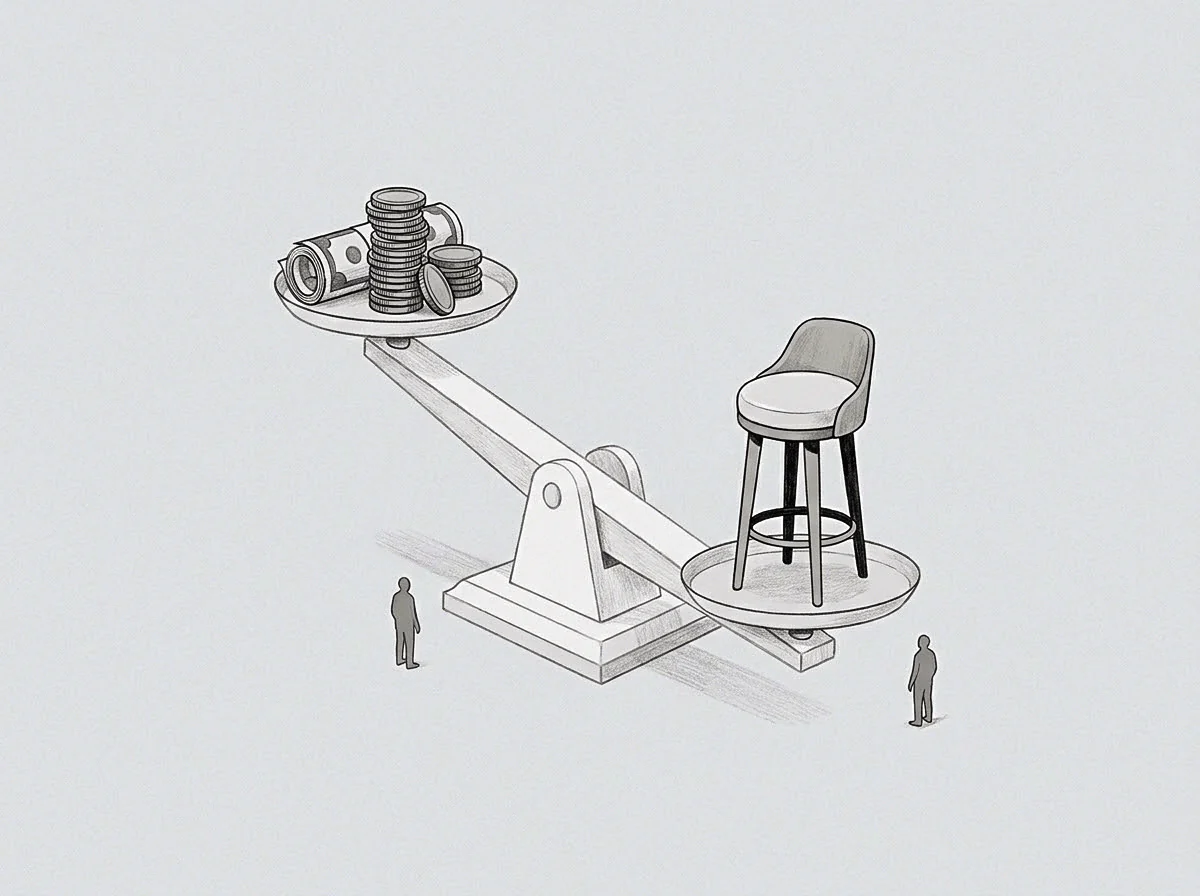
Negative covenants granting minority capital veto rights over executive hiring freeze key management seats and transfer massive operational strain to founders.

Contractual mechanical buyout formulas enforce agreed share prices against departed equity holders when accounting controls remain consistent and transparent.
The terms are written where they belong. Each field holds three desks, and every entry a desk writes raises the terms it uses, each term given a meaning, a mechanism and the places it appears. The record on these pages stays first person and hand made; the fields grow the nomenclature.