

What Moves When A Seat Is Handed Over And What Stays
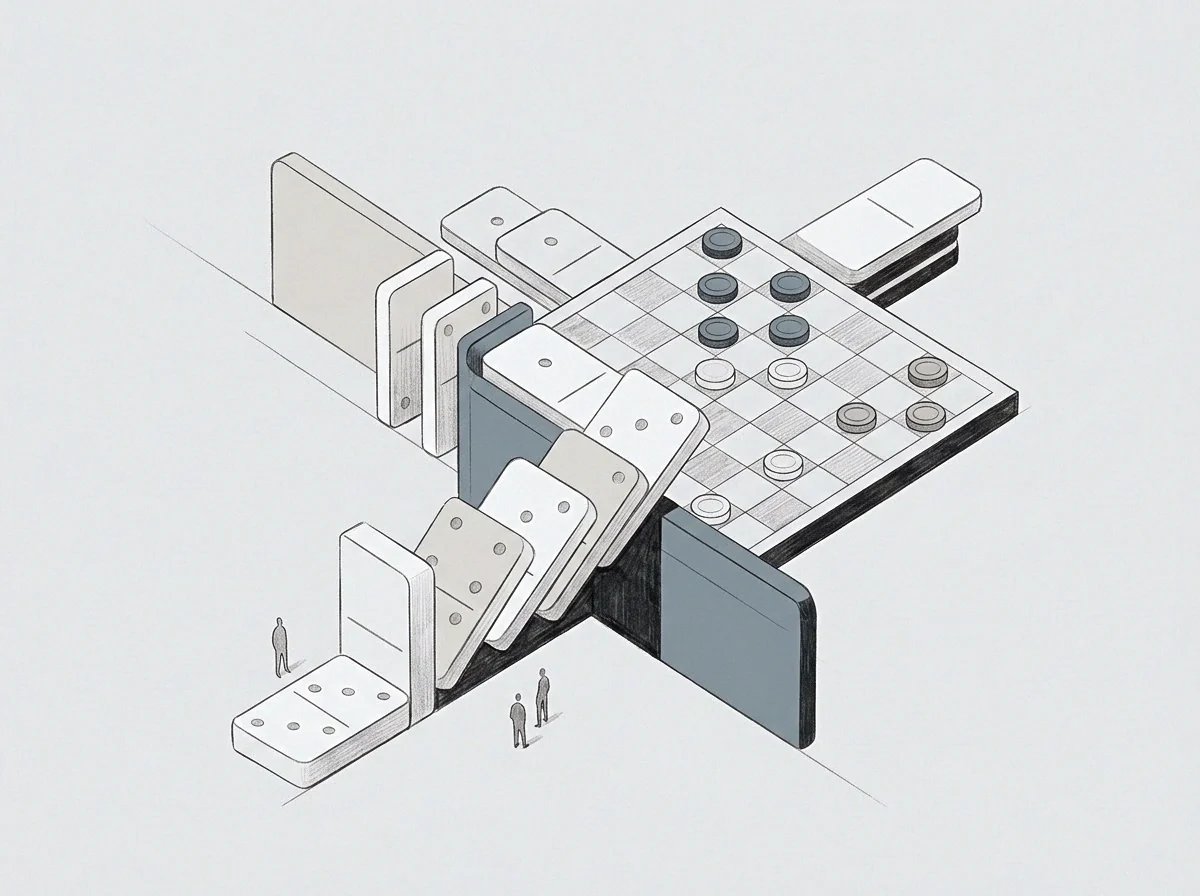
A seat handover transfers legal authority and explicit procedures, while diagnostic intuition, relational trust, and evaluative taste remain with the predecessor.
A seat handover transfers legal authority and explicit procedures, while diagnostic intuition, relational trust, and evaluative taste remain with the predecessor.

Succession succeeds when multi-role executive functions are unbundled into discrete positions before transferring authority to replacement leaders.

Transferring founder-dependent client relationships requires phased authority migration, explicit tacit knowledge codification, and strict boundary enforcement.

Mapping functional roles separates bundled executive duties into distinct operational seats, eliminating candidate profile traps and securing continuity.

Tacit authority transfers through structured observational co-judgment and incremental threshold expansion that shifts uncodified heuristics to incoming leaders.

Decision authority transfer latency measures the delay between formal executive appointment milestones and the de facto operational execution of unilateral discretion.

Contractual triggers relinquish founder veto power through phase-gated performance thresholds and operational covenants during leadership transitions.

Senior executive operational handover transfers statutory, commercial, and tacit administrative authority through a staged sequence of structured protocols.

Tacit knowledge extraction fails when intuitive owner patterns are codified without capturing the situational cues that trigger operational choices.

Formal exit triggers immediate legal transfer while de facto operational authority lags by six to eighteen months across core decision channels.

Amending early shareholder agreements during succession aligns voting control with active executive management while converting legacy equity into non-voting stock.

Organizational performance decays post-founder exit when uncodified cognitive routines and implicit sensemaking models exhaust their operational momentum.

Operational authority transfers through scheduled migrations of administrative spending limits, binding signatory powers, and codified commercial protocols.

Deconstructing executive roles separates title-based decision rights into distinct functional operating seats with explicit operational cadences and transferrable knowledge.

Decoupling operational knowledge transfer from public executive transition calendars prevents compressed handovers and validates successor performance before exit dates are set.

Majority equity ownership creates structural decision latency when informal shareholder overrides bypass formal board delegation.
Operational continuity protocols isolate executive seats from personal operating habits by converting unwritten authority into stage-gated corporate procedures.

A founder veto transitions into standard board governance through automatic share conversions and shrinking reserved matter schedules upon operational exit.

Executive departures stall when title transfer precedes tacit knowledge codification, requiring structured co-decision cycles to delegate authority safely.

Retained founder advisory roles cause operational ambiguity when informal advice bypasses executive hierarchy, requiring explicit contract boundaries and single-channel routing.
Owner operator handover transfers procedural execution through phased scaffolding, isolating tacit judgment from explicit rules to ensure enterprise continuity.

Tacit knowledge decay occurs as incoming executives lose access to uncodified decision heuristics following the abrupt removal of transitional cognitive scaffolding.
Governance transitions fail when owner heuristics are codified into static rules without accounting for uncodified contextual judgment under uncertainty.

Delegating key accounts depends on transferring relational authority and operational context before removing executive oversight to maintain client trust.

Account governance structures maintain transitional continuity by decoupling authorization rights from personal identity through progressive gating sequences.

Decoupling account maintenance from expansion through tiered decaying retention pools secures founder client relationships without inflating successor bonuses.
Successor authority survives market contraction through explicit emergency scopes, singular board communication, and contractual capital intervention triggers.
Operational boundary covenants enforce management authority by stripping former executives of unrouted operational access during organizational stress.
Executive operating autonomy drops when uncodified predecessor information loops force reliance on legacy shadow channels for routine decision approval.

Corporate recapitalizations exchange personal founder operational vetoes for preferred stock protective provisions to restore executive management authority.
The terms are written where they belong. Each field holds three desks, and every entry a desk writes raises the terms it uses, each term given a meaning, a mechanism and the places it appears. The record on these pages stays first person and hand made; the fields grow the nomenclature.